
Carbon Steel Plate · Flat Steel
Carbon Steel Plate Supplier
Selecting Carbon Steel Plate depends on type, material, grade or standard, dimensions, application, documents, quantity, and destination.
Price on request · confirmed against the standard/edition and the mill certificate
Fit & selection logic
Fix the product ruling before the commercial terms
Carbon Steel Plate fits where the required thickness, grade, dimensions, tolerance and service conditions sit under a single governing standard. Match the manufacturing route, grade and standard to the governing edition so every later decision sits on a fixed dimensional basis.
Manufacturing route
Hot-rolled or cold-rolled plate and the delivery condition change the specification, the checks and the RFQ line. Confirm the route with the grade before commitment.
Grade and standard
ASTM A36 and A516 are different materials with different obligations; the governing standard and edition fix chemistry, mechanical minimums and testing.
Dimensions and tolerances
Thickness, width, length and the tolerance basis fix the plate and its unit weight. Keep the unit system coherent and cite the edition.
Surface, edge and processing
Mill finish, edge condition, cutting or flame-cut edges and any processing are project decisions, confirmed against the governing standard.
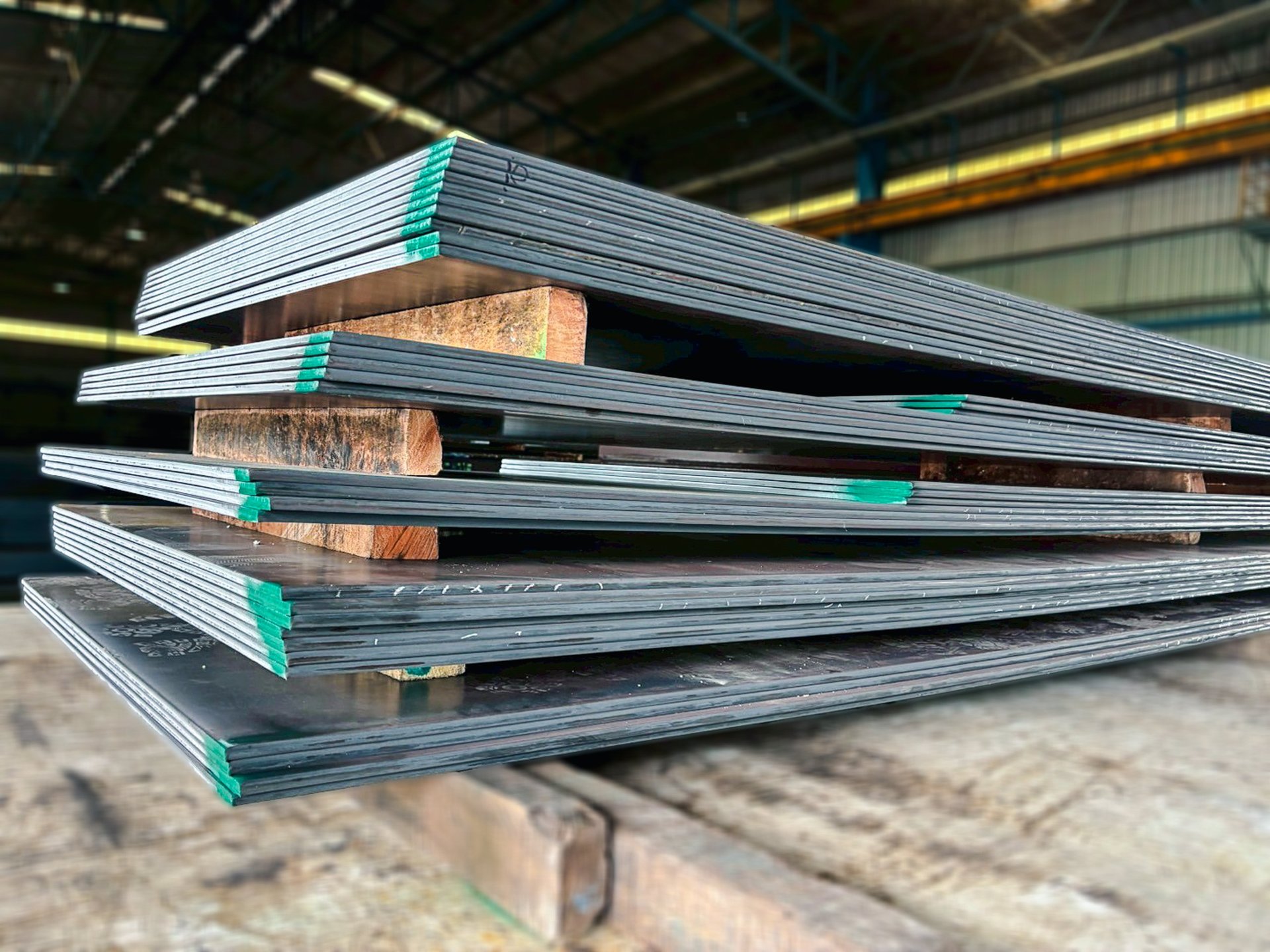
Selection path
A36 and A516 are different materials — compare the exact related page
ASTM A36 plate is a general structural grade; A516 is a pressure-vessel grade with different mechanical minimums and test obligations. Confirm the exact grade, standard and edition with the governing project specification before the plate basis is fixed.
ASTM A36 steel plateSelection tool
Carbon Steel Plate Specification-to-RFQ Builder
Build the specification line by line. When the required fields are set, copy a qualified RFQ summary and hand it to the commercial department — nothing here implies stock, price, lead time or certification, which stay on request.
Completeness
Still needed for a qualified RFQ
- Product form
- Grade / standard
- Thickness
- Quantity
- Destination
Price on request. Grade, dimensions, tests and certification are confirmed against the governing standard and mill process.
Standards, grades, dimensions & service
Specify the plate so it is verifiable, not assumed
A standard and grade fix chemistry, mechanical minimums, dimensions, tolerances and testing. The tables below connect each to the purchasing decision; no value is invented — every figure is confirmed against the governing standard, edition, MTC or project specification.
Grade and standard
A36 vs A516, the edition, heat-treatment/delivery condition and what each governs before the plate basis is fixed.
Dimensions and tolerances
Thickness, width, length, flatness, camber and the tolerance basis carried under one unit system.
Unit weight
Calculated from thickness and dimensions — an estimate until confirmed against the mill ticket.
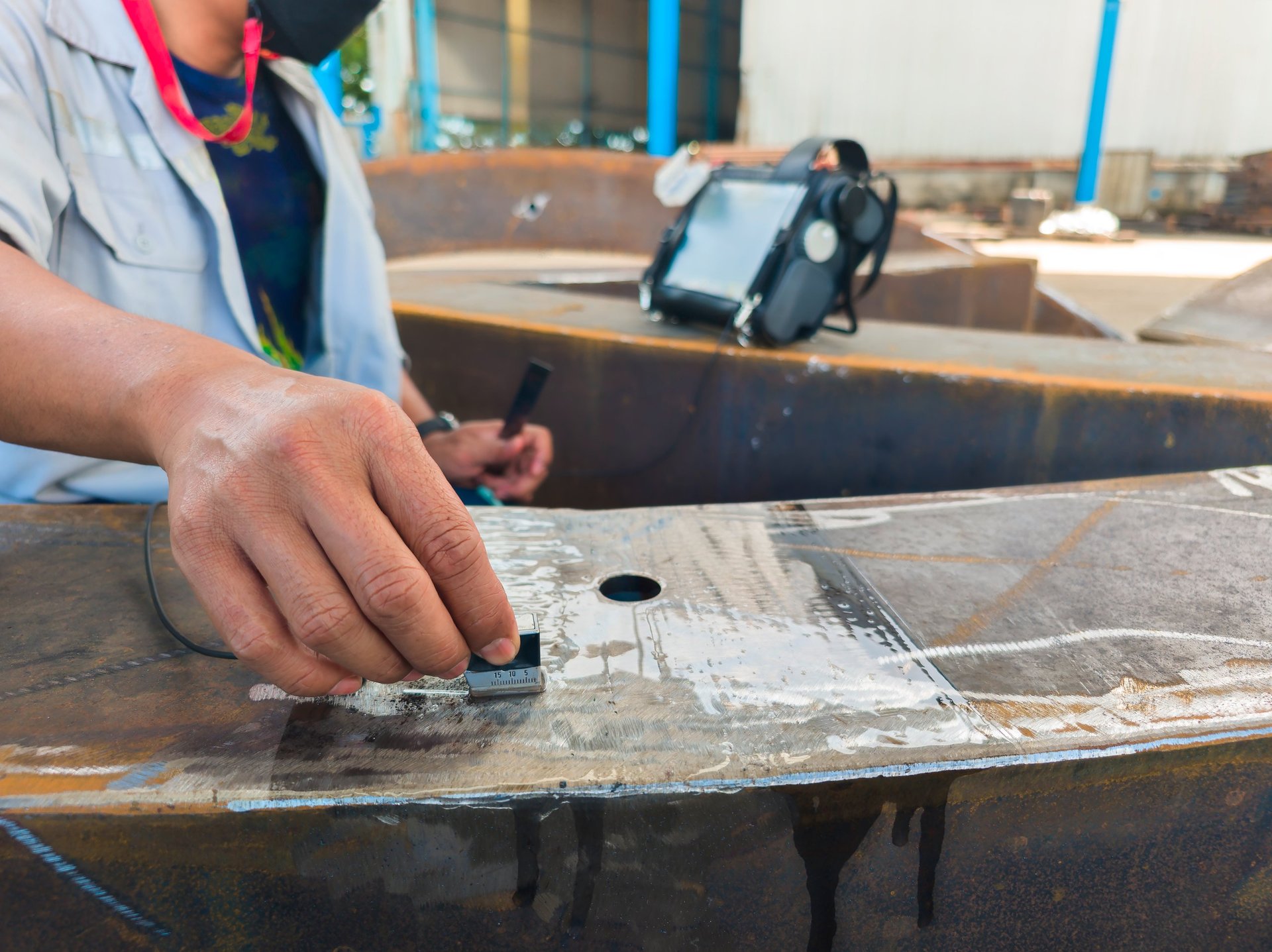
Specification route
Reference the exact related standard and accuracy aids
Confirm the A516 pressure-plate standard and verify a weight or cutting input before it becomes an RFQ ordering basis.
| Project / product context | Standard family | Applies to / limitation | Verify / evidence | RFQ field |
|---|---|---|---|---|
| General structural plate (fabrication, framing) | ASTM A36 | Applicable where a general structural grade and weldability are the baseline; confirm the edition and delivery condition. | Governing edition, grade, thickness/width/length, tolerances | Grade/standard + dimensions |
| Pressure-vessel quality plate (boilers, heat) | ASTM A516 (Gr. 55 / 60 / 70) | Applicable where a pressure-vessel-grade plate is specified; test and impact obligations are stricter. | Governing edition, grade, impact test, heat treatment | Grade/standard + inspection/testing |
| Structural plate under European project spec | EN 10025 S275 / S355 | Applicable where the governing project specification calls EN grades; confirm the parent standard and condition. | Governing standard, grade, delivery condition | Grade/standard + processing |
This table is a decision aid only. It carries no numerical technical value; every gauge, weight, tolerances or property figure is confirmed against the governing standard, edition and the mill certificate before quotation. Price on request.
Quality, testing & documentation
The document set is a deliverable, not a footnote
A buyer purchasing plate on a dimensional and grade basis needs the paper trail to match the steel. These are the three groups the RFQ addresses — each confirmed, never implied.
Product evidence
- Mill Test Certificate (chemistry + mechanical minimums)
- Dimensional / gauge record against the standard
- Heat / lot traceability to the shipped consignment
Inspection records
- Dimensional, surface or edge inspection per the agreed route
- Third-party inspection where the RFQ calls for it
- Weight / count reconciliation to the packing list
Destination documents
- Commercial invoice and packing list
- Origin / transport documents per the Incoterm
- Customs declaration inputs for the destination

Dimensional, surface and edge verification sit inside the explicit field list, not at the tail of the order.
Every record is requested against the agreed standard and edition. Nothing about stock, mill, origin, price or lead time is implied by this page — confirm each in the RFQ.
Application & industry decision paths
Pick the operating context that rules the spec
The same nominal plate serves different services. Choose the application so the governing standard, grade, testing and document discipline match what the plate will actually do.
Fabrication
Plate for fabricated connection components: check whether the operating conditions and failure risks change grade, testing, fabrication or documentation.
Explore FabricationBoiler
Pressure and temperature service: confirm the exact standard, grade, test and documentation discipline before the plate basis is fixed.
Explore BoilerBridge
Structural plate for bridge fabrication: reconcile thickness, tolerance and mechanical evidence to the governing project specification.
Explore BridgeGCC markets & destination planning
Carbon steel plate across the Gulf
Six steel plate country routes, each with destination-specific document, delivery-location, Incoterm and RFQ implications. No branch, stock or market presence is claimed — each route differentiates the inputs that change the offer.

United Arab Emirates
Destination and import documentation.
Carry the plate spec, destination emirate and importer inputs into the RFQ so the quotation and document set match the UAE requirement.

Saudi Arabia
Project specification and import documentation.
Confirm the standard/grade, dimensions, quantity and delivery window so the estimate and logistics stay aligned to the order.

Qatar
Specification and delivery inputs.
State the plate standard, grade, thickness, width, length, quantity, documents and delivery base so the Qatar quotation is fixed on a verified dimensional basis.

Oman
Port-oriented supply for industrial projects.
Oman projects are typically supplied through port destinations, harmonising plate specification with industrial project requirements.

Kuwait
Contractor procurement and fabrication hand-off.
Link plate selection and cutting to fabrication needs, with shipment agreed against the destination and delivery window.

Bahrain
Industrial supply and re-export coordination.
Coordinate material and cutting documentation to the delivery requirement so the plate and document set stay aligned.
Commercial, logistics & availability inputs
Packing, route and Incoterm — made explicit
The quotation depends on inputs the buyer supplies: destination, Incoterm, documents, packing and required date. Price stays on request; the route carries the exact delivery terms.
Packing
Plates stacked, strapped and marked by size, grade, heat and lot, matched to the declared route and destination. Confirm packing in the RFQ.
Delivery route
Name the destination, port or delivery location. Delivery terms are matched to the route and stated on the quotation.
Incoterm & named place
State the Incoterm and named place so packing, transport and document obligations are explicit and auditable for the plate import.
A qualified RFQ carries every variable
Turn product, grade/standard, dimensions, quantity, destination, Incoterm, date and documents into a copyable RFQ summary. The commercial department reviews the specification and document set for consistency before quoting — no value is prefilled.
Related products & technical resources
Validate a specification input before it reaches the RFQ
Reference the related pages so a grade, weight or processing input is confirmed before it is transferred into the RFQ. Carbon steel plate is the bounded basis here; compare the same material across forms only where the decision requires it.
Steel Plate weight chart
Verify a weight, gauge or tolerance input before it becomes an RFQ ordering basis.
Open referenceCutting & processing guide
Confirm how a cutting or processing requirement affects the plate basis before quoting.
Open referenceCarbon Steel Products
Compare the same material or process across the product forms — sheet, coil, pipe and rebar — before the plate basis is fixed.
Compare materialExpert insight
The evidence that most changes the plate decision
Map the buyer's requested plate form and standard to an authoritative standards family, then require exact grade, dimensions, tests and documentation before any technical claim. What follows is a procurement verification aid and is not a substitute for a standards professional.
ASTM International — Steel Standards catalog
Official primary source · reviewed for scope
Which evidence most changes the Carbon Steel Plate purchase decision? Confirm the exact standard, grade, dimensions, tolerances and test obligations against the governing project specification — and use the ASTM steel standards catalog to locate the authoritative standard family before any technical claim is accepted.
For the buyer this means the RFQ must carry the standard and edition, grade, dimensions and test/document inputsthe governing specification expects — and that conformity, certification and commercial outcomes remain separate, verification-dependent steps after the technical product description is complete.
Scope: Carbon Steel Plate; procurement and specification decisions for the exact route /products/steel-plate/carbon-steel/. The cited source does not establish Noor Deira Steel inventory, price, origin, lead time, certificates, market presence or project suitability. Exact acceptance values, editions, supplementary requirements, grades or commercial outcomes must be verified against the buyer's governing documents and current transaction data.
Evidence-led buyer advantages
A concern, answered with evidence, becomes an outcome
Each common buying concern is met with a verifiable behaviour, not a promise. The result is a specification a buyer can audit before it becomes an order.
Buyer concern
Wrong-grade substitution
Evidence-led answer
The RFQ forces a named standard, grade, edition and heat-treatment/delivery condition before any value is shown.
A plate whose grade and standard are unconditional, auditable ordering inputs.
Buyer concern
Dimensional or tolerance ambiguity
Evidence-led answer
Thickness, width, length and the tolerance basis are carried together under one stated unit system.
A dimension a fabricator can cut, weld and re-check against the governing standard.
Buyer concern
Undocumented testing or MTC
Evidence-led answer
Inspection, test-certificate and traceability needs are explicit RFQ fields, requested against the standard before quotation.
An MTC and document set that match the plate actually shipped.
Buyer concern
Quotation gaps or hidden assumptions
Evidence-led answer
Application, processing, destination, Incoterm and date are separate explicit fields, never buried in a price.
A quotation that states delivery and import expectations rather than hiding them.
Buyer concern
Unsupported stock or lead-time claims
Evidence-led answer
Every stock, price, origin or delivery claim is either verified or left to the RFQ to confirm against the mill and destination process.
No surprise when availability and lead time are confirmed.
From enquiry to delivery
From spec to site, with every hand-off named
A route-aware workflow for the Carbon Steel Plate purchase — each step names the owner, the input, the risk and the way out, so nothing is left to guesswork.
The seven steps
Specification to delivery
- 1
Requirement
BuyerInput: Form, grade/standard, thickness, width, length, quantity.
Output: Dimensional basis stated; route and material identified.
Risk: No standard or edition named.
- 2
Destination & importer
Buyer + commercialInput: Destination, port or delivery location, importer/consignee details.
Output: Destination and clearance owner explicit.
Risk: Importer not confirmed.
- 3
Documents & Incoterm
Buyer + commercialInput: Invoice/origin/transport-document needs, Incoterm + named place.
Output: Document set and delivery terms stated.
Risk: Customs assumptions unstated.
- 4
Quotation
CommercialInput: Quantity, Incoterm, destination, date.
Output: Availability and pricing on request.
Risk: Unknown lead time.
- 5
Inspection & documents
Technical / QAInput: Dimensional, surface, edge and weigh checks.
Output: Thickness, width, length and mass reconciled to the mill ticket.
Risk: Missing weigh or gauge report.
- 6
Packing & shipping
Supplier / forwarderInput: Strapping, marking, Incoterm, port.
Output: Coordinated to the destination.
Risk: Document delay.
- 7
Delivery & follow-up
CommercialInput: Site handover, closed-out docs.
Output: Handed to site with documents.
Risk: Open claims.
Qualified RFQ procurement check
The Builder above assembles a qualified Carbon Steel Plate RFQ. Carry this checklist into the request so the specification, the documents and the delivery terms stay aligned:
- Standard, grade and edition set
- Thickness, width, length and tolerance basis stated together
- Application and processing conditions explicit
- Inspection, MTC and document set requested with the order
- Destination, Incoterm and packing named
- Quantity and required date fixed
Frequently asked
Carbon Steel Plate — asked after the decision
These are the questions a buyer or engineer holds at the end of the specification, answered to the same explicit standard as the rest of this page.
Which exact standard, grade, and supplementary requirements should be written into an RFQ for Carbon Steel Plate?
Which dimensions, tolerances, edge/processing conditions, and quantity details must be confirmed for Carbon Steel Plate?
Which inspection, test certificate, traceability, and document requirements should be stated before quotation?
When is a related alternative technically comparable, and which differences must be verified before substitution?
Which destination, Incoterm, packing, and delivery-date inputs materially change the commercial offer?
Ready to specify
Request a quote for Carbon Steel Plate
Complete the Specification Builder above, then confirm with the commercial department. Price on request — standard, grade, dimensions and lead time are confirmed against your exact specification and destination.
Monday – Saturday · 8.00 AM – 6.00 PM (GST) · sales@noordeirasteel.ae