
Steel Sheet · Grade
Three things the designation does not settle
S235JR is a designation inside a standard, not a standalone set of properties. Before it is placed on a sheet order line, three things have to be pinned down: the standard part it comes from, the thickness the sheet will actually be — because the strength minimums it is read against are banded by thickness — and the impact quality the JR suffix carries. The designation alone does not fix any of those.
Bring the standard part, the thickness and the required impact quality — they decide what can be offered, and pricing is on request.

Banded by thickness
Not one number
JR is a quality
Not a suffix to skip
Scope of the Call-Out
What S235JR resolves — and where it stops
The designation is doing real work: it names a base grade and an impact quality within a standard. What it does not carry is the part of the standard, the thickness the properties are read at, or the form the material takes. Those are the four places a call-out is completed or left short.
The standard part
S235JR sits inside a technical delivery condition for non-alloy structural steels. The part number matters: a neighbouring part of the same standard covers a different delivery route for the same base designation. Naming “EN 10025” without the part is an incomplete call-out.
Without the part, and the edition, two suppliers can quote the same letters against different requirement sets.
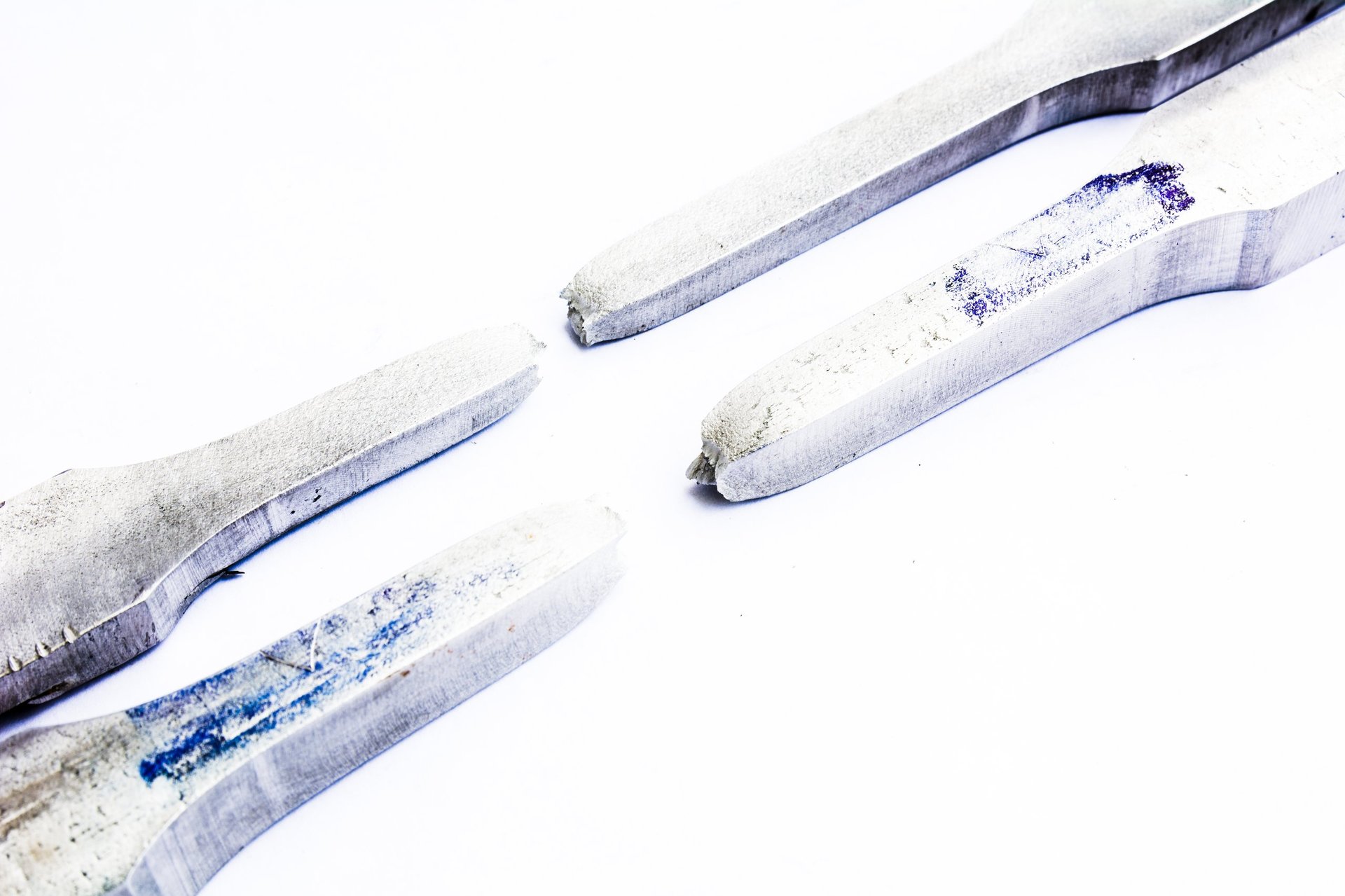
Mechanical evidence is read at the thickness the material was tested at — not in the abstract.
Cross-Check
Five lines that have to agree before the material is released
This pairs each item on the order line with the thing on the inspection document that has to match it. It produces the checks to run — it does not look up, compute or confirm a property value, and no strength or impact figure is offered here.
| Order line | What to state | What it must agree with |
|---|---|---|
| Standard part and edition | The part number the sheet is ordered to, and the edition year, written on the order line. | The certificate cites the same part and edition. A certificate issued to a different edition is not evidence for your order. |
| Nominal thickness | The actual ordered thickness, with units — not a nominal figure carried over from a previous job. | The thickness on the certificate sits inside the band the properties were quoted against, and matches the sheet delivered. |
| Impact quality | The quality letters exactly as required, stated rather than inferred from the base designation. | The impact requirement on the certificate corresponds to the quality letter ordered, with the test record where one is due. |
| Delivery condition | The condition the material is supplied in, stated as its own instruction. | The condition recorded corresponds to what was ordered, and any processing is consistent with it. |
| Test record and heat identity | The specific tests the order is released against, and the identification that ties the sheet to its cast. | The chemical and mechanical records reference the same heat or lot as the material delivered, and stay attached through cutting. |
This checklist sets out what has to be reconciled — it does not verify a certificate and does not substitute for the acceptance decision your own quality procedure makes.
Thickness first
Fix the ordered thickness before any strength figure is discussed. The band it falls in determines which minimums apply, so the thickness is what makes a property statement checkable at all.
Quality letter, stated
Write the impact quality as its own instruction rather than leaving it inside the base designation. It is the part a specification reviewer looks for and the part easiest to lose when a call-out is shortened.
Keep the identity
Traceability survives only if the heat or lot identification travels with the material. Once a sheet is cut free of its bundle marking, no certificate attaches to it any more.
Request a Quote
Send the standard part, the thickness and the quality
An S235JR enquiry is only as precise as the call-out behind it. State the part and edition, the ordered thickness and the impact quality, and anything you leave open comes back as open rather than assumed.
Standard part and edition
The part number the sheet is ordered to, and the edition year, written on the order line.
Nominal thickness
The actual ordered thickness, with units — not a nominal figure carried over from a previous job.
Impact quality
The quality letters exactly as required, stated rather than inferred from the base designation.
Delivery condition
The condition the material is supplied in, stated as its own instruction.
Writing the Order Line
How the call-out reads when it is complete
A finished S235JR order line names the standard and its part, the edition, the grade with its impact quality, the form and the dimensions with the thickness. Each element does a job that the others cannot cover.

What is written on the order line is what the document can be checked against.
The standard: the part number and the edition year. The part selects which delivery requirements apply, and the edition fixes which revision of them — so the certificate can be matched to the order rather than to a general idea of the grade.
The grade and quality: the designation with its impact quality letters intact. This is the line that answers the toughness question, and shortening it to a base grade removes the answer.
The form and thickness: sheet, with the nominal thickness stated in the same unit system as the rest of the order. The thickness is not a secondary dimension here — it selects which strength minimums apply.
The evidence: the inspection document the order is released against, and the identification that has to accompany the material. Agreeing this before manufacture is what makes it available after it.
Purchasing Evidence
What the document can and cannot tell you
The inspection document is evidence that a specific order was made to a specific requirement. It is not a general statement about a grade, and treating it as one is where acceptance decisions go wrong.
It is order-specific
The document evidences the material it was issued for. A certificate from a previous order, or for material from another source, is not evidence for the sheets in front of you — however similar the designation looks.
It records a thickness
The mechanical results on the document relate to the thickness tested. Reading a result across to a different thickness ignores the banding that gives the figure its meaning.
It needs an identity to attach to
None of it is verifiable without the heat or lot identification still travelling with the material. Preserve the marking at goods-in and through cutting — that is the whole chain.
Why one number never survives
A strength figure is only true at a thickness
Structural grades are written with their mechanical requirements expressed across bands of thickness rather than as single values. The reason is physical: as a section gets thicker, the through-thickness behaviour changes and the material cannot be relied on to deliver the same minimum across every size. So the standard states a figure for one band, a lower one for the next, and so on down its range.
This is why an S235 call-out travels badly as a bare number. A figure that is entirely correct for a thin sheet becomes optimistic the moment it is attached to a heavier one, and nothing on the order line will flag it — the designation is the same, and the figure looks authoritative. The check that catches it is not a calculation but a comparison: does the thickness on the certificate fall in the band the figure was quoted for?
For a purchasing or QA reviewer, that reframing is the whole job. You are not being asked to re-derive the design; you are being asked whether the evidence in front of you supports what was ordered, at the thickness that was ordered. Carrying the thickness alongside every strength statement is what makes that question answerable, and it costs one column on the drawing.
Where It Fits
The duties this grade is written into
S235JR serves the lower-strength end of structural work, where the requirement is a defined and verifiable structural quality rather than the highest available strength.
General structural work
Fabricated components in ordinary structural duty, where the section is sized by the design and the material has to meet a stated quality consistently batch to batch.
Welded fabrication
Where parts are joined by welding and the specification needs a defined and documentable material behind the joint — with the procedure and any qualification confirmed separately.
Formed sheet components
Bent and pressed parts where a defined structural grade is called out and the forming route is agreed against the thickness and the design's own requirements.
None of these is a suitability determination for a particular part, and none replaces the design approval behind the call-out. Where a project specification or a governing code sets the requirement, that document governs.
GCC Supply
Plan the destination separately from the designation
The standard part and thickness answer what the sheet is at handover. The consignee, delivery point and document set answer where it is going — and those are planned on their own route.






A country link is a destination-planning page. None of them implies a local office, warehouse or stock position, and none of them changes the specification.
Commercial Basis
What is confirmed against your enquiry, not published in advance
An order for this designation turns on several inputs at once, and the definition of the call-out is the one that most often decides the answer.
Call-out completeness
Whether the part, edition, thickness and impact quality are all stated — an incomplete call-out is confirmed back as a question rather than filled in by assumption.
Availability by thickness
Whether the size you need is obtainable, confirmed per enquiry against the actual requirement rather than inferred from a stock list.
Origin and mill
The producing source is stated against the actual enquiry, not asserted as a standing position.
Documentation
The inspection document and any additional test evidence are confirmed against the standard part and edition you cite.
Pricing is on request. No rate, lead time or stock position is published before the standard part and thickness are confirmed.
Related Routes
Where the neighbouring technical decisions are answered
Open one only when it settles the question in front of you — a neighbouring grade or form is not evidence that two designations are interchangeable.
Why This Grade
What a defined structural quality buys — and what it asks of you
Choosing a designation inside a standard is a trade between specification certainty and the discipline of documenting it. These are the honest terms.
A requirement that can be cited
Because the grade sits inside a published delivery condition, the requirement can be stated by reference rather than written out — and both parties are reading the same document.
Evidence that can be reconciled
An established designation comes with an established evidence route, so the certificate can be checked against the order line item by item rather than taken on trust.
Discipline in the call-out
The same specificity is the cost. A shortened call-out loses the part, the edition or the quality, and the order can no longer be reconciled to what was actually required.
How the Order Moves
From a design call-out to a reconciled delivery
Each step fixes something the next one depends on. The thickness and the quality are settled before the quotation, not discovered at goods-in.
- 01
Complete the call-out
State the standard part, the edition, the grade with its impact quality, and the nominal thickness the design actually uses.
- 02
Confirm the scope
Check the part covers sheet at that thickness, and that no project specification imposes a stricter or different requirement.
- 03
Agree the evidence
Settle the inspection document the order is released against, and the identification that must travel with the material.
- 04
Reconcile on arrival
Cross-check the document against the order line — part, edition, thickness band, quality and heat identity — before release to production.
Availability, origin and documentation are confirmed against the live enquiry — never inferred from a checklist outcome or a published list.
Request a QuoteCommon Questions
Questions an S235JR review usually raises
Can I quote a single yield strength for S235JR?
Not as a portable figure, and not without its thickness. The minimum the designation carries is set against thickness bands, so the applicable value depends on how thick the sheet actually is. A number lifted from a thin sample and applied to a heavier sheet overstates what that sheet is verified to. Whenever a strength figure is written down, write the thickness band it came from alongside it — that is what makes it checkable against the mill certificate.
What exactly does the JR suffix tell me?
It identifies the impact quality the material is verified to, which is a toughness requirement expressed through an impact test at a defined temperature. It is the part of the designation that answers a toughness question rather than a strength one. JR is a specific quality; J0 and J2 are different ones, and treating any of them as interchangeable with another is the kind of substitution that passes on paper and fails a specification review.
Is S235JR equivalent to SS400?
They belong to different standard systems and are not interchangeable by declaration. Each carries its own requirement set, its own property basis and its own test provisions, and a documented equivalence would have to be established against the specific specification governing your project — not asserted from a grade name. If a substitution is being considered, treat it as a technical question for whoever owns the design, and let the documentation show the basis rather than the name.
Which document should I be checking?
The inspection document that accompanies the material, read against the order line you placed. The useful checks are that it cites the same standard part and edition, that the thickness it records falls inside the band your properties were quoted against, and that its heat or lot identification matches what was delivered. The document is evidence for a specific order — it is not a general statement about the grade, and a certificate for a different order is not evidence for yours.
Writing a quantity schedule or reconciling a consignment in tonnes? The sheet weight chart and the sheet dimensions reference cover the mass and dimensional basis that sit alongside the grade requirement.
Send the complete call-out, not the shorthand
Give the standard part and edition, the grade with its impact quality, and the thickness the sheet will actually be. The quotation comes back against a definition that can be reconciled line by line.
sales@noordeirasteel.ae · +971 56 398 0860 · Business Bay, Dubai