
B2B Steel Distribution
Steel Billet Supplier for Long-Product and Forging Mills
Source steel billet by grade, section, size and standard. Build a complete billet specification and hand it to Noor Deira Steel for quotation.
Free, no-obligation specification review
Information current as of
Product Range
Billet types matched to the mill they feed
Select the billet type that matches the downstream product it will be rolled or forged into. Each family is a selection path, not a claim of standing stock — availability is confirmed against your specification.
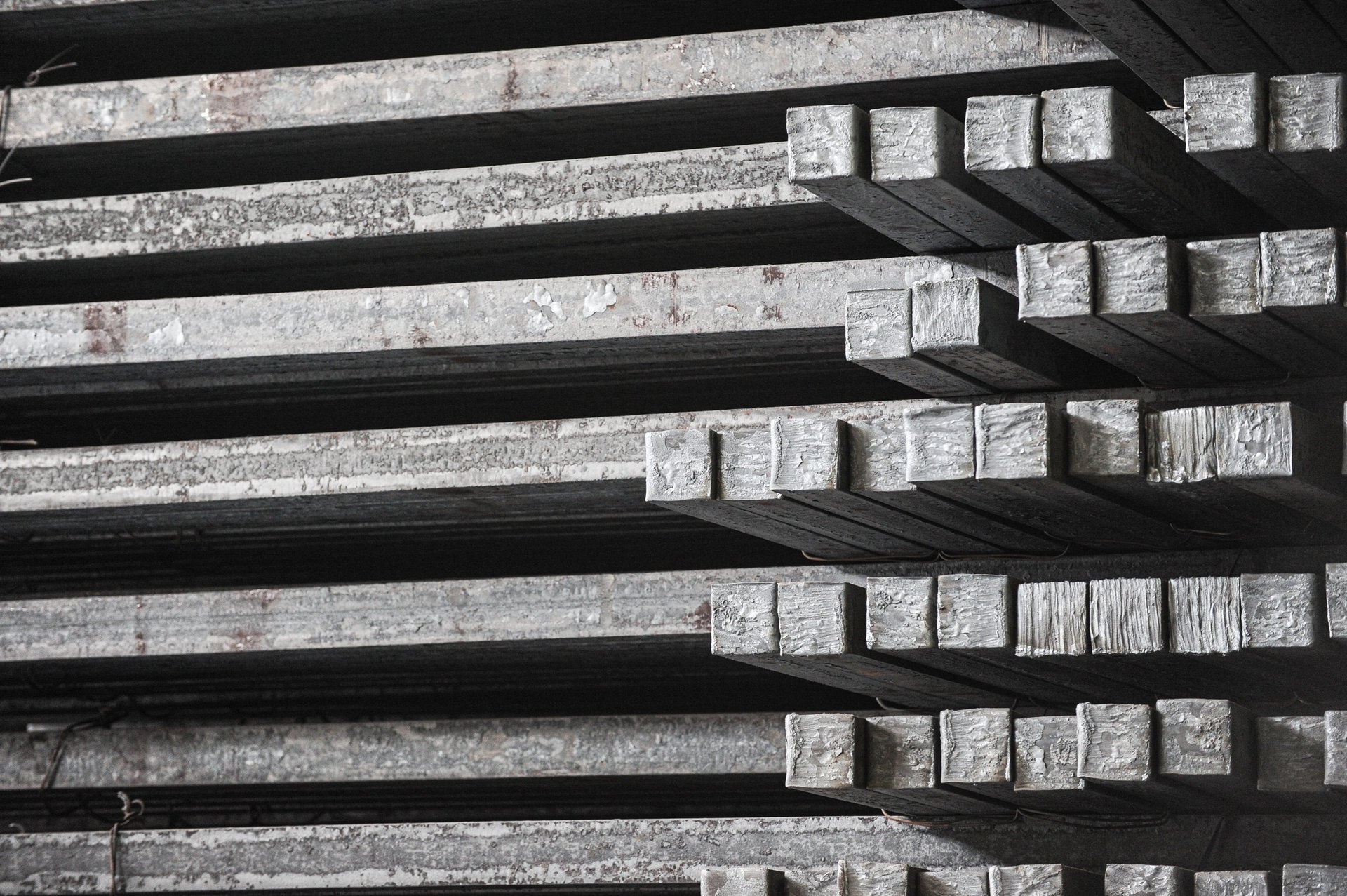
Billets matched to the product they become
Square, round, rebar-grade and rolling-mill billets — each a distinct feedstock path.
Continuous-Cast Billet
Cast directly from molten steel into a semi-finished square or round section.
Square Billet
Square cross-section billet — the standard feedstock for bar and section rolling.
Rolling-Mill Billet
Billet destined for rebar, wire-rod and section rolling at the finishing mill.
Rebar-Grade Billet
Billet with chemistry tuned for high-yield reinforcing bar production.
Round Steel Billet
Round cross-section billet for seamless tube and forging feedstock.
Cut-to-Length Billet
Billet cut to ordered length, with end and surface conformity checked.
Explore steel billet by type
Steel Billet Types
Continuous-cast, square, rolling-mill, rebar-grade and round billet compared.
Learn moreContinuous Casting
Semi-finished billet cast directly from molten steel.
Learn moreSquare Billet
Square cross-section feedstock for bar and section rolling.
Learn moreRolling Mill Billet
Billet for rebar, wire-rod and section rolling.
Learn moreRebar-Grade Billet
Chemistry tuned for high-yield reinforcing bar.
Learn moreRound Steel Billet
Round section for tube and forging feedstock.
Learn moreMaterials & Composition
Billet chemistry drives the product it becomes
Carbon, low-carbon and high-carbon billets sit on different thermodynamic and mechanical paths. Confirm the chemistry against the final product so the billet is selected once, correctly.
Carbon Steel Billet
General-purpose billet for rebar and section production.
View materialLow-Carbon Billet
Soft, weldable billet for wire-rod and drawing.
View materialHigh-Carbon Billet
Harder billet for springs, wire and wear stock.
View materialRebar-Grade
Controlled chemistry for high-yield reinforcing bar.
View materialAlloy / Special
Alloyed billet for forging and engineering stock.
View materialCarbon content sets the path
Low-carbon billets roll into wire-rod and drawing stock; rebar-grade billets carry controlled chemistry for high-yield reinforcing bar; high-carbon billets serve spring, wire and wear-applications. The Mill Test Certificate states the elements and the casting route, so the billet is verified against the standard before it ships.
Specification Builder
Build a confirmation-ready billet specification
Select the section, material, grade, standard and delivery terms. The builder compiles a summary you can copy, and hands the whole specification to our commercial department for quotation.
Your specification
A printable summary compiled from your selections.
- Cross-section
- —
- Material
- —
- Grade
- —
- Standard
- —
- Length
- —
- Unit weight
- —
- Quantity
- —
- Surface
- —
- Documents
- —
- Application
- —
- Destination
- —
- Incoterm
- —
- Delivery date
- —
Unit weight is used as stated; the commercial department re-verifies it against the governing standard and the MTC before quoting.
Technical Data
Grades, standards, sizes and tolerances
Billets are specified by grade, governing standard and cross-section. Reference the tables below, then confirm your exact requirement against the mill before ordering.
Grade & standard reference
| Standard | Grades | Remark |
|---|---|---|
| GOST 380 | 3SP / 3PS | Structural carbon steel |
| GOST 380-2005 | 5SP / 5PS | High-yield reinforcing-grade carbon steel |
| GB/T 700 | Q235B | Structural carbon steel |
| GB/T 700 | Q275 | Higher-strength structural carbon steel |
| JIS G3101 | SS400 | General structural steel |
| Other | On request | Project-specific chemistry confirmed against mill |
Common billet sections & nominal mass
| Cross-section | Nominal mass | Typical use |
|---|---|---|
| 100 × 100 mm | ≈ 78.5 kg/m | Small-section and wire-rod feedstock |
| 130 × 130 mm | ≈ 132.7 kg/m | Bar mill and rebar feedstock |
| 150 × 150 mm | ≈ 176.6 kg/m | Rebar and section rolling |
| 160 × 160 mm | ≈ 201.0 kg/m | Heavy section and bar production |
| 200 × 200 mm | ≈ 314.0 kg/m | Large-section and forging feedstock |
Nominal mass is calculated at 0.00785 kg/mm²·m and shown for reference; the MTC confirms the cast section and the actual length and weight delivered per consignment. Tolerances follow the governing standard for section, length and straightness.
Chemistry
Elemental composition traceable to heat & cast number
Section
Cross-section & length verified against the standard
Mass
Billet weight reconciled to the stated section
Casting route
Continuous-cast route stated in the MTC
Technical resources
Quality, Testing & Documentation
Every billet carries a traceable paper trail
The billet consignment is released with the Mill Test Certificate and supporting documents that tie it back to the heat and cast of origin — the evidence industrial buyers require.
Mill Test Certificate (MTC)
Chemical composition, cast route and mechanical properties per heat.
Heat & cast traceability
Billet traceable to the heat number and casting order of origin.
Surface & end conformity
End and surface condition verified against the downstream mill's requirement.
Weighing & tagging
Billets bundled, weighed and tagged by heat for hand-over.
Inspection
Milestone inspection and documentation agreed at order stage.
Shipping documents
Packing, commercial and destination documents closed out per Incoterm.
Procurement Insight
Why unit weight scales with the square of the section
A single verified calculation that anchors billet selection, so an industrial buyer can sanity-check any quoted section before committing.
The relationship
For a square billet of side a (mm), the mass per metre is m = 0.00785 × a² kg/m. Because the section is squared, a small increase in side yields a large increase in mass: a 130 mm billet carries ≈1.69× the mass per metre of a 100 mm billet, even though the side is only 30% larger.
100 mm square
≈ 78.5 kg/m
130 mm square
≈ 132.7 kg/m
150 mm square
≈ 176.6 kg/m
Source: steel density 7.85 g/cm³, standard mass-per-metre formula for square billet. The commercial department re-verifies the governing standard and the MTC before quoting. Last reviewed 30 August 2026.
The buyer takeaway
Specify the section — don't let an ambiguous "one billet" drive a mis-quote.
Naming the cross-section and length (not just the tonnage) pins down the unit weight and keeps the quotation accurate against the MTC. It is the single most common clarification our commercial department asks.
Applications & Industries
The billet becomes rebar, wire-rod, bar and forgings
Each application sets its own chemistry, section and documentation requirements. Share the target product and we align the billet to it.
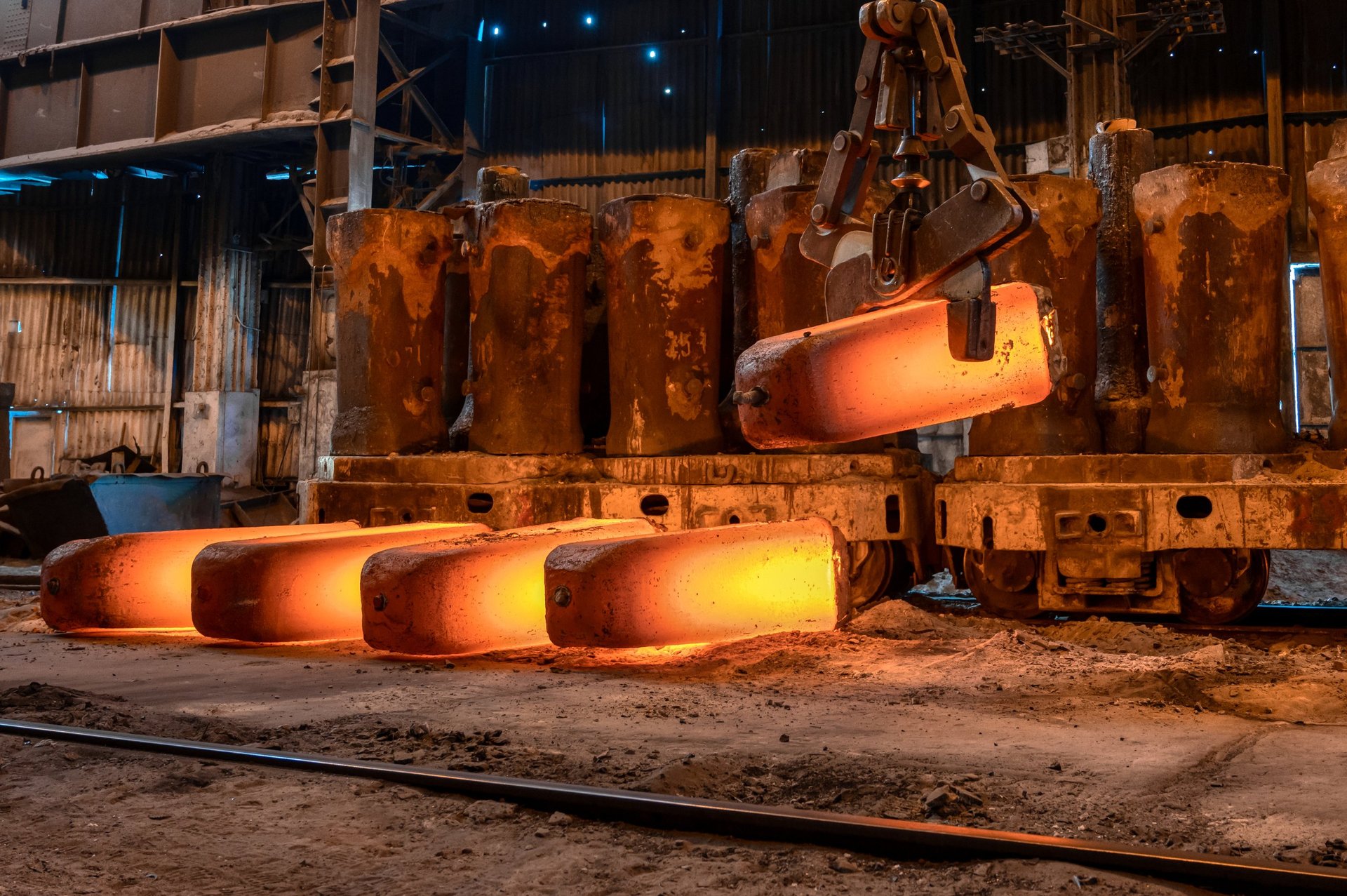
From billet to bar, rod and forging
Each downstream route earns a distinct billet specification.
Rebar Rolling
Concern: Yield-appropriate chemistry and weldability.
Which rebar grade must the mill roll?
Wire-Rod Mills
Concern: Low-carbon chemistry for drawing and forming.
What final wire-rod grade and diameter are targeted?
Bar Mills
Concern: Section, length and surface conformity.
Which bar grade and size schedule must the billet serve?
Rolling Mills
Concern: Reheat, pass design and yield.
What finished section and tolerance govern the billet?
Forging Plants
Concern: Chemistry, internal soundness and heat treatment.
Which forged part and material spec apply?
Construction-Steel Producers
Concern: Rebar-grade consistency and documentation.
Which reinforcing standard must the billet meet?
GCC Supply
Billet supply across the Gulf Cooperation Council
Noor Deira Steel coordinates billet supply to six GCC markets, aligning specification and documentation to each destination's downstream production requirement.

United Arab Emirates
Rolling-mill feedstock with Dubai-based coordination.
We align billet grade, section and chemistry against the downstream mill's product, then plan domestic delivery from our Dubai base to rebar, wire-rod or section mills.
Explore United Arab Emirates
Saudi Arabia
EPC and long-product mill feedstock quantities.
For Saudi EPC and mill supply we align material certificates and billet schedules to project hold points, and plan shipment of project quantities.
Explore Saudi Arabia
Qatar
Mill feedstock and technical approval.
Qatar rolling and reinforcement supply prioritises technical submittal approval — we coordinate billet specification and the document set first.
Explore Qatar
Oman
Port-oriented billet for downstream production.
Oman projects are typically supplied through port destinations, harmonising billet specification with the downstream mill's requirement.
Explore Oman
Kuwait
Mill feedstock procurement and production hand-off.
Kuwait mill supply links billet selection to the rolled product, with shipment agreed against destination and delivery window.
Explore Kuwait
Bahrain
Industrial billet and re-export coordination.
Bahrain industrial supply depends on accurate project documentation — we coordinate billet and documents to the delivery requirement.
Explore BahrainTrust & Commercial Support
A commercial partner, not a one-time seller
Billet supply is rarely a single transaction — it is a recurring feedstock relationship. We structure the support industrial buyers depend on, order after order.
Specification clarity
We reconcile grade, standard and section to the mill's product before quoting.
Transparent quotation
Availability and delivery terms stated on request, with no hidden mark-ups.
Documentation
MTC, heat traceability and shipping documents closed out per consignment.
GCC coordination
Deliveries planned to destination with the Incoterm agreed up front.
Why buyers choose Noor Deira Steel
The concern
Wrong grade costs the whole heat
Our capability
We confirm chemistry, cast route and MTC against the target product first.
The outcome
One correct billet selection — no re-roll or rejection at the mill.
The concern
Ambiguous section mis-quotes the tonnage
Our capability
We pin the cross-section and unit weight before quoting.
The outcome
An accurate, verification-ready quotation against the standard.
The concern
Documentation gaps stall mill hand-over
Our capability
We close MTC, traceability and shipping documents per consignment.
The outcome
Billet released to production without paperwork hold-ups.
Buying Process
From enquiry to delivered billet
A predictable eight-stage journey. Each stage has a clear owner and output, so you always know where the order stands.
- 01
Requirement
Billet section, grade, size, length and quantity scope.
- 02
Specification review
Grade and chemistry reconciled against the governing standard.
- 03
Quotation
Availability, pricing on request and delivery terms.
- 04
Order
Purchase order confirmed against the quotation.
- 05
Quality & documents
Casting route, heat traceability and MTC verified.
- 06
Packing
Billets bundled, tagged and weighed by heat.
- 07
Shipping
Coordinated to the destination and Incoterm.
- 08
Delivery & after-sales
Handed to the mill with closed-out documents.
Frequently Asked Questions
Steel billet, answered
The questions procurement teams and mill buyers ask most, answered plainly.
What steel billet can Noor Deira Steel supply?
Continuous-cast, square, rolling-mill, rebar-grade and round billet, plus cut-to-length orders. Availability is confirmed against the downstream mill's specification, not from a standing catalogue.
How do I choose the right billet grade?
Match the grade to the finished product: rebar-grade (3SP/5SP) for high-yield reinforcing bar, Q235B for structural sections and low-carbon grades for wire-rod. Confirm the governing standard and grade together so the order is unambiguous.
What is the difference between billet section and unit weight?
The section defines the cross-section (for example 150 × 150 mm); unit weight is the mass per metre calculated from that section (≈ 0.00785 × section area mm²). Both are reconciled against the governing standard and confirmed against the MTC.
Can billet be supplied with a Mill Test Certificate?
Yes — a Mill Test Certificate is issued per consignment, reporting chemical composition, casting route, and mechanical properties traceable to the heat and cast number of origin.
What information do I need to request a billet quotation?
Cross-section, length, unit weight, grade, standard, quantity, required documents, destination and Incoterm. The Specification Builder collects these fields and hands them to our commercial department.
Does Noor Deira Steel deliver billet across the GCC?
Yes — Noor Deira Steel coordinates billet supply to the UAE, Saudi Arabia, Qatar, Oman, Kuwait and Bahrain, with Incoterms, bundling and destination documents agreed per order. Lead time is confirmed at quotation stage.
What is the casting route and why does it matter?
The casting route (continuous casting) determines the billet's internal soundness and surface quality. It is stated in the MTC and reconciled against the downstream mill's requirement for surface and internal conformity.
Request a Quote
Request your steel billet quotation
Tell us what you need and our commercial department will respond with availability and terms.
Email
sales@noordeirasteel.ae
WhatsApp / Mobile
+971 56 398 0860
Address
Office 3303, Churchill Executive Tower, Business Bay, Dubai, UAE
Working hours
Mon–Sat: 8.00 AM – 6.00 PM · Sun: Closed
"We would rather spend two minutes clarifying a billet specification than quote the wrong section twice."