
Steel Billet — Saudi Arabia
Steel Billet Supplier in Saudi Arabia
For a Saudi Arabia steel billet enquiry, pair the full billet specification with the importer's current ZATCA/Fasah clearance inputs, including commercial invoice, bill of lading and origin information as applicable, product-specific permits/registrations where required, HS classification verification, destination, Incoterm and named place. Do not invent tariff or conformity requirements without current product classification.
No price, stock, lead time or clearance outcome is claimed on this page
Information current as of
Destination requirement map
Saudi Arabia — procurement decision tracks
Saudi Arabia is the primary decision context. Keep the billet technical line, the customs classification, the product-condition check, the delivery location and the commercial term as separate tracks, so that none of them is assumed from another.
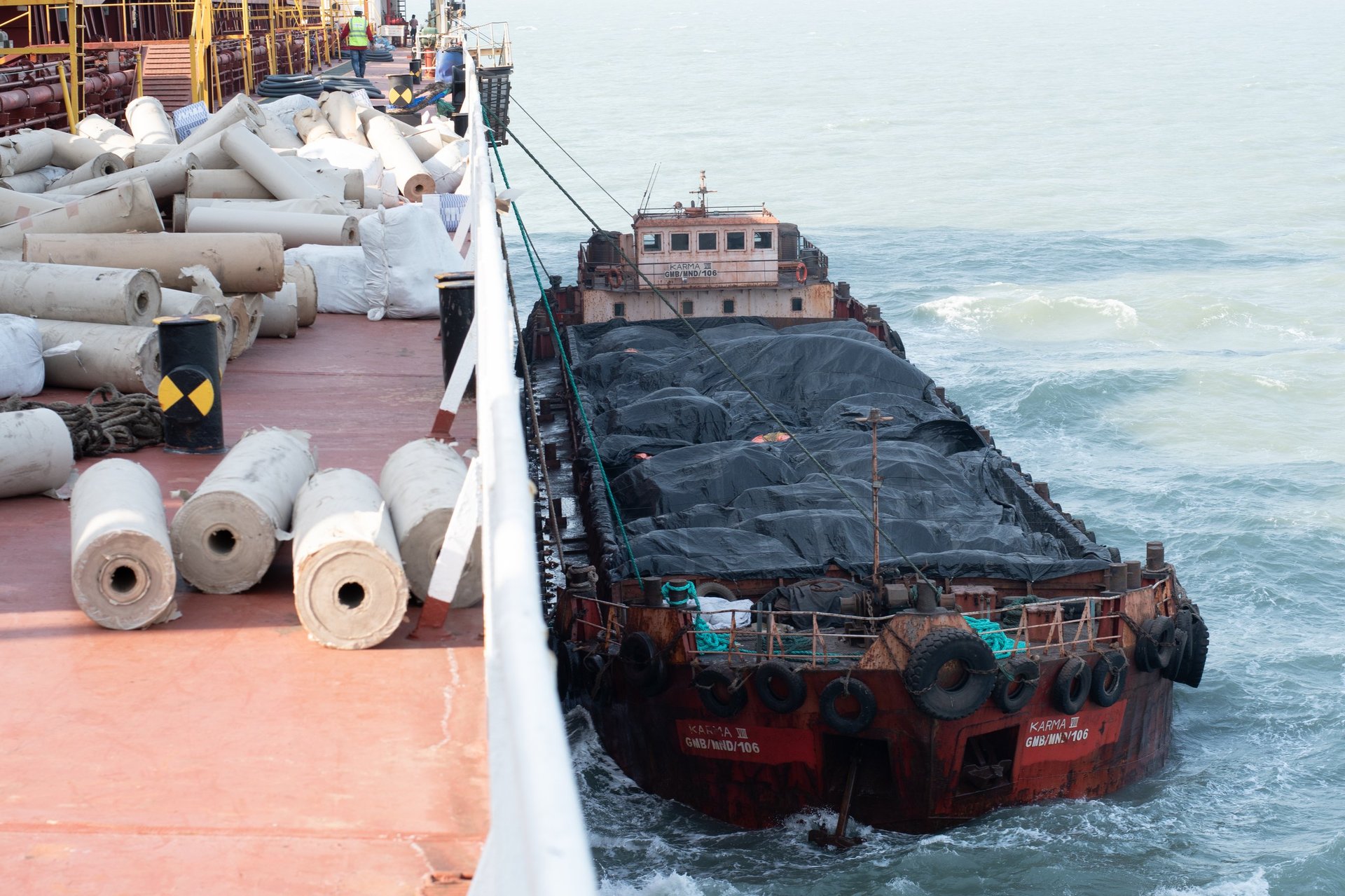
 Saudi Arabia — current marketDestination-driven RFQ
Billet technical line
Grade with the standard that defines it, section and length with the tolerance basis, and quantity with its unit basis. This is the description that later has to agree with the invoice and the clearance submission.
HS classification
A classification to be confirmed against the actual goods by the importer or their broker. It is never inferred from the product name, and the tariff position follows from it.
Product-specific conditions
ZATCA import instructions require product-dependent documents and conditions to be checked. Never assume billet carries no additional condition until the current tariff and product checks are completed.
Destination port or place
Name the port, city or inland delivery position. The place decides handling, onward transport and where the trade term attaches its delivery obligation.
Incoterm and named place
The rule and the named place together, selected with the commercial parties. A separate field from classification and from the clearance routine.
Selection tool
Saudi Billet Fasah Readiness Builder
Build a destination-first enquiry. Enter the minimum valid set below — the builder produces no result until the required fields carry values, and it never derives a tariff, a permit requirement or a clearance outcome from the product name.
Required fields are marked *. Revise any input without losing your other entries. The builder runs entirely in your browser — nothing is transmitted or stored until you choose to send it.
Readiness result
This Saudi billet enquiry cannot be reviewed as it stands.
One or more items below must be closed before a quotation or clearance plan is meaningful. Your other entries are kept.
Still needed: Billet specification and grade, Quantity and value basis, Importer / consignee data, HS classification status, Commercial invoice, Bill of lading, Product-specific permit / registration check, Destination port / place, Incoterm and named place
Open items & assumptions
- Importer or consignee data is not stated. The import declaration and the bill of lading are raised in the importer's name, so the enquiry cannot be turned into a clearance-ready set without it.
- Origin is not stated. Where origin is a condition rather than a formality, its absence will surface as a document gap close to the pre-arrival filing.
Pre-arrival document checklist
Assembled from the fields you supplied, with the ZATCA-listed documents as the anchor. Each line originates on a commercial document, which is what lets the clearance submission, the invoice and the technical line agree before arrival.
- Importer or consignee identity as it will appear on the declaration and the bill of lading
- Consignment description matching the technical line on the RFQ
- Commercial invoice with the value basis and goods description stated
- Bill of lading (or the transport document matching the route)
- Origin information, with the supporting document
- Quantity with its unit basis — tonnes, pieces or bundles
- HS classification to be confirmed against the actual goods
- Packaging list reconciling bundle and marking against the declaration
- Named port or place of delivery as it appears in the trade term
Filing context: ZATCA instructs importers to complete the Fasah clearance procedures before the goods arrive. The pre-arrival window is why these documents are assembled at the enquiry stage — confirm the current filing requirements with your broker, since the timing rule is set by the authority, not by this page.
Who holds each obligation
Supplier documents evidence the goods. The classification, the product-condition check and the Fasah submission sit with the importer or their broker. Incoterms allocate delivery cost and risk between the two — they do not move the clearance obligation.
| Document or duty | Held by |
|---|---|
| Mill test certificate for the heat | Supplier |
| Dimensional and condition record | Supplier |
| Packing list | Supplier |
| Commercial invoice and its value basis | Supplier / buyer |
| Bill of lading | Carrier / supplier |
| Certificate of origin | Supplier / chamber |
| HS classification and product-condition check | Importer or broker |
| Fasah clearance submission and duty settlement | Importer or broker |
Copyable Saudi delivery brief
Product / entity: Steel Billet — Saudi Arabia
Billet specification and grade: to confirm on RFQ
Section / length / tolerance basis: to confirm on RFQ (state section and cut length with tolerance)
Quantity / unit basis: to confirm on RFQ
Importer / consignee: to confirm on RFQ
Origin: quotation-dependent unless verified
HS classification status: to confirm on RFQ
Commercial invoice: to confirm on RFQ
Bill of lading: to confirm on RFQ
Certificate of origin status: to confirm on RFQ
Product-specific permit / registration: to confirm on RFQ
Destination port / place: to confirm on RFQ
Incoterm 2020 rule and named place: to confirm on RFQ
Open verification notes: HS classification, tariff, permit and clearance outcome are importer/broker verification fields. Payment terms are stated separately from the Incoterm.
This brief states requirements only. No stock position, price, lead time or availability is asserted, and no clearance outcome is implied.
Send it to the billet team
The brief above is attached to your enquiry automatically. The commercial department reviews a complete enquiry — no field is inferred on your behalf, and no clearance figure is supplied by this page.
Product and specification fit
Match the billet to the Saudi requirement
Compare the related billet options against the selection criteria, with the trade-off and the boundary that prevents an automatic substitution. Every alternative carries the technical limit that stops it being read as interchangeable.
Billet types
Continuous-cast square billet, rolling-mill billet, rebar-grade billet and the wider type range each carry their own downstream relationship. The type is a supply-form decision, not a grade.
Boundary: A type label does not set the grade. Confirm the chemistry basis separately.
steel billet supplierGrades and standards
3SP, 5SP and Q235B sit against different defining standards. A designation carried over from another mill's practice is conditional engineering comparison only.
Boundary: Never treat 3SP, 5SP, Q235B, S235 or an ASTM grade as synonyms.
steel billet gradesSection and length
Square section and cut length with an explicit tolerance basis. Section drives the downstream rolling pass, and length drives handling, bundle weight and stowage.
Boundary: Nominal section and actual measured section are different statements.
steel billet specificationsQuantity and mass basis
Pieces, bundles or tonnes — with the basis stated. Billet mass follows from section, length and density, so a quantity in tonnes depends on which section it describes.
Boundary: An enquiry that gives tonnage without section cannot be priced against a mill programme.
steel billet priceGrade designations are not synonyms. 3SP, 5SP, Q235B, S235 and the ASTM billet grades belong to different defining standards, and any equivalence between them is a conditional engineering comparison only. If a designation has been carried over from a drawing, a previous purchase or another mill's practice, the governing standard and its edition have to be named on the enquiry before it is quoted.
Documents and verification
Evidence gates before the Saudi enquiry
Separate product evidence, inspection records, commercial documents and destination-dependent requirements. Each row names what the buyer must specify, what to request, who accepts it, and the risk that follows if it is missing.

No certificate is implied by this page
Nothing here states that a particular certificate, inspection, permit or approval exists for any consignment. Each row is a requirement to be requested and evidenced per order. Where a row shows a supplier as the holder, it means the document is ordinarily issued on the supply side — not that it has been issued for your enquiry.
| Requirement | Buyer must specify | Supplier evidence to request | Acceptance owner | Risk if missing |
|---|---|---|---|---|
| Heat analysis / MTC | Grade, standard and edition, with the heat identity you will accept | Mill test certificate for the heat, traceable to the shipped lot | Buyer / project | The declared description and the certificate describe different material. |
| Dimensional record | Section, length and the tolerance basis for each | Measured section and length record against the stated basis | Buyer / project | The receiving mill cannot set its first pass with confidence. |
| Surface condition | Whether surface defects are controlled, and to what limit | Condition statement with the inspection basis named | Buyer / project | A condition requirement with no inspection basis cannot be accepted or rejected. |
| Traceability | Whether heat identity must follow to the bundle and marking | Heat marking convention and the record linking heat to bundle | Buyer / supplier | Reconciliation on arrival has nothing to reconcile against. |
| Inspection and testing | Whether inspection is independent, and at what scope and stage | Named inspection body, scope and stage, agreed before release | Buyer, with the named body | Inspection performed later than agreed, at a stage that cannot change the outcome. |
| Commercial invoice | Value basis and the exact goods description to be declared | Invoice aligned with the agreed Incoterm and unit basis | Commercial / buyer | The declared description and the invoice do not agree at clearance. |
| Bill of lading | The consignee details and the shipment data the carrier will record | Transport document matching the agreed rule and named place | Commercial / carrier | The shipment cannot be reconciled against the declaration on arrival. |
| Certificate of origin | Whether the destination requires a chamber-issued or self-declared form | Origin document in the required form, issuable before shipment | Buyer / importer | Origin issued in a form the destination does not accept. |
| Packing list | The bundle and marking convention, and the document matching the rule | Packing list reconciling bundle and marking against the declaration | Commercial | The consignment cannot be reconciled against the declaration on arrival. |
Logistics and commercial handoff
Quotation-dependent inputs for the Saudi route
Quantity, section and length, packing, origin, named port or place, Incoterm, requested window, payment terms and the document set all change the commercial offer. Price, stock, lead time and routing stay quotation-dependent unless verified current data is present.
Packing and bundle handling
Billet is dense and long-span. Bundle arrangement, lifting points and load-out sequence affect both the freight figure and the loading operation, so they are stated rather than assumed.
Destination port or place
Name the port, terminal or inland position. The named place fixes where the seller's delivery obligation ends and where the buyer takes over handling and onward movement.
Incoterm and named place
The rule and the place together decide the cost split and the point at which risk passes. Under CFR and CIF the seller carries freight that FOB excludes.

| Quotation input | Evidence / limitation | Buyer decision | RFQ field / next action |
|---|---|---|---|
| Quantity and unit | Tonnes, pieces or bundles, with the basis stated | Buyer states the unit basis | Quantity field |
| Section and length | Section drives the rolling pass; length drives handling and stowage | Buyer names section and length with tolerance | Technical line field |
| Packing and bundle arrangement | Bundle weight and lifting points change the handling operation | Buyer confirms bundle weight and marking | Packing field |
| Origin | Quotation-dependent unless a verified record is supplied | Buyer confirms whether origin is a condition | Origin field |
| Named port or place | Port routing and vessel schedule are quotation-dependent | Buyer names the port, terminal or inland place | Destination field |
| Incoterm 2020 rule | Selected with the commercial parties; the place is part of the term | Buyer chooses the rule and named place | Incoterm field |
| Requested shipment window | Lead time is quotation-dependent and never asserted here | Buyer states the window required | Date field |
| Payment and documentary terms | Incoterms allocate delivery cost and risk, not payment | Buyer states instrument and timing separately | Payment field |
| Inspection and document scope | Destination and importer requirements decide the paper set | Buyer lists each document and its issuer | Document matrix |
Need packing, named place, Incoterm, export-document and shipment-planning fields beyond the Saudi enquiry? Continue to the steel billet exporter once the billet technical line is fixed.
Destination use cases
Saudi downstream routes for billet
Connect the current billet decision to a related application page only where that downstream context actually matches, and state the boundary that keeps the comparison honest.
Bar production
The finished bar specification, not a use label, sets what the feedstock has to satisfy. Name the product standard and edition the finished bar will be declared and tested against.
A bar route and a rebar route impose different feedstock expectations from the same billet family.
steel billet for bar productionBar production route
Rebar production
Where a reinforcement programme sets the acceptance basis, and the certificate follows a product standard rather than the buyer's drawing.
Reinforcement acceptance and general engineering acceptance are different controls.
steel billet for rebar productionRebar production route
Export planning
Continue into export-commercial planning: trade-term responsibilities, document checklists and the copyable export enquiry brief.
An export route explains how material travels, not what it has to be.
steel billet exporterExport planning route
Next buyer task
Where the Saudi billet decision continues
Grouped by the task that follows this enquiry. The Saudi Arabia page stays primary — these are bounded alternatives and support resources, not duplicated country copy.
Billet scope
Expert insight
What the Saudi buyer must align with the supplier before Fasah
A source-backed decision note for the Saudi billet buyer, built from the ZATCA import-instruction scope and bounded by what that source does not establish.
What must a Saudi billet buyer align with the supplier before Fasah pre-arrival clearance?
A Saudi import submission is not written from scratch at the port. It is assembled from facts that already exist on the commercial papers — what the goods are, what they are worth, where they came from and how much of it there is. Where those facts were settled loosely on the enquiry, the submission inherits the looseness.
Method. The buyer decision is compared against the ZATCA import-instruction scope. What the authority source establishes is kept separate from what is order-specific, and the fields that carry across the RFQ, the trade documents and the clearance submission are named explicitly.
What the source establishes. That the import documents are a defined set anchored on the commercial invoice, the bill of lading and origin information, and that product-dependent conditions exist and must be checked against the actual goods — with clearance procedures completed before arrival.
What it does not establish. Any tariff rate, permit outcome, conformity requirement or clearance result for steel billet. Those follow from the current product classification and the authority's current rules, not from the words used on this page.
The practical consequence is that a small set of RFQ fields does the heavy lifting. The goods description, because it is what the invoice and the submission repeat. The value and its basis, because valuation follows the invoice. The origin with its supporting document. The quantity with its stated unit. And the named port or place, because that is where the trade term attaches its obligations and where the consignment is released.
The product-dependent part is the one buyers most often skip. The import instructions make the document set depend on what is actually being imported, so the question is not whether billet is commonly traded but whether any condition attaches to your classified goods. That check, together with the classification itself, belongs to your importer or broker. Keeping the two apart is the whole point: the buyer supplies the commercial facts, the broker supplies the classification and the condition position.
Buyer implication. Make the technical description and trade documents consistent, confirm classification and any product conditions, and collect the required shipment documents before the pre-arrival filing window.
Saudi Zakat, Tax and Customs Authority — Import Instructions
- Authority
- ZATCA — Zakat, Tax and Customs Authority, Kingdom of Saudi Arabia
- Reference
- zatca.gov.sa — import instructions
- Scope
- ZATCA lists commercial invoice, bill of lading and origin information plus product-dependent documents, and instructs importers to complete Fasah clearance procedures before arrival. Exact tariff/conditions require current product lookup.
- Limitation
- The source does not prove Noor Deira Steel inventory, price, lead time, origin, certification or market coverage. Those remain quotation- and evidence-dependent.
- Information date
- 2026-10-03
Evidence-led buyer advantages
What a complete Saudi billet enquiry changes
Each one is a real failure mode from a Saudi billet purchase, mapped to the control that closes it and the procurement outcome that follows.
The quote and the clearance documents describe different goods
Evidence: The planner reads the same technical fields the invoice and the declaration are built from — grade with its standard, section, length, quantity with its unit basis — so the two documents start from one description.
Outcome: A consignment that is described once and not re-described at clearance.
A tariff position assumed from the product name
Evidence: HS classification is a separate verification field, required before any commercial conclusion. The builder never derives a tariff from the words steel billet.
Outcome: Import cost expectations that are verified rather than guessed.
A product-specific condition discovered after arrival
Evidence: Product-dependent documents and conditions are captured as an explicit check, because ZATCA import instructions require them to be verified against the actual goods rather than assumed away.
Outcome: Permit and condition questions raised before the pre-arrival filing window.
Origin treated as a formality rather than a condition
Evidence: Origin is captured as a buyer decision with its own field and its own evidence requirement, not folded into the price.
Outcome: Origin documentation requested in the form the destination actually accepts.
The named place left vague inside the trade term
Evidence: The rule and the named port or place are captured together, because the same three-letter term attaches to different obligations depending on the place named.
Outcome: Offers that can be compared on one obligation instead of three.
From enquiry to delivery
Route-aware workflow for the Saudi order
Seven stages across the import route. Each states the buyer input it needs, the output it produces, the risk it closes and the next action — no timing is promised at any stage.
- Stage 01
Enquiry
- Buyer input
- Grade with its standard, section and length with the tolerance basis, quantity with its unit basis.
- Output
- A technical line item complete enough to be quoted against.
- Risk it closes
- Suppliers quoting different materials under a designation that looked specific.
- Next action
- Name the standard and the section before anything else.
- Stage 02
Technical review
- Buyer input
- Chemistry basis, dimensional basis, condition requirements and any downstream manufacturing constraint.
- Output
- A completeness decision on the technical line.
- Risk it closes
- A grade carried over from another mill's practice and treated as a synonym.
- Next action
- Confirm the defining standard and edition on the RFQ.
- Stage 03
Evidence and inspection
- Buyer input
- The certificates, inspections and records the destination and the contract require, with their issuers.
- Output
- A named document set with each issuer and each stage identified.
- Risk it closes
- A certificate assumed rather than requested, discovered at port.
- Next action
- List each document against the party who issues it.
- Stage 04
Classification and condition check
- Buyer input
- HS classification status and the product-specific permit or registration question for the actual goods.
- Output
- A classification and condition position that is verified rather than assumed.
- Risk it closes
- A product condition assumed absent because the material is commonly traded.
- Next action
- Verify classification and any product condition against the current ZATCA source with your broker.
- Stage 05
Pre-arrival document set
- Buyer input
- Commercial invoice, bill of lading, origin information and the packing list, assembled and aligned.
- Output
- A pre-arrival document set that agrees with the technical line and the invoice.
- Risk it closes
- Trade documents and the technical description that do not read the same.
- Next action
- Prepare the Fasah clearance data before arrival, not after.
- Stage 06
Commercial quotation
- Buyer input
- Incoterm 2020 rule with its named place, quantity, packing and origin status.
- Output
- A quotation request on a stated basis — price on request.
- Risk it closes
- A cost difference read as a commercial difference when the offers carry different obligations.
- Next action
- Hand the qualified RFQ to the Steel Billet enquiry form.
- Stage 07
Delivery and document handoff
- Buyer input
- Confirmed named place, shipment window and the destination papers.
- Output
- A document handoff at the buyer's end, reconciled against the requirement.
- Risk it closes
- Clearance obligation assumed to sit with the supplier when it does not.
- Next action
- Keep classification and clearance duty with the importer or broker.
Buyer FAQ
Post-decision questions for the Saudi route
Procurement-specific answers for Steel Billet — Saudi Arabia. Definitions already settled above are not repeated here.
Which documents does ZATCA list for import clearance?
The ZATCA import instructions anchor the set on the commercial invoice, the bill of lading and origin information, with further documents required depending on the product. Because the product-dependent part changes with what is actually being imported, treat the list as a starting point to be completed against the current rules for your consignment rather than a fixed checklist. We do not publish a document set here that would replace the current authority requirements.
When should Fasah clearance data be prepared?
Before arrival. ZATCA directs importers to complete the Fasah clearance procedures ahead of the goods arriving, which is why the document set has to be assembled and aligned at the enquiry stage rather than at the port. Preparing the invoice, bill of lading, origin and product-condition data early is what lets the pre-arrival filing proceed without a document gap. The exact filing window and any timing rule are confirmed against the current ZATCA requirements.
Can tariff treatment be inferred from the term steel billet?
No. Tariff treatment follows from the classification of the actual goods, and the classification follows from the real composition, form and condition of the consignment — not from the product name. We do not publish a tariff rate, and nothing here should be read as one. Your importer or customs broker confirms the classification against the current tariff, and the position follows from that.
Who should verify product-specific permits or registration?
The importer or their broker, against the actual consignment and the current requirements. ZATCA import instructions require product-dependent documents and conditions to be checked, so the question is whether any apply to your goods — not whether billet is commonly traded. The supplier can evidence the material with the mill test certificate, the dimensional record and the packing list, but the permit and registration position is confirmed on the import side.
How should the supplier RFQ description match the customs declaration?
Use one description across the documents. The grade and its defining standard, the section and length with the tolerance basis, the quantity with its unit basis and the named delivery place should read identically on the RFQ, the invoice, the bill of lading and the declaration. Where origin is a condition rather than a formality, capture it on the RFQ as its own field with its evidence requirement, so the certificate is issued in the form the destination accepts.
Ready when the required fields are complete
Send a reviewable Saudi billet RFQ
Your enquiry is ready for review when the billet technical line, the importer data, the classification status, the product-condition check, the destination and the trade term carry values. Price, stock, origin, lead time and routing stay quotation-dependent.
Your Saudi billet RFQ payload
This is what your enquiry carries. Copy it to your own records, or complete the enquiry in the Fasah readiness builder above — the brief is attached automatically.
Product / entity: Steel Billet — Saudi Arabia
Billet specification and grade: to confirm on RFQ
Section / length / tolerance basis: to confirm on RFQ (state section and cut length with tolerance)
Quantity / unit basis: to confirm on RFQ
Importer / consignee: to confirm on RFQ
Origin: quotation-dependent unless verified
HS classification status: to confirm on RFQ
Commercial invoice: to confirm on RFQ
Bill of lading: to confirm on RFQ
Certificate of origin status: to confirm on RFQ
Product-specific permit / registration: to confirm on RFQ
Destination port / place: to confirm on RFQ
Incoterm 2020 rule and named place: to confirm on RFQ
Open verification notes: HS classification, tariff, permit and clearance outcome are importer/broker verification fields. Payment terms are stated separately from the Incoterm.
Send it to the Steel Billet team
Complete the enquiry and it reaches the commercial department with your delivery brief attached. No price, stock position, lead time or clearance outcome is stated by this page.
Request a quote WhatsApp- Hours
- Mon – Sat 8.00 AM – 6.00 PM · Sunday closed
- Office
- Office 3303, Churchill Executive Tower, Business Bay, Dubai, United Arab Emirates
GCC supply routes
Related country routes for steel billet
Saudi Arabia is the current decision context. Each other country card asks for the delivery location, the importer and document inputs, the trade term and the classification verification. No local stock, branch, clearance capability or delivery time is claimed anywhere on this page.
Saudi Arabia
Current market
You are here. Fix the billet technical line first, then add the importer data, the classification status, the product-condition check, the destination port or place, the trade term and the document set before the enquiry is released.

United Arab Emirates
steel billet supplier UAE
State the billet specification, quantity, importer position, delivery emirate or port and trade term so the quotation and document set match the UAE requirement.
Open for destination, importer, Incoterm & documents →
Qatar
steel billet supplier Qatar
Carry the technical line, importer inputs and named delivery place into the enquiry so classification and documents are handled at country level.
Open for destination, importer, Incoterm & documents →
Kuwait
steel billet supplier Kuwait
Confirm the section, length, grade basis and delivery point with the destination so the quotation and the declared description stay aligned.
Open for destination, importer, Incoterm & documents →
Bahrain
steel billet supplier Bahrain
Name the port or inland place and the trade term, and confirm which origin and inspection documents the route requires.
Open for destination, importer, Incoterm & documents →
Oman
steel billet supplier Oman
Provide the destination, named place and Incoterm so the delivery plan and the document set align with the verified billet basis.
Open for destination, importer, Incoterm & documents →Local project standards
Billet technical inputs with their source basis
Decision-grade tables for the inputs that carry into a Saudi enquiry. Each row names its source basis, the unit convention, the condition it depends on, the buyer implication and the RFQ field. Unsupported values are omitted rather than estimated.
Standards basis by billet designation
| Input / option | Source basis / condition | Buyer decision implication | RFQ field / next action |
|---|---|---|---|
| 3SP billet | Designation defined by the standard named on the enquiry; not interchangeable with 5SP | Buyer names the defining standard and edition | Specification / grade field |
| 5SP billet | Higher designation in the same family; the chemistry basis differs from 3SP | Buyer names the standard and any supplementary requirement | Specification / grade field |
| Q235B billet | Chinese designation family with its own chemistry and mechanical basis | Buyer confirms the Q235B basis and edition before substitution | Specification / grade field |
| ASTM billet grades | Each designation carries its own bound requirement under its own standard | Buyer cites the governing ASTM document and grade | Specification / grade field |
| Designation not yet fixed | Requires an explicit standard and grade on the enquiry before review | Buyer completes the grade field | Grade field |
Technical input table
| Input / option | Source basis / condition | Buyer decision implication | RFQ field / next action |
|---|---|---|---|
| Section (square) | mm as the page default; the governing standard's native system is preserved and never mixed | Buyer names section and unit basis | Section field |
| Cut length | mm, with the tolerance basis stated separately from the nominal value | Buyer states length and tolerance basis | Length field |
| Tolerance basis | Length and section tolerances belong to the governing standard, not to a default | Buyer cites the standard's tolerance clause | Tolerance field |
| Mass per piece | Derived from section, length and density; a conversion, not a standard value | Buyer confirms density basis or accepts the stated assumption | Mass field with stated basis |
| Chemistry | Chemistry requirements follow the defining standard; the MTC evidences the heat | Buyer requests the MTC against the stated grade | MTC / chemistry field |
| Surface condition | Only where condition limits are stated with the inspection basis named | Buyer names the limit and the inspection basis | Condition field |
| Quantity | Tonnes, pieces or bundles — the unit basis is stated with the figure | Buyer confirms the unit basis | Quantity field |
| Bundle weight | A packing and handling input, and a quotation input | Buyer confirms bundle weight and marking | Packing field |
| Standard and edition | Every value carries source, revision, units and condition | Buyer cites the governing document | Standard / edition field |
| Mill certificate | Required unless waived; never assumed as an export default | Buyer decides the MTC need and the inspected basis | Document field set |
Compare across related billet routes
Test the current requirement against a bounded related page. Never present one as interchangeable with another unless the governing document for your order explicitly approves the alternative.
Evidence warning: lot-specific compliance always requires evidence from the actually supplied product. Any conversion shown is informational and labelled as a conversion, not a standard value. SI is the page-default display, and the governing standard's native unit system is never mixed with inch-pound acceptance values.
Sector use cases
Where Saudi billet demand actually comes from
How the specification and the enquiry change for common Saudi project types. No customer, project, market share or current supply presence is claimed.
Re-rolling and bar production
Where the billet feeds a rolling programme, the finished product standard is what sets the acceptance basis. Name the product standard and its edition, the section and length, and the heat traceability the receiving mill needs.
Fabrication and engineering
Where billet is consumed in a fabrication or general engineering route, the chemistry and condition basis matter more than a use label. Confirm the grade, the surface condition limit and the inspection basis before quotation.
Trading and stockholding
Where the billet is traded onward, the enquiry has to survive being re-described. State the standard, section, length and quantity basis precisely enough that the invoice, the certificate and the declaration all read the same.
Next step: complete the fields in the Saudi Billet Fasah Readiness Builder, copy your delivery brief, and hand it to the Steel Billet RFQ form.
WhatsApp