
Steel Billet · Material
Carbon Steel Billet Supplier
Carbon steel billet is not a single chemistry or property class. The order must identify the applicable grade/standard or agreed chemistry, intended downstream product, section/length, tolerance and surface requirements, testing, traceability and documents.
Two offers can both read “carbon steel billet” and still carry different chemistry, tolerance and acceptance terms. This page turns the family description into something you can actually order against — chemistry basis, geometry, evidence, documents.
Standards & chemistry evidenceAn orderable billet needs all five
- Grade / standard or agreed chemistryA designation under its own standard, or explicitly agreed limits written into the order.
- Intended downstream productWhat the billet must roll into. This is what gives the chemistry requirement its purpose.
- Section, length, toleranceNominal section and cut length, with the dimensional tolerance basis stated rather than assumed.
- Surface requirementsDefect acceptance and inspection basis for the as-supplied surface and cut ends.
- Testing, traceability, documentsWhich tests apply, how heat identity is carried, and the certificate the order requires.
Selection logic
When carbon steel billet fits — and when it does not
‘Carbon steel’ narrows the material family. It does not specify chemistry, tolerance or acceptance — so treat it as the start of a specification, not the end of one.
Fits when
- The order names a grade under its own standard, or states agreed chemistry limits, rather than relying on the family description.
- The intended downstream product is stated, so the chemistry requirement can be checked against something real.
- Section, length and tolerance basis are given as values, and where a finished-product standard is referenced, the billet-specific agreement is written out separately.
- Testing scope, heat traceability and the document set are agreed before dispatch, while heat identity still exists.
Does not fit when
- The enquiry says only “carbon steel billet” and leaves chemistry, tolerance and acceptance to be settled later.
- A finished-product standard is copied onto the billet enquiry as though its limits applied to semi-finished material.
- The intended downstream product is unstated, so nothing connects the chemistry to a purpose.
- Certificate content and heat-marking method are left to whatever the supplier happens to issue.

Closest related alternatives
Continuous casting billet
Compare when the production route is the open question and the chemistry basis is already settled.
Boundary: The casting route describes how the shape was formed; it does not set chemistry or acceptance limits.
continuous casting billet supplierRolling mill billet
Compare when the receiving mill's entry and charge constraints are the deciding factors.
Boundary: Mill-fit and material chemistry are separate decisions; clearing one does not settle the other.
rolling mill steel billet supplierOther billet materials
Compare low-carbon, high-carbon and alloy routes when the carbon level itself is still open.
Boundary: Each material family carries its own chemistry and downstream implications; equivalence is not assumed.
steel billet materialsDecision tool
Carbon Billet Chemistry & Evidence Matrix
Turn ‘carbon steel’ into an orderable chemistry and verification basis. The matrix scores how completely your enquiry specifies the material, labels the chemistry basis, and surfaces the special agreement that is required whenever a finished-product standard is named as the target.
2. Specification assessment
No assessment yet — three fields are required
- Target downstream product
- Standard / grade or chemistry basis
- Billet section and length
The remaining fields complete the checklist and raise the completeness score.
Grades, standards & dimensions
From material family to orderable chemistry
Every row below names its unit, method and source. Where a value cannot be stated without your documents, or is subject to agreement at order, it is shown that way rather than filled in.
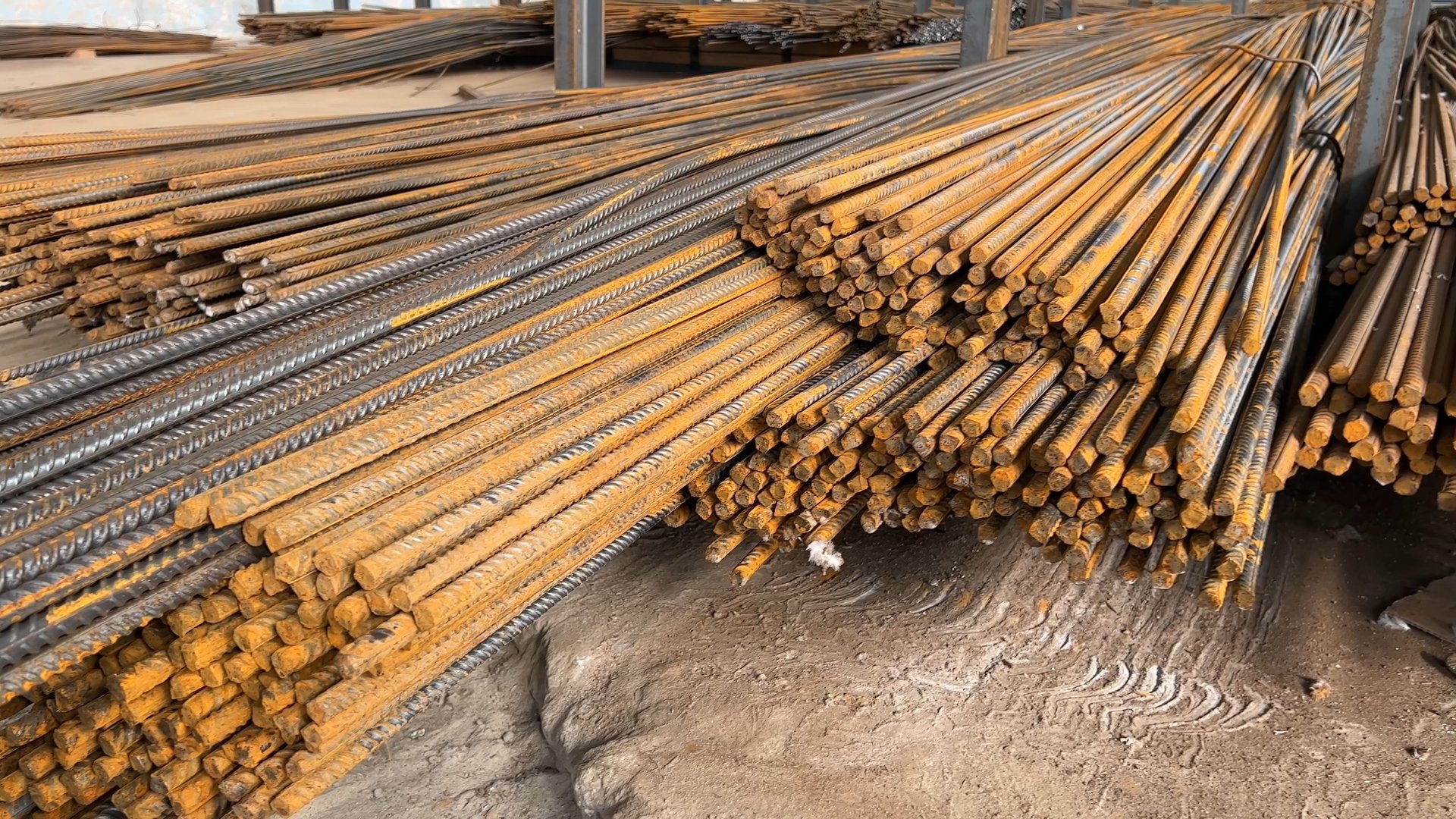
How the chemistry basis can be set
There are three workable ways to fix the chemistry of a carbon billet order. They carry different obligations, and the third is the one most often mistaken for the first.
Dedicated billet standard
A standard written for semi-finished or billet product. Cite the exact edition and grade; the certificate is held to heat analysis against that edition.
Confirm whether any table value in that edition is itself subject to agreement.
Explicitly agreed limits
Chemistry written out as agreed limits for this order. Common where no dedicated billet standard applies, or where the mill works to an internal practice.
Valid for the order that defines them — re-agree before reuse.
Finished-product standard as target
A structural or product standard named as what the billet must eventually become. It anchors intent and downstream chemistry direction.
Where such a standard covers semi-finished material, composition is generally subject to special agreement at order — the billet chemistry still has to be written separately.
Standards — evidence status
The designations below are commonly encountered on carbon billet enquiries. They are not interchangeable, and none is presented here as the universal billet specification. The agreement column records where the standard does not fix the billet requirement on its own.
| Designation | Scope | Status here | Agreement required |
|---|---|---|---|
| 3SP / 3PS | Structural carbon steel grade | Conditional comparison only | Governing standard and edition; not a synonym for other designations |
| 5SP / 5PS | Reinforcing-grade carbon steel feedstock | Conditional comparison only | Governing standard and edition |
| Q235B | General structural steel | Conditional comparison only | Governing standard and edition |
| S235 | Non-alloy structural steel designation | Conditional comparison only | Governing standard and edition |
| ASTM grades | Varies with the specific designation and product form | Conditional comparison only | Exact designation and standard |
| Special order chemistry | Agreed for a specific mill and order | Order-specific | Limits written into the order documents |
Evidence warning. Any equivalence between 3SP, 5SP, Q235B, S235, ASTM designations or other marks is a conditional engineering comparison, not a synonym. No chemical composition or mechanical property value is stated on this page because those depend on the governing standard edition and the order — and where a standard covers semi-finished material only by special agreement, on the agreement itself.
Size range — geometry basis
Nominal cross-sectional area and the corresponding unit mass. Area is the exact nominal square (side²). Unit mass is calculated from that nominal area at steel density 7,850 kg/m³ — a planning aid and engineering assumption, not an acceptance value. This range is illustrative of commonly requested sections, not a stock list.
| Nominal side (mm) | Nominal area | Indicative unit mass | Method & basis | Typical downstream use |
|---|---|---|---|---|
| 100 × 100 | 10,000 mm² | ≈ 78.5 kg/m | side² at 7,850 kg/m³ | Small-section and wire-rod feedstock |
| 130 × 130 | 16,900 mm² | ≈ 132.7 kg/m | side² at 7,850 kg/m³ | Bar mill and rebar feedstock |
| 150 × 150 | 22,500 mm² | ≈ 176.6 kg/m | side² at 7,850 kg/m³ | Rebar and section rolling |
| 160 × 160 | 25,600 mm² | ≈ 201.0 kg/m | side² at 7,850 kg/m³ | Heavy section and bar production |
| 200 × 200 | 40,000 mm² | ≈ 314.0 kg/m | side² at 7,850 kg/m³ | Large-section and forging feedstock |
Dimensional tolerance, straightness, corner condition and cut-length variation are order-specific and confirmed against the receiving mill's requirement — they are not stated as standard values here.
Mechanical properties — why no values are listed
Mechanical properties are properties of a finished, tested product. A billet has not been rolled, so it has no tensile, yield or elongation value to certify — only a chemistry that makes those values reachable downstream.
Downstream, not billet
Yield, tensile and elongation are established on the rolled product under its own standard. Stating them for a billet would describe something that has not yet been made.
Chemistry drives them
What you control at billet stage is the chemistry basis and its consistency. That is the input; the mechanical result is produced by the rolling route.
Route-dependent
The same chemistry can yield different properties depending on reduction and cooling practice. Process capability is the mill's to confirm, not the billet certificate's.
Related specification paths
3SP steel billet
A specific designation route. Its applicability depends on your governing standard — it is not a synonym for other designations.
3sp steel billet supplier5SP steel billet
Compare against your standard before substituting; designation families are not interchangeable.
5sp steel billet supplierQuality, testing & documentation
The verification matrix
Each row names what must be specified, the evidence to request, who owns acceptance, and the risk carried if the line is left open. Chemistry, geometry and traceability are listed separately because they are separate evidence.

| Requirement | Buyer must specify | Evidence to request | Acceptance owner | Risk if missing |
|---|---|---|---|---|
| Chemistry basis | Grade under its own standard, agreed limits, or the downstream target standard plus a billet-specific agreement | Stated in the order documents as the governing basis | Buyer's technical authority | Heat analysis cannot be accepted or rejected against an undefined requirement |
| Heat analysis content | Which elements the certificate must report, including carbon equivalent where weldability matters | Mill test certificate reporting those elements | Buyer's technical authority | A certificate omitting a relied-on element cannot support acceptance |
| Dimensions | Section, length and the tolerance basis | Dimensional record against the order | Receiving mill | Section that does not suit the mill's pass schedule or charge |
| Surface condition | Quantified defect limits and the inspection basis | Visual and dimensional inspection record | Receiving mill | Defects propagate into the rolled product |
| Heat traceability | How heat identity is marked and what it must survive | Heat number on bundle, tied to the certificate; marking method stated | Buyer / mill quality function | A delivered billet cannot be connected back to its analysis |
| Special agreement | Any chemistry, tolerance or surface term the standard does not itself fix | The agreed terms written into the order documents | Buyer's commercial and technical functions | The billet requirement has nothing enforceable to attach to |
| Mill process capability | The route the receiving mill will use for the intended product | Mill's written confirmation — not a supplier certification | Receiving mill | Suitable chemistry that the route cannot convert to the finished product |
| Shipment documents | Document set, language and issue timing | Certificate, packing list, and documents per the Incoterm | Buyer's commercial function | Release, clearance or payment is delayed at destination |
Certification limit. This page does not assert that any certificate, approval or test report is held, issued or available, nor that any chemistry will reach a given finished-product outcome. The certificate content, its issuing party and its timing are confirmed against your order. A certificate is not created here and none is implied.
Application & industry paths
Which downstream route anchors the chemistry?
The receiving route is what the chemistry basis is chosen against. Each path below maps an operating requirement to the chemistry, the section and the mill constraint — rather than listing generic uses.
Rebar rolling
- Operating requirement
- Chemistry anchored to the reinforcing standard the finished bar must satisfy
- Selection implication
- State the chemistry basis against the rebar target, and keep the billet-side agreement separate from the finished-bar acceptance.
- Fit limit
- The billet grade is not the rebar grade — the finished bar is qualified under its own standard.
Bar / section rolling
- Operating requirement
- Section and chemistry matched to the bar mill's pass schedule and target product
- Selection implication
- Where one mill rolls several products, name which order each chemistry basis serves — they are not interchangeable across orders.
- Fit limit
- Bar tolerances come from the bar standard, not from the billet supply.
Wire-rod rolling
- Operating requirement
- Lower-carbon chemistry and surface condition suited to drawing
- Selection implication
- Surface acceptance matters more here than in re-rolling — defects carry through drawing rather than being reduced out.
- Fit limit
- Drawing performance depends on the whole route, not on the billet alone.
GCC markets
Destination planning for carbon steel billet
Each destination route below handles customs, documentation and logistics inputs at country level. A named destination, port or place, an Incoterm and the importer's document and classification context are required before an offer can be written — this page makes no claim of served markets or live availability.
 United Arab Emirates
Domestic mill feedstock with Dubai-based coordination.
Name the receiving mill and the chemistry basis. Domestic delivery is coordinated from the Dubai base against the agreed section, length and tolerance basis.
steel billet supplier UAE Saudi Arabia
Mill feedstock quantities with technical submittal approval.
Saudi routes typically require technical submittal approval before release. Agree the grade basis, any special chemistry agreement, certificate scope and the named port or inland destination first.
steel billet supplier Saudi Arabia Qatar
Technical approval and document scope led.
Confirm the importer's document and classification context, the named port, and the approval sequence before the quotation is finalised.
steel billet supplier Qatar Oman
Port-oriented supply for downstream rolling.
State the port or inland delivery place and the Incoterm rule. Chemistry basis and section are harmonised with the receiving mill's requirement.
steel billet supplier Oman Kuwait
Mill feedstock with production hand-off planning.
Tie billet selection to the rolled product, and agree the shipment against the named destination and the required delivery window.
steel billet supplier Kuwait Bahrain
Industrial supply and re-export documentation.
Industrial routes depend on accurate documentation. Confirm the document set, the named place and the importer's requirements before dispatch.
steel billet supplier BahrainBefore an offer: state the named destination or port, the applicable Incoterm 2020 rule, the importer's documentation and classification requirements, and confirm the tariff classification for the billet form with your own customs adviser — classification is not determined on this page.
Commercial & logistics inputs
What the quotation is written against
A billet quotation is normalised from the inputs below. Price, stock, lead time, origin and delivery dates are not stated on this page — they are confirmed against your enquiry, and no figure is invented to fill the gap.
Chemistry basis first
State the grade, standard or agreed limits up front. Everything else in the enquiry is written against that basis.
Quantity & unit
State the quantity with its unit of measure — pieces or MT — and whether it is a single lot or a schedule.
Mass basis
Agree whether theoretical mass from nominal dimensions or actual weighbridge mass governs settlement, and the tolerance between them.
Named place / port
A named port or inland delivery place is required. A country alone does not define the delivery obligation.
Incoterm 2020
Name the rule (EXW, FOB, CFR, CIF, DAP…). The rule decides who carries risk, freight and insurance at each point.
Payment & documents
State the documentary and payment requirement, and the document set the importer must receive.
Packing & handling
Strapping, heat tagging, lifting points and any marking requirement for the receiving mill.
Inspection scope
Which inspections apply, at whose cost, and whether witnessing is required.
Open items
Anything not yet decided is carried as an open item in the enquiry, never assumed on your behalf.
Quote required. Price, availability, lead time and origin are confirmed against your enquiry. They are deliberately not stated on this page because a figure published without a live basis would misstate what an order actually carries.
Alternatives & technical resources
Close the remaining gaps
Grouped by what they resolve: the category you sit inside, the material routes worth weighing, the calculation resources that reduce ambiguity, and the downstream routes.
Product hierarchy
- steel billet supplier
The full billet scope — grades, sizes, standards and the wider type range.
- steel billet materials
Compare this material family against the sibling billet materials.
- alloy steel billet supplier
Use when chemistry must be named and controlled rather than taken as a carbon range.
- carbon steel products
The wider carbon steel product family this billet belongs to — useful when the requirement spans more than billet.
Technical resources
- steel billet specifications
Reduce specification ambiguity before the enquiry is written.
- steel billet price
Understand the commercial inputs that shape a billet offer before you request pricing.
Billet type routes
- continuous casting billet supplier
Compare the casting route when the chemistry basis is already settled.
- rolling mill steel billet supplier
Compare when the receiving mill's entry and charge constraints are the deciding factor.
Downstream routes
- steel billet for rebar production
Test the chemistry basis against a defined rebar route.
- steel billet for bar production
Test the chemistry basis against a defined bar-mill route.
- steel billet for wire rod production
Test the chemistry basis against a defined wire-rod route.
Expert insight
When can a finished-product steel standard inform a carbon billet order — and where is special agreement still required?
Source-backed procurement decision note
What the source establishes
BS EN 10025-2:2019 covers hot-rolled products of non-alloy structural steels and its scope includes semi-finished products intended for further processing. So a structural standard can legitimately reach into the semi-finished world — it is not limited to the finished section.
Where it stops — and this is the crux
Within that scope, the standard states that semi-finished products and their chemical compositions are subject to special agreement at order. So including billets does not mean the standard hands you a billet chemistry. It tells you the chemistry has to be agreed separately — which is exactly the opposite of the assumption people make when they copy a finished-product standard onto a billet enquiry.
The practical shape of the answer
Use the target standard for what it does well: it anchors the downstream intent and tells you which steel family and property direction you are heading in. Then do the billet work separately, in the order documents — the chemistry limits you actually require, the tolerance basis, surface acceptance, the heat-analysis elements, and the traceability arrangement. These are not inferred from the standard. They are agreed.
Buyer implication. Use the target standard to anchor chemistry and downstream intent only where its scope allows; document billet-specific agreements instead of assuming finished-product conditions transfer automatically.
Primary source
BSI — BS EN 10025-2:2019Method: the source scope is compared against the buyer decision; source-backed facts are separated from order-specific ones.
Scope & limitations
- Information date
- 2026-10-03
- Scope
- Hot-rolled products of non-alloy structural steels, including semi-finished products intended for further processing.
- Limitations
- Semi-finished products and their chemical compositions are subject to special agreement at order. It is not a blanket billet specification for every downstream product. The source does not establish inventory, price, lead time, origin or market coverage for any supplier.
This note is an engineering aid for framing your own specification. It is not a certificate, an inspection report or a statement of compliance.
Buyer advantages
What a buyer can actually rely on
Each line maps a real procurement concern to a verifiable capability or a named evidence requirement — and then to what you can do with it. No superiority claim is made that is not tied to a check you control.
“Is ‘carbon steel billet’ enough to order against?”
The matrix scores how completely your enquiry specifies the material and lists exactly which fields are still open.
You can see whether you have a specification or just a family description.
“Am I about to copy a finished standard onto a billet?”
Choosing a finished-product standard as the target immediately surfaces the special-agreement requirement rather than letting it pass.
The billet-specific terms get written, instead of being assumed to transfer.
“Will the certificate answer my question?”
Heat-analysis content is specified element by element, including carbon equivalent where weldability or bending matters.
The certificate you receive supports the acceptance decision you are making.
“Can a delivered billet be traced back?”
Traceability is treated as a marking requirement tied to the certificate, not as a document alone.
Heat identity is enforceable at intake rather than assumed.
“Whose job is the finished outcome?”
Mill process capability is listed as the receiving mill's written confirmation, separate from the billet certificate.
You know which evidence is yours to request and which is theirs to produce.
“Am I getting assumptions instead of facts?”
No composition, mechanical property or grade-equivalence value is asserted anywhere on this page.
Nothing looks settled that your own documents have not settled.
From enquiry to delivery
Who owns each step
A route-aware workflow. Every stage names the buyer concern, the input required, the evidence or output produced, the risk carried and the next action.
- Stage 1
Chemistry basis set
- Buyer concern
- What chemistry am I actually ordering?
- Required input
- Grade under its own standard, agreed limits, or a target standard plus a separate billet agreement
- Output
- A defined chemistry basis with its obligation stated
- Risk
- Heat analysis cannot be assessed against an undefined requirement
Next: Run the matrix and carry the basis into the enquiry
- Stage 2
Enquiry
- Buyer concern
- Is there enough to quote against?
- Required input
- Chemistry basis, section, quantity, destination, intended product
- Output
- A normalised enquiry record
- Risk
- An incomplete enquiry returns assumptions rather than an offer
Next: Attach the material specification and the element list
- Stage 3
Heat analysis agreed
- Buyer concern
- What must the certificate report?
- Required input
- The element list, including carbon equivalent where relevant
- Output
- Agreed certificate content
- Risk
- A certificate omitting a relied-on element cannot support acceptance
Next: Confirm the content in writing before accepting the offer
- Stage 4
Quotation
- Buyer concern
- On what basis is the offer made?
- Required input
- Named place or port, Incoterm 2020, currency, mass basis and document set
- Output
- A comparable offer with open items listed
- Risk
- An unstated basis becomes a settlement dispute
Next: Compare the offer against the alternatives on this page
- Stage 5
Production & packing
- Buyer concern
- Will the lot match the order?
- Required input
- Confirmed section, length, strapping, heat tagging and marking
- Output
- Strapped, heat-tagged and weighed lot
- Risk
- Heat identity is lost between cast and bundle
Next: Verify the physical marking method, not just the certificate
- Stage 6
Intake verification
- Buyer concern
- Does the evidence hold up?
- Required input
- Certificate, dimensional and surface records, heat traceability
- Output
- Acceptance against the stated criteria, or a documented non-conformity
- Risk
- Acceptance judged against an unwritten criterion
Next: Close out against the agreed terms in the order
- Stage 7
Shipment
- Buyer concern
- Who carries risk, and when?
- Required input
- Incoterm rule and the named place or port
- Output
- Freight and insurance arranged to the agreed point
- Risk
- Risk transfers at a point the buyer did not expect
Next: Confirm the risk-transfer point in writing
- Stage 8
Rolling
- Buyer concern
- Does the route reach the intended product?
- Required input
- The mill's confirmed process route and pass design
- Output
- Rolled product, with the mill's process records
- Risk
- Suitable chemistry that the route cannot convert
Next: Confirm capability in writing — this is the mill's to establish
Buyer FAQ
Questions that decide the order
Technical and commercial questions from the technical-buying perspective — after the family is identified, not before it.
What does carbon steel billet mean in procurement terms?
It identifies a material family and a product form — non-alloy steel, supplied as semi-finished billet. It is not a chemistry, a grade or a property class. Two offers that both correctly read “carbon steel billet” can carry entirely different heat-analysis limits, sections and acceptance conditions, so the term narrows the field but does not specify an orderable material.
When is chemistry agreed separately for semi-finished product?
Where the standard you are pointing at covers finished or hot-rolled product, semi-finished material and its chemical composition are generally subject to special agreement at order rather than being fixed by the standard. That means the chemistry limits for your billet need to be written into the order explicitly, even when a well-known structural standard is named as the downstream target.
Which elements should appear on the heat analysis request?
At minimum the elements the governing standard or your own specification relies on — typically carbon, manganese, silicon, sulphur and phosphorus, with aluminium or nitrogen where fine-grain or specific practices matter. Where weldability or bending matters downstream, carbon equivalent should be reported rather than left to be calculated later. State the list; a certificate that omits a relied-on element cannot support acceptance.
Can a finished-product standard be copied directly onto a billet RFQ?
No. A finished-product standard governs the delivered product — its mechanical properties, tolerances and marking. Copying its limits onto a billet enquiry asks the supplier to certify semi-finished material against conditions written for something else. Use the target standard to anchor chemistry and downstream intent where its scope allows, then write the billet-specific requirements as a separate, explicit agreement.
What documents verify heat identity and chemistry?
The mill test certificate carrying the heat analysis, and the physical heat identification on the bundle tied to that certificate. They work as a pair: the certificate states the chemistry, and the marking is what lets you connect a delivered billet back to that chemistry. A certificate without surviving physical identification is difficult to enforce at intake; marking without the certificate proves nothing about composition.
Composition
Why the composition field list is a decision, not a formality
Which elements you require on the heat analysis determines what you can later accept or reject. Selecting them is a specification act.
Carbon (C)
The primary strength and hardenability element, and the one most tied to the intended product. Its required range is a consequence of what you are rolling, not a default.
Manganese (Mn), Silicon (Si)
Commonly specified alongside carbon. Where they matter to your acceptance, they need to be on the list — a certificate that leaves them off cannot be assessed against them.
Sulphur (S), Phosphorus (P)
Often controlled rather than merely reported. Where your specification places limits on them, the certificate must show the values for those limits to be enforceable.
Carbon equivalent (CEV)
Relevant where weldability or bending matters downstream. Ask for it to be reported rather than calculated later — a value derived after the fact is not the same as one certified with the heat.
No values are given here. Required ranges for these elements depend on the grade, the governing standard edition and any special agreement. This page names the fields to specify; it does not assert what any of them should be. The matrix above records which elements your enquiry calls for.
Service limits
Corrosion and temperature are order conditions, not carbon-steel properties
‘Carbon steel’ does not carry a corrosion rate or a service temperature. Those come from the environment, the product form and any coating or protection specified — each of which is a separate decision.
Corrosion environment
Atmospheric, marine, buried or immersed service behave very differently, and carbon steel has no inherent resistance to any of them. Where corrosion matters, it is addressed by protection — coating, galvanising, or a change of material family — not by the billet chemistry.
Service temperature
Carbon steel has no single working temperature range that applies regardless of grade and application. Where service is hot or cold, the applicable limits come from the relevant product standard and the design condition, and should be stated as an order requirement.
What this means for the billet order
If your downstream product has a corrosion or temperature requirement, state it in the enquiry as context for the mill. It does not change the billet chemistry basis by itself — but it may change which finished-product standard you are aiming at.
No limits are stated here. Corrosion rates and service temperature limits depend on the environment, the product form and the governing standard. Publishing a number without those conditions would create a claim the order does not carry. State your service conditions and they are addressed as part of the enquiry.
Qualified RFQ
Send a specification, not a material family
The more of the payload below you supply, the more of the offer is an answer rather than an assumption. Anything you have not decided is carried as an open item — never filled in for you.
- Product and entity
- Grade, standard or agreed chemistry basis
- Required heat-analysis elements
- Section and length
- Surface and tolerance requirements
- Quantity with unit of measure
- Destination and named place or port
- Incoterm 2020 and required documents
The RFQ is submitted to the Steel Billet enquiry intake. Your material specification travels with it.
Contact the commercial department
- WhatsApp / Mobile
- +971 56 398 0860
- Address
- Office 3303, Churchill Executive Tower, Business Bay, Dubai, United Arab Emirates
- Working hours
- Monday – Saturday: 8.00 AM – 6.00 PM · Sunday: Closed
A technical-review path is available at organisation level through the commercial department. No individual contact is named on this page.