
Stainless Steel Rebar
Stainless Steel Rebar Supplier
Treat a stainless reinforcing bar as an alloy selection, not a generic upgrade: fix the specified alloy and grade, the exposure the bar will actually see, the bar geometry and the connection it has to sit in, and the test and traceability evidence the project requires. Stainless resists corrosion more than carbon steel — it is not corrosion-proof, and it is not a blanket substitute for coated or carbon reinforcing bar.
Free, no-obligation alloy-and-service match review against your specification
Information current as of
Alloy & Service Match
When a stainless reinforcing bar is the right answer, and what has to be settled with it
Stainless is not a general upgrade you apply to a structure. It is a specific alloy chosen against a specific exposure, and six decisions have to line up before the bar can be ordered defensibly. Each one below has an owner and a point where the chain stops if it is left open.
- 01
Confirm the requirement is written down
Find the durability requirement in the specification before choosing anything. An alloy selected by reputation rather than by document cannot be approved later.
Owner
Project authority
No document requirement, no defensible alloy selection.
- 02
Separate the alloy from everything else
Fix the alloy family and grade designation as one decision, and keep the exposure, geometry and connection decisions separate from it.
Owner
Corrosion engineer
An alloy name is not a specification — the grade and edition are part of it.
- 03
Match it to the real exposure
State the zone the bar will actually see — airborne, wetted, submerged, buried or chemical — rather than the general site description.
Owner
Corrosion engineer + consultant
Stainless resists corrosion more than carbon steel; no exposure is immune to it.
- 04
Resolve geometry and connections
Fix the bar diameters and confirm how the stainless bar laps, couples or connects to the reinforcement around it.
Owner
Designer + fabricator
A reinforcement system is a system — the bar has to join what it sits in.
- 05
Name the testing and traceability
State the tests the project requires and the documentation that links the delivered bar to its heat, rather than leaving both to delivery.
Owner
Independent inspection
Tests chosen at delivery are not a specified requirement.
- 06
Supply against the qualified RFQ
Quote the alloy, grade, diameters, quantity, destination and documents against the stated specification.
Owner
Supply chain
Availability, origin and lead time remain quotation-dependent.
Where this page stops
This page helps you assemble and check the inputs an alloy selection needs. It does not select the alloy for you, and it states no corrosion performance figure, no service life and no substitution permission. Those conclusions belong to the project's corrosion engineer and its specification — which is why the checklist below refuses to produce a verdict from a partial input.
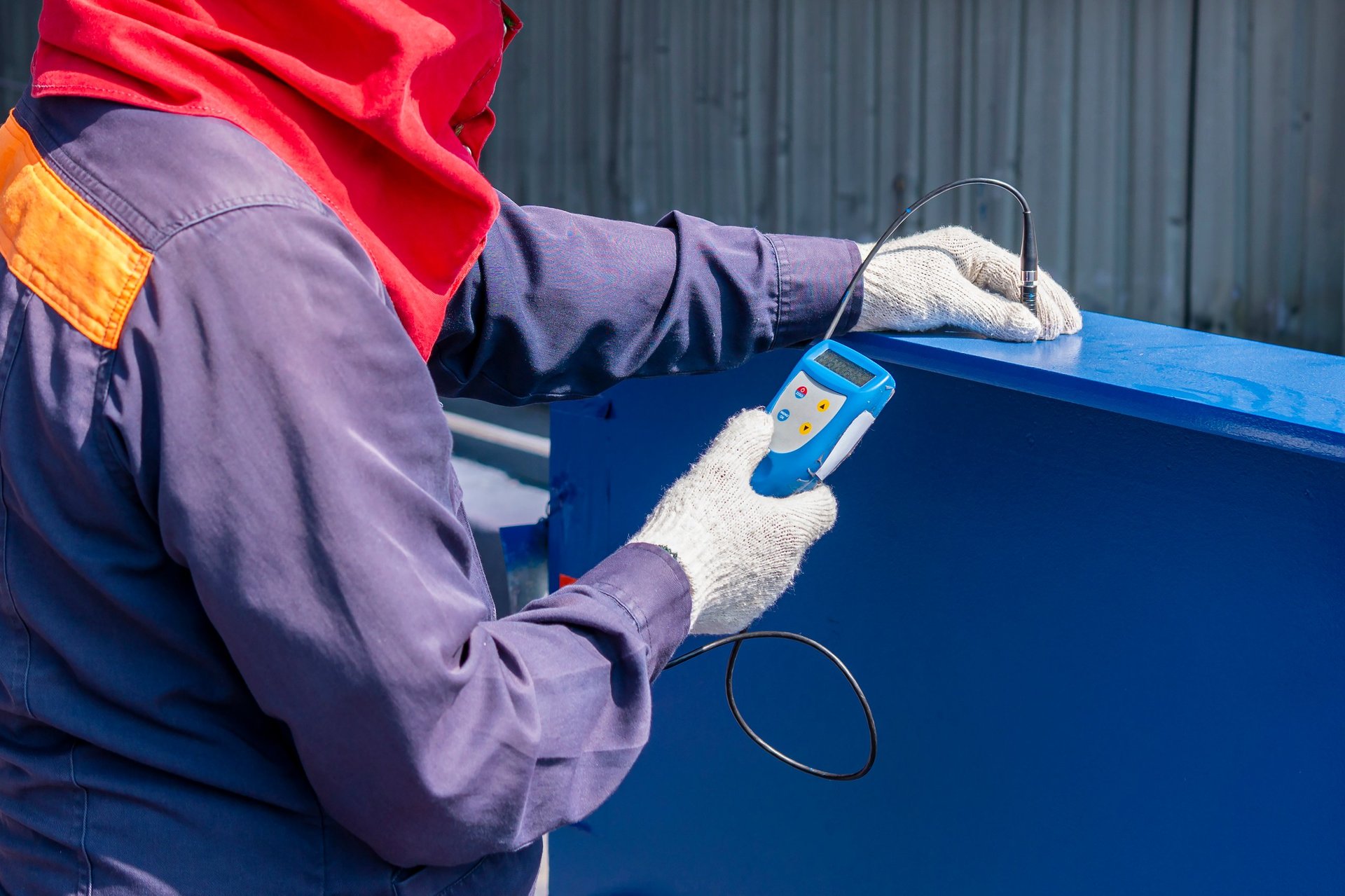
Exposure & Use Cases
Why the zone the bar sits in matters more than the site it is in
A coastal project rarely applies one corrosion strategy everywhere. Two bars in the same structure can sit in conditions the durability design treats quite differently — and the alloy has to be matched to the condition it actually sees, not to the name of the site.
| Exposure zone | How it shapes the alloy decision | Boundary to confirm |
|---|---|---|
| Atmospheric, low chloride — inland | Corrosion resistance is often not the governing reason for the specification at all; appearance or a project standard may be. | Do not carry a high-alloy selection inland as a default — confirm the requirement exists before paying for it. |
| Atmospheric, chloride-bearing — coastal | Airborne chloride is the exposure the alloy is usually being selected against, and the zone definition itself is the first variable. | Distance from the shoreline, wind and shelter change the real zone — confirm the classification, don't assume “coastal”. |
| Splash and tidal — intermittent wetting | Wetting and drying is a genuinely different and frequently more demanding condition than permanent immersion. | This is where alloy choice most often needs the corrosion engineer rather than the buyer to settle it. |
| Permanently submerged or buried | Fully wetted and oxygen-depleted conditions behave differently again, and are often treated separately in durability design. | Never assume the zone rule for the exposed part of the structure applies to the buried or submerged part. |
| Chemical or process exposure | The aggressive agent may not be chloride at all, which can change which alloy family is appropriate. | Do not carry a chloride-driven alloy decision into a chemical-exposure structure without re-checking the requirement. |
The zones describe how exposure classifications differ in kind, not what any alloy achieves. The classification, the design life it implies and the protection required in each zone come from the project's durability design — confirm them there rather than from a supplier description.
Marine structures
Specification driver
Permanent chloride exposure is the condition the alloy is usually being selected against, and the zone definition drives the choice.
Fit limit
Apply only when the marine exposure classification and the project's durability design match this scope.
View applicationBridges
Specification driver
Bridges add exposure zoning, design life and inspection hold points that decide where a stainless alloy is used at all.
Fit limit
Confirm the governing document, exposed zones and evidence set for the bridge scope.
View applicationRoads and infrastructure
Specification driver
De-icing salts and drainage can create a chloride exposure on elements that are geographically inland.
Fit limit
Use only when the road-and-infrastructure exposure classification matches the project.
View applicationAlloy & Service Match Checklist
Check whether the alloy, the exposure and the detailing actually line up
Enter the seven inputs an alloy selection needs. The checklist returns a match state with the open items that still block a defensible selection, and it will not produce a verdict from a partial input. Nothing is transmitted; the summary is yours to send.
Selection inputs
Document, alloy and exposure are required *The document that requires corrosion-resistant reinforcement and states the exposure.
State the family and grade — “stainless” alone is not a specification.
The condition the bar actually sits in, not the general site description.
Evidence to request
Every item carries a fixed status. A status of “Confirmed” means the evidence is requested against the delivered lot and issued at quotation — it is never claimed in advance and never inferred from a related document.
Match state
Insufficient information — name the document that specifies the alloy
An alloy cannot be selected without the document that requires it. State the specification or design document and its revision that governs the corrosion-resistance requirement for this reinforcement, then assess the alloy against it. This checklist will not produce a selection verdict from a partial input.
Open items before selection
- Governing specification document and revision not yet named.
- The alloy, grade and acceptance criteria are project-controlled — name the governing document and its revision before selecting.
- Stainless does not mean corrosion-proof: no exposure is immune, and no service life can be read from an alloy name.
- This is not a substitute decision — moving between stainless and carbon or coated reinforcing bar is a design change, not a purchasing swap.
This checklist checks that the inputs a selection needs are present and consistent. It is not an approval and it does not validate one alloy against another — no corrosion performance, immunity or service life is stated or implied.
Alloys & Documents
Which document identifies the material, and which one authorises using it
These are two different questions and they have two different answers. One set of documents tells you what the bar is; another tells you whether you are allowed to specify it. Confusing the two is how an alloy gets approved without its requirement ever being checked.
| Document identity | What it actually covers | Buyer decision implication |
|---|---|---|
| Austenitic stainless | A widely specified stainless family for reinforcement, commonly supplied in a molybdenum-bearing grade and in a general-purpose grade; the two are different specifications, not tiers of one another. | State the exact grade the project requires — the family name alone does not identify the material. |
| Duplex / super-duplex stainless | A stainless family with a different microstructure, specified where the project's durability design calls for it by grade designation. | Confirm the grade and its edition; duplex grades are not interchangeable with austenitic grades of a similar number. |
| The base bar standard | Stainless reinforcing bar is specified under its own standard, which covers the bar's grade, dimensions and property requirements — it does not inherit a carbon-steel bar standard's provisions automatically. | Name the stainless bar standard and its edition; do not assume a carbon-steel bar specification applies unchanged. |
| The project document | The specification that requires corrosion-resistant reinforcement in the first place, states the exposure and the design life, and sets the acceptance criteria. | This is the authority. Nothing on this page substitutes for it or can approve an alloy in its place. |
The table states published scope at family level so you can see which document governs which layer. It deliberately publishes no alloy compositions, corrosion rates or mechanical values: those belong to the specific grade and edition your project names, and quoting them from a summary creates a verification problem rather than solving one. Confirm every figure against the current edition of the governing standard.
Carbon bar, for contrast
See the carbon reinforcing bar that a stainless selection is replacing — a different material, not a grade of the same one.
Open reference20 mm bar
Confirm this diameter is on the schedule and its jointing method.
Open reference25 mm bar
Large-diameter bars change lap and coupler requirements.
Open reference8 mm bar
Small-diameter bars are frequently used where the alloy decision differs again.
Open referenceRebar weight chart
Reference the weight chart for schedule-driven quantity planning.
Open referenceMechanical properties
How property evidence is read from the bar certificate.
Open referenceGeometry & Connections
A reinforcing bar is bought as a system, not as a material
Four detailing questions decide whether the bar you specify can actually be built into the cage it belongs to. Each one is stated as a question to answer in the RFQ, not an answer to assume — because a mismatch here surfaces on site, not in the quotation.
Bar diameter and form
The question to answer
Which diameters does the schedule actually call for, and is any of it bent or cut to shape?
Why it changes the order
Diameters fix the order and the laps; forming changes which fabrication and coating-free handling requirements apply.
RFQ action: List every diameter on the schedule, not only the common one — an RFQ for one size will not price the others.
Lap and jointing to adjacent reinforcement
The question to answer
How does this bar join the rest of the cage — plain lap, coupler, or a mechanical connection?
Why it changes the order
The reinforcement system has to work as a whole; a mismatch at the joint is a detailing problem that surfaces on site.
RFQ action: State the jointing method in the RFQ so the supply and the detailing assumptions line up.
Coupler and connection compatibility
The question to answer
Does the specified coupler or connection system accept this bar and this grade?
Why it changes the order
Coupling systems are specified for particular bar types and grades, and are not automatically interchangeable between materials.
RFQ action: Confirm the connection system against the bar it will receive before ordering either.
Contact with other metals
The question to answer
Will the stainless bar sit in contact with galvanized, coated or carbon steel components?
Why it changes the order
Dissimilar metals in contact behave differently in a wet environment, and the detailing has to account for it.
RFQ action: Flag any mixed-metal interfaces in the RFQ so they are resolved in detailing rather than on site.
Testing & Traceability
What each document proves, and which item is still yours to decide
Three of these six items are not certificates at all — they are requirements the project has to state. Read the status column before treating the document set as complete, because a quotation cannot close out an item the specification has not yet decided.
| Evidence / document | What it verifies | When required | RFQ action | Status |
|---|---|---|---|---|
| Mill certificate / inspection document for the bar | The alloy and grade identity, chemistry and mechanical properties of the delivered lot, traceable to the heat. | For project-certified reinforcement and for any order where the alloy is the reason it was specified at all. | Request at RFQ; content is confirmed against the delivered heat rather than assumed. | Confirmed |
| Alloy and grade verification | That the delivered bars are the alloy and grade stated — not a different stainless grade substituted on availability. | Wherever the specification names a specific grade, which is the normal case for stainless reinforcement. | Require the alloy to be stated on the certificate, not only “stainless”. | Confirmed |
| Product / test documentation required by the project | The tests the project specification calls for on the bar, evidenced against the actual consignment. | When the project or the bar standard requires tests beyond the standard mill certificate. | Name the required tests in the RFQ; results are issued on test, not claimed in advance. | Project-dependent |
| Traceability and marking | That the bar in the bundle can be tied back to the heat and the document set supplied with it. | For project-certified work and for any consignment where grade identity is a hold point. | Request lot-level traceability and the marking convention in the RFQ. | Confirmed |
| Fabrication and handling requirements | How the bar may be cut, bent and stored, and what the project expects at the fabrication stage. | Always, on any stainless reinforcement that will be fabricated or stored on site. | Confirm the fabrication and storage requirements in the approval record. | Project-dependent |
| Third-party or purchaser witness inspection | That the required evidence was witnessed by the party the project names. | When the project specification makes witness inspection a hold point. | Confirm the hold points and the witnessing party in the RFQ. | Project-dependent |
Issued against the lot
Certificates and test records are issued against the actual delivered heat — never claimed in advance of it.
Alloy stated, not implied
Require the certificate to name the alloy and grade, because “stainless” alone cannot be verified against a specification.
Three items are yours
Fabrication requirements, witness inspection and any project-specific test are project decisions, and the status column says so.
Bounded comparison
The alternative protection routes, and why they are not substitutions
These sit close enough to a stainless bar that they get swapped in by mistake. Compare each against the project document; a change between them is a design change, not a purchasing decision.
Epoxy coated rebar
Coating-based protectionWhere it applies
An alternative protection route where the project document authorises a coated carbon bar instead of a corrosion-resistant alloy.
Boundary
A coated bar and a stainless bar are different material and protection decisions. Compare each against the project's expose and acceptance criteria — never substitute one for the other.
Compare this routeGalvanized rebar
Coating-based protectionWhere it applies
A further coating-based alternative where the project document authorises it for the stated exposure.
Boundary
A different protection system with its own specification and handling rules. Not interchangeable with a stainless alloy selection.
Compare this routeDeformed (ribbed) rebar
Bar formWhere it applies
The ribbed form a stainless bar is typically supplied in, where the project requires the bar form rather than the alloy.
Boundary
Bar form and alloy are separate decisions; specifying stainless does not change the form the bar schedule calls for.
Compare this routeGCC Project Paths
Each Gulf market changes what an alloy selection has to carry
The governing documents, submittal route and cross-border inputs change with the destination. Availability, origin and delivery are confirmed from your full specification at quotation — they are not claimed on this page.

United Arab Emirates
Coastal durability specification and document review.
Add the governing document revision, alloy and grade, exposure zone, diameters and Incoterm before the stainless-rebar RFQ.

Oman
Coastal and port-oriented project supply planning.
Confirm the exposure zone, required document set and Incoterm so the quotation basis is fixed for the stainless bar.

Qatar
Marine and infrastructure technical submittal readiness.
Add the alloy and grade evidence and the submittal document set the project requires for the coastal scope.

Saudi Arabia
Large-project quantities and cross-border documentation.
Confirm the exposure classification, delivery location, importer inputs, Incoterm and alloy documents for the RFQ.

Bahrain
Island and coastal contractor procurement.
State the exposure zone, importer/customs inputs, Incoterm and alloy evidence before quotation.

Kuwait
Coastal contractor and fabricator hand-off.
State the governing document revision, alloy and grade, jointing method, Incoterm and required date for the order.
Destination, alloy documents, port or delivery line, Incoterm and the required date are fixed at quotation from your specification. No local stock, local office, origin or delivery-time claim is made in advance.
Application decision paths
What the Quotation Needs
Nine inputs that turn an alloy choice into a confirmed offer
Five of these come from the project document, not from the buyer. If any is still open, the enquiry can be quoted but the selection cannot close — which is why the commercial desk returns an open-items list rather than assuming an answer.
| Quotation input | What it fixes | Status |
|---|---|---|
| Governing specification and revision | Which document requires the corrosion-resistant reinforcement and sets the exposure and acceptance criteria. | Required for quotation. |
| Alloy family and grade designation | The material being specified, exactly as the project writes it. | Required for quotation. |
| Exposure zone | The condition the bar will actually see, not the general site description. | Required for quotation. |
| Bar diameters and form | Every diameter on the schedule and whether any bar is cut or bent. | Required for quotation. |
| Jointing / coupling method | How the bar connects to the reinforcement around it. | Fixed with the detailing. |
| Quantity and delivery form | Total tonnes or bar count, and the lengths required. | Required for scheduling and pricing. |
| Test and traceability evidence | The tests and documents the project requires for the consignment. | Fixed at quotation per specification. |
| Availability, origin and lead time | Quotation-dependent unless current verified evidence is present. | Confirmed at quotation — never claimed in advance. |
| Incoterm, named place and required date | The commercial and delivery basis. | Fixed with the destination. |
Price on request. Stock, origin, lead time and routing are quotation-dependent unless current verified evidence is present — no figure for them appears anywhere on this page.
Commercial department
Each stainless rebar enquiry is checked for specification consistency, alloy and grade clarity against the stated exposure, every diameter on the schedule, the jointing method and the required document set before it is quoted. Where an input is still open, the desk returns it as an open item rather than quoting against an assumption.
Office 3303, Churchill Executive Tower, Business Bay, Dubai, United Arab Emirates
Monday – Saturday: 8.00 AM – 6.00 PM · Sunday: Closed
From Enquiry to Approval
The sequence that closes a stainless rebar selection
Each stage names the owner, the input it needs, the output it produces and the risk of leaving it open. Stages one and three are where coastal selections most often stall.
Locate the requirement
Detail: Find where the specification requires corrosion-resistant reinforcement, and read the exposure and design life it states.
Owner: Buyer + project authority
Input: Document reference and revision
Output: An authorised basis to select against
Risk: Selecting an alloy that no document requires
Next: Fix the alloy and grade exactly
Fix the alloy and grade
Detail: State the alloy family and the full grade designation as the project writes them, with the edition of the standard.
Owner: Corrosion engineer
Input: Alloy family, grade, edition
Output: A verifiable material requirement
Risk: A shorthand alloy name that cannot be verified
Next: Match it to the stated exposure
Match the alloy to the exposure
Detail: Confirm the alloy against the zone the bar actually sees — airborne, wetted, submerged, buried or chemical.
Owner: Corrosion engineer + consultant
Input: Exposure zone and classification
Output: A stated alloy-and-service match
Risk: Carrying one zone's alloy decision across the structure
Next: Resolve geometry and connections
Resolve geometry and connections
Detail: List every diameter on the schedule and confirm how the bar laps, couples or connects to the surrounding reinforcement.
Owner: Designer + fabricator
Input: Diameters, jointing method, interfaces
Output: A reinforcement system that works as a whole
Risk: A connection detail that does not accept the bar
Next: Name the tests and traceability
Name the tests and traceability
Detail: State the required tests and the documentation that ties the delivered bars to their heat.
Owner: Buyer + inspector
Input: Test and document requirements
Output: An evidence set that matches the specification
Risk: Tests chosen at delivery instead of specified
Next: Send the qualified RFQ
Send the qualified RFQ
Detail: Hand the completed summary to the commercial department for availability and pricing confirmation.
Owner: Commercial department
Input: Qualified RFQ summary
Output: Confirmed availability and pricing
Risk: Unverified stock or lead-time assumption
Next: Review and issue for approval
Evidence-led Approach
What this page actually changes about an alloy selection
Each concern is mapped to the mechanism on this page that addresses it, then to the practical outcome. No superiority claim is made — every entry describes what the page does or deliberately leaves unsaid.
| Selection concern | How this page addresses it | Outcome for the selection |
|---|---|---|
| Choosing an alloy by reputation rather than by document | The checklist refuses a verdict until the binding specification is named, and the authorisation stage puts the document first. | An alloy selection that cites the requirement it was made against. |
| Treating “stainless” as a specification | The alloy field requires a family and grade designation, and the alloy table states plainly that different grades are different specifications. | A verifiable material requirement rather than a family name on an enquiry. |
| Assuming stainless removes the corrosion question | No immunity, performance or service-life claim appears anywhere on the page, and the FAQ addresses the misconception directly. | Durability resting on the project's own design basis, not on a supplier assumption. |
| Treating the bar as a standalone purchase | Geometry, jointing and connection compatibility are separate inputs, and the connection table flags mixed-metal interfaces. | A reinforcement system that is detailed, not just supplied. |
| Substituting stainless for coated or carbon bar | The related-types section frames both coating routes as separate protection decisions with their own boundaries. | A substitution handled as a design change, with the authority that owns it identified. |
FAQ
The questions an alloy selection has to settle
Is stainless rebar corrosion-proof?
No. Stainless reinforcing bar resists corrosion considerably more than carbon steel, but it is not immune. Whether it performs in a given structure depends on the alloy specified, the exposure the bar actually sees, the detailing and connections, and the condition it is left in on site.
Can stainless rebar replace coated or carbon rebar on an existing design?
Not as a purchasing decision. Moving between stainless, coated and carbon reinforcement changes the material, the protection mechanism and the detailing assumptions. Treat it as a design change that the project's corrosion engineer and specification have to authorise first.
Does specifying “stainless” identify the material?
No. Stainless is a family of alloys, and different grades are different specifications rather than grades of one material. State the exact alloy family and grade designation, with the edition of the standard it is specified under, so the delivered bar can be verified against it.
Why does the exposure zone matter more than the site location?
The alloy has to be matched to the condition the bar actually sees. Two bars in the same structure can sit in airborne, wetted, submerged or buried zones that the durability design treats differently, so the zone is part of the requirement rather than a detail of the description.
What should the RFQ state for a stainless reinforcing bar order?
State the governing document and its revision, the alloy and grade designation, the exposure zone, every diameter on the schedule, the jointing or coupling method, the quantity and destination, and the test and traceability evidence the project requires.
Qualified RFQ
Request a quote for stainless steel rebar
Copy the match summary, add any item the checklist flagged as still open, and hand it to the commercial department. The enquiry is quotable once the governing document, the alloy and grade, the exposure, the diameters and the destination are stated.
Send to commercial departmentPrice on request. Stock, origin and lead time remain quotation-dependent unless current verified evidence is present.
Office 3303, Churchill Executive Tower, Business Bay, Dubai, United Arab Emirates
Monday – Saturday: 8.00 AM – 6.00 PM · Sunday: Closed
Copyable match summary
- Governing document
- To be confirmed
- Alloy family
- To be confirmed
- Grade / edition
- To be confirmed
- Exposure zone
- To be confirmed
- Diameter(s)
- To be confirmed
- Jointing method
- To be confirmed
- Required tests
- To be confirmed
- Destination
- To be confirmed
This summary records inputs, not an approval. Add the open verification notes the checklist surfaced — governing document revision, grade edition, exposure zone, connection compatibility and test evidence — as explicit RFQ fields before sending.