
PPGI Prepainted Steel Sheet
PPGI Steel Sheet Supplier
PPGI is a layered specification: substrate steel, metallic coating, primer/topcoat system, colour/finish and formed geometry must all be defined. A colour name or 'prepainted galvanized' description is not enough for a controlled RFQ.
Price on request. No published price, stock, lead time or certification status is stated on this page — the enquiry defines the specification and the quotation follows from it.
The layers that must all be defined
- 1Substrate steel
- The standard and the grade being coated — the acceptance basis beneath everything else.
- 2Metallic coating & basis
- The corrosion-protection layer with the mass or thickness basis it is declared on.
- 3Primer / topcoat system
- The organic layers carrying colour and durability — named as a system, not as a colour.
- 4Colour, finish & formed geometry
- The colour reference, gloss or finish, and the profile or forming the sheet must accept.
Next action: before you ask for a price, write down all four layers. An enquiry that names only a colour and the word "prepainted" leaves the coating chemistry, film build, substrate coating mass and forming suitability to whoever answers it — and that is precisely where two quotations stop being comparable.
Quality, Testing & Documentation
What a PPGI document set actually proves — and what it does not
Prepainting adds layers, and each layer has its own evidence. A single certificate covering the substrate does not describe the paint system, and a coating datasheet does not describe the steel beneath it. The matrix below sets out what to request, what each document verifies, when it is required, and which parts remain quotation-dependent.
| Document to request | What it verifies | When it is required | Quotation-dependent |
|---|---|---|---|
| Mill test certificate for the coated substrate | Grade, the invoked substrate standard and edition, and the coating designation with its declared basis for the material identified. | Whenever the order is placed against a named standard or grade, and typically before goods are accepted at site. | Whether a certificate to a specific edition, or witnessed by a third party, can be supplied — state the requirement in the enquiry. |
| Coating system identification | The primer and topcoat chemistry, the colour reference and the finish that were actually applied to the material supplied. | Wherever colour or durability is part of the specification, not only where appearance is visible. | Whether the coating supplier's own documentation is passed through — ask for it explicitly rather than assuming it travels. |
| Dimensional and surface inspection basis | The basis on which thickness, width, length and surface condition are inspected and accepted. | Wherever the part is formed or assembled to a tolerance, which is almost every building product application. | Which tolerance basis governs — this comes from the standard you invoke and must be agreed, not assumed from a nominal figure. |
| Coating adhesion and forming evidence | That the applied system is intended to survive the forming operation the part will undergo. | Where the sheet is roll-formed, profiled, bent or folded after coating — coating and forming are accepted together. | Which test basis applies is defined by the coating system specification; the applicable criterion must be taken from that document. |
| Weight and quantity reconciliation | That the quantity delivered reconciles with the quantity ordered on the agreed unit and basis. | On every order, but especially where coil mass, sheet count and covered area are all in play. | The basis of the reconciliation — mass, count or area — should be agreed in the enquiry. |

Evidence gate
A document is evidence only for the material it identifies. Where a certificate references a different heat, lot or coating batch than the bundle in front of you, the correct response is to raise it — not to accept it because the document itself looks complete.
What we will not claim
This page states no certification status, no approval, no project reference and no test result. Those are documentary facts that must be produced for the specific requirement you are placing — or the limitation stated plainly.
The certificate limit
A certificate confirms results on identified material. It does not establish that the coating system is suitable for your exposure, your forming operation or your project durability expectation. Suitability is a separate decision and stays yours.
Next action: write the document set into the enquiry as a list. A requirement for documents added after the order is placed is a request; the same list inside the enquiry is a condition of the order.
Application & Industry Decision Paths
What the operating condition forces onto the specification
PPGI is chosen against an operating condition, not against a product category. The three routes below each impose a different duty on the coating system and a different failure mode when it is specified loosely — so the correct entry point is the condition the sheet will actually see.
Roofing
The duty is continuous exterior exposure with standing water at low-slope details and thermal movement across the service year. The failure mode of a loose specification is colour and gloss change that appears within the warranty period rather than at the end of it — which is why the topcoat family and the metallic coating mass both belong in the specification, not only the colour.
Selection implication: exposure and topcoat family control the choice; a colour reference alone does not.
Cladding & façades
The duty here is visual as well as protective: a large, flat, closely-viewed plane where any variation between batches, and any coating defect from forming, is immediately legible. Colour consistency, gloss level and surface texture move from preferences into specification inputs, and the batch relationship between panels becomes a procurement question.
Selection implication: colour consistency and finish become acceptance criteria, not cosmetic preferences.
Construction
On a construction programme the controlling risk is coordination rather than the sheet in isolation. The coating system must survive the forming and fixing operation it is put through, and the delivered batch must match the batch relationship the specification assumed. Where packages are ordered at different times, that assumption breaks quietly.
Selection implication: forming compatibility and batch continuity become programme risks, not just technical details.
| Operating requirement | What it forces onto the specification | Rationale | Decision route |
|---|---|---|---|
| Continuous exterior exposure | Topcoat family and the metallic coating mass basis, stated together. | The topcoat carries appearance retention; the metallic coating carries corrosion protection. Neither substitutes for the other. | roofing steel sheet supplier |
| Closely viewed, large flat plane | Colour reference, gloss level, surface texture and batch relationship. | Any variation between batches, or any forming mark, is visible at a distance where a roof would hide it. | cladding steel sheet supplier |
| Post-coating forming operation | Coating system declared as suitable for that forming, plus the profile or geometry. | Coating adhesion under forming is a property of the system, not of the colour or the substrate alone. | steel sheet for construction |
| Multi-package programme delivery | Batch continuity stated as a requirement, and delivery sequencing tied to the fixing programme. | Panels from different production batches on one elevation are the most common visible defect on a prepainted façade. | steel sheet supplier |
Next action: name the operating condition in the first line of the enquiry — roof, façade, or a formed component — before naming the colour. The condition determines what the colour has to survive.
Fit, Alternatives & Selection Logic
When PPGI is the right answer — and when it is not
PPGI is a coated product chosen for appearance and corrosion protection together. It is the wrong specification wherever one of those two duties is absent, and it is frequently the wrong specification wherever the sheet will be welded or exposed to sustained high temperature after coating.
Fits
- The sheet is exposed to view and its appearance over time is part of the requirement, not an afterthought.
- The forming operation happens after coating and is known in advance, so coating adhesion under that forming can be specified.
- The exposure is a coated-product exposure — exterior building products, roofing or cladding — where a metallic coating beneath an organic system is the intended protection strategy.
- A colour reference and finish can be fixed and held across the batches the programme will consume.
Does not fit
- The part is welded after coating. The organic system is destroyed at the weld and the surrounding coating is heat-affected — a post-coating fabrication route changes the product choice.
- Sustained elevated service temperature is expected. Organic coating systems have temperature limits, and exceeding them is a durability question that belongs to the coating supplier's data.
- Appearance carries no requirement at all — where the sheet is fully concealed and only corrosion protection matters, an uncoated metallic-coated product may be the more direct specification.
- A colour name is the only thing that has been decided. That is not a specification, and proceeding on it transfers every remaining choice to the supplier.
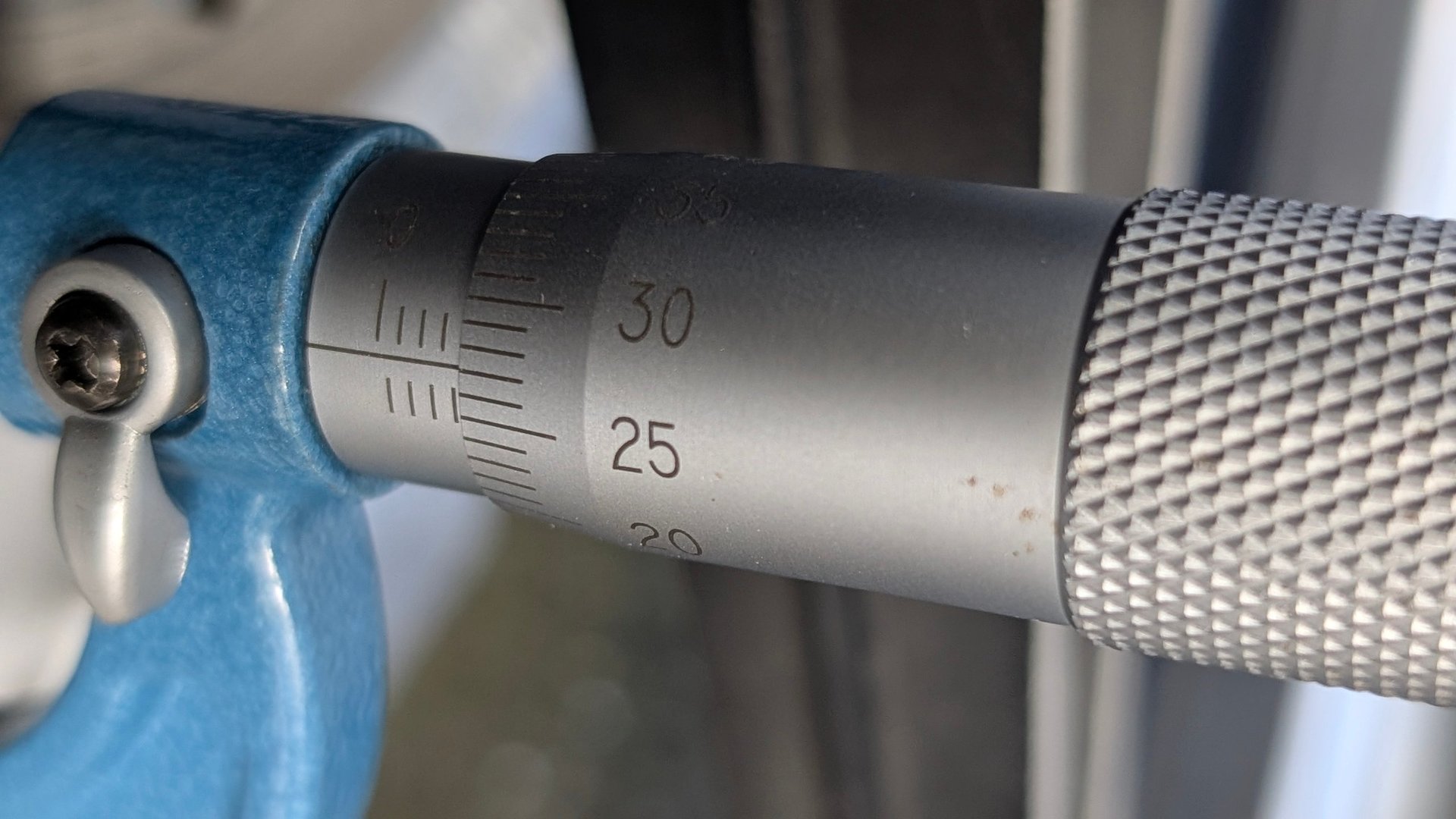
Closest related alternatives
galvanized steel sheet supplier
Trade-off: corrosion protection without the organic system — no colour, no finish and no appearance requirement, but also no paint layer to damage during forming. Choose it where appearance carries no duty.
corrugated steel sheet supplier
Trade-off: geometry carries the stiffness, so the specification is led by the profile drawing and the effective cover width. Choose it where the covering duty dominates and the profile form is already fixed.
These are the two adjacent related pages. Comparing them against PPGI is a specification comparison, not a ranking — each is correct for a different duty, and none is universally better than the others.
Next action: confirm the sheet is not welded or heat-affected after coating before you go further. If it is, the product choice changes and no amount of coating specification will recover it.
Selection Tool
PPGI Coating-System RFQ Builder
This builder does not guess your values and does not read any stock, price, certificate or lead-time record. It takes the layers you declare, reports which ones are still undefined, and produces a copyable layered specification you can transfer to the RFQ. It performs no structural design, no durability assessment and no chemical-resistance rating.
No result yet
Declare the layers on the left. Nothing is assumed on your behalf — the result reports only what you state, and lists every layer that is still undefined.
Next action: close every open layer, then transfer the summary. A PPGI enquiry that names the substrate, the metallic coating basis and the full organic system is the only one that can be answered without a clarification round.
Standards, Grades, Dimensions & Service Conditions
Every value on a PPGI specification needs a source and a basis
This section states no grade value, no tolerance, no coating mass and no mechanical property. Each of those comes from a document you invoke and edition you cite. What follows is the decision structure: what each input governs, where it must be verified, what it changes commercially, and what it forces into the RFQ.
Evidence warning. Numeric limits for thickness tolerance, coating mass, chemistry and mechanical properties are defined by the standard, edition and declared condition that governs your order. They are not stated on this page because stating them without that context would create exactly the unverifiable specification this page exists to prevent. Take each value from the document you invoke, and cite it by designation and edition in the enquiry.
Grade & standard control table
The layered acceptance basis for PPGI, and what each layer forces into the RFQ.
| Layer / control | Applicability & limitation | Source / verification requirement | Buyer implication | Resulting RFQ field |
|---|---|---|---|---|
| Substrate standard & grade | Applies to the steel beneath the coating. Does not describe the coating or the finish. | Cite the standard designation and edition; verify the grade in the mill certificate for the material supplied. | The grade is the acceptance basis for a substitution claim; without it, substitution is undetectable at goods-in. | Substrate standard, edition and grade. |
| Metallic coating designation | Applies to the corrosion-protection layer. Zinc and aluminium-zinc families behave differently and are not interchangeable. | From the coated-sheet standard you invoke; verify against the declaration of coating mass or thickness basis on the certificate. | The basis — mass per unit area or thickness — is the comparable quantity between suppliers, not the trade name. | Coating designation with its declared basis. |
| Organic coating system | Applies to primer and topcoat. Durability performance is defined by the coating system specification, not by the colour. | Coating supplier's system data; verify the applied system against the identification supplied with the material. | A colour name specifies none of chemistry, film build or weathering performance — each must be named separately. | Primer system, topcoat system, colour reference. |
| Prepainted product standard | Covers the prepainted product category. Does not replace the substrate standard or the coating system specification. | Cite by designation and edition; confirm the current edition in force when you invoke it. | Because more than one document controls acceptance, citing a trade name in place of a standard leaves the basis undefined. | Product standard designation and edition. |
dx51d galvanized steel sheet supplier
Directly applicable when your substrate grade sits in the DX51D family: the route covers the grade designation and what must be verified against it.
en 10346 steel sheet supplier
Directly applicable where the continuously hot-dip coated standard governs: the route covers designation and scope. Confirm the edition in force before citing it.
Size & unit-weight control table
Dimensions and mass are ordering quantities. Each is only comparable when its basis is stated.
| Input | Applicability & limitation | Source / verification requirement | Buyer implication | Resulting RFQ field |
|---|---|---|---|---|
| Nominal thickness | Applies to the ordered sheet. Its meaning changes entirely depending on whether it refers to base metal or includes the coating. | Tolerance basis from the standard you invoke; verify on the material against that basis. | Two offers on different thickness bases appear identical and are not the same product. | Nominal thickness with its declared basis. |
| Width & length | Applies to the ordered form. Coil and cut sheet are ordered on different dimension conventions. | Tolerance basis from the standard; confirm whether the order is coil or cut sheet before stating dimensions. | Stating dimensions without stating the ordered form leaves the tolerance question unanswered. | Width, length, and whether coil or cut sheet. |
| Unit weight / mass basis | Applies to quantity reconciliation. The coated product carries the coating mass in addition to the steel. | Derived from dimensions and the density convention the standard applies; verify by reconciliation at goods-in. | Quantity agreed on mass and quantity agreed on count are different commitments; say which governs. | Quantity with its unit and the basis of reconciliation. |
| Unit system | Applies to every dimension above. SI and inch-pound values are not interchangeable without conversion. | Declare the system; do not mix systems unlabelled in one specification line. | A mixed unlabelled specification is a recurring source of dimensional disputes at goods-in. | Unit system declared for each dimension. |
Chemical & mechanical properties control table
Properties belong to the substrate grade. The coating layers do not change them, and no property value is stated here.
| Property class | Applicability & limitation | Source / verification requirement | Buyer implication | Resulting RFQ field |
|---|---|---|---|---|
| Chemistry | Applies to the substrate grade. Governed by the grade designation, not by the coating. | Limits are stated in the grade standard; verify the heat analysis on the mill certificate. | Request the certificate against the grade designation — otherwise the chemistry has no named basis. | Grade designation and required certificate type. |
| Mechanical properties | Applies to the substrate grade and to the direction of test relative to rolling. Prepainting does not set these values. | Values and test methods come from the grade standard; verify the results declared on the certificate. | Where the part is formed, the relevant property and its test direction must be named, not assumed. | Grade, test direction and required property declaration. |
| Coating performance properties | Belong to the coating system, not the substrate. They are a separate class of requirement. | Defined by the coating system specification and the supplier's system data; verify the applied system identification. | Durability expectation is a coating-system property. Asking for it against the substrate specification gets no answer. | Coating system identification and performance requirement. |
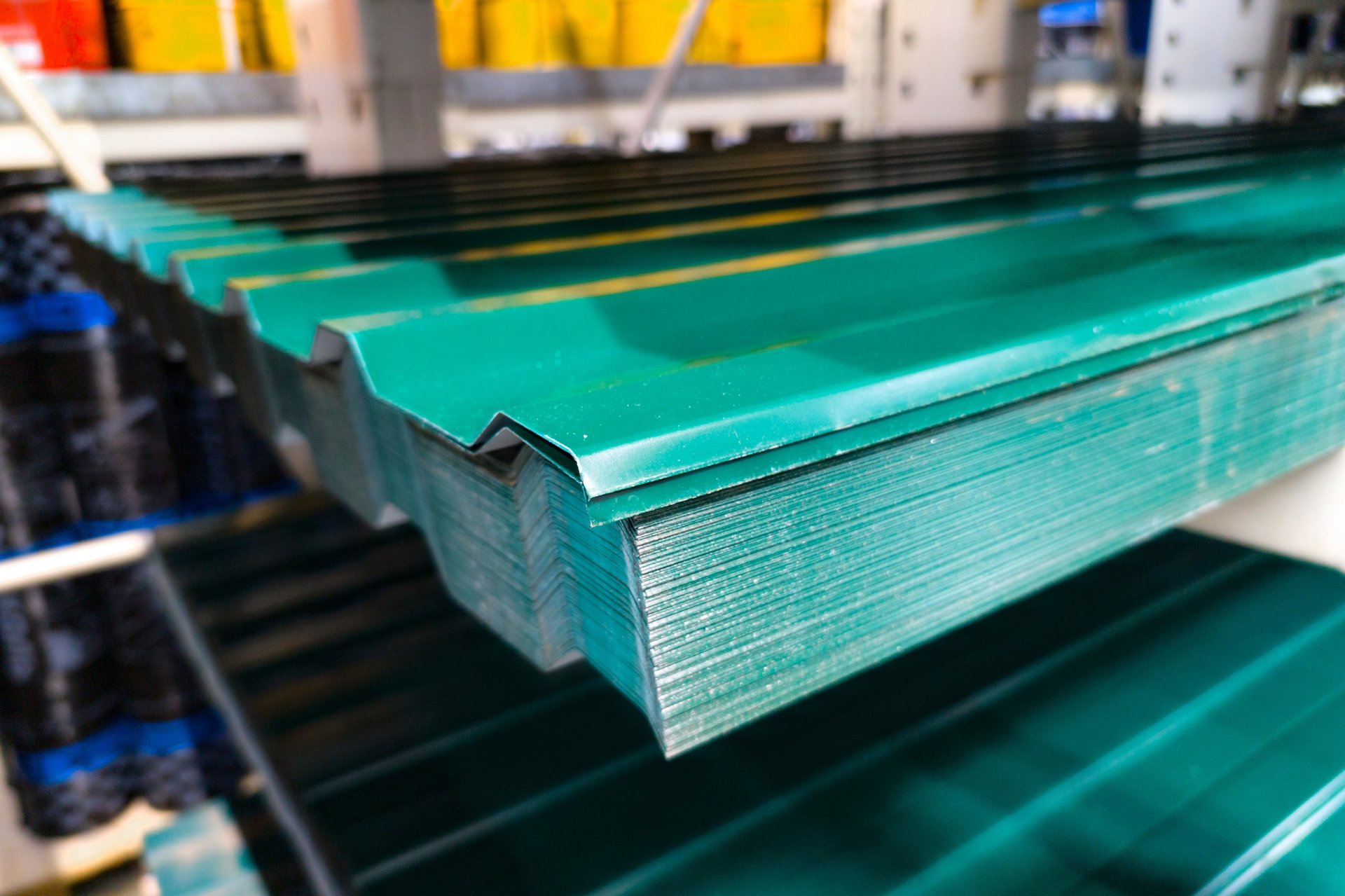
Next action: for each value you intend to put in the enquiry, write down the document it comes from. A value with no document behind it will be resolved by whoever quotes it — and not necessarily in your favour.
GCC Markets & Destination Planning
The destination changes the document set, not just the freight
Each market below is an active planning route for a steel sheet requirement in that country. Destination drives three separate things: the exposure assumption that governs the coating system, the documents the import and goods-in process will demand, and the delivery-location inputs that determine how the material must be packed and sequenced.
 United Arab Emirates
The exposure split inside the Emirates is the decisive input: a Gulf-facing coastal elevation and an inland industrial installation do not carry the same coating duty. State which one applies before the coating system is fixed, because the two produce different specifications from the same colour reference.
Destination inputs: emirate and delivery location, coastal or inland, import documentation route.
 Saudi Arabia
Programme volumes are large and packages are frequently ordered at different times. The controlling risk is batch continuity across an elevation: panels from two production batches on one visible plane is the defect that most often survives every documentary check, because each batch is individually compliant.
Destination inputs: city and site, inland or coastal, delivery sequencing across packages.
 Qatar
Humidity and saline air make the metallic coating basis the single most consequential line in the specification. An enquiry that names the basis up front removes the most common clarification round on this destination, because the basis is what makes two coating designations comparable at all.
Destination inputs: delivery location, coastal exposure statement, coating basis on the certificate.
 Kuwait
Temperature swing across the service year drives movement at fixings and laps. The coating system has to accept that movement, which makes the formed geometry and the coating's forming compatibility relevant to the destination rather than only to the profile drawing.
Destination inputs: delivery location, fixing and lap detail, dimension tolerance basis.
 Bahrain
An island destination where a marine exposure assumption is often made implicitly rather than stated. Making it explicit matters, because the assumption determines both the coating system and the documentary expectation — and an implicit assumption cannot be checked against anything.
Destination inputs: delivery location, stated exposure assumption, import documentation route.
 Oman
Overland and coastal delivery routes on the same project make packing a commercial variable rather than a detail. Stating the destination as a route rather than a city is what allows the packing specification to be priced against the transport leg it will actually face.
Destination inputs: city and route, packing requirement for the transport leg, delivery window.
What destination planning does not establish
This section lists planning routes, not markets served. It states no availability, no stock position, no port, no lead time and no customs classification for any country. Each of those is a commercial fact that must be confirmed for the requirement you are actually placing and the date on which you place it.
Next action: select the destination route and carry three things into the enquiry from it — the exposure assumption, the documentation expectation, and the delivery location stated as a route rather than a city.
Commercial, Logistics & Availability Inputs
What actually determines a PPGI quotation
A PPGI quotation is built from the specification layers plus a small number of commercial variables. This page states no price, no stock position, no lead time, no origin and no delivery commitment — each of those is quoted against a specific requirement. What follows is the input list a quotation is built from, and the unknowns that stay open until it is.
Specification load
The number of layers and the specificity of each one. A full organic system with a named primer, topcoat, colour reference and gloss level is a different production requirement from a single-line description, and it is priced as such.
Quantity & unit
Quantity priced on mass and quantity priced on sheet count commit two different things. Say which basis governs the order, because the reconciliation at goods-in follows the basis you named, not the one that was convenient.
Ordered form
Coil or cut sheet changes the dimension conventions, the tolerance question and the packing requirement. It is a commercial variable as much as a technical one.
Delivery destination & Incoterm
Where the material is delivered and where the responsibility for it transfers are two separate answers. State the delivery location and the Incoterm you are working to, because the two together define who carries the risk on each leg.
Packaging requirement
Packing follows from the transport route and the goods-in handling the material will face. A coating is a visible surface — edge protection and interleaving are outcome variables on a prepainted product, not packaging trivia.
Documentation set
Which certificates and coating identifications are required, and whether any inspection is to be witnessed. Document requirements added after the order is placed are requests; those stated inside the enquiry are conditions.
| Commercial input | Applicability & limitation | Source / verification requirement | Buyer implication | Resulting RFQ field |
|---|---|---|---|---|
| Price | Price on request. No price is stated, published or implied on this page. | Quoted per requirement against the specification layers and commercial inputs below. | A price without the specification it was quoted against cannot be compared with another price. | Complete layered specification plus commercial inputs. |
| Availability & lead time | Not stated here. Availability is a point-in-time fact tied to a specific specification and delivery date. | Confirm against the requirement you are placing and the date you place it — not against a page. | Any lead time not confirmed in writing for your requirement is an assumption, and the programme carries the risk of it. | Required delivery window, to be confirmed rather than assumed. |
| Origin | Not stated here. No origin, mill or production location is claimed on this page. | Where origin matters to your approval or import process, state it as an enquiry requirement so it is answered explicitly. | An origin requirement left unstated is answered by whatever was sourced, not by what you needed. | Origin requirement or its explicit absence. |
| Certification status | Not claimed. No approval, certification or endorsement is asserted on this page. | Any approval requirement must be named in the enquiry and confirmed against the current document set. | An unstated approval requirement discovered at goods-in stops the release of material that is otherwise compliant. | Named approval or certification requirement, if any. |
| Incoterm & customs inputs | Depends on the destination and the commercial relationship. No classification or duty treatment is stated here. | Confirm the Incoterm and the customs inputs separately — they are the buyer's and importer's responsibility to establish for their own jurisdiction. | Assuming a duty treatment or classification is a cost that surfaces after the material has shipped. | Named Incoterm, delivery location and importer responsibilities. |
Next action: complete the specification layers first, then the commercial inputs. A quotation requested before the layers are defined is answered by assumption, and an assumption is the most expensive thing you can buy.
Expert Insight
How a PPGI buyer separates substrate, metallic coating and paint system
The layered structure this page insists on is not a local convention — it follows from how the product standard for prepainted metallic-coated sheet for exterior building products is written. Reading that standard directly is the most reliable way to see why each layer must become its own RFQ field.
Primary source
ASTM A755/A755M-18(2024) — Prepainted Metallic-Coated Steel Sheet for Exterior Building Products
Open the standard record at ASTM- Method
- Use the standard to identify that exterior prepainted building sheet depends on the metallic-coated substrate plus the organic coating system plus the forming operation, then make each of those layers a separate field in the RFQ rather than collapsing them into a product name.
- Information date
- 11 September 2026. Standards are revised on their own cycle — confirm the edition and any amendment in force at the time you invoke it, rather than relying on this date.
- Scope
- Metallic-coated steel sheet coil-coated with organic films for exterior exposed building products, including corrugated and roll- or brake-formed products.
- Limitations
- A colour name alone does not specify coating chemistry, film build, substrate coating mass, weathering performance or project durability. The standard also does not perform structural design or project suitability approval for your build-up.
Buyer implication
Specify substrate standard and grade, metallic coating designation, primer and topcoat system, colour reference, finish, profile or forming, dimensions, exposure and the verification documents — as separate fields, not as one description.
Why the order of the layers matters
Each layer exists for a different reason, and each can be changed without changing the others. The substrate carries the structural duty. The metallic coating carries corrosion protection. The organic system carries colour and weathering performance. The forming operation tests all three at once. That is why a change to any one layer is a change to the product, and why a colour reference alone leaves three of the four layers undefined.
Applying it to your own enquiry
- Cite each controlling document by designation and edition, so the acceptance basis is unambiguous.
- State the metallic coating on a mass or thickness basis — the designation alone does not state the protection level.
- Name the forming operation on the enquiry, so coating suitability for that forming can be answered rather than assumed.
Next action: cite the substrate standard, the coating designation and the coating system together in the enquiry. Naming any one of them alone leaves the remaining layers to be inferred by whoever quotes it.
Related Products & Technical Resources
Where to go next, and what each route settles
The routes below are grouped by the decision each one resolves — not listed as a directory. Use the group that matches the question still open on your specification.
The range this product sits in
Settles whether a coated, prepainted product is the right form at all — the question to answer before the coating system is specified.
steel sheet supplierThe full steel sheet range with the specification inputs and verification requirements that apply to each product form.Product-form comparisons
Settles which sheet product form carries your duty — coated appearance, or geometry-led stiffness.
Dimensional verification
Settles how the nominal figures on your drawing are stated and checked, before they become a goods-in dispute.
Next action: if more than one group above is still open, resolve the product-form group first. The coating system you specify depends on the form you have chosen, not the other way round.
From Enquiry to Delivery
The PPGI order chain and who owns each step
Prepainting inserts a coating operation between the steel and the finished product, and that extra step is where most PPGI disputes originate. Each stage below names the buyer concern it addresses, the input it requires, the output it produces and the risk that sits on it.
| Stage | Buyer concern | Required input | Evidence / output | Risk |
|---|---|---|---|---|
| 1 — Requirement defined | Being quoted something other than what was intended. | All four layers named: substrate, metallic coating, organic system, colour/finish. | A written layered specification that two parties can hold each other to. | A colour-and-no-more enquiry transfers every remaining choice to the supplier. |
| 2 — Documents agreed | Discovering after the order that the certificate does not cover what was bought. | Each controlling standard cited by designation and edition, plus the required document list. | An agreed evidence set tied to the specification rather than to a product name. | Documents requested after the order are requests; inside the enquiry they are conditions. |
| 3 — Substrate sourced & coated | Silent substitution of grade, coating class or coating system. | The agreed grade, coating designation with its basis, and the named organic system. | Mill certificate and coating system identification for the material actually produced. | Without a declared coating basis, a substitution of equal designation is undetectable. |
| 4 — Formed & inspected | Coating damage or adhesion failure appearing during or after forming. | The forming operation stated in the enquiry, and the dimensional and surface inspection basis. | Formed material checked against the agreed colour reference, gloss level and tolerance basis. | Coating and forming are accepted together — specifying one without the other leaves the gap open. |
| 5 — Packed & dispatched | Material arriving compliant on paper and damaged in fact. | Delivery location as a route, and the packing requirement that route implies. | Bundle identification reconcilable with the document set that accompanies it. | A valid certificate on a crushed edge is a rejected delivery, not a compliant one. |
| 6 — Received & released | Material held at site because the paperwork does not match the goods. | The document set, the marking standard and the reconciliation basis agreed at stage two. | Goods-in release against the same basis the order was placed on. | Reconciliation on a basis nobody agreed is the last place a specification quietly fails. |
Where PPGI orders stall
- The colour is agreed but the coating system behind it is never named.
- The metallic coating designation is quoted without its mass or thickness basis, so protection level is never actually settled.
- The forming operation is discovered at stage four rather than stated at stage one, after the coating system has been fixed.
What each stage protects
- A named layered specification protects the commercial comparison between offers.
- An agreed document set protects the goods-in release from an avoidable hold.
- A stated forming operation protects the coating system from being chosen without knowing what it must survive.
Next action: identify which stage your requirement currently sits at. A PPGI enquiry that has not completed stage one cannot be quoted accurately — only quickly.
Evidence-Led Buyer Advantages
Five buyer concerns, and what actually addresses them
Each row below starts from a concern a PPGI buyer actually raises, states the evidence or capability that addresses it, and ends at the procurement outcome. None of it is a superiority claim — where the answer is a limitation, the limitation is what is stated.
| Buyer concern | Evidence / capability | Procurement outcome |
|---|---|---|
| Quotations that cannot be compared | Every specification input is qualified against the layers that actually control the product, and open layers are raised as questions rather than closed by assumption. | Offers arrive on one declared basis and can be ranked against each other. |
| Silent substitution of grade or coating | The substrate standard, grade and coating designation with its basis are stated as separate RFQ fields, so a substitution is visible against the specification. | Substitution becomes detectable at goods-in instead of at the end of the building's life. |
| Undefined tolerance or finish | Thickness, width and length bases are required in the specification, and the finish is expressed as a colour reference and gloss level rather than a colour name. | Dimensional and appearance acceptance stops being a matter of opinion at goods-in. |
| Documentation that does not match the goods | The document list is written into the enquiry as a condition, and bundle identification is required to reconcile with it. | Material is released at goods-in against the same basis it was ordered on. |
| Claims that cannot be verified | No price, stock, lead time, origin, port, certification status or project reference is stated on this page. Where a fact is required, it is named as a verification requirement. | Nothing in the specification rests on a claim that has not been confirmed in writing for your requirement. |
Next action: check your own enquiry against these five concerns. Any row where the evidence is missing is a row where the outcome depends on someone else's assumption.
Buyer FAQ
PPGI questions that decide the specification
These are the questions that most often determine whether a PPGI enquiry can be answered on the first pass. Each answer states its own basis and its own limits.
What exact specification fields should an RFQ for PPGI Prepainted Steel Sheet include?
Substrate standard and grade, metallic coating designation with its mass or thickness basis, primer and topcoat system, colour reference, gloss or finish requirement, nominal thickness with its basis, profile or forming requirement, dimensions and quantity with unit, exposure and intended function, destination, required delivery window and the verification documents required. Each of these is a separate RFQ field because each is a separate acceptance control.
Which standard or designation should control acceptance of PPGI Prepainted Steel Sheet?
The acceptance basis is layered and each layer must be named. Substrate and metallic coating are controlled by the specification standard you invoke for the coated sheet, including its designation system and edition. The organic coating system is controlled by its own paint-system specification. The product standard covers the prepainted product category. Because more than one document is in play, cite each document by designation and edition rather than referring to the product by trade name.
How should thickness, dimensions and tolerances be stated for PPGI Prepainted Steel Sheet?
State the nominal thickness of the base substrate with a clear statement of whether the figure refers to the base metal or includes the coating, and give the tolerance basis that governs it. State width and length as ordered dimensions with their tolerance basis, and state whether the material is supplied as coil or as cut sheet. The applicable numeric limits come from the standard and edition you invoke, so the range must be confirmed against that document rather than assumed from the nominal figure.
Which finish, coating, forming or service-condition details can change the PPGI Prepainted Steel Sheet selection?
The metallic coating type and its mass basis, the primer and topcoat chemistry, the colour reference, the gloss level and surface texture, the profile or forming operation, and the exposure the installed product will see. A colour name alone does not specify coating chemistry, film build, substrate coating mass, weathering performance or project durability, so each of these must be stated separately rather than inferred from a colour description.
Which certificates or verification documents should be requested for PPGI Prepainted Steel Sheet?
Request the inspection documents that the substrate standard, the coating system specification and the end use require, stated explicitly in the enquiry. The usual set is a mill test certificate for the coated substrate covering grade and coating designation with its basis, plus the coating system identification and any coating performance documentation the project requires. A certificate confirms results on the material it identifies; it does not by itself establish that the coating system suits your project exposure, so the suitability question remains a separate check.
Next action: if a question above is still open for your requirement, include it in the enquiry. A stated question is answered in writing; an unstated one is answered by the material that arrives.
Request a Quote
Send the layers, not the colour name
A PPGI enquiry that names the substrate standard and grade, the metallic coating with its basis, the primer and topcoat system, the colour reference and finish, the forming operation, the dimensions, the quantity, the destination and the delivery window can be quoted without a clarification round. If some layers are still open, send it with those marked — they will be raised as questions rather than filled with assumptions.
Price on request. No price, stock position, lead time, origin or certification status is stated or implied on this page.
Minimum RFQ payload
- Governing standard or designation, with edition
- Product form — coil or cut sheet
- Dimensions and tolerance basis
- Finish and coating specification, including colour reference
- Quantity with its unit and reconciliation basis
- Destination and Incoterm
- Required delivery window
- Required documents and any inspection requirement
Commercial department
- WhatsApp / Mobile
- +971 56 398 0860
- Address
- Office 3303, Churchill Executive Tower, Business Bay, Dubai, United Arab Emirates
- Working hours
- Monday – Saturday: 8.00 AM – 6.00 PM | Sunday: Closed
Next action: send the requirement as it stands. Whether every layer is filled or some remain open, the enquiry is read against the same specification controls — and a stated gap is always cheaper than a discovered one.