
1
Enquiry
Input: A36 designation, product form, quantity
Output: Purchase spec captured
Risk: Grade-only enquiry risks a wrong-section or wrong-standard quote.
Next: Send the spec in full.
Structural Steel · Grade — ASTM A36 / A36M
ASTM A36 is a material specification covering defined structural product forms; a compliant RFQ must pair A36/A36M with the required shape or product, the dimensional/general-requirements standard, size, thickness where relevant, length, quantity and test-report requirements. The grade label is the starting point — the product form, standard, dimensions and documents together complete the purchase order.
Evidence limit: A36 chemistry and mechanical values are not reproduced from memory here — they must be verified against the cited current standard or a verified mill test report. What stays open until technical review: exact dimensional standard, tolerance and mechanical confirmation, documentation set, destination and Incoterm. We do not publish live stock, price or lead-time figures.
What to send now
Fit, Alternatives & Selection Logic
The boundary that matters is not the A36 grade label alone but whether you can pair it with the required product form, the dimensional/general-requirements standard, and the project-supplied dimensions and test-report needs. These three states tell you how to treat a brief.
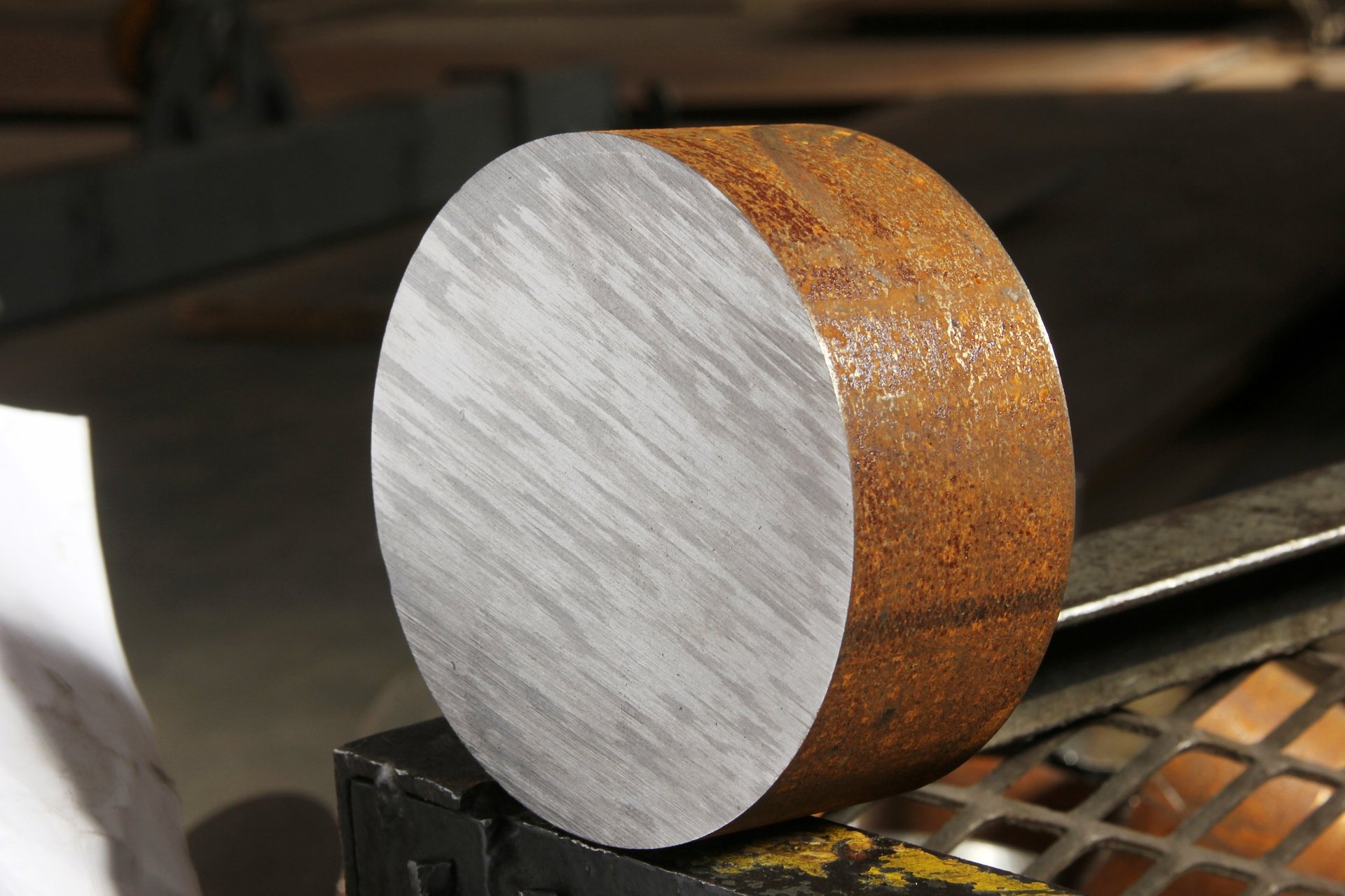
The buyer can name the product form (plate, bar, angle, channel, beam, column or hollow section), state the A36/A36M designation with its governing dimensional/general-requirements standard, and supply the size, thickness, length, quantity, weld/fabrication note and test-report requirements from the project.
A brief that only says "A36" with no product form and no dimensional standard cannot be quoted as-is. A material specification is not a complete purchase order — it needs the pairing resolved first, or it carries a real risk of the wrong section family or wrong standard.
When the drawing is still the project's own, the standard edition is unnamed, or quantity and size are not final, treat the A36 spec as "verify first": record which fields remain unverified rather than defaulting them, and confirm the governing standard and project documents before technical review.
Preserve the drawing reference and project-spec identity in the RFQ. A36 chemistry and mechanical values must be verified against the cited current standard or mill test report, not inferred from the page.
A same-appearance or similar-strength alternative in another family is not engineering equivalence. Any substitution of grade, standard or section requires explicit project approval and is confirmed at the RFQ.
The ASTM grade set and the structural-steel hierarchy keep this decision in context. When the current route is too narrow, move across the related grade set or up the structural hierarchy: astm steel grades and structural steel supplier.
Comparison boundary: every fit state above states its limit — a nominal depth or similar yield is never treated as engineering equivalence to A36 in another shape family. If the member is an I-section needing its type route, review the h beam steel supplier route for its specification and comparison purpose.
Selection Tool
Pair the A36/A36M designation with the required shape or product, the dimensional/general-requirements standard, size/thickness, length, quantity, weld/fabrication note and test-report requirement. The check validates each line item, flags empty or mismatched states and builds a copyable RFQ summary from what you entered.
Why the pairing matters
A36/A36M without a product form and a dimensional standard is not a complete purchase specification — it leaves too much unverified.
Required fields
Product form, A36 designation, dimensional/general-requirements standard, size/thickness and quantity are required before a line is spec-complete.
Never auto-filled
Grade, standard, size, quantity, stock, origin, Incoterm and destination are never invented — empty fields stay "unknown / verify".
No design approval
This tool does not rate structural load, perform equivalence approval or act as a design authority.
| Product form | A36 / A36M designation | Dimensional / general-req standard | Size / thickness | Length | Quantity & unit | Weld / fabrication note | Test report | |
|---|---|---|---|---|---|---|---|---|
Purchase-spec status
Method & assumptions: this check validates whether A36/A36M is paired with a product form, a dimensional/general-requirements standard and dimensions, and flags missing or mismatched fields. It never invents a default grade, standard, size, quantity, stock, origin, Incoterm or destination, and it does not perform structural design, load-rating or material-equivalence approval. A36 chemistry and mechanical values must be verified against the cited current standard or a verified mill test report.
RFQ summary
ASTM A36 purchase specification not yet entered. Add product form, A36/A36M designation, dimensional standard, size/thickness, length and quantity to build the RFQ summary.
No line items entered yet — add fields above to build the summary.
Standards, Grades, Dimensions & Service Conditions
ASTM A36 is a material specification covering defined structural product forms; its dimensions, tolerances and mechanical values are confirmed under the governing standard and project documents. The tables below connect the A36 designation, the dimensional/product standard, the shape and the service conditions to the fields your RFQ must carry. Values are not published from memory — they require verified evidence and explicit units.

A printed member schedule, a calibrated reference and a neutral section sketch are the working set a buyer uses to reconcile the A36 material designation with the governing dimensional standard and the drawn member. This is a verification workflow — it checks a pairing, it does not approve a design or imply live stock.
When you need the ASTM structural-steel standard boundary that A36 falls under, follow the standard route for the comparison and verification context: astm structural steel — a comparison route with the standard boundary, not an automatic substitute.
| Field | What it locks | Required evidence | RFQ field / next action |
|---|---|---|---|
| Material designation | The A36/A36M material specification scope and the structural product form it covers. | Cited current standard / mill test certificate | Designation field; never default |
| Dimensional / general-req standard | The standard (e.g. ASTM A6/A6M dimensional context) that defines size, thickness and tolerances. | Standard edition / mill-tolerance band | Dimensional standard field; never default |
| Product form & designation | The exact member shape (plate, bar, angle, channel, beam, column, hollow) and its designation. | Drawing / member schedule | Member designation field |
| Dimensions / units / tolerances | Size, thickness where relevant, length and quantity, in explicit units, under the product standard's tolerance band. | Verified dimensional source / drawing | Dimensions & length field |
| Service / fabrication conditions | Weld/fabrication, finish and service conditions supplied by the project that can change grade or inspection selection. | Project basis | Weld/fabrication note; verify |
| Inspection documents | Test report, MTC, dimensional inspection and traceability required by the order. | Mill / inspection records | Test-report & documentation fields at RFQ |
Evidence warning: numeric chemistry, mechanical properties, tolerances, dimensional values and section masses are not published here from memory. Any numeric value you need must be verified against the governing current standard, the mill test report or the project drawing. An unverified numeric property is a publication blocker, not a fill-in-the-blank; enter it in the Spec Check as an RFQ field to verify instead.
Applicability/limitation, buyer implication, evidence/source requirement and the resulting RFQ field for each A36 designation and standard combination are resolved against the governing standard scope — not from memory. Confirm the edition before the RFQ.
Section sizes, dimensions and unit weights vary with the product form and the dimensional standard edition. Values require verified authority, explicit units and stated conditions. Unverified sizes/weights are publication blockers — enter them as RFQ fields to verify.
A36 chemistry and yield/tensile/toughness values depend on the specific grade, cross-section and mill lot. No numeric chemistry or mechanical property appears here without a direct verified source. Request the governing standard's data or the mill test report as the evidence requirement.
Availability, lead time, stock and origin are quotation outputs — never published here. The documentation set (MTC, dimensional inspection, TPI, traceability) is confirmed at the RFQ stage per the order's inspection requirements.
Quality, Testing & Documentation
What the buyer requests, what it verifies, who verifies it, when it is required and what RFQ field it affects. No MTC, certificate, heat number or inspection is invented — each item is quotation-dependent and confirmed at technical review.
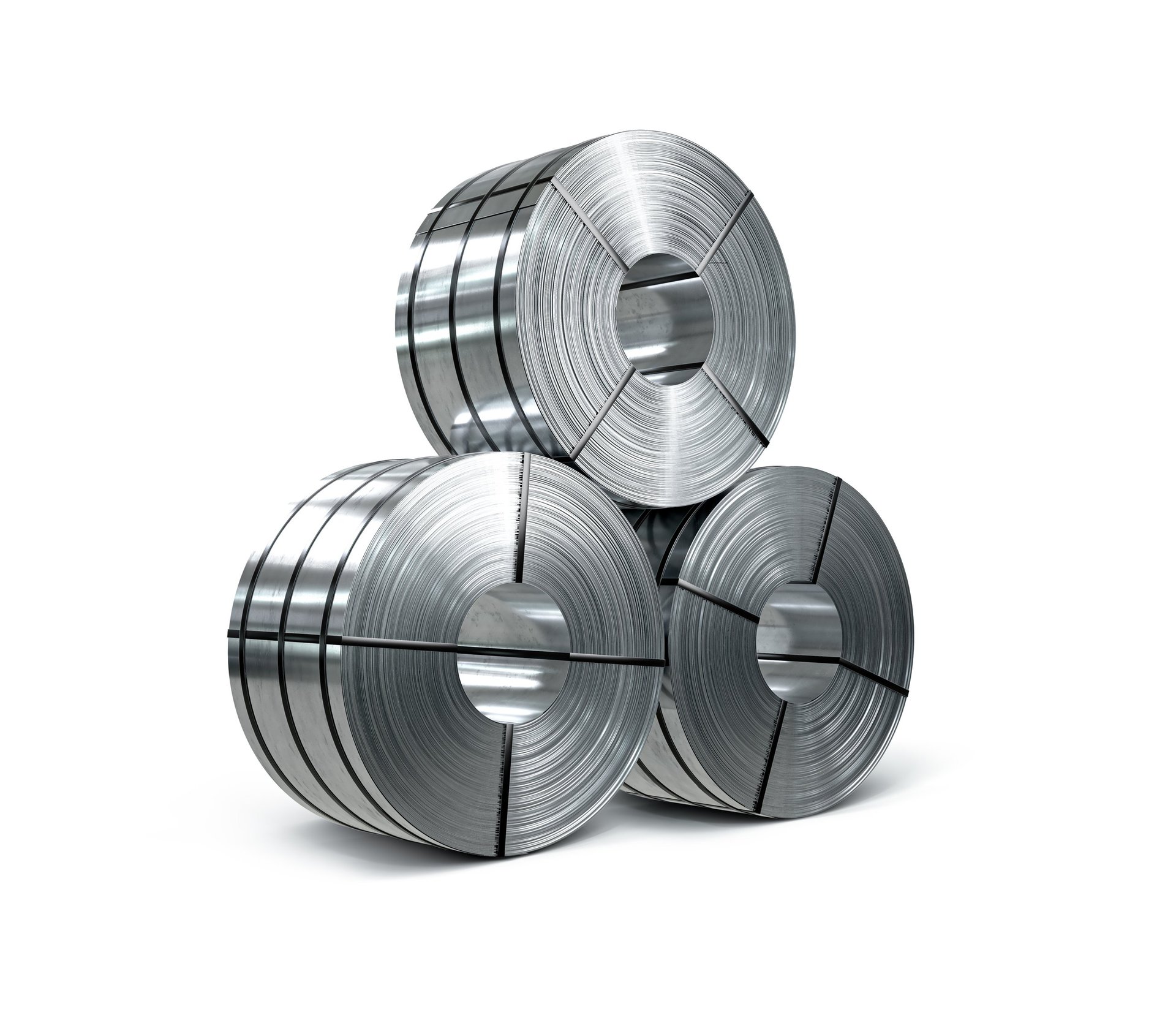
The member designation and dimensional identity you lock in the Spec Check continue into commercial handoff: identification tags, lifting/packing context and the document check are part of the order, not afterthoughts. The image above is a packing-and-document iteration — it depicts handling and review, not a named facility, live stock or a service claim.
Request a Quote for ASTM A36 Structural Steel| Document / evidence | What it verifies | Who verifies | When required | Limitation | RFQ field affected |
|---|---|---|---|---|---|
| Mill test certificate (MTC) | A36 chemistry & mechanical results for the supplied heat(s) | Mill / supplier — buyer reviews | At order & delivery | Heat-lot specific; not a design approval | Test-report / documentation field |
| Chemical + mechanical test report | Verified A36 chemistry and mechanical values against the standard | Supplier / buyer's QA-QC team | At order & delivery | Values are per the cited standard / heat, not page memory | Test-report requirement field |
| Dimensional inspection report | Nominal size, thickness, length & tolerance conformance | Inspector / buyer's engineer | Pre-shipment when specified | Against the product standard's tolerance band | Size/thickness & length field |
| Third-party inspection (TPI) | Independent confirmation per the agreed scope | Independent inspection body | When requested | Scope defined by the order | Inspection/documentation field |
| Heat-lot traceability | Links each member to its heat via identification tags | Supplier / logistics | With the member & docs | No fabrication/equivalence claim | Buyer notes field |
No MTC, certificate, heat number or inspection approval is asserted here — every row is confirmed against the order's inspection requirements and the cited standard at technical review.
Application & Industry Decision Paths
Each application route is shown with the operating/fabrication condition, the resulting specification risk and the field to verify — not a generic use list. Follow a route only where the stated boundary matches your project.
PEB structures use framed structural steel with specific dimensional and fabrication inputs from the building system. The A36 spec must carry the member form, size and weld/fabrication requirements from the system drawing. Route for the PEB boundary: pre engineered building steel supplier — concerned with the building system drawing, not a generic section.
Power-plant framing raises stricter inspection, fabrication and material-specification consequences beyond the grade decision. For the power-plant boundary and its verification limits: power plant structural steel supplier — verify the plant-specific test-report and inspection requirement separately.
General construction framing needs the member designation, dimensional standard and project-supplied fabrication conditions locked together. For the construction-industry boundary: structural steel for construction — verify the industry-specific tolerances and document set at RFQ.
Selection note: each card states its operating/fabrication condition, the resulting risk and the field to verify. A similar shape, strength or nominal depth is never treated as engineering equivalence to A36 in another grade or standard family.
GCC Markets & Destination Planning
Each GCC market route carries its own delivery-location, importer/clearance, document and Incoterm questions. These destination cards help you resolve the destination inputs for ASTM A36 structural steel; they do not claim a branch, warehouse, live stock or guaranteed service presence in any country.

Confirm the delivery city/emirate, importer and clearance input, the document set for the receiving port and the Incoterm named place. Route: structural steel supplier UAE

Confirm the delivery point in KSA, the clearance and documentation path and the Incoterm named place. Route: structural steel supplier Saudi Arabia

Confirm the port/city, the document set and the Incoterm named place for the delivery. Route: structural steel supplier Qatar

Confirm the delivery point in Oman, importer/clearance input and the Incoterm named place. Route: structural steel supplier Oman

Confirm the delivery point, document set and Incoterm named place. Route: structural steel supplier Bahrain

Confirm the delivery point in Kuwait, importer/clearance input and Incoterm named place. Route: structural steel supplier Kuwait
Destination card rule: every card above is an active Structural Steel country route. No branch, warehouse, live stock, lead-time or guaranteed service presence is claimed for any country.
Commercial, Logistics & Availability Inputs
Price, stock, lead time, origin, port and delivery are quotation outputs — never published here. The RFQ must carry the inputs below so commercial review can return a complete, named-place quotation against your project basis.
Quantity and unit per member designation, plus cut lengths where the project specifies them. Quotation-dependent.
Packing method and the inspection/document set (MTC, test report, dimensional report, TPI, traceability) confirmed per order.
The delivery city/port and the Incoterm plus named place determine the commercial terms. Never assumed.
Freight routing and material availability are quotation outputs; no live stock, price or lead time is quoted here.
The date you need the material is a required input so commercial review can assess feasibility against the quote.
Grade, standard, size, quantity, stock, origin, Incoterm and destination are never invented — empty fields stay "unknown / verify".
Price on request
No fake price, discount or unverified offer is shown. The quotation is returned after technical review of the fields above.
Related Products & Technical Resources
These resources support the A36 product-scope and purchase-order completeness decision by giving you the related size page for the specific shape. Each route is grouped by the buyer decision it serves and explains why to follow it — not a generic link directory.
When the A36 product form is an angle and you need its nominal size and tolerance reference under the shape standard: steel angle sizes — confirms nominal angle dimensions, distinct from the A36 material decision.
When the A36 product form is a channel and you need its section size and tolerance reference: steel channel sizes — confirms nominal channel dimensions, distinct from the A36 material decision.
Expert Insight
Decision question: what authoritative source should change the buyer decision about A36 product-scope and purchase-order completeness?
ASTM A36/A36M-19 — Standard Specification for Carbon Structural Steel
Primary source · Information date: 2019; active status verified 10 September 2026
Method
Read the cited primary standard's published scope/status and use it to determine which product forms, designation fields and purchase-order conditions require explicit confirmation. Technical values (chemistry, mechanical properties, tolerances, dimensions, toughness) may be published only when verified directly against the licensed/current standard or product test documentation — never from memory.
Scope
Specification-boundary and procurement-completeness guidance for ASTM A36 Structural Steel; not a replacement for the purchased standard, the project design basis or the mill test report.
Limitations
Buyer implication
Use the source to prevent incomplete or wrong-standard RFQs; make unverified numeric properties publication blockers rather than filling them from memory. Review the primary source directly: ASTM A36/A36M-19.
This is a methodology and decision note grounded in the cited primary source — it is not a named-person opinion, and it does not approve a design or an equivalence boundary.
Evidence-led Buyer Advantages
Five real buyer concerns, the verifiable evidence each needs, and the practical outcome. No superiority language — each row names the evidence that must be supplied to de-risk the ASTM A36 decision.
| Buyer concern | Evidence required | Procurement outcome |
|---|---|---|
| Designation accuracy | Exact A36/A36M designation + governing standard scopes | A precise RFQ the supplier can match without guessing |
| Grade traceability | Mill test certificate / grade conformance evidence | Chemistry & mechanical lineage confirmed per heat |
| Dimension verification | Dimensional inspection vs the product standard tolerance | Nominal size, thickness, length & quantity locked to the drawing |
| Document completeness | Test-report, MTC and inspection set confirmed at RFQ | Quote and handoff carry the full verified document set |
| Destination readiness | Destination, Incoterm and named place confirmed at RFQ | Logistics and clearance inputs settled in the quote |
Each row states the evidence to bring and the outcome it delivers; none asserts a "best", "premium" or unsupported superiority claim.
From Enquiry to Delivery
Each stage names the buyer input, the verification output, the risk if an input or its evidence is missing, and the next action. Timing is never promised.
1
Enquiry
Input: A36 designation, product form, quantity
Output: Purchase spec captured
Risk: Grade-only enquiry risks a wrong-section or wrong-standard quote.
Next: Send the spec in full.
2
Technical clarification
Input: Dimensional standard, size/thickness, cut lengths
Output: Specification fixed
Risk: Missing dimensional standard leaves the A36 order under-defined.
Next: Confirm the A36 & standard pairing.
3
Evidence check
Input: Mill certificate, test-report needs
Output: Document set confirmed
Risk: No evidence means unverified conformance.
Next: List required test reports.
4
Commercial review
Input: Destination, Incoterm, requested date
Output: Quote issued on request
Risk: Missing destination stalls the quote.
Next: Provide destination & Incoterm.
5
Order & handoff
Input: PO, documents, delivery
Output: Confirmed supply
Risk: Missing documents delay clearance.
Next: Confirm document handoff.
Buyer FAQ
Route-specific technical and commercial answers that preserve the verification boundary. Basic product definitions are not repeated here.
ASTM A36 is a material specification covering defined structural product forms. To buy it you must name the specific form — plate, bar, angle, channel, beam, column or hollow section — and pair it with the governing dimensional/general-requirements standard. The form and standard are confirmed against the project before the order, not assumed from the grade label.
State the nominal size, the thickness where relevant, the length and the quantity in explicit units. These sit under the governing dimensional/product standard's tolerance band and are carried into the RFQ as verifiable fields rather than inferred. A grade alone is not a dimensioned product.
When the project specifies a toughness requirement, a supplementary requirement or a service/fabrication condition beyond the base designation, it must be reviewed explicitly at RFQ. A36 mechanical and toughness values are verified against the current standard or mill test report — never read off the page from memory.
No. A grade with a similar yield strength or a similar-looking section is not engineering equivalence to A36. Any substitution of grade, standard or section requires explicit project approval and is confirmed at the RFQ, never treated as an automatic drop-in.
Require the chemical and mechanical results tied to the supplied heat(s) — the mill test certificate and any dimensional inspection or third-party inspection the order specifies. State the test-report requirement explicitly so the quote and handoff carry the full verified document set.
Qualified RFQ Handoff
Send the A36/A36M designation, grade/standard, size, quantity, destination and the required delivery date. The commercial team confirms grade, standard, documentation and lead time before quoting — pricing is provided on request.
Include to keep the RFQ valid
Copyable RFQ summary
ASTM A36 purchase specification not yet entered. Add product form, A36/A36M designation, dimensional standard, size/thickness, length and quantity to build the RFQ summary.
Complete the Spec Check above to build the RFQ summary, or submit directly with the fields you have.
Price on request · Grade, standard, documentation and lead time confirmed at RFQ · No named contact person, email or phone is asserted here.
Chemistry evidence gate
The chemical composition of ASTM A36 structural steel, like every numeric property here, is a publication blocker unless it is verified directly against the governing current standard or a mill test record. The decision consequence is an RFQ that never assumes a chemistry it cannot source.
Limitation
A36 composition limits and the products they apply to are read from the cited standard's edition; they are not reproduced from memory, and a grade label alone does not fix the chemistry for a given heat.
Verification step
Confirm the exact A36 designation, product form and standard edition and require the chemistry results on the mill test certificate for the supplied heats.
Next action
Add the chemistry evidence requirement to the RFQ test-report field and the Spec Check, keeping the value "verify" until the source is attached.
Equivalence evidence gate
A36 sits within a wider set of structural carbon steel standards, but any equivalence claim between A36 and another designation is a publication blocker unless it is verified against the governing standards and the project's design basis. The decision consequence is an RFQ that never maps a substitute from memory.
Limitation
A similar yield strength, nominal depth or appearance is never treated as engineering equivalence. Cross-grade and cross-standard mapping requires explicit project approval.
Verification step
Verify any proposed substitute against the applicable standards and the project design basis, and record the equivalence decision before it reaches the RFQ.
Next action
State the substitution boundary and the approval evidence in the buyer notes so commercial and technical review confirm it rather than assume it.
Mill test certificate (MTC) requirements
The mill test certificate is quotation- and heat-dependent: what it must prove, who verifies it and when it is required are confirmed against the order and the cited standard. No MTC or test result is asserted here.
Limitation
An MTC is specific to the supplied heat and the product form; it is not a design approval, and it must be reviewed against the requested designation and standard.
Verification step
Require the MTC to name the A36 designation, the product form, the dimensional standard, the heats and the chemistry and mechanical results, and reconcile them with the order.
Next action
Add the MTC and any additional inspection requirement to the RFQ test-report field so the quote and handoff carry the full verified document set.