
Carbon steel coil
The base substrate for formed-and-welded tube — confirm the designation, gauge tolerance and edge basis against the weld route before the mill accepts it.
carbon steel coil supplierPipe & Tube Manufacturing Coil
A pipe or tube mill buys coil as skelp, and skelp is qualified by the input conditions the line runs on — the width it closes on, the slit and edge condition, the thickness tolerance class and the weld or forming route. Fix those inputs first and the finished tube's dimensions and weld quality follow; leave them loose and no finished-tube specification can recover the yield you lose at the slitter.
Pipe and tube feedstock is qualified as skelp, not by finished-pipe properties. Fix the coil width and slit-width regime, thickness and tolerance class, edge condition, surface/coating preparation and the weld or forming route first — those inputs decide mill yield, weld soundness and the finished tube's dimensional result.
Free, no-obligation skelp input review
Information current as of
Who This Page Is For
Use this page if you buy coil for a pipe or tube mill and need to qualify what the line runs on. If you are specifying product to flow through the pipe, you want the steel pipe pages instead — the purchasing unit is different.
This page is the right fit if you
Look elsewhere if you
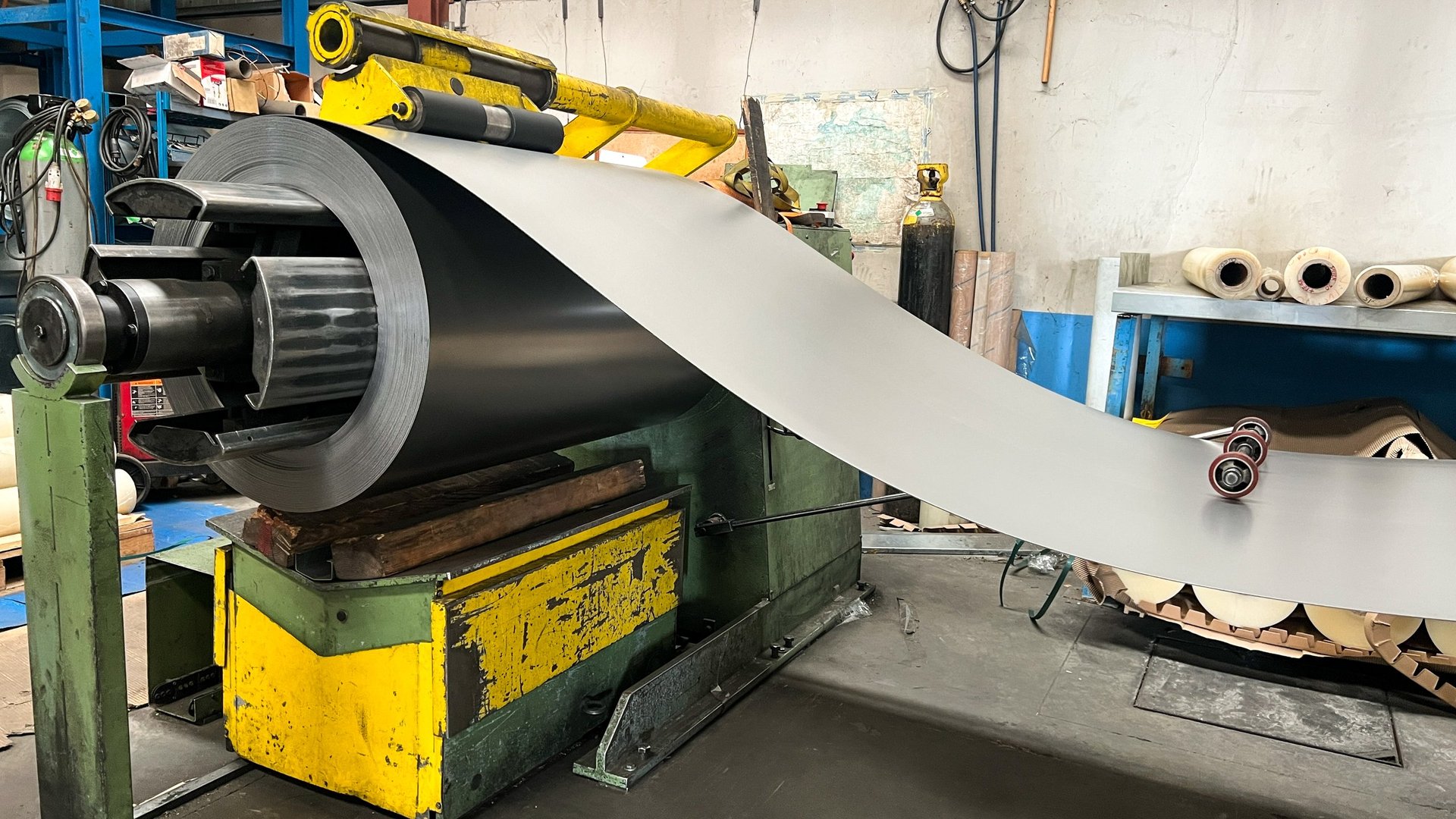
The coil is the mill's input. Width, edge, gauge tolerance and the weld route decide the finished tube long before the first metre leaves the line.
The strip width the line closes on sets the finished circumference — a slitting error is a dimensional error in every metre of tube.
Burr height and edge condition pass straight into the weld or scarfing process, so the slitting basis is a weld-quality input.
The skelp thickness and its tolerance class set the formed wall — order at nominal and the mill runs the wall you actually receive.
Skelp Input Qualification Tool
Enter the dimensions and route the line actually runs. The tool derives the finished-wall estimate from your gauge, returns route-specific guidance and refuses to name a coil route until the width, edge, weld and tolerance inputs are present.
Mill inputs
Reference: galvanized coil · steel coil thickness chart
Derived check — finished wall
Enter the skelp gauge to derive the formed wall the line will run at nominal.
Input fit verdict
Skelp is qualified by the mill's inputs — the width it closes on, the slit and edge condition, the thickness tolerance class and the weld route. Enter the mill basis on the left to see the derived finished-wall estimate, the route-specific guidance and a copyable input summary.
Copyable input summary
Skelp input qualification — Pipe & tube manufacturing feedstock
Mill product: —
Line working width (mm): —
Slit width required (mm): —
Thickness — skelp gauge (mm): —
Thickness tolerance class: —
Edge condition: —
Weld / forming route: —
Surface / coating prep: —
Material designation: —
Governing standard / edition: —
Coil basis (ID/OD/weight): —
Quantity (tonnes): —
Destination / port: —
Document set: —
The tool derives only from figures you supply and states the route boundary rather than recommending a coil route from the product name. Availability, price and lead time are always confirmed against a complete input specification.
Input Specification & Order Conditions
Each input below changes what the mill can do with the coil. The table states what must be agreed at order and the buyer consequence — it deliberately leaves numeric limits to the governing standard rather than publishing figures that would need inventing.
| Input attribute | Why it matters to the mill | Order condition | Buyer consequence → RFQ field |
|---|---|---|---|
| Slit width | The width the forming line closes on sets the finished circumference | Width in mm with the slitting tolerance basis | slit width |
| Thickness & tolerance class | Sets the formed wall and how much of the ordered gauge the mill receives | Gauge in mm plus the tolerance class, not nominal alone | thickness + tolerance class |
| Edge condition | Burr height and edge shape feed the weld, scarfing and forming process | Mill edge, slit, deburred or rolled — stated explicitly | edge condition |
| Surface preparation | Scale, oil or coating affects pickling, welding and the finished surface | Hot-rolled, pickled & oiled, dry or coated — with the basis | surface / coating prep |
| Base designation & chemistry | Drives formability, weldability and the pressure or structural basis of the tube | Designation under the governing input standard and edition | designation / standard |
| Coil geometry & basis | Must suit the uncoiler and accumulator — ID, OD and weight per coil | Coil ID, maximum OD / weight and the unit basis | coil basis |
| Flatness & camber | Poor flatness or camber disturbs tracking and the consistent gap at the weld | Flatness/camber basis under the input standard | flatness / camber |
| Mechanical properties | Yield and elongation govern forming behaviour and the tube's strength | Values and test method per the governing standard | mechanical properties |
The table sets out what to agree, not numeric limits. Exact tolerances, flatness limits and property values carry the edition and scope of the governing standard — verify them in the licensed standard before they are written into an order.
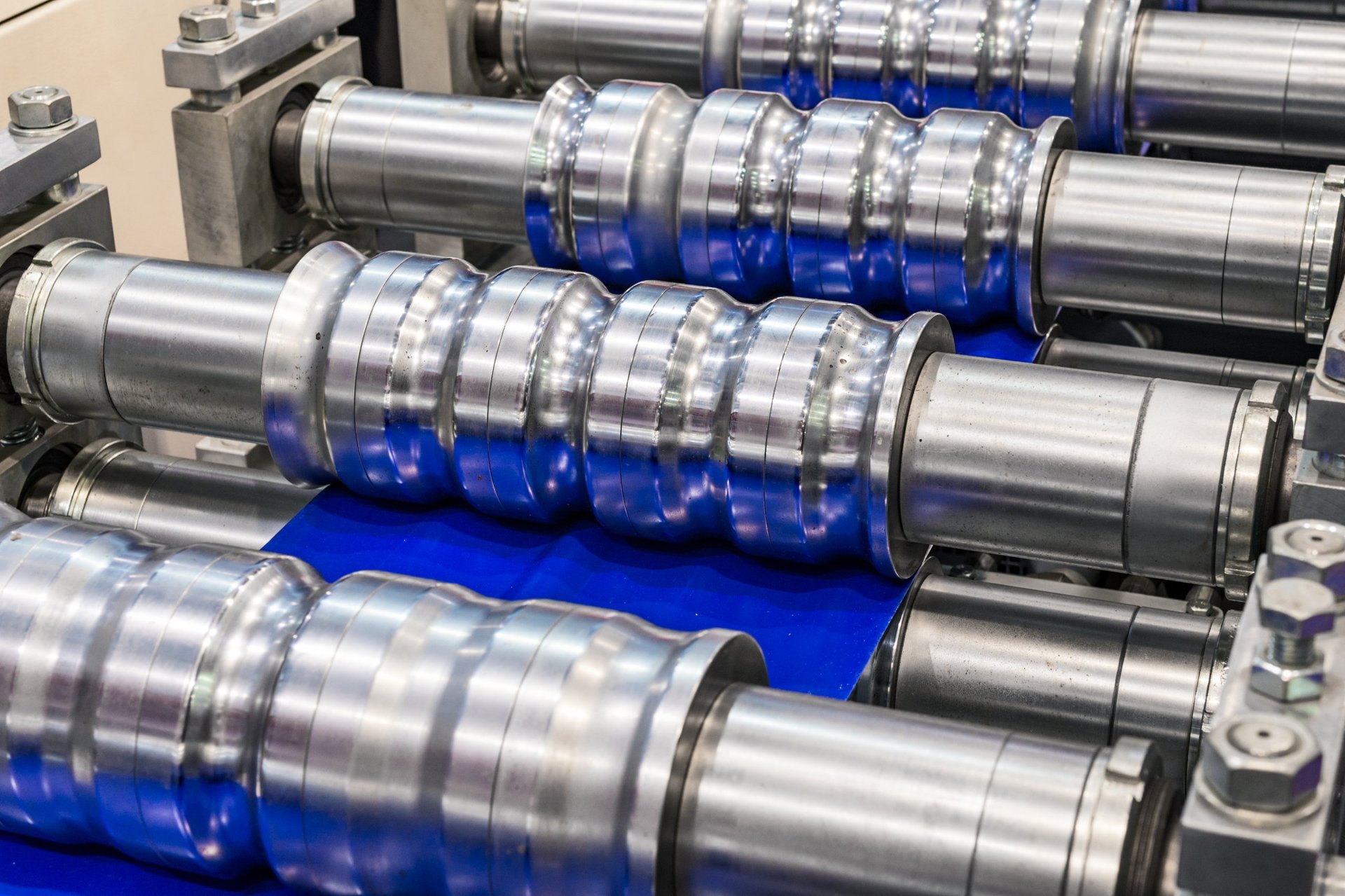
The slitting basis decides the edge the weld sees. Width, burr and camber are qualified at the slitter, before the coil ever reaches the mill.
Compare the skelp substrate routes — each states the boundary where it fits a pipe or tube line, rather than a general claim that one is better.
The base substrate for formed-and-welded tube — confirm the designation, gauge tolerance and edge basis against the weld route before the mill accepts it.
carbon steel coil supplierA scale-free surface where weld cleanliness and finished appearance matter more — confirm the surface standard and oiling basis for the weld process.
pickled and oiled steel coil supplierWhere the finished tube needs a metallic coating — note that coating prep changes the weld and edge-cleaning route, so confirm it with the mill, not after ordering.
galvanized steel coil supplierWeld & Forming Route Boundaries
The weld or forming route is not a preference — it changes which skelp attributes carry the risk. Read the route, then qualify the edge, width and surface the process actually consumes.
The strip edges are heated and forged together, so edge condition, burr and the strip width that closes the tube are the dominant inputs. Internal scarfing allowance follows from the edge the slitter delivers.
The strip is formed first and welded with filler, so edge fit-up, surface cleanliness and consistent width matter more than burr height. The forming sequence has to be fixed before the slit width is agreed.
Continuous feedstock routes consume the strip as a flow rather than edge-welding a formed tube. Width and thickness tolerance drive throughput and the finished wall, not weld-edge geometry.
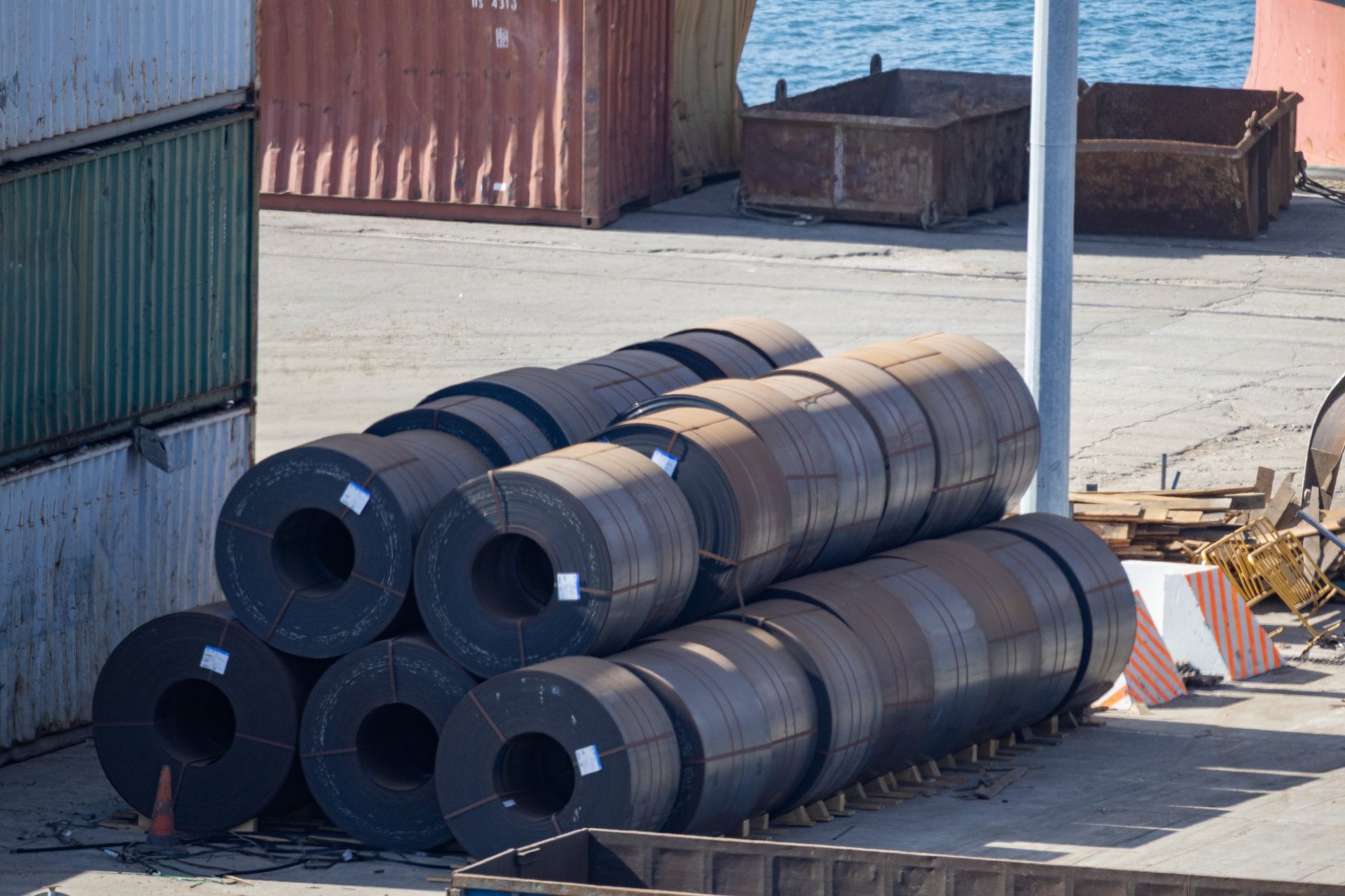
Yield check before you order
Compare the working width the line needs against the slit width the coil is ordered at, and hold the thickness at the middle of its tolerance class rather than at nominal. That pair is where a mill recovers — or loses — usable strip.
Inspection & Documentation
Each document answers a specific question about the feedstock. Request only what the purchase specification or the mill's own intake procedure requires — a certificate that verifies nothing relevant is a cost, not a safeguard.
| Document | Question it answers | When it matters | Released how |
|---|---|---|---|
| Mill Test Certificate (MTC) | Does the coil carry the designation, chemistry and mechanical results ordered? | Standard trade practice for skelp | On order fulfilment |
| Dimensional / slitting report | Did the width and thickness land inside the tolerance class ordered? | Essential where mill yield and wall depend on it | Confirm scope before RFQ |
| Surface / coating verification | Is the surface preparation the one the weld and finished tube need? | Where pickling, oiling or coating is ordered | Project-dependent |
| Coil identity & traceability | Can a delivered coil be traced back to its heat and its certificate? | Where the mill runs documented production or a project audit trail | Confirm the marking basis at order |
| Third-party inspection | Has an independent party checked the coil against the order? | When the buyer or their client specifies it | On buyer request |
No document is presented as a promise before it is confirmed. The set is aligned to the actual quoted coil — never to a claim that a given certificate exists for material that has not yet been sourced.
A designation without its edition and scope is not a specification. Confirm both against the primary standard before the values are written into the order.
Width, thickness and flatness are only meaningful with their tolerance basis and unit system stated — a bare number invites a dispute at the slitter.
Close the order on the designation, dimensions, edge, surface, coil basis and document set — that pair of documents is the record of what the mill receives.
Commercial & Consignment Planning
Technical fit is only half the exercise. The commercial inputs — quantity, port, Incoterm, packing and coil orientation — decide whether the coil arrives at the mill in the condition the specification assumed.
Mill runs are planned in tonnes and coil counts. State the quantity and whether the order must cover a single continuous run — that decides how the coils are set up.
Name the receiving port and the Incoterm. Both move the handling risk, and both change what packaging has to survive between the coil yard and the mill.
Coils are heavy, easily edge-damaged loads. Specify the packing, eye-to-sky or eye-to-wall orientation and weather protection the voyage and storage require.
Availability, price and lead time are confirmed against the complete input specification. Nothing is published in advance as a fixed stock or schedule.
Adjacent Products
Some pipe and vessel work draws on plate rather than coil, and some forming operations call for cut-to-length sheet. Check the adjacent form before assuming coil is the correct purchasing unit.
Where the item is formed from discrete plate rather than continuous coil — larger diameter and heavier-wall work that a coil line cannot feed.
steel plate supplierCut-to-length flat product where a continuous coil is not the correct purchasing form — smaller runs, or operations feeding a press rather than a mill.
steel sheet supplierGCC Consignment Planning
The input specification travels with the coil. What changes by market is the clearance regime, the receiving port and the naming a mill needs on the documents — plan those alongside the technical basis.

Re-export & free-zone
UAE-bound skelp is often cleared into a free zone for slitting, storage or onward re-export — plan the consignment around the destination port and the customs regime the coil is entered under.
View United Arab Emirates steel coil supply
Project-scale consignments
Saudi pipe and tube demand arrives in project volumes — plan the coil training, rotational direction and mill scheduling around delivery windows agreed at order, not a fixed published date.
View Saudi Arabia steel coil supply
Port schedules
Qatar consignments route through Hamad Port — align the coil sizes, packing and port handling with the mill's intake schedule before shipment is planned.
View Qatar steel coil supply
Spooling layouts
Kuwait projects plan coil spooling and mill layout early — confirm the coil ID/OD and weight basis against the mill's uncoiler capacity rather than assuming a standard reel size.
View Kuwait steel coil supply
Compact consignments
Bahrain industrial supply favours smaller, well-documented lots — plan the packing and document set so a compact consignment still clears as a clean trade unit.
View Bahrain steel coil supply
Functioning port routing
Oman consignments route through Salalah or Sohar — plan the port, packaging and coil orientation around the receiving mill's handling capacity.
View Oman steel coil supplyShipment planning is confirmed against a complete input specification, the named port and commercial terms — never published in advance as a fixed schedule or as company presence in every destination.
Source-Backed Reference
A pipe or tube order is only enforceable if the input is written against a published standard rather than a habit. Read the primary source yourself before the values go into the enquiry.
The standard a skelp order usually points to
Line pipe and tube orders are commonly written against ISO 3183:2019 — Petroleum and natural gas industries, Steel pipe for pipeline transportation systems. The standard sets out the ordering information, product specification levels, dimensional and tolerance requirements, material grades and the testing regime a mill works to. Its scope is pipeline steel pipe — it is not a flat-rolled steel standard, so the coil input is qualified against the pipe standard's requirements for the strip it is made from.
What the source does — and does not — settle
Reading the source in the right order
Information current as of . Verify the current edition and its scope with the publisher before relying on any figure.
Procurement Path
A short path that keeps the input qualification ahead of the commercial commitment — no step asks you to have a price before you have a specification.
01
Send the working width, slit width, thickness and tolerance class, edge condition and the weld or forming route the line runs.
02
Close the designation, governing standard and edition, and the surface preparation the mill needs — hot-rolled, pickled and oiled, dry or coated.
03
Confirm the coil ID, weight and handling basis against the uncoiler, plus packing and the destination port and Incoterm.
04
Lock the MTC, dimensional report and inspection scope to the order before dispatch, so the mill's intake check has something to verify against.
Each step is a field in the input summary above. Fill the tool, copy the summary and send it — the enquiry starts already specified.
FAQ
Direct answers on how skelp feedstock is qualified, quoted and documented — and where the page's scope ends.
Send the skelp input specification and the commercial department responds with availability and pricing. Price is always on request.
Office 3303, Churchill Executive Tower, Business Bay, Dubai, United Arab Emirates
Monday – Saturday: 8.00 AM – 6.00 PM · Sunday: Closed
Not sure what to send?
Start with the mill's working width, the slit width, the gauge and its tolerance class, the edge condition and the weld route. Add the standard, destination and required documents — the rest can be confirmed during quotation.