
Steel Coil for Appliances
Steel Coil for Appliances — scoped at incoming inspection
An appliance line rejects coil for what the customer will see, not for what a certificate says. That makes sourcing a scope decision across every SKU that shares the substrate: which finish level each model carries, what the incoming inspection actually rejects, and how consistent the surface stays batch to batch. Get the grade right and the finish wrong and the coil still stops at the door.
Appliance coil sourcing is decided at incoming inspection, not on the specification sheet. The visible surface the customer sees, the reject criteria your line applies, and the batch consistency across SKUs are what determine whether a coil is usable — so the sourcing scope has to be written around those, not around the material grade alone.
Free, no-obligation sourcing scope review
Information current as of
Who This Page Is For
For the category manager scoping coil across a product range
Use this page when one sourcing decision has to cover several models sharing a substrate, and the line's rejection behaviour is what determines usability. If the question is what a single line can run, the appliance application page answers that instead.
The right fit if you
- Buy coil for several appliance models that share a common substrate.
- Need cosmetic acceptance written into the order, not left to the inspector.
- Are managing a growing SKU range and want one scope rather than per-model approvals.
- Need the surface record and dimensional basis that incoming inspection can check.
Look elsewhere if you
- Are qualifying a single forming line — the appliance application page works at line level.
- Need cut blanks rather than coiled material — that is the sheet route, a different purchasing form.
- Are working out the material basis itself — the steel coil specification sets out the types, grades and standards.
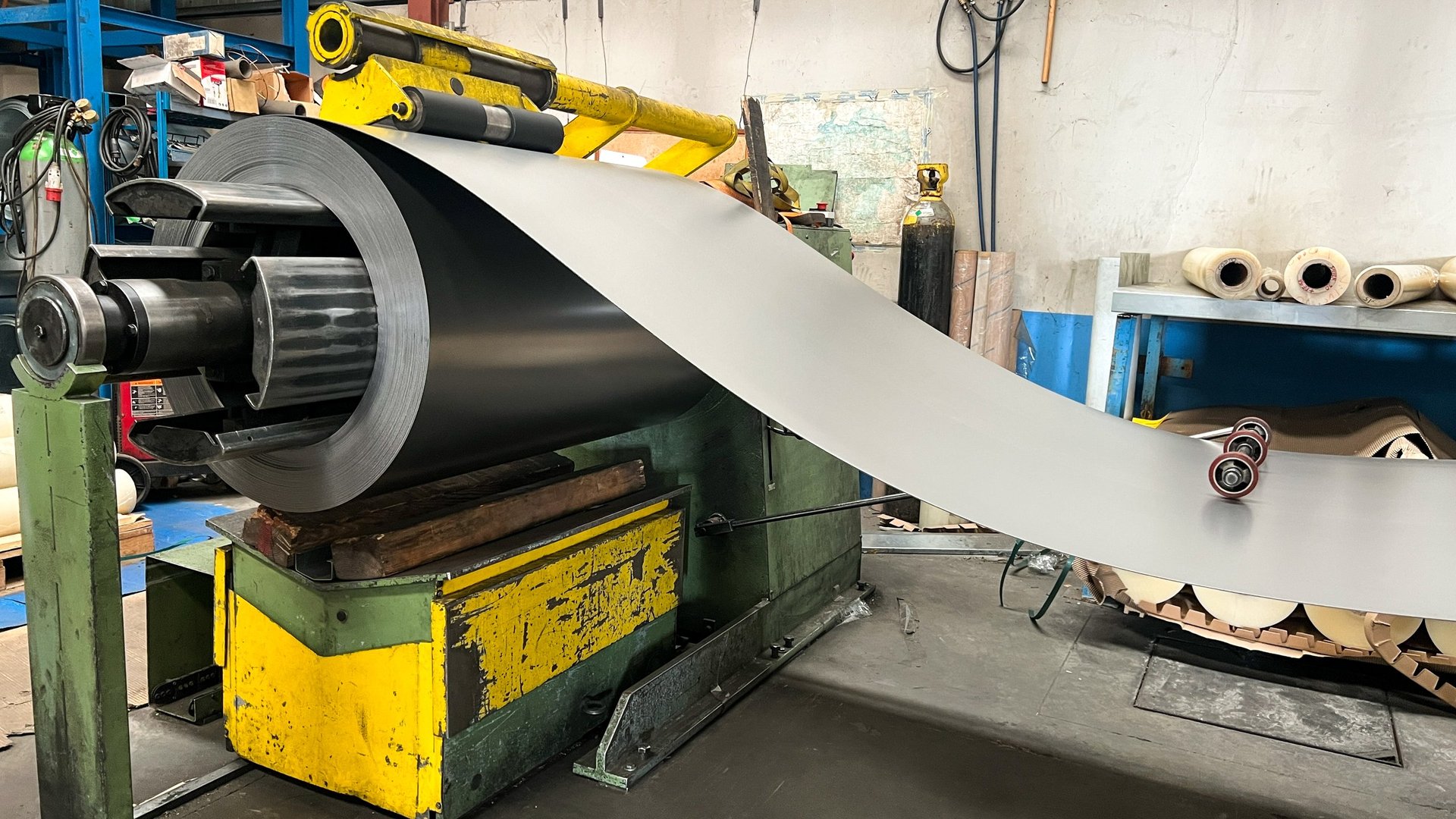
One substrate, many models, one visible surface. The sourcing scope has to hold across the whole range or every new model becomes a new approval.
Visible surface
The finish the customer sees becomes an acceptance criterion, not an afterthought.
Incoming rejection
What the gate actually turns away is the real specification — write it down.
Batch consistency
A shade difference across lots shows instantly once the units are assembled.
Appliance Sourcing Scope Qualifier
Write the scope around what the line rejects
Enter the product category, the finish level, the exposure, how many SKUs share the substrate and the cosmetic basis your inspection applies. The qualifier returns finish-level guidance, derives the strip mass from your dimensions, and refuses to describe an acceptance set until all five scope inputs are present.
Scope inputs
Reference: cold rolled steel coil · steel coil thickness chart
Scope verdict
Appliance sourcing is scoped by the finish the customer sees, across every SKU that shares the substrate. Enter the product category, finish level, exposure, SKU count and cosmetic basis to see the sourcing guidance, the derived strip mass and a copyable scope summary.
Derived check — strip mass
Enter the thickness and width to derive the strip's mass per running metre.
Copyable scope summary
Appliance coil sourcing scope — summary
Product category: —
Finish level: —
Exposure: —
SKU count sharing the substrate: —
Cosmetic acceptance basis: —
Substrate / designation: —
Thickness (mm): —
Width (mm): —
Governing standard / edition: —
Annual volume (tonnes): —
Destination / plant: —
Evidence set required: —
The tool maps your scope to the acceptance criteria it implies and derives figures only from what you supply. It does not confirm that any certificate or inspection record exists — that is verified against the supplier's own current documents.
SKU Sourcing Matrix
What each appliance part family asks of the coil
Route the requirement by the part the coil becomes. Read the row for the family you are sourcing: what the customer sees, what drives the material, what the line rejects first, and where the row stops applying.
| Part family | What the customer sees | What drives the material | Rejected first on the line | Boundary / limitation |
|---|---|---|---|---|
| Exterior cabinet panels | The full painted or brushed face of the unit | Surface quality and flatness for the finish applied | Cosmetic defects — marks, waviness, shade variation | Paint-line standards are set by the producer's own process, not by the coil alone |
| Door & lid wrappers | A large visible formed surface with complex curvature | Formability for the draw, plus finish consistency after forming | Forming strain marks and surface distortion at the draw | Forming severity and finish acceptance are separate requirements — one does not prove the other |
| Internal structural parts | Nothing — the customer never sees the part | Dimensional conformance and formability only | Dimensional drift and forming splits | Carrying a cosmetic spec here adds cost and inspection effort for a surface nobody sees |
| Tub, drum & liner parts | Partly visible, with a corrosion-protected surface | Coating performance against water, detergent and humidity | Coating defects and edge damage | A protective coating is chosen for the wet duty — it is not the same as a decorative finish |
| Trim, fascia & nameplate backing | Small, close-viewed decorative elements | Colour and finish match with the panels they sit against | Shade mismatch against the assembled unit | Narrow strip or sheet may be the correct form at this scale — coil is not automatic |
The matrix states what each family asks of the sourcing decision and where the row stops applying. It does not publish numeric defect limits — those are written by the producer's own acceptance standard and the customer's design intent.

Cosmetic acceptance is a viewing condition as much as a defect list — the light the inspector works under is part of the specification.
Choice Boundaries
Where a cosmetic assumption becomes a line stoppage
The appliance sourcing failure that hurts most is not a rejected coil — it is a coil accepted in the office and refused at the goods-in gate. These are the boundaries where an assumption has to be replaced with a written criterion.
A grade code is not a finish
Two coils can meet the same designation and still differ in the surface the customer sees. If the requirement is written only as a grade, the finish is unmanaged — and the finish is what gets rejected.
Protective ≠ decorative coating
A coating chosen for wet-duty corrosion resistance and a coating chosen for a visible colour match answer different questions. Borrowing one for the other leaves a requirement unmet while looking specified.
One SKU's answer is not the range's
The material that satisfied the flagship model has not automatically been qualified for the value line added a year later. Extending a range means extending the scope, not assuming the approval carries.
Boundaries that rule an option out
- An unwritten criterion cannot be enforced. If the acceptance rule lives only in an inspector's experience, it cannot be put to a supplier and it will be argued at every delivery. Write it into the order.
- Surface is not substituted by thickness. Ordering a heavier gauge to "get a better surface" does not follow — the surface comes from the processing route and the finish system, not from the gauge.
- Form and standard are not interchangeable. A requirement written for coiled material does not automatically apply to the same steel bought as cut sheet, and a coated variant is not the uncoated basis with a coating added on top.
- Delivery condition is not the service condition. Whether the coil arrives bare, oiled or prefinished is a supply decision. What the finished appliance must withstand is a product decision, and the two must not be swapped in the enquiry.
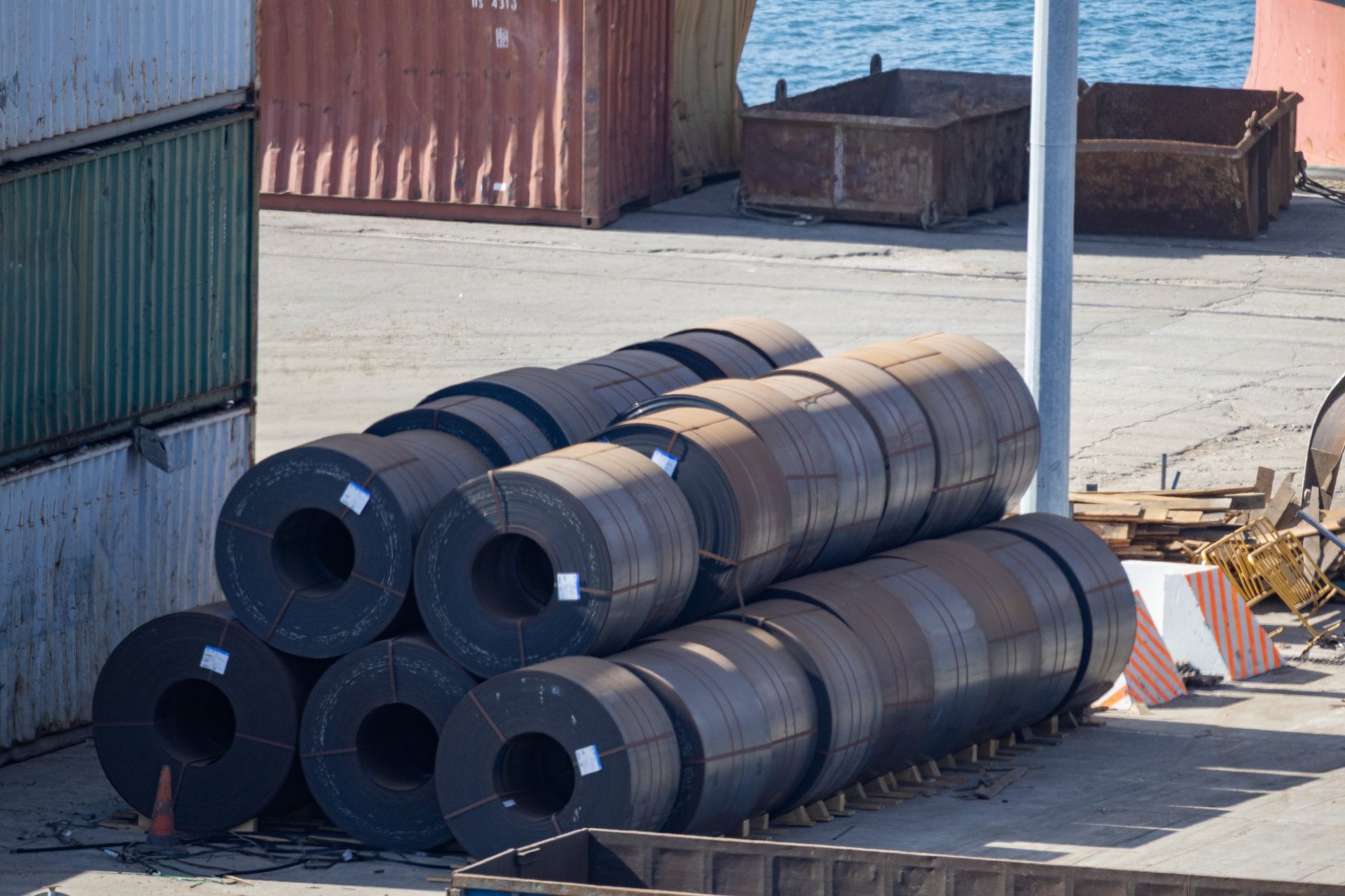
The one question that closes most gaps
For every requirement in the scope, ask: can the inspector at goods-in decide pass or fail from this, without asking anyone? A requirement that cannot be checked at the gate was never a requirement.
Incoming Quality & Verification
What the goods-in gate has to be able to decide
Treat each record as answering one question the inspector will actually ask. The aim is not more paperwork — it is that a coil can be passed or rejected at the door on evidence rather than on trust.
| Record | Question the gate asks | When it is decisive | Released how |
|---|---|---|---|
| Mill Test Certificate (MTC) | Is this the substrate the scope qualified? | Every delivery | On order fulfilment |
| Surface / coating record | Is the finish the level this model carries? | Where a finish or coating is specified | Confirm scope before RFQ |
| Dimensional record | Does it hold the thickness, width and flatness ordered? | Where forming yield and fit depend on it | Project-dependent |
| Packing & edge protection | Did it survive transit without surface damage? | Essential on cosmetic-critical coil | With the shipment |
| Written acceptance criteria | Can the inspector decide pass or fail unaided? | On any cosmetic-critical part | Agreed with the order |
The table describes the category each record belongs to and what it settles. It does not state that any record exists for any given order — the set is assembled against the actual quoted material, and the scope is agreed before the enquiry is priced.
Write before you buy
Decide the acceptance criteria before the enquiry is priced. A criterion invented after the coil arrives cannot be applied to it.
Match record to claim
A material certificate does not prove a surface standard, and a surface record does not prove dimensional fit. Ask for the record that settles the claim.
Keep it consistent
Acceptance is a habit, not an event. Inspection has to keep applying the same criterion lot after lot, or the scope quietly stops meaning anything.
Commercial & Range Supply
The commercial inputs an appliance range adds
A product range is supplied against volumes and model cadence rather than a single purchase. The commercial terms, the release pattern and the change provision are part of the sourcing scope, not paperwork after it.
Volume & model mix
State the annual volume and how it splits across the SKUs sharing the substrate — a range supplied from one basis needs the mix declared, not just the total.
Coil basis
Confirm the coil ID, weight and packing against the uncoiler and the blanking line — the physical basis is part of what the finish has to survive.
Release cadence
Align releases with the model the plant is actually running, so the finish level delivered matches the finish level being built.
Availability & price
Confirmed against the complete sourcing scope. Nothing is published in advance as fixed stock, a fixed price or a committed schedule.
GCC Range Supply
Coil supply into each GCC appliance market
The qualified scope travels with the material. What changes by market is the receiving port, the handling and the document set the plant files — plan those alongside the technical basis.

United Arab Emirates
Multi-SKU consolidation
UAE appliance assembly often consolidates several SKUs onto one consignment — plan the release so each SKU's finish level stays identifiable through to the line rather than arriving as one undifferentiated lot.
View United Arab Emirates steel coil supply
Saudi Arabia
Volume program staging
Saudi appliance volumes are staged against production programs — align the coil basis and delivery windows with the build schedule agreed at order.
View Saudi Arabia steel coil supply
Qatar
Documented consignments
Qatar supply favours tightly documented lots — the surface record and dimensional conformance travel with the material so receiving inspection has something to check against.
View Qatar steel coil supply
Kuwait
Protected handling
Cosmetic-critical coil is easily damaged in transit — align packing and edge protection with the receiving store's handling before the finish is put at risk.
View Kuwait steel coil supply
Bahrain
Assembly-linked supply
Bahrain assembly-linked supply ties delivery to the build cadence — state the call-off pattern so the finish level delivered matches the model actually running.
View Bahrain steel coil supply
Oman
Port-to-plant routing
Oman consignments route through Sohar or Salalah — align packing and coil orientation with the receiving plant's intake and incoming inspection procedure.
View Oman steel coil supplySupply planning is confirmed against the qualified scope, the named plant and the commercial terms — never published in advance as a committed schedule or as company presence in every destination.
Adjacent Flat-Rolled Forms
When coil is not the right purchasing form
Some appliance parts are better bought outside coil. Check the form before the specification — a finish problem and a form problem look similar at the gate but are solved differently.
Steel sheet
Cut-to-length flat product for trim, small pressings and low-volume runs where a continuous coil is not the correct purchasing form.
steel sheet supplierSteel plate
Heavier discrete product for base plates, brackets and support components where a coil line cannot feed the thickness required.
steel plate supplierProcurement Path
Five decisions between the range and the accepted coil
An appliance sourcing scope succeeds or fails on the decisions taken before the enquiry is priced. This path keeps the acceptance criteria ahead of the commercial commitment.
01
Map the SKUs
List every model sharing the substrate and what finish level each one carries.
02
Write the criteria
Define the defect types, severity and viewing condition the inspector applies.
03
Fix the substrate
Confirm the designation, standard and form the range is built from.
04
Plan the release
Set the lot sizes and cadence so each model's finish level stays identifiable.
05
Set the change rule
Agree how a substrate, finish or supplier change is notified before it reaches the line.
Steps one to three are the fields in the scope qualifier above. Run it per product category, then send the summaries as one range enquiry.
Source-Backed Reference
Where a cold-rolled finish requirement comes from
A surface requirement is only enforceable if it is written against a published standard rather than described in words. Read the primary source yourself before the specification goes into the enquiry.
The standard behind a cold-rolled surface requirement
Cold-reduced steel sheet intended for direct use or surface-critical finishing is commonly ordered against ISO 3574:2012 — Cold-reduced carbon steel sheet of commercial and drawing qualities. It sets out the qualities, the surface-finish conditions and the dimensional and mechanical requirements a supplier works to, along with the tolerances that make an order verifiable. Its scope is cold-reduced carbon steel sheet — it is not an appliance finish standard, so it does not by itself define the cosmetic acceptance a producer's own paint line applies.
What the source does — and does not — settle
- It gives you the quality designations and surface-finish conditions to order against.
- It defines the tolerances and mechanical properties that make an order checkable.
- It does not define the cosmetic acceptance your paint line or customers apply — that is your own standard, and it has to be written separately.
- It does not confirm any supplier's stock, price, origin, lead time or certificates — those are commercial questions answered at quotation.
Reading the source in the right order
- 1Find the quality designation and surface condition your process needs.
- 2Read its ordering clause — that list is your RFQ checklist.
- 3Write your own cosmetic criteria on top of it, for the viewing condition you use.
- 4Send both as the requirement, so the surface is defined and enforceable.
Information current as of . Verify the current edition and its scope with the publisher before relying on any figure.
FAQ
Questions an appliance category manager asks
Direct answers on how an appliance coil scope is written, checked and quoted — and where this page's scope ends.
Why does cosmetic acceptance matter more than the material grade here?
How should reject criteria be written into the order?
What changes when the same steel serves many SKUs?
Can you confirm price, availability or a supply program?
Which pages should I use next?
Request a Quote
Send the sourcing scope for each product category and the commercial department responds with availability and pricing. Price is always on request.
Office 3303, Churchill Executive Tower, Business Bay, Dubai, United Arab Emirates
Monday – Saturday: 8.00 AM – 6.00 PM · Sunday: Closed
Not sure where to start?
Send one line per product category with the finish level, the exposure and how many models share the substrate. If a cosmetic criterion is still unwritten, say so — it is better declared than discovered at the gate.