
Applications · Bar Mills
Steel Billet for Bar Production
Billet for bar mills should be defined from the target bar standard, quality level, section range and end use, then matched to billet chemistry, section/length, surface quality, traceability and mill entry limits. A bar-mill use label is not a material specification.
“Billet for bar mill” describes where the material is going, not what it has to be. The acceptance basis is your bar specification and the mill's own entry limits — neither of which is implied by the use label.
Standards, grades and evidenceA bar feedstock enquiry needs all five
- The controlling bar specificationYour order document. Where it and a general requirements standard disagree, this one governs.
- Bar product family and size rangeRound, square, flat or section — and the finished sizes the program covers.
- Quality level and end useWhat the bar has to survive after rolling. This decides which controls are justified.
- Billet section and charge lengthMatched to the receiving mill's furnace and entry equipment, not carried over from a previous order.
- Traceability and test documentsThe chain from billet heat through the mill's production record to the bar lot supplied.
No chemical composition, mechanical property or dimensional tolerance value appears on this page. Those belong to the controlled standards and to your own order documents.
Operating requirement
What a bar program actually demands of its feedstock
A bar mill charges, reheats and rolls in sequence, and every one of those steps puts a constraint on the material going in. These are the operating realities that turn into selection criteria — and the failure each produces when it is left out of the enquiry.
Charging and reheat sequence
Bar mills charge in sequence through a reheating furnace, so entry section and charge length are throughput variables rather than one-off choices. A section that rolls acceptably but disrupts the charge plan is a problem the order created.
A feedstock that works in isolation and slows the campaign it was bought for.
Reduction from billet to finished size
The finished bar size range sets how much reduction the billet has to absorb. A section that gives one bar program the right reduction may give another too little to reach the required condition.
A section chosen by habit that produces bar outside the properties the program expects.
Quality level and what follows rolling
The control set follows the end process, not the use label. Bar that will be machined, forged or cold drawn carries different expectations from bar destined for general engineering use.
Controls specified by habit — missing where they matter, and adding inspection cost where they do not.
Surface and internal condition
Condition requirements only mean something when paired with a named inspection basis. A stated limit checked against a different method than the one it was written for fails silently rather than loudly.
A requirement that is accepted on paper and cannot be enforced at intake.
Consistency across a rolling campaign
Bar is produced in volume across many heats. Chemistry variation between them shows up as scattered downstream behaviour rather than as one obvious failure that can be traced to a single lot.
Inconsistent behaviour across lots that is hard to attribute and expensive to investigate.
Traceability through the mill record
A question about a finished bar has to trace back through the mill's production record to the billet heat. That chain exists only if it was designed before the campaign started.
A delivered lot whose origin cannot be established, with no way to reconstruct the link afterwards.
The requirement nobody writes down. Every control this page describes has to be stated in the order to exist. A surface limit, a charge length, an inspection basis or a marking convention that stays in a conversation cannot be inspected against, accepted, or rejected — and at delivery there is no basis on which to raise it.
Decision tool
Bar Mill Feedstock Planner
Start from the bar specification, not the use label. Eight answers produce a feedstock dependency map, the mill-fit notes your programme depends on, the billet quality checklist it needs, and a copyable specification.
No result yet
The planner needs six answers before it can say anything useful — the finished bar specification, the bar family and size range, the quality level, the billet chemistry basis, the billet section and length, and the traceability arrangement.
- Finished bar standard / specification
- Bar product family and size range
- Quality level / end use
- Billet chemistry basis
- Billet section and length
- Traceability and testing documents
The surface condition and mill entry inputs are optional, but the planner reads them where you supply them.
Why the standard comes second. ASTM A29/A29M-23 is a general requirements standard for hot-wrought carbon and alloy steel bars — a finished-product document that yields to the individual specification and the purchase order where they conflict. Selecting it alone raises a gap in this planner rather than passing, because it names the fallback and omits the document the fallback points to. It also creates no universal billet grade and no mill feed tolerance.
Shortlist
Which billet choice fits a bar program
Only three of the registered billet routes bear on a bar-mill decision, and each answers a different question. Compare them on fit and on the boundary where the comparison stops being useful.
Rolling mill billet
The usual feedstock form for a bar program. Compare here when the rolling route is settled and the grade basis is the open question.
This describes the route the form is produced for. It fixes no chemistry and no section — both remain separate decisions.
rolling mill steel billet supplierSquare billet
Compare when the entry section is still open and the receiving mill's stand and guide configuration has to be matched.
Section shape alone decides nothing about grade. A square section that fits one mill's entry may not suit another.
square steel billet supplierCarbon steel billet
Compare when the bar program sits in the carbon family and no specific designation has been fixed yet.
The material family narrows the field but asserts no composition. The grade decision still has to be made and named.
carbon steel billet supplierA bar feedstock decision fits when
- The enquiry names the individual bar specification and grade — not only the general requirements standard — so the feedstock has something controlling to be written against.
- The bar family, finished size range and quality level are stated, which is what makes the reduction sequence and the entry section decidable.
- Mill entry constraints are given as the receiving mill states them: nominal section, charge length range, and any end or straightness condition the charging equipment depends on.
- Heat traceability is arranged end to end, with the mill's production record linking charged heat to the bar lot supplied.
And stops fitting when
- The enquiry says “billet for bar mill” and names no bar specification, leaving the mill to infer the product the feedstock is meant to become.
- A quality level is assumed rather than stated, so no one can say whether the controls being paid for are needed.
- Billet section is copied from a previous order without checking it against the current bar program and the receiving mill's entry limits.
- Traceability stops at the billet certificate, with nothing carrying heat identity through to the finished bar lot.
Grade, standard and size
Which document governs, and in what order
A bar program almost always runs against more than one document. When they disagree, the outcome is decided by precedence rather than by preference — and the general requirements standard sits near the bottom of that order by its own terms.
| Order | Document | What it establishes | What it does not |
|---|---|---|---|
| 1 | Purchase order and agreed amendments | The commercial and technical terms of this specific supply, including any billet-side limits you have written in. | Nothing beyond this order. Limits agreed here do not carry into a later enquiry without re-agreement. |
| 2 | Buyer drawing or product specification | The dimensional and quality requirements of the finished bar where a drawing controls the product. | Billet-side chemistry or entry geometry, unless you have written them in explicitly. |
| 3 | Individual bar specification | The product requirements for the specific bar type and grade your order names. | A billet grade or a mill feed tolerance. It describes the finished product it is written for. |
| 4 | General requirements standard (A29/A29M-23) | Common requirements across hot-wrought carbon and alloy steel bars — the framework the individual specification sits inside. | A universal billet grade, a mill feed tolerance, or anything the purchase order and specification already settle. |
| 5 | Billet-side specification or agreed limits | The chemistry, section and condition the semi-finished material will be accepted against. | Anything about the finished bar. It governs the input, and it has to be stated separately. |
A29/A29M is a bar standard, not a billet standard. It gives general requirements for hot-wrought carbon and alloy steel bars and it yields to the individual specification and the purchase order where they conflict. It creates no universal billet grade and no mill feed tolerance. No composition, mechanical property or dimensional tolerance value is asserted here — cite the edition you are working to and hold the values to your own order documents.
Where a grade route bears on the decision
Grade designations describe the material as the standard that defines it writes it. A designation taken from one standard is not a synonym for a similarly named designation in another, and no equivalence between 3SP, 5SP, Q235B, S235 and ASTM grades is asserted here — any such comparison is a conditional engineering judgement that has to be agreed for the order in front of you.
Where a size route bears on the decision
Billet section is a mill entry constraint, not a product property. The same nominal section can suit one bar mill's furnace, stands and entry equipment and not another, which is why it is confirmed against the receiving mill for each programme rather than carried forward from the last one.
Verification and documentation
What has to be confirmed before the mill charges
Each row is a requirement you either state or lose. The buyer side says what has to come from your order; the supplier side says what the mill has to return. Where both are blank, there is no acceptance basis at all.
| Requirement | You must specify | Evidence to request | Accepted by | If it is missing |
|---|---|---|---|---|
| Heat analysis | The chemistry basis — a named billet grade, or limits written into the order. | Mill test certificate for the billet heat, against the basis you named. | Your technical reviewer, against the order document. | Nothing to compare the certificate to. The analysis arrives as information rather than as evidence. |
| Section and dimensions | Nominal section, charge length range, and the tolerance basis they are held to. | Dimensional record for the delivered material, plus the mill's statement of the basis used. | Receiving mill on entry, against its own equipment. | Section is nominal in name only. Entry interference and charging problems surface at the furnace. |
| Surface and internal condition | The condition required, and the inspection basis it will be judged against. | Condition records taken by the method named in your requirement. | Your quality function, using the same basis it was specified against. | A defect is found at intake with no agreed standard to reject it against. |
| Traceability | Whether heat identity must reach the finished bar lot, and how it is marked. | Heat marking record and the mill's production record linking charge to lot. | You, on intake — the marking is what makes the certificate attach to material. | A certificate that cannot be tied to physical bundles, and a lot whose origin cannot be established. |
| Inspection and testing | Which tests are required, on which population, and to which acceptance criteria. | Test records for the finished bar against the specification you named. | The party your order designates — often the mill, sometimes a third party. | Test results arrive without criteria. They can be recorded but not accepted or rejected. |
| Shipment documents | The document set, named place, Incoterm rule and the form each document must take. | Packing list, certificate set, and the documents the named destination requires. | Importer and clearing agent at destination. | Material is held at port while paperwork is corrected, at the buyer's cost and schedule. |
Distinguishing the documents that get confused
- Billet mill test certificate
- Describes the semi-finished material as a heat. Without a marking convention it stays a document about material nobody can point to.
- Bar test records
- Describe the finished product against the specification you named. They are evidence about output, not about the input it came from.
- Production record
- The mill's own link between the two — which charged heat became which finished lot. It is the only document that closes the traceability chain.

Intake is the last point at which a condition requirement can be applied to physical material. After charging, the evidence that matters is the mill's production record.
Procurement
Turning the technical scope into an order
The technical decision is only half of an enquiry. What remains is the set of commercial inputs a mill needs before it can quote — and each one that is left open delays the answer rather than improving it.
Quantity and unit
State the tonnage and the unit it is expressed in, and whether it is per heat, per shipment or per programme. Ambiguity here is usually resolved backwards from a total, which is the wrong direction.
Packing and handling
Bundle arrangement, marking convention and any bundling dimension the receiving mill's handling equipment depends on. Marking is where traceability either survives transit or does not.
Destination and named place
The port, inland terminal or mill gate — named, not described. The Incoterm rule only has meaning against a named place, and so does the freight line of any quote.
Documents required
The certificate set, legalisation or attestation if the destination needs it, and any pre-shipment inspection. Named at enquiry rather than requested after dispatch.
Timing and delivery window
When the material is needed at the mill, and how the shipment has to align with the rolling programme. A delivery window matched to a campaign avoids material sitting on the ground.
Price, stock and lead time
Quotation-dependent. Nothing on this page asserts a price, a stock position or a lead time, because all three move with grade, section, quantity, destination and the moment of enquiry.
Price on request. Billet pricing moves with grade, section, quantity, destination, Incoterm and timing, and it is agreed per enquiry rather than published. Send the technical scope and the commercial inputs together and the commercial department can answer in one pass instead of asking for each in turn.
Registered paths
Where this decision continues
Grouped by the task in front of you rather than by taxonomy. Each path answers a question this page raises but does not settle on its own.
Billet hierarchy
Technical resources
Sibling applications
- steel billet for rebar productionWhere the feedstock decision is driven by reinforcement acceptance rather than bar quality.
- steel billet for wire rod productionThe route where downstream drawing, not rolling, sets the feedstock expectation.
- steel billet for forgingWhere the input bypasses rolling entirely and the forge decides the acceptance basis.
Expert insight
Which bar requirements should be visible before billet is approved
A source-backed decision note. The question is what has to be established on the bar side before a mill can sensibly accept the feedstock that will make it.
Why does approval fail when the bar requirements were never written down?
ASTM A29/A29M-23 gives general requirements for hot-wrought carbon and alloy steel bars. It is deliberately a framework — the common requirements that individual bar specifications sit inside rather than a document that sets a product for you. It yields to the individual specification and the purchase order where they conflict, and it does not create a universal billet grade or a mill feed tolerance.
What the source establishes. That a general requirements framework exists for hot-wrought carbon and alloy bars, that it has a defined relationship with the individual product specification, and that the individual specification and purchase order govern where the two disagree.
What it does not establish. Any billet chemistry, any entry section or charge length, any mill feed tolerance, and any statement about stock, price, lead time, origin or certification. Those are order-specific facts and they have to be settled for the supply in front of you.
The implication for approval is direct. Where the bar requirements were never written into the order — the individual specification, the quality level, the testing basis — there is no document for the feedstock to be judged against. Approval then rests on a use label, and a use label is not an acceptance basis.
Buyer implication. Tie billet chemistry and geometry to the actual bar specification and the mill's entry limits. Do not use a generic bar-mill label as the acceptance basis.
Source and scope
- Primary source
- ASTM International — ASTM A29/A29M-23
- Document reference
- store.astm.org — A29/A29M-23
- Method
- The buyer decision is compared against the source scope, and what the source establishes is kept separate from what is order-specific.
- Information date
- 2026-10-03
- Scope and limitation
- A29/A29M-23 provides general requirements for hot-wrought carbon and alloy steel bars. It is a finished-bar reference, not a universal billet grade or mill feed tolerance.
- Evidence boundary
- The source does not prove inventory, price, lead time, origin, certification or market coverage. Those remain quotation- and evidence-dependent.
Buyer advantages
What a properly stated enquiry changes
No claim here rests on being better than anyone. Each one is a buyer concern mapped to something checkable, and then to what it changes about the supply you receive.
The bar specification is named, so the feedstock has a controlling document.
Evidence: The enquiry states the individual specification and its edition, alongside any general requirements standard.
Outcome: The mill writes the feedstock requirements against a document rather than inferring them from a use label.
Entry geometry is confirmed rather than assumed.
Evidence: Nominal section, charge length range and any end or straightness condition, stated as the receiving mill states them.
Outcome: Material arrives that the furnace and entry equipment can charge without adjustment or rejection.
Quality controls are justified by a stated end use.
Evidence: The quality level and what follows rolling are declared, so each control can be traced to a need.
Outcome: You stop paying inspection cost for controls that improve no decision you actually make.
Traceability is designed end to end before production.
Evidence: A marking convention plus the mill's agreement to record which heat became which lot.
Outcome: A later question about a delivered bar has an answer, and that answer exists in records.
The enquiry can be answered in one pass.
Evidence: Technical scope and commercial inputs — quantity, named place, Incoterm, documents, timing — sent together.
Outcome: Fewer rounds of clarification between enquiry and quotation, and a shorter route to a decision.
Enquiry to delivery
What happens, and who owns each step
Six stages from first enquiry to arrival at the mill. Each one names the input that has to exist before it can start, and the risk it closes when it does.
Scope the bar requirement
Owner: Buyer, with the end customer where the quality level comes from them
Input needed: The individual bar specification and edition, the bar family and size range, and the quality level the order has to meet.
Output
A stated bar requirement that the feedstock can be written against.
Risk it closes
The enquiry proceeds on a use label, and every later step inherits an undefined acceptance basis.
Confirm mill entry and testing capability
Owner: Buyer and receiving mill
Input needed: The section and charge length the mill's equipment takes, and the bar tests it can actually perform.
Output
Entry limits and testing capability confirmed for this programme rather than inferred from the last one.
Risk it closes
A feedstock that fits the entry but not the testing capability, discovered after the lot is produced.
Fix the chemistry basis
Owner: Buyer, with the technical reviewer
Input needed: A named billet grade, or chemistry limits written into the order as an agreed position.
Output
A defined basis the delivered heat analysis will be accepted or rejected against.
Risk it closes
A certificate that arrives with nothing to compare it to, so it informs but does not decide.
Raise the enquiry with technical and commercial scope together
Owner: Buyer to the commercial department
Input needed: Specification, chemistry basis, section and length, quantity, named place, Incoterm, document set and required timing.
Output
A quotation the mill can prepare in one pass, with no clarification rounds.
Risk it closes
A quote built on assumptions the buyer never saw, which then has to be revisited.
Agree the order documents before production
Owner: Buyer and supplier
Input needed: The final wording of the traceability arrangement, the packing and marking convention, and the certificate scope.
Output
An order that states what will actually be inspected and accepted, with the basis named.
Risk it closes
Requirements that stayed in conversation cannot be inspected at intake or enforced afterwards.
Verify on arrival and close the loop
Owner: Buyer's intake function, with the mill
Input needed: The certificate set, the marking records, and the dimensional records against the ordered section.
Output
Material accepted or raised against a stated basis, with the production record closing traceability.
Risk it closes
A discrepancy found with no agreed standard to measure it against, which leaves it unresolved.
Buyer FAQ
Questions that come up after the decision
Technical and commercial points a bar-mill buyer raises once the feedstock shape is agreed — not definitions, which are settled above.
Is ASTM A29/A29M a billet standard?
No. A29/A29M gives general requirements for hot-wrought carbon and alloy steel bars — the finished product a bar mill makes, not the semi-finished input it charges. It is a downstream reference, and it creates neither a universal billet grade nor a mill feed tolerance. Those come from your purchase order and from the individual bar specification your order is written against.
Which finished bar specification should control the enquiry?
The one your customer's order is actually written to, named with its identity and edition. Where a general requirements standard and an individual product specification both apply, the individual specification and the purchase order control, and the general standard fills in what they leave unaddressed. Naming only the general standard leaves your feedstock without a controlling document.
How does bar end use change feedstock quality requirements?
Through how much working the bar receives after rolling and how it is loaded in service. A bar that will be machined, forged or cold-drawn puts more weight on surface and internal condition than one rolled for general structural use. Where a control is justified, write it into the order with its inspection basis named — a requirement that is not stated cannot be inspected against.
What mill-entry dimensions should be captured?
The nominal billet section, the charge length range, the section tolerance basis and any straightness or end-condition requirement your charging equipment depends on. These are mill-specific rather than universal: the same nominal section that suits one bar mill's furnace and entry guide may not suit another, so they are confirmed against the receiving mill rather than assumed.
Which traceability fields should survive from billet to finished bar?
The billet heat number, the section and length of the charged material, and the production record linking that charge to the finished bar lot the material is supplied under. All three have to exist for a later question about a bar's origin to be answerable. A billet certificate with no surviving marking proves nothing at intake, and a bar lot with no route back to a heat cannot be reconstructed after the fact.
Send the bar specification, and the feedstock scope comes back defined
Include the individual bar specification and edition, the bar family and finished size range, the quality level, the billet chemistry basis, the section and charge length, and the traceability arrangement. Commercial inputs — quantity, named place, Incoterm and timing — let the commercial department answer in one pass.
Or send the enquiry directly to sales@noordeirasteel.ae. Price on request — no price, stock or lead time is published.
What to attach
- The individual bar specification, with its edition
- Bar family, finished size range and quality level
- Billet chemistry basis — a grade name or agreed limits
- Nominal section and charge length for the receiving mill
- Traceability and marking arrangement
- Quantity, named place, Incoterm and required timing
- The document set the destination requires
Commercial department
- Mobile
- +971 56 398 0860
- Office
- Office 1015, Churchill Executive Tower, Business Bay, Dubai, United Arab Emirates
- Hours
- Monday – Saturday: 8.00 AM – 6.00 PM · Sunday: Closed
Application requirements
What the bar programme has to be, and what that asks of the billet
Each row maps an operating requirement to the product and grade position it points to, states the rationale, and marks where the fit stops. The final column is the evidence that closes the question.
| Requirement | Product and grade position | Rationale | Fit limit | Evidence that closes it |
|---|---|---|---|---|
| General engineering bar | Carbon family, standard commercial quality | The finished product is a rolled bar with no demanding downstream working, so the feedstock has to deliver the reduction and the grade the specification names and little beyond it. | Commercial quality is a stated position, not a default. If any machining, forging or cold drawing follows, the position changes. | The individual bar specification, plus the finished size range the programme covers. |
| Bar for machining or cold drawing | Carbon family with specified condition requirements | Working the bar after rolling turns a feedstock defect into a rejection at the customer's process rather than at the mill, which moves condition controls from optional to justified. | Demanding condition limits only help where an inspection basis is named. Without it the requirement cannot be applied at intake. | Condition requirement stated with its inspection basis, plus the receiving mill's confirmation it can test to it. |
| Alloy bar programmes | Alloy family under a dedicated grade basis | Alloy grades carry tighter compositional expectations, and the bar specification that names them is the document the feedstock chemistry has to follow. | A grade designation is defined by the standard that writes it. Similarly named designations from different standards are not synonyms. | The grade and edition cited, plus an agreed billet-side chemistry position in the order. |
| Merchant bar sections | Carbon family, section-rolled product | Section rolling concentrates on the pass design and the entry fit rather than on chemistry variation, which moves the decision toward section and length confirmation. | Section fit is a receiving-mill constraint. A section that suits one mill's passes may not suit another's. | Entry section and charge length confirmed by the receiving mill for this programme. |
| Bar lot requiring traceability | Any family, with a marking and record arrangement | Where a delivered bar has to be traceable to its heat, the arrangement has to exist before the campaign runs rather than being reconstructed afterwards. | Traceability is a design decision. Once heats are mixed across a campaign, the link cannot be rebuilt. | Agreed marking convention plus the mill's commitment to record which heat became which lot. |
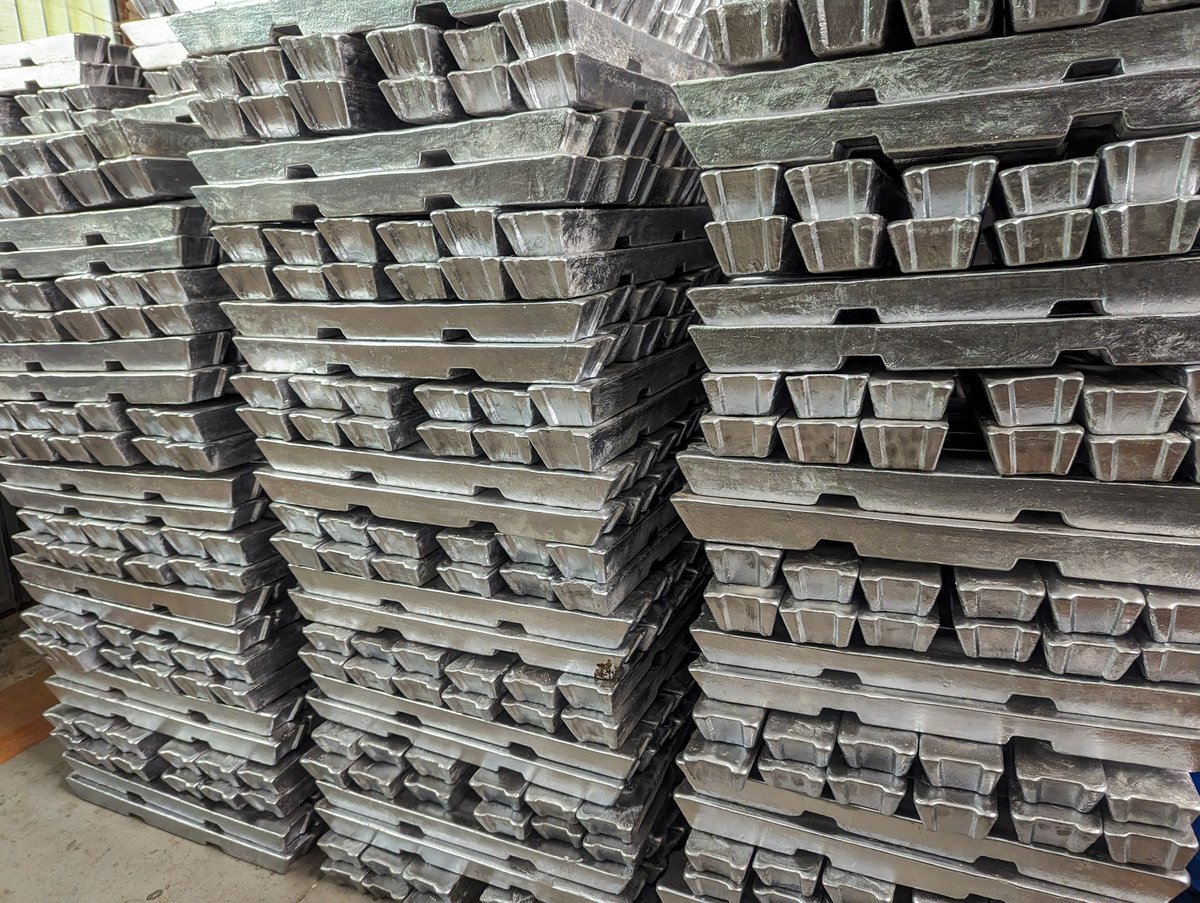
The finished bar is the evidence about the output. The billet that produced it is a separate record — which is why the production record linking the two is the document that makes traceability real.
Recommended products
Billet forms that suit a bar-mill programme
Three forms a bar mill buyer most often ends up comparing. Each note says what the form settles and what it leaves open — the second part is usually the one that matters.
Rolling mill billet
The usual feedstock form for a bar program. Compare here when the rolling route is settled and the grade basis is the open question.
rolling mill steel billet supplierSquare billet
Compare when the entry section is still open and the receiving mill's stand and guide configuration has to be matched.
square steel billet supplierCarbon steel billet
Compare when the bar program sits in the carbon family and no specific designation has been fixed yet.
carbon steel billet supplierNone of these three is a specification. A form, a section and a material family each narrow the field without settling chemistry, geometry or acceptance criteria. Those come from your bar specification and your order, which is why this page treats the form as a starting point rather than a decision.
Operating conditions
The conditions a bar feedstock is bought into
A bar mill's environment is ordinary and demanding at the same time. What matters is not the severity of any single condition but how each one converts into something you can state in an order.
Continuous charging
Material is charged in sequence against a rolling programme, which makes entry geometry a scheduling input rather than a dimensional detail. A charge length that suits the furnace keeps the programme on its rhythm.
Confirm the charge length range with the receiving mill rather than carrying it over.
Reheat and reduction
The billet is reheated and reduced through a fixed pass design. The reduction the programme applies is set by the finished size range, which is what ties the entry section to the product rather than to preference.
State the finished size range so the section can be checked against the actual reduction sequence.
Intake inspection
Intake is the only point at which physical material can be checked against a stated condition. Everything after charging is a record rather than an inspection.
Name the inspection basis alongside the condition, so intake has something to apply.
Campaign runs across heats
A programme runs across many heats, so consistency between them matters as much as the properties of any one. Variation shows up as scattered behaviour downstream rather than as one identifiable failure.
State whether compositional consistency between heats is something you rely on, and how it is evidenced.
Records outliving the material
Long after delivery the only things left are documents. The mill's production record is what allows a question about a finished bar to be answered at all.
Agree the record arrangement before production, not after a question arises.
Handling and storage
Bundling, marking and stacking all affect whether heat identity survives to the point of use. A marking convention that does not survive handling is the same as no convention.
Specify the marking and bundling convention, including what it has to survive.
QA and compliance
The quality position, stated plainly
What Noor Deira Steel can arrange, what has to come from the mill that produces the material, and what stays with the buyer. Nothing here claims a certification or a capability that has not been confirmed for the order.
Coordinated by Noor Deira Steel
- Technical review of the enquiry against the bar specification you name
- Arranging the document set the named destination requires
- Commercial alignment — quantity, Incoterm, named place and timing
- Liaison on inspection scope where a third party is appointed
Held with the producing mill
- Heat analysis and the mill test certificate for the billet heat
- Dimensional and condition records against the basis you specified
- The production record linking charged heat to finished bar lot
- Finished bar test records against the specification you named
Stays with the buyer
- The bar specification, its edition, and the quality level
- The inspection basis each condition requirement is judged against
- Acceptance decisions at intake against the stated basis
- Destination-specific classification and import compliance
No certification claim is made here. Certificate scope, testing scope and any attestation a destination requires are confirmed per order rather than stated as a standing capability. Where a programme depends on a specific document, name it in the enquiry and it will be confirmed for that supply in writing.
Procurement checklist
Eight lines a complete bar feedstock enquiry carries
Work down the list before sending. Anything left open comes back as a clarification round rather than as part of a quotation.
Bar specification and edition
The individual specification your order is written to, named with its edition — plus any general requirements standard that applies alongside it.
Bar family and size range
The family and the finished sizes the programme covers, so the reduction sequence and entry section can be checked.
Quality level and end process
What the bar has to meet and what happens to it afterwards. This is what justifies each control you ask for.
Billet chemistry basis
A named billet grade, or chemistry limits written into the order as an agreed position.
Section and charge length
Nominal section and the length range the receiving mill's furnace and entry equipment actually take.
Condition requirements and inspection basis
Any surface or internal condition you rely on, paired with the method it will be judged against.
Traceability and marking
Whether heat identity has to reach the bar lot, and how it will be marked so the chain survives handling.
Commercial scope
Quantity and unit, named place, Incoterm 2020 rule, document set, inspection scope and required timing.
GCC logistics
Delivering to a bar mill across the Gulf
Six destinations, and the input that most often delays each one. None of these cards claims a served market or a stock position — each asks for the commercial detail the route actually needs.
 United Arab EmiratesFeedstock for domestic bar programs, coordinated from Dubai.Name the receiving mill and the bar program the feedstock serves. Domestic movement is arranged from Dubai against the agreed section, charge length and heat separation.steel billet supplier UAE
 Saudi ArabiaMill feedstock with technical submittal approval.Saudi routes commonly require technical submittal approval before release. Settle the bar specification, billet grade, certificate scope and the named port or inland destination before anything is quoted.steel billet supplier Saudi Arabia
 QatarTechnical approval and document scope led.Confirm the importer's document and classification position, the named port, and how long the approval sequence runs before the quotation can be finalised.steel billet supplier Qatar
 OmanPort-oriented supply for downstream rolling.Name the port or inland delivery place and the Incoterm rule. Section and charge length are harmonised with what the receiving mill's furnace and entry equipment actually take.steel billet supplier Oman
 KuwaitMill feedstock with production hand-off planning.Tie the feedstock choice to the bar program, and agree the shipment against the named destination and the delivery window the rolling schedule is working to.steel billet supplier Kuwait
 BahrainIndustrial supply and re-export documentation.Industrial routes live or die on accurate paperwork. Confirm the document set, the named place and the importer's requirements before dispatch, not after arrival.steel billet supplier Bahrain
What every route needs before it can be quoted. The named port, terminal or inland place; the Incoterm 2020 rule and the named place it applies to; the importer's document and classification position; and the delivery window the rolling programme is working to. Given those alongside the technical scope, a route can be quoted without a second exchange.