
Mild Steel Hollow Section · Structural Steel Products
Mild Steel Hollow Section Supplier
Specify Mild Steel Hollow Section by pairing the material/finish requirement with the exact hollow-section shape, standard, grade, dimensions, fabrication/service conditions and documentation; the material label alone is not enough to establish compliance.
Price on request · specified from the governing standard/edition and the mill certificate, never from the material label alone
Fit, alternatives & selection logic
Decide when Mild Steel Hollow Section fits — and how to state it
Mild Steel Hollow Section is a general material/finish descriptor, not a complete grade. Pair it with the exact shape (SHS, RHS or CHS), the governing standard and edition, grade, dimensions, fabrication/service conditions and documentation. Compare it against the related alternatives before fixing the spec: only the explicit material/finish requirement, standard, grade, geometry, finish and inspection-document set together complete the ordering basis.
Material & finish are separate
'Mild steel', 'carbon steel' and 'galvanized' are procurement descriptors, not universal grade equivalents. Pair the material/finish requirement with the exact shape, standard, grade and coating so compliance is not assumed from the label.
Governing standard
The governing standard and edition fix scope, grade, chemistry, tolerances, testing and ordering requirements. Name the standard and edition so the mechanical and dimensional basis is auditable, never inferred from 'mild steel'.
Hollow-section shape
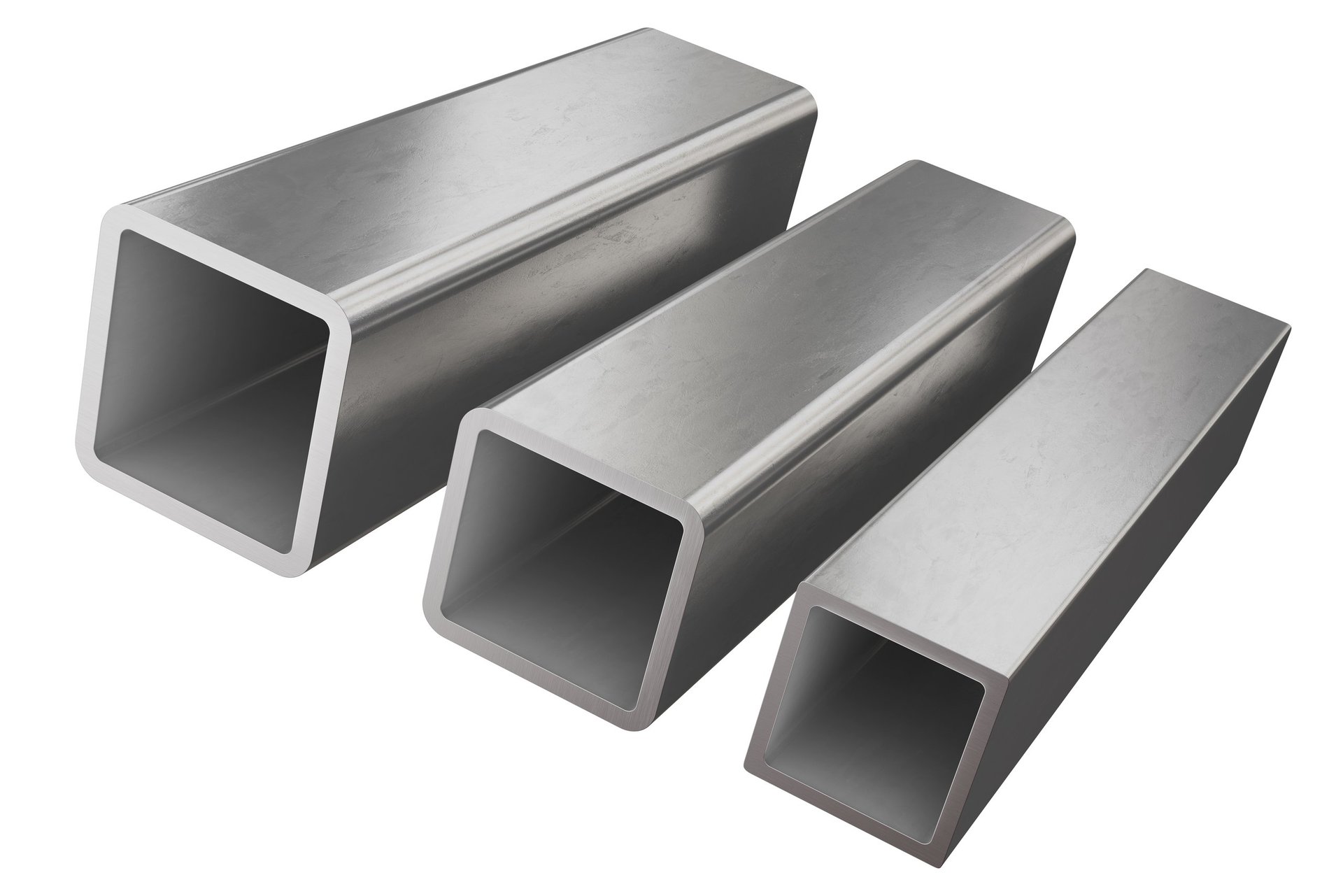
Mild Steel Hollow Section is supplied as square (SHS), rectangular (RHS) or circular (CHS). The shape, outside dimensions and wall thickness change connection and fabrication inputs — state the exact geometry.
Grade, dimensions & service
Grade, dimensions, tolerance basis, fabrication/service conditions and finish are fixed by the service and governing standard. Confirm the related grade and material path so mechanical and MTC requirements are explicit.
Compare the related choices
State the material/finish and geometry requirement explicitly
A Mild Steel Hollow Section is only meaningfully compared against a related hot-finished or stainless solution where the geometry and material/finish requirement have been decided, and against a related grade where the mechanical and MTC requirement is explicit. Never treat the material label as a generic steel item — state the finish, material and grade requirement.
Selection tool
Mild Steel Hollow Section Material Decision Guide
Build a material-fit and RFQ decision from service environment, hollow-section shape, standard, grade, fabrication/welding, corrosion/finish, dimensions, quantity, destination and inspection documents. The guide produces a material-fit rationale, coating or fabrication questions to resolve, related pages worth checking, and an RFQ readiness score with a copyable summary — it treats 'mild steel', 'carbon steel' and 'galvanized' as procurement descriptors whose exact requirements must be stated.
RFQ summary
Standards, grades, dimensions & service conditions
Specify the mild steel hollow section so it is verifiable, not assumed
A standard and grade fix the scope, chemistry, tolerances and testing for a Mild Steel Hollow Section; the material/finish descriptor, shape, outside dimensions, wall thickness, length, unit weight and finish complete the ordering basis. Every table is a decision aid carrying no invented numerical value — each figure is confirmed against the governing standard, edition, MTC or the governing project specification.
Grade and standard
A standard such as EN 10210 (hot-formed structural hollow sections), EN 10219 (cold-formed), ASTM A500/A500M or JIS G3466, or the governing project spec, fixes chemistry, mechanical minimums, tolerances and testing — the standard, edition, grade and any supplementary requirement must all be named.
Dimensions and wall thickness
Shape (square, rectangular or circular), outside dimensions, wall thickness, length and the tolerance basis carried under one unit system.
Unit weight
Calculated from the hollow-section profile and wall thickness — an estimate until confirmed against the mill ticket and the standard.
Specification route
Anchor to the carbon steel reference and exact aids
Confirm the hollow-section standard and verify a dimension, size or weight input before it becomes an RFQ ordering basis. The carbon steel reference ties the material/finish and commercial continuity; the weight and dimensions charts verify a figure before quotation.
| Project / product context | Standard family | Applies to / limitation | Verify / evidence | RFQ field |
|---|---|---|---|---|
| Hot-formed square / rectangular / circular structural hollow section (general structure) | EN 10210 (hot-formed) or governing project spec | Applicable where a hot-formed structural hollow-section grade is specified; confirm scope, chemistry, tolerances, testing and ordering requirements. | Governing edition, exact grade, shape, outside dimensions, wall thickness, finish, supplementary requirements | Material + grade/standard + geometry |
| Cold-formed structural hollow section | EN 10219 (cold-formed), ASTM A500/A500M or governing project spec | Applicable where a cold-formed structural hollow-section grade is specified; confirm scope, chemistry, tolerances, testing and ordering requirements. | Governing edition, exact grade, shape, outside dimensions, wall thickness, finish, supplementary requirements | Material + grade/standard + geometry |
| Lower-strength / general-structure JIS G3466-type grade | JIS G3466 — carbon steel square and round tubes for general structure | Applicable where a related general-structure hollow-section grade (e.g. STKR400) is the baseline; confirm the mechanical and MTC basis. | Governing suite, exact grade, dimensions, tolerance basis | Material + grade/standard + dimensions |
| Property group | Units / method | Source | Conditions & evidence warning | Publication state |
|---|---|---|---|---|
| Chemical composition (C, Mn, S, P maxes) | Weight % per governing standard | Governing standard / MTC per consignment | Exact chemistry is defined by the standard and grade, not by the 'mild steel' label; confirm the mill certificate. | Blocked to publication until verified against a current source |
| Mechanical properties (yield, tensile, elongation) | Per governing standard test method | Governing standard / MTC per consignment | Property minimums and test obligations are grade-defined; do not infer from the material descriptor. | Blocked to publication until verified against a current source |
| Size range & unit weight | Dimensions per unit system; mass per metre | Related size / weight chart + mill ticket | Size, wall and mass must be confirmed against the governing standard and the maintenance basis. | Blocked to publication until verified against a current source |
| Finish / coating | Galvanizing mass or coating system | Coating / finish evidence per the requested requirement | Corrosion protection is a stated requirement, never an assumption from 'mild steel'. | Blocked to publication until verified against a current source |
These tables are decision aids only and carry no numerical technical value; every gauge, weight, dimension, tolerance, chemical or test figure is confirmed against the governing standard, edition and the mill certificate before quotation. Price on request.
Quality, testing & documentation
The document set is a deliverable, not a footnote
A buyer purchasing a Mild Steel Hollow Section on a material, dimensional and grade basis needs the test evidence and paper trail to match the steel. Standard conformity, MTC and test evidence, dimensional inspection, coating or finish evidence and the commercial destination documents are separated so nothing is implied that is not evidenced.
- Mill Test Certificate — chemistry and mechanical minimums against the governing hollow-section standard and grade
- Dimensional / gauge record against the standard (shape, outside dimensions, wall thickness, length)
- Heat / lot traceability to the shipped consignment
- Dimensional, surface, edge or weld inspection per the agreed route
- Coating / finish or galvanizing evidence where the requirement calls for it
- Mechanical-test record where the grade and standard require it
- Commercial invoice and packing list
- Origin / transport documents per the Incoterm
- Customs declaration inputs for the destination

What is verified, when, and what stays quotation-dependent
- Standard conformity and chemistry are confirmed against the governing standard, edition and grade — never an unsupported certificate.
- MTC / test and traceability are requested explicitly per consignment so the section shipped is traceable to its heat and lot.
- Stock, mill origin, price and lead time are quotation-dependent and confirmed with your offer — nothing is implied by this page.
Application & industry decision paths
Pick the operating context that rules the spec
The same nominal Mild Steel Hollow Section serves different services. Choose the application so the governing standard, grade, finish, testing and document discipline match what the section will actually do.
Structural frames
Structural frame service: confirm grade, mechanical evidence, welding, tolerances and stability inputs before the specification is frozen.
Explore Structural framesColumns
Column service: reconcile member size, wall, grade, continuity and the governing design basis before the RFQ is fixed.
Explore ColumnsInfrastructure
Infrastructure context: check whether service, fabrication, documents or project specification change the order.
Explore InfrastructureGCC markets & destination planning
Mild steel hollow section across the Gulf
Six related Hollow Sections market pages, each with destination-specific document, delivery-location, Incoterm and RFQ implications. No stock or market presence is claimed — each route differentiates the inputs that change the offer.

United Arab Emirates
Destination & importer inputs
Move from Mild Steel Hollow Section selection to the exact UAE procurement route: carry the material/finish requirement, hollow-section shape, standard, grade, dimensions, quantity and destination emirate so the quotation and document set match the import.
Mild steel hollow section supply · United Arab Emirates
Saudi Arabia
Project specification & import inputs
Confirm the mild steel hollow section shape, standard, grade, dimensions, finish, quantity and delivery window so the estimate and logistics stay aligned to the order and the governing project specification.
Mild steel hollow section supply · Saudi Arabia
Bahrain
Industrial supply inputs
Coordinate the mild steel hollow section standard, grade, testing, finish, documents and delivery to the Bahrain requirement so the section and its document set stay aligned.
Mild steel hollow section supply · Bahrain
Kuwait
Contractor procurement inputs
Link mild steel hollow section selection and any cutting or welding to the fabrication and inspection needs, with delivery agreed against the destination and window.
Mild steel hollow section supply · Kuwait
Oman
Port-oriented supply inputs
Confirm the mild steel hollow section specification, dimensions, quantity, documents, port and Incoterm so the Oman quotation and logistics stay aligned to the order.
Mild steel hollow section supply · Oman
Qatar
Specification & delivery inputs
State the mild steel hollow section shape, standard, grade, dimensions, finish, quantity, documents and delivery location so the Qatar quotation is fixed on a verified basis.
Mild steel hollow section supply · QatarCommercial, logistics & availability inputs
Packing, route and Incoterm — made explicit
The quotation depends on inputs the buyer supplies: quantity, length/packing, destination, Incoterm, delivery date and documents. Price, stock, freight and lead time are quotation-dependent unless verified data is provided.
Packing
Mild Steel Hollow Section bunched, strapped, tagged and marked by shape, wall, grade, heat and lot, matched to the declared route. Confirm packing and quantity in the RFQ.
Delivery route & schedule
Name the destination, port or delivery location and the required date. Delivery terms are matched to the route and stated on the quotation.
Incoterm & named place
State the Incoterm and named place so packing, transport and document obligations are explicit for the mild steel hollow section import.
A qualified RFQ exports the full commercial basis
Turn the explicit material/finish descriptor, shape, standard, grade, dimensions, finish, quantity, destination, Incoterm, date and documents into a copyable RFQ summary. The covered export, document and logistics route is the hollow-section exporter page — the commercial department reviews the specification for consistency before quoting, and no value is prefilled.
Price, stock, freight and lead time are confirmed with your quotation — never invented upfront.
Related products & technical resources
Validate a specification input before it reaches the RFQ
Reference the related pages so a material, grade, dimension, size or weight input is confirmed before it is transferred into the RFQ. Mild Steel Hollow Section is the bounded basis here; the broader structural steel family is offered only as a comparison, never as an interchange.
Structural steel products
A bounded adjacent route to compare the mild steel hollow section against the broader structural steel family when the buyer needs a comparison rather than an interchange.
Compare structural steel formExpert insight
What the source actually proves that changes the Mild Steel decision
A source-scope checkpoint with buyer implication and an explicit non-equivalence and compliance boundary. The decision aid maps the buyer's requested hollow-section material, application, grade, geometry and documentation to the governing specification scope — it is not a named-person endorsement and not a standards professional.
ASTM International — ASTM A500/A500M-23
Official primary source · reviewed for scope
What does the primary source actually prove that changes the buyer decision for Mild Steel Hollow Section? Check whether the requested hollow-section material, application, grade, geometry, testing and documentation align with the governing hollow-section specification scope before the RFQ — and use a recognized structural tubing standard as a bounded comparison to fix the exact material, grade, dimensions, tolerances and test obligations before any technical claim is accepted.
Buyer implication: use the source to validate scope and the questions that must be fixed in the RFQ for Mild Steel Hollow Section. The RFQ must carry the standard and edition, grade, shape, outside dimensions, wall thickness, finish, test and document inputs the governing project specification expects — and conformity, certification and commercial outcomes remain separate, verification-dependent steps after the technical product description is complete.
Scope: cold-formed welded and seamless carbon steel structural tubing in round, square, rectangular and special shapes for structural uses. Limitations: the ASTM public abstract does not provide every grade property, tolerance or ordering detail, and paywalled tables are not reproduced; project specifications can impose requirements beyond ASTM A500/A500M — verify the purchase order and current licensed standard. The source does not prove Noor Deira Steel inventory, price, lead time, origin, certification, project approval or fitness for a particular design, and does not equate 'mild steel' with any universal grade.
Evidence-led buyer advantages
A concern, answered with evidence, becomes an outcome
Each common buying concern for Mild Steel Hollow Section is met with a verifiable behaviour, not a promise. The result is a specification a buyer can audit before it becomes an order.
Buyer concern
Specification from the material label alone
Evidence-led answer
Every value is forced against the governing standard/edition, grade, hollow-section shape, dimensions, finish and test evidence — never assumed from 'mild steel'.
A Mild Steel Hollow Section whose material, geometry, grade and condition are auditable, order-driving inputs.
Buyer concern
Wrong-grade or standard substitution
Evidence-led answer
The RFQ forces a named standard/edition and grade before any value is shown, and the related grade and material pages are the only comparison routes.
A Mild Steel Hollow Section whose grade, standard and finish are fixed and verified, not approximated.
Buyer concern
Coating or finish ambiguity
Evidence-led answer
'Mild steel' does not fix corrosion protection: the finish or galvanizing requirement and the coating mass or system are explicit RFQ fields, not an assumption.
A hollow section whose corrosion/finish protection is stated and confirmed, not inferred.
Buyer concern
Undocumented testing or traceability
Evidence-led answer
MTC, chemistry, mechanical, finish and test-certificate needs are explicit RFQ fields requested against the declared basis before quotation.
An MTC, chemical, mechanical and finish evidence set that matches the hollow section actually shipped.
Buyer concern
Quotation gaps or destination surprises
Evidence-led answer
Application, fabrication, destination, Incoterm, schedule and documents are separate explicit fields, never buried in a price.
A quotation that states delivery and import expectations rather than hiding them.
From enquiry to delivery
From spec to site, with every hand-off named
A route-aware workflow for the Mild Steel Hollow Section purchase — each step names the buyer input, the owner, the output or evidence, the risk and the next action, so nothing is left to guesswork.
Requirement
Buyer
In: Material/finish descriptor, shape (SHS/RHS/CHS), standard/edition, grade, dimensions, quantity.
Out: Material and geometry basis stated; route identified.
Material label without standard or grade.
Next: Name the standard/edition and grade.
Destination & importer
Buyer + commercial
In: Destination, port or delivery location, importer/consignee details.
Out: Destination and clearance owner explicit.
Importer not confirmed.
Next: Add importer/consignee inputs.
Documents & Incoterm
Buyer + commercial
In: MTC/test and invoice/origin/transport needs, Incoterm + named place.
Out: Document set and delivery terms stated.
Class/document assumptions unstated.
Next: Confirm document checklist.
Quotation
Commercial
In: Quantity, Incoterm, destination, date.
Out: Availability and pricing on request.
Unknown lead time.
Next: Receive confirmed offer.
Inspection & documents
Technical / QA
In: Dimensional, surface, weld and coating checks.
Out: Outside dimensions, wall, length and mass reconciled to the mill ticket and test record.
Missing gauge or test report.
Next: Approve document set.
Packing & shipping
Supplier / forwarder
In: Bunching, strapping, tagging, Incoterm, port.
Out: Coordinated to the destination.
Document delay.
Next: Track to delivery location.
Delivery & follow-up
Commercial
In: Site handover, closed-out docs.
Out: Handed to site with documents.
Open claims.
Next: Close out.
Carry the qualified RFQ into the hand-off
Material/finish descriptor, shape, standard, grade, dimensions, wall thickness, length, finish, quantity, destination, Incoterm and documents enter the RFQ so the specification, the evidence and the delivery terms stay aligned.
Request a quote for Mild Steel Hollow SectionBuyer FAQ
Mild Steel Hollow Section — asked after the decision
These are the technical and commercial questions a buyer or engineer holds at the end of the specification, answered to the same explicit standard as the rest of this page.
What must be specified when requesting Mild Steel Hollow Section?
How do I choose the governing standard and grade?
Which dimensions and tolerances should appear in the RFQ?
What MTC, inspection or coating documents can be requested?
How are stock, lead time and price confirmed?
Qualified RFQ
Request a quote for Mild Steel Hollow Section
Send the explicit material/finish requirement, standard, grade, shape, size, quantity, destination and required delivery date. Review specifications, availability and request an RFQ. Price on request — availability and lead time confirmed with your quotation.
Response within one business day · Price on request
Composition guidance
Composition for a Mild Steel Hollow Section is defined, not labelled
The chemical composition of a Mild Steel Hollow Section is set by the governing standard and grade — never by the descriptor 'mild steel'. This is a decision aid: it tells you what to request and verify, and it carries no invented chemical values.
Exact chemistry by grade
Carbon, manganese, sulphur and phosphorus limits are fixed by the governing standard and grade, and stated per element on the MTC — never assumed from a general material label.
Weldability
Composition influences welding response, but the exact welding input comes from the grade, carbon content and the chosen weld process — confirm with the fabricator and the governing grade.
Heat & lot traceability
Each consignment's chemistry is traceable to its heat and lot via the MTC, so the shipped section matches the declared composition.
No published numbers here
This page publishes no chemical values from memory. Composition figures are confirmed against the current licensed standard and the mill certificate before quotation.
Composition evidence is only meaningful against an explicit governing standard and grade. No chemistry, mechanical or tolerance value is published here; every figure is confirmed against the current licensed standard and the mill certificate before quotation. Price on request.
Corrosion & temperature limits
Corrosion and temperature limits follow the finish and service, not the label
Corrosion protection and service-temperature behaviour for a Mild Steel Hollow Section are decided by the finish/coating system and the governing standard and service — not by the material descriptor. This decision aid states what to specify and verify, and it carries no invented limits.
Corrosion is finish-defined
Corrosion protection is an explicit finish/coating requirement — galvanized (coating mass per standard), coated, or as-supplied — confirmed against the applied system, not assumed from 'mild steel'.
Temperature limits are service-defined
Service and temperature limits are decided by the governing design/code and the finish and grade, and confirmed by the project specification — they are not published here from memory.
Coastal & humid service
For exterior, coastal or humid service the corrosion/finish requirement must be stated explicitly so the coating or galvanizing basis matches the exposure — never left to the material label.
Verify, don't infer
Every corrosion, coating or temperature figure is confirmed against the governing standard, the requested finish, and verified order evidence before quotation.
Corrosion and temperature limits are service- and specification-defined. This page publishes no limit values from memory; each is confirmed against the governing standard, the requested finish/coating system and verified order evidence before quotation. Price on request.