
What the mineralogy establishes
- Which iron oxide family the material belongs to.
- That the material is hydrated, so heating drives off water.
- Which determinations the lot is worth testing for.
- How the material relates to its mineral neighbours.
Material — Hydrated Iron Oxide
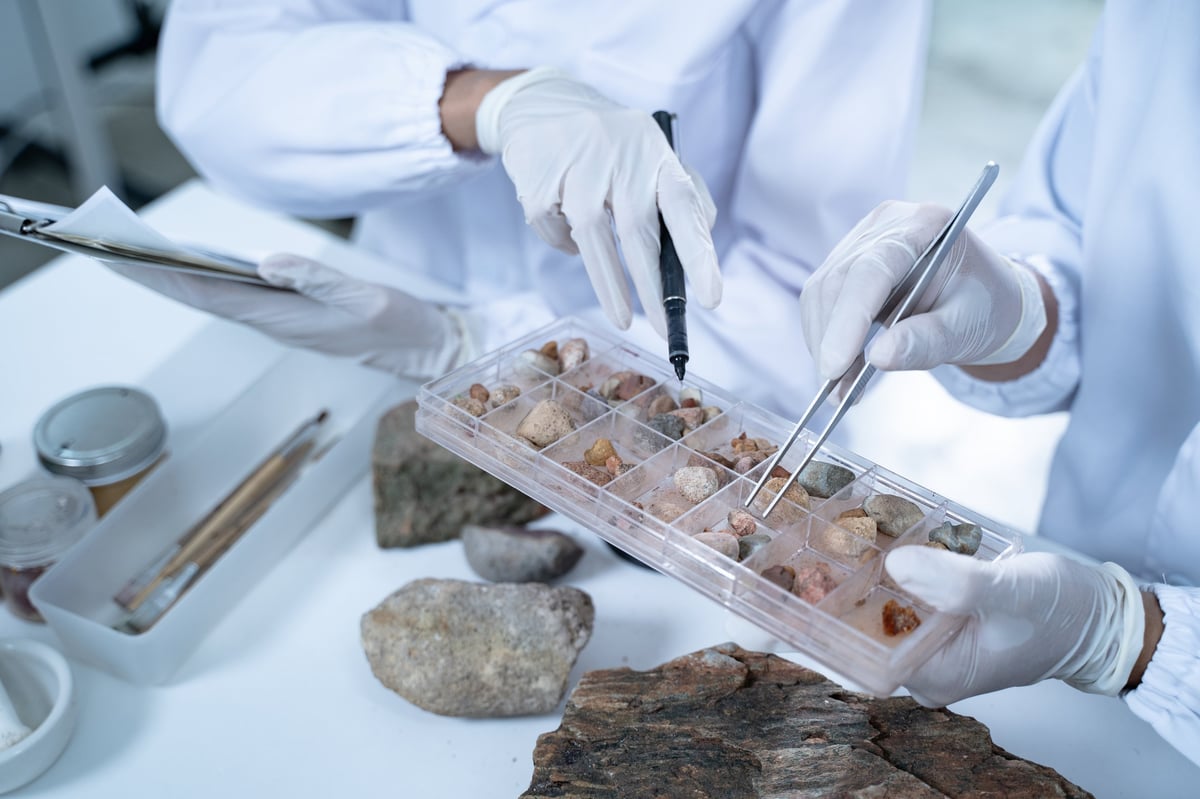
Goethite names a mineral, not a specification. It is a hydrated iron oxide, and calling a lot goethite describes the mineralogy it belongs to — not the iron content it will assay, the impurities it carries or how it will behave in a process.
That distinction is the whole of the buying problem. Two goethite-bearing lots are two different materials that share a family name, and only their own determinations say what you are being offered. A goethite label describes a hydrated iron oxide mineralogy, not a guaranteed Fe grade, impurity profile, sizing, moisture or reduction behaviour. Compare offers on the lot's own assay and test data, and treat hematite and limonite as mineralogical neighbours rather than interchangeable grades.
Price on request. No assay, sizing, stock or performance claim is made on this page.
The mineral holds water within its structure, so heating it drives that water off and shows up in the mass balance through a process. That makes the loss on ignition a property of the lot rather than something the iron figure implies.
What the label carries, and what it does not
Naming the mineral tells you which family the material belongs to, and therefore which determinations are worth asking for. It does not answer them.
The practical consequence: treat the mineral name as the list of questions, not the answers. An offer that states only "goethite iron ore" has told you which family the material belongs to and nothing about the lot on the table.

Two assumptions worth checking
Both of these start from a reasonable instinct — that a named mineral tells you something — and both end somewhere the documentation does not support.
They are not, and collapsing them costs you information. Goethite is a named mineral species with a recognisable structure. Limonite is a broader descriptive grouping for hydrated iron oxide material that is not consistently one species — a field term rather than a mineral name.
Material offered as limonite may contain goethite, may be dominated by it, or may contain little of it. So where a lot is described as limonite, the goethite content is one of the things to confirm rather than assume — and a goethite figure is not a description of a limonite ore body.
The neighbouring page sets out the limonite grouping on its own terms. It is a comparison, not a substitute for this one.
How limonite is describedIt does not. What accompanies goethite in a given ore body depends on that deposit, so no fixed impurity profile follows from the name — for this cargo or any other. A profile you were given for one lot describes that lot.
Each component should be reported separately rather than as a combined figure, because the ratio between them is often what a receiving process is actually sensitive to. A single combined number hides the part that matters.
Where the material is going into a plant that runs its own chain, acceptance is set against that plant's basis rather than a general grade.
What an internal acceptance basis changesMineralogy-to-acceptance decision tree
Five questions, worked in order. Answer each as your offer currently stands; the tree reports the branch that follows — including the ones where an assumption is being made rather than an answer given.
Step 1 — Establish what is actually being offered
Step 2 — Assay the iron content
Step 3 — Account for the water
Step 4 — Settle the moisture basis
Step 5 — Match the evidence to the receiving route
0 of 5 steps answered.
No branch is shown because nothing has been stated. A mineral name on its own is not evidence, so the tree waits for your answers before it says anything.
Neighbouring materials and forms
Each of these settles a different question. None of them stands in for another — where a link is a comparison rather than a replacement, it is labelled as one.
Where the mineralogy itself is the open question. These are comparisons, not substitutes — each is described on its own terms.
An anhydrous iron oxide. Described by dominant mineralogy rather than a guaranteed grade, like this page.
CompareA hydrated grouping close to goethite in character, where the test package has to be built per lot.
CompareA magnetic oxide with its own beneficiation logic, and a bounded comparison rather than an alternative.
CompareWhere the mineralogy is settled but the physical form is the question.
Destination planning
The delivery place and the Incoterm that reaches it change the documents and the handling. Open the market you are actually shipping into.
Enquiries landing at Jebel Ali, Khalifa Port or a free-zone consignee need the delivery place named before the Incoterm means anything. Say whether the receiving plant or the trader takes the customs entry.
Plan a deliveryConsignments into Dammam or Jeddah typically move on to inland industrial cities, so the quotation has to reach the inland place rather than stop at the port. Say whether the rail or road leg sits inside your requirement.
Plan a deliveryHamad Port consignments are usually cleared against a document set agreed in advance. Name the consignee and whether the receiving plant needs the assay and moisture documents before discharge rather than after.
Plan a deliveryShuwaikh and Shuaiba movements are short-sea legs, so the loading form affects handling more than the voyage. State whether the requirement is containerised or breakbulk, because it changes the documents and the discharge arrangement.
Plan a deliveryKhalifa Bin Salman Port deliveries often connect to a mainland industrial consumer, so the delivery place may not be the port itself. Name the final place and the Incoterm that reaches it.
Plan a deliverySohar and Duqm consignments sit close to industrial zones where the receiving site may take delivery directly. State the port or zone, the delivery term that reaches it, and any origin documentation your end use requires.
Plan a delivery
Buyer FAQ
These are the points buyers and technical traders raise once a mineral name is on the table and the figures are not.
Qualified enquiry
Attach what your documents state. The commercial desk responds against the evidence you provide, so what is missing is visible on both sides.
State the determinations you hold. Nothing is pre-filled.