
Technical Resource
Iron Ore Chemical Compositionfor a testable acceptance schedule
Iron ore chemical composition should be read as a method- and sample-basis-dependent assay. Total Fe is only one field; buyer-defined limits for gangue and deleterious elements, moisture and other quality variables must be stated with methods and tolerances.
No tolerance, limit or default is inferred on this page — absent values stay absent.
Assay Completeness and Basis Checker
Read the assay before you read the grade
Enter the fields an assay comparison is judged on. The checker reports what is present, what is missing, and where a figure has been stated without the method or basis that makes it decision-grade. It never supplies a limit, a tolerance or a default.
Acceptance fields
Related references: iso 3082 iron ore sampling · iso 2597 iron ore
Assay completeness result
This checker audits an assay comparison — it does not grade the material or rank suppliers. Add the fields on the left and it will report which are present, which are missing, and which figures have been stated without the method or basis that makes them decision-grade. Nothing is scored until you enter something.
Evidence warning
Completing this form does not confirm availability, compliance or suitability, and no tolerance limit has been supplied by this tool. Every limit above must come from the buyer's own requirements or a verified supplier value.
Copyable RFQ summary
Specification basis: buyer-defined acceptance schedule. No tolerance, limit or default has been inferred by this tool — every stated value above was entered by the buyer.
Availability, price, origin, lead time and freight are quotation-dependent and are verified against current company data for the exact consignment.
The checker is deterministic: the same inputs always produce the same report, and the report describes completeness only. It contains no hidden weighting and no supplier ranking.
Method, Basis & Data Conditions
How an assay becomes decision-grade
An assay is only decision-grade when every figure in it names the method and sample basis it was determined on. This is the method the page applies — and the conditions under which it does not apply.
- 01
Read Fe as one field
Total iron is a single measured result, not a summary of quality. A 62% Fe figure says nothing about gangue, moisture, sizing or reduction behaviour.
- 02
Name the analytical method
A measured result is only reproducible when the standard and edition that produced it are stated. Without them, two laboratories can report different figures for the same sample.
- 03
Tie the assay to a sample
Every figure describes the sample that was drawn and prepared. Without the sampling standard, the certificate cannot be said to describe the consignment.
- 04
Set limits against the route
Which impurities matter, and how tightly they are bounded, depends on the receiving process — not on the product name or a trade grade label.
Unit system
Each element is expressed as a percentage by mass on the stated grading basis — usually dried — and the basis must be named. Mass is expressed in metric tonnes, with the wet or dry basis declared alongside any tonnage.
Source hierarchy
A lot-specific measured result overrides a generic product description; a named analytical standard and edition overrides a trade grade label; buyer requirements override supplier defaults. Apply them in that order.
Applicability limits
This method describes how to read an assay. It does not set commercial acceptance limits, does not confirm that a given material meets them, and the total-iron determination does not establish impurity limits, moisture, sizing, physical strength or metallurgical performance.
Procurement-grade Worked Example
Two assays that look identical, read differently
Every value below is illustrative example data — not a live quote, not a benchmark, and not a Noor Deira Steel figure. It shows how the same headline Fe figure can describe two different purchasing positions.
| Stage | Input (example data) | Method applied | Interpretation & decision impact |
|---|---|---|---|
| Offer A received | “62% Fe iron ore fines, 25,000 t, Jeddah” | Core-field check against the acceptance list | Returns verify-first. A grade label is present but no measured assay, no method, no gangue fields and no sampling basis. Two suppliers could answer this and mean materially different ore. |
| Offer A — assay provided | Fe 62.1% (example), natural basis, by ISO 2597-1; SiO2 5.4%; Al2O3 2.2%; P 0.06%; S 0.04% (example) | Measured assay read against grading basis and method | The full element set is now visible, not just iron. Gangue and deleterious elements are reported individually, so the offer can be tested against the receiving process rather than against its headline Fe figure. |
| Offer B — same Fe, different basis | Fe 62.0% (example) on a calcined basis; SiO2 8.1%; Al2O3 3.4% (example) | Assay-specific basis rule: grading basis changed between offers | Both offers read “62% Fe”, but they are not the same material. A calcined basis reports a higher Fe for the same ore, and the gangue is materially higher. Comparing the two headline figures would select the wrong offer — the basis and the full element set are what make the comparison valid. |
| Decision | Offer A preferred (example); Offer B rejected on gangue against a sinter-plant limit | Element-by-element check against buyer-defined limits | The decision turned on the gangue fields, not on the Fe figure. Had only the headline grade been compared, Offer B would have looked equivalent — which is the failure this checker exists to catch. |
Verification step
Confirm any assay against the buyer's own acceptance schedule and the certificate's sampling basis before acting on it. None of the values above are acceptance limits, and none were taken from a Noor Deira Steel offering or a live market source.
Standards & Tolerance Context
What each assay field means, and how it is verified
A decision-grade table: the field, what the buyer must define, the unit and basis it is read on, how it is verified, and what happens in the RFQ. No value is invented — the requirement column states what must be defined, never what the number should be.
| Assay field | Buyer requirement | Unit / basis | Verification method | Applicability | RFQ action |
|---|---|---|---|---|---|
| Total Fe | Target or minimum, set by the buyer | % by mass, on a stated grading basis | ISO 2597 — confirm the edition named | One field of many; the basis changes the reported figure | State target, basis and method in the RFQ |
| Gangue & deleterious | Buyer-defined maximum for SiO2, Al2O3, P, S, individually | % by mass, same basis as the Fe figure | Lot-specific analysis tied to the sampling standard | Limits differ by process route, not by product name or grade label | State each element separately; never as a combined grade label |
| Moisture (with assay) | Accepted value or ceiling, read with the chemistry | % and the mass basis it applies to (WMT / DMT) | Determination on a sample drawn per the sampling standard | Not an assay field, but changes the mass basis of every figure above | Name the mass basis beside every tonnage quoted |
| Size distribution | Required range or distribution, incl. undersize ceiling | mm, with the sieve series used | Sieve analysis; name the method and series | Determines which process the ore can feed at all | State the range and the method used to establish it |
| Sampling basis | Governing standard, and what counts as a lot | Standard reference; lot definition | ISO 3082 sampling and sample preparation | Every chemistry, moisture and sizing result depends on it | State the standard and the lot definition |
| Physical / metallurgical | Only the tests the process route requires — never inferred from the assay | Method-specific index or dimensionless result | The applicable test method, with its conditions stated | Not established by total-iron determination at all | Name the test and the route that requires it |
| Delivery basis | Destination with a precise named place or port, and the Incoterm | Place name; ICC trade term | Contract terms — verified in the offer, not assumed | Determines which costs sit on which side | Name rule and place in the RFQ itself |
Evidence warning: no tolerance value or element limit, acceptance limit or default has been supplied in the table above. The buyer-requirement column states what must be defined, not what the value should be. Any figure used in a live enquiry must come from the buyer's governing document or a supplier's lot-specific analysis.
ISO 3082 — Ore Sampling
Sampling and sample preparation for natural and processed ores. It is the basis on which every assay figure is established — a certificate is only as useful as the sampling behind it.
iso 3082 iron ore samplingISO 2597 — Iron Content
Determination of total iron content in iron ore. Naming the edition is what makes an Fe figure reproducible between two laboratories — and note that it establishes total iron only, not impurity limits or physical performance.
iso 2597 iron oreVerification & Misuse Controls
Where assay comparisons go wrong — and what must be verified
The common failures are not exotic: a grade label read as a measured assay, a natural-basis figure compared against a calcined one, or a certificate accepted without the sampling basis behind it. Each has a control.
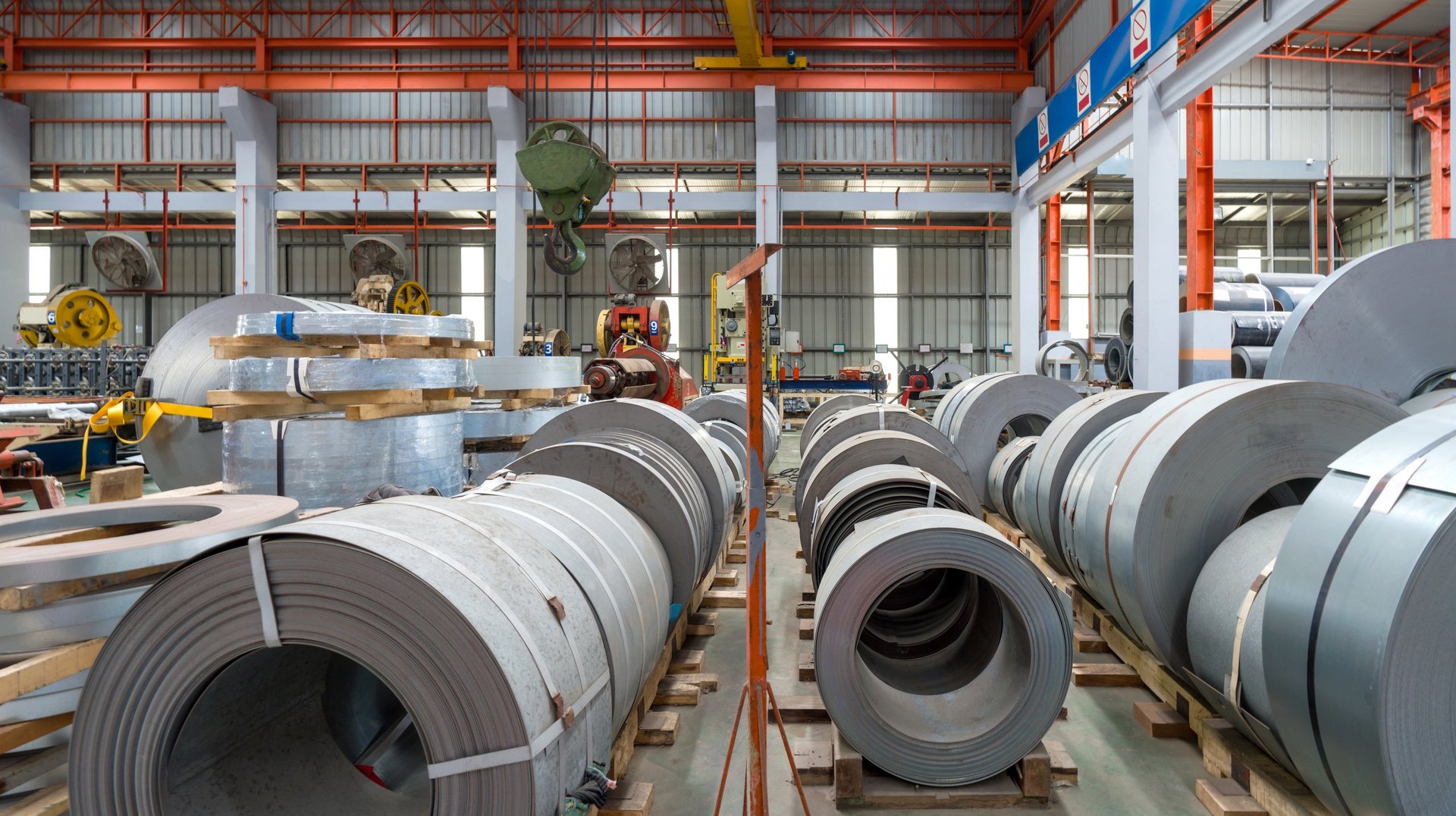
Verification turns a stated assay and document set into an inspectable, quotation-ready consignment — not a decorative number.
Request / verify / document matrix
| Request | Verify against | Carried by | Misuse it prevents |
|---|---|---|---|
| Sampling method | The standard named in the buyer's specification | Sampling record accompanying the analysis | Treating an assay from an unstated sampling basis as representative of the consignment |
| Assay / certificate of analysis | The test method, and whether it matches the specification | Certificate of analysis for the actual lot | Reading a certificate of analysis as a complete purchase specification |
| Moisture determination | The mass basis declared in the offer | Moisture result and the weight certificate | Comparing a natural-basis Fe figure against a calcined-basis one as if they described the same material |
| Size distribution | The sizing method and sieve series used | Size analysis record | Assuming a feed suits a process without evidence it falls in the size window |
| Physical / metallurgical tests | The test method and its conditions | Test report where the route requires it | Requiring tests the process does not use, or omitting ones it depends on |
| Origin & shipping documents | The destination's import and processing requirements | Origin, transport and customs documentation | Assuming a document set that satisfied one destination satisfies the next |
Label read as a measurement
A bare “62% Fe” is a commercial label, not a measured result. Until the basis and method are named it cannot be verified or reproduced.
Mixed grading bases
A calcined figure and a natural figure for the same ore are different numbers. Comparing them measures the reporting convention, not the material.
Fe read as quality
Total iron is one field. An offer can match on Fe and still fail on gangue, moisture or sizing — the assay is read as a set, not a headline.
When engineering review is required
Where a limit comes from plant metallurgy rather than a generic grade — the receiving process engineer sets it, not the supplier.
Product Decision Handoff
Fit, verify-first, or not fit
The assay is read against the product form, material and process route the buyer is actually purchasing. These are not interchangeable — the same Fe figure carries different meaning in each.
Fit
The assay names each controlled element with its method, states total iron on a declared grading basis, ties the chemistry to a sampling standard and lot, and sits inside a stated process route. Nothing in it needs to be assumed by the reader.
Verify first
One or more figures exist without the basis that makes them decision-grade — a total-iron result with no analytical method, chemistry with no sampling standard, a moisture reading with no mass basis. The assay is close, but a reader would be supplying assumptions you cannot see.
Not fit
The element limits contradict the process route or the product form selected — a gangue level the receiving plant cannot tolerate, or an assay written against the wrong form. Change the route or the form before seeking a quotation.
Product form, material & grade paths
Each path states its applicability boundary and the trade-off a buyer accepts by choosing it.
Iron Ore Pellets
A sized, heat-hardened form with its own chemistry and physical spec — verify the grading basis before comparing it against lump or fines.
iron ore pellets supplierIron Ore Fines
A fine feed whose sizing and moisture carry as much weight as its Fe figure — state the size window and the basis before quoting.
iron ore fines supplierIron Ore Concentrate
A beneficiated form where the concentrate grade is the tradable figure — the head grade is not the specification.
iron ore concentrate supplierHigh Grade Iron Ore
A grade band whose premium is only justified when the receiving process requires it — confirm the requirement before specifying up.
high grade iron ore supplier62% Fe Grade
A widely referenced band — comparable only when the grading basis and impurity limits are stated with the figure.
62 fe iron ore supplierHematite Iron Ore
A mineralogy with its own reduction behaviour — confirm the mineralogy claim against the assay rather than the trade name.
hematite iron ore supplierMagnetite Iron Ore
Usually beneficiated before sale — the concentrate grade reached is what the specification should state, not the head grade.
magnetite iron ore supplierProcess, sector and export paths
An assay is only meaningful inside the process that will consume it. The same element is benign in one route and constrained in another — test the intended duty before comparing offers.
Blast furnace
Accepts lump and sinter feed within a defined size and chemistry window — the sizing basis matters as much as the Fe figure.
iron ore for blast furnaceDirect reduction
Constrained by gangue and physical quality — a grade acceptable to a sinter plant may fall outside a DR feed specification.
iron ore for direct reductionSteel production
The route that sets which iron unit is required — the same tonnage is not the same input across steelmaking flows.
iron ore for steel productionIntegrated mills
Run several iron-unit routes at once, so one delivery may be qualified against more than one feed specification.
iron ore for steel millsPellet plants
Take a fine concentrate feed and agglomerate it — the concentrate grade and moisture drive both yield and the specification.
iron ore for pellet plantsExport enquiry
Where destination, Incoterm, mass basis, packing and the document set are qualified before a landed comparison is possible.
iron ore exporterRelated Related Tools & Pages
Complementary destinations by next buyer task
Grouped by what the buyer does next — verify a technical field, continue the specification into the product family, or move to an export enquiry. Not an unstructured link directory.
Verify a technical or commercial field
Iron Ore Price Per Ton
Converts a stated ton figure onto a single mass and grade basis — the commercial check that follows reading the assay.
iron ore price per tonIron Ore Grades
How grade bands are expressed and where a label stops being a specification — useful when setting an Fe target.
iron ore gradesIron Ore Price Guide
How a quote basis is formed and normalized once the specification exists — the commercial counterpart to this page.
iron ore priceContinue into the product family
Iron Ore Exporter
Connects the resolved specification to an export-enquiry workflow where destination, Incoterm, mass basis, packing and document inputs are qualified.
iron ore exporterIron Ore Supplier
Return to the iron ore product family to progress the completed specification into a full procurement.
iron ore supplierGCC Product × Country Routes
Carry the specification to a destination
Each destination route carries its own documentation and delivery inputs, so the same specification produces a different RFQ per market. Every country page is listed.

United Arab Emirates
Port & re-export basis
UAE iron ore enquiries are generally priced landed at a named port — Fe grade, moisture basis, sizing and the document set are reconciled with the receiving plant before a quote basis is fixed.
View United Arab Emirates iron ore supply
Saudi Arabia
Direct-reduction grades
Saudi direct-reduction demand is specified on pellet or lump chemistry, so grading basis, impurity limits and physical quality are agreed before the commercial comparison begins.
View Saudi Arabia iron ore supply
Qatar
Consignment documentation
Qatar steelmaking input supply turns on inspection and analysis documentation — sampling standard, moisture basis and certificate set are fixed with the specification.
View Qatar iron ore supply
Kuwait
Bulk handling intake
Kuwait bulk intake links the required sizing and moisture to the receiving system — size distribution, mass basis and discharge constraints are set early in the specification.
View Kuwait iron ore supply
Bahrain
Smelter intake chemistry
Bahrain smelter intake fixes the acceptable chemistry window — Fe grade, gangue limits, mass basis and the required analysis documents are confirmed before a specification is issued.
View Bahrain iron ore supply
Oman
Port delivery basis
Oman enquiries are routed to a named port and inland destination — delivery point, Incoterm, mass basis, sizing and document set are harmonised with the receiving operation.
View Oman iron ore supplyExpert Insight
Why a measured result beats a grade label
A source-backed procurement note: the published scope of the analytical standard, what it does and does not settle, and the consequence for the RFQ.
Decision question
What evidence most directly changes the procurement decision for Iron Ore Chemical Composition on this page?
The analytical method and sample basis behind the Fe figure. A total-iron percentage is a measured result, not a quality summary — it describes the sample that was drawn, prepared and analysed, under a named method. Without both the method and the sampling basis, two laboratories can report different figures for the same ore, and a commercial label such as 62% Fe cannot be verified at all. That is the single piece of evidence that most often separates an assay you can act on from one you cannot.
Method, scope & limitations
- Method: use the ISO scope to distinguish a measured total-iron result from a commercial grade label, and require the analytical method and sample basis alongside any Fe percentage.
- Scope: titrimetric determination of total iron content in natural iron ores, concentrates and agglomerates within the method's stated range.
- Limitation: the method measures total iron only; it does not establish impurity limits, size distribution, moisture, physical strength or metallurgical performance.
- Limitation: a commercial label such as 62% Fe or 65% Fe is not a complete purchase specification, and contract tolerances remain buyer-seller specific.
Buyer implication: treat Fe grade as one controlled field in a full assay and acceptance schedule, not as sufficient evidence of application fit. The RFQ should carry the method, the basis and the lot — not simply an Fe number.
Primary source: ISO 2597-1:2006 — Iron ores — Determination of total iron content — Part 1. Information current as of 22 September 2026. This source does not establish Noor Deira Steel inventory, price, origin, lead time, certificates, market presence or project suitability, and it is not a named-person profile.
Evidence-led Buyer Advantages
Buyer concerns mapped to evidence, not claims
Each concern maps to something verifiable and then to a practical procurement outcome. No superiority claim is made or implied.
“The Fe figure we are quoted may not mean what we think.”
Evidence: The analytical method and edition are stated with the figure, and the grading basis is declared.
Outcome: A measured result can be reproduced and compared, instead of a label being taken on trust.
“The ore matches on Fe but fails in the plant.”
Evidence: Gangue and deleterious elements are reported individually, each against a buyer-defined limit.
Outcome: Element-by-element limits are applied instead of a headline grade, so a specification that would fail on chemistry is caught before delivery.
“Two certificates disagree and we cannot tell which is right.”
Evidence: The sampling standard and lot definition each certificate was established under are stated.
Outcome: A disagreement can be traced to a method or sampling difference rather than treated as an unexplained conflict.
“A grade label alone does not tell us if it suits our process.”
Evidence: The application or process route is stated alongside the assay, since limits are route-specific.
Outcome: Suitability is tested against the intended duty instead of against a trade name.
“Two quotes differ and we cannot tell whether it is the material or the logistics.”
Evidence: Destination with a named place or port, and the Incoterm, are fixed before quoting.
Outcome: Cost differences can be attributed to the right cause, so the comparison stays meaningful.
From Enquiry to Delivery
Six stages, each with a named risk
A route-aware workflow. Every stage carries its owner, the input it needs, the evidence it produces, the risk if it is skipped, and the next action.
Enquiry
- Owner
- Buyer
- Required input
- Product form, intended process route, rough volume
- Evidence / output
- A written requirement, however rough
- Risk
- A verbal requirement gets quoted against the wrong product form
- Next action
- Put the requirement in writing
Specification validation
- Owner
- Buyer + technical
- Required input
- Chemistry fields, moisture basis, sizing, test methods
- Evidence / output
- A complete acceptance schedule
- Risk
- Absent limits get filled by the supplier's assumption rather than yours
- Next action
- Run the assay check
Evidence review
- Owner
- Quality / technical
- Required input
- Sampling standard, lot definition, analytical method, required documents
- Evidence / output
- Sampling and analysis basis agreed before quoting
- Risk
- Certificates arrive that describe a different lot, method or grading basis
- Next action
- Name the sampling standard and analytical method
Commercial basis
- Owner
- Procurement
- Required input
- Quantity and cadence, currency, quotation validity
- Evidence / output
- Offers stated on one comparable basis
- Risk
- Quotes cannot be ranked because the bases differ
- Next action
- Normalize before comparing
Destination & logistics
- Owner
- Logistics
- Required input
- Named place or port, Incoterm, packing, documents
- Evidence / output
- A landed cost basis that can be compared
- Risk
- Different Incoterms make cheaper material look more expensive
- Next action
- Fix the place and the trade term
RFQ handoff
- Owner
- Buyer + commercial
- Required input
- The completed specification and delivery terms
- Evidence / output
- A copyable, complete RFQ
- Risk
- An unstated field is resolved after the price is fixed
- Next action
- Transfer the specification to the RFQ
Buyer FAQ
Questions that come after the specification exists
Procurement and quality questions, not definitions — the basics are resolved above.
What specification fields should a buyer provide for Iron Ore Chemical Composition?
How should Fe grade and impurity limits be verified?
Why should moisture and size distribution be stated with a test basis?
Which quality and inspection documents should be requested rather than assumed?
Which commercial and delivery inputs are needed for a comparable RFQ?
Need a verified iron ore specification?
Send grade, size, quantity and destination for technical RFQ support. The commercial department responds with availability and pricing against your stated assay and acceptance schedule. Price is always on request.
- Product form and total Fe grade or grading basis
- Buyer-defined chemistry limits, element by element
- Moisture and mass basis
- Size distribution with its sizing basis
- Applicable physical / metallurgical tests
- Sampling, analytical method and inspection basis
- Quantity and required cadence
- Destination port or place, and Incoterm
- Required documents and quotation timing
Office 3303, Churchill Executive Tower, Business Bay, Dubai, United Arab Emirates
Monday – Saturday: 8.00 AM – 6.00 PM · Sunday: Closed
Method & Basis
The completeness rule, stated plainly
The check applied above is deterministic and can be reproduced by hand. It contains no weighting and no scoring.
Core-field rule
An assay comparison is incomplete while any core field is absent. Core fields are: product form, total Fe, each gangue and deleterious element, moisture, sampling method, application route, quantity, and destination. No default is substituted for an absent field.
Basis rule
When every core field is present, the comparison is verify-first if a stated figure lacks its basis: total Fe without a grading basis or analytical method, chemistry without a sampling standard or lot definition, moisture without a mass basis, or size without a sizing method.
Complete rule
Only when every core field is present and every stated figure carries its basis does the checker report complete. Completeness describes the assay document, never the material, its availability or its suitability.
What this method deliberately does not do
- It does not supply, guess or default any acceptance limit or element tolerance.
- It does not rank suppliers or score material quality.
- It does not confirm availability, compliance or suitability.
- It does not treat a commercial grade label as a measured assay.
Worked Examples
Two reports, side by side
What the checker returns for an assay presented without a basis and for one carried with it — illustrative example data only.
Example A — label only
Product form: fines
Fe target: 62%
Quantity: 25,000 t
Destination: Jeddah
Result: verify-first. The gangue and deleterious fields are absent, no sampling method is named, and the Fe figure has neither a grading basis nor an analytical method. The checker leaves them blank rather than filling them in.
Decision impact: each supplier would assume their own chemistry limits and their own basis. The offers would not be comparable, and the 62% would mean different things.
Example B — assay carried with its basis
Product form: fines
Fe 62.1% natural basis, ISO 2597-1
SiO2 5.4% · Al2O3 2.2% · P 0.06% · S 0.04%
Moisture 8.5% DMT
Size 10–30 mm, ISO 4701
Sampled per ISO 3082, lot = shipment
Route: sinter plant
25,000 t · CFR Jeddah · valid 30 days
Result: complete. Every element is reported individually with a method and basis, tied to a sampling standard and lot, so the assay can be tested against the receiving process rather than read as a single grade.
Verification step: the limits above would still need to come from the buyer's own plant requirements — the checker confirms they are stated with a basis, not that they are correct.
Every value in both examples is illustrative example data. Nothing here is a Noor Deira Steel figure, a market benchmark or a live quotation.
Related Products
Recommended iron ore forms
Route-specific paths a buyer can verify against a governing analytical basis and process requirement before reading an assay against them.
Iron ore pellets
A sized, heat-hardened form; confirm the grading basis and sizing before comparing it against a lump or fine offer.
Iron ore fines
A fine-feed form where sizing and moisture drive both the specification and the process it can serve.
Magnetite iron ore
A mineralogy with distinct beneficiation behaviour; confirm the mineralogy claim against the assay before treating offers as interchangeable.
Reference & Handoff
Turn the assay into a quoted RFQ
Save the resolved assay as a copyable summary and hand it to the target.
Specification handoff
Copy the RFQ line from the checker, add the named place or port, the Incoterm and the document set, then transfer it to the RFQ.
Back to the completeness checkerIron Ore Supplier
Return to the iron ore product family to progress the completed specification into a full procurement.
iron ore supplier