
B2B Steel Distribution
Iron Ore Supplier for Blast Furnaces, DRI and Steelmaking
Source iron ore by type, Fe grade, form and chemistry. Build a complete ore specification and hand it to Noor Deira Steel for quotation.
Free, no-obligation specification review
Information current as of
Product Types & Range
Ore route matched to the plant and reduction process
Fines, lumps, pellets, concentrate and direct-shipping ore each feed a different process. Choose the route that matches Fe grade and particle form — availability is confirmed against your specification, not from a standing catalogue.
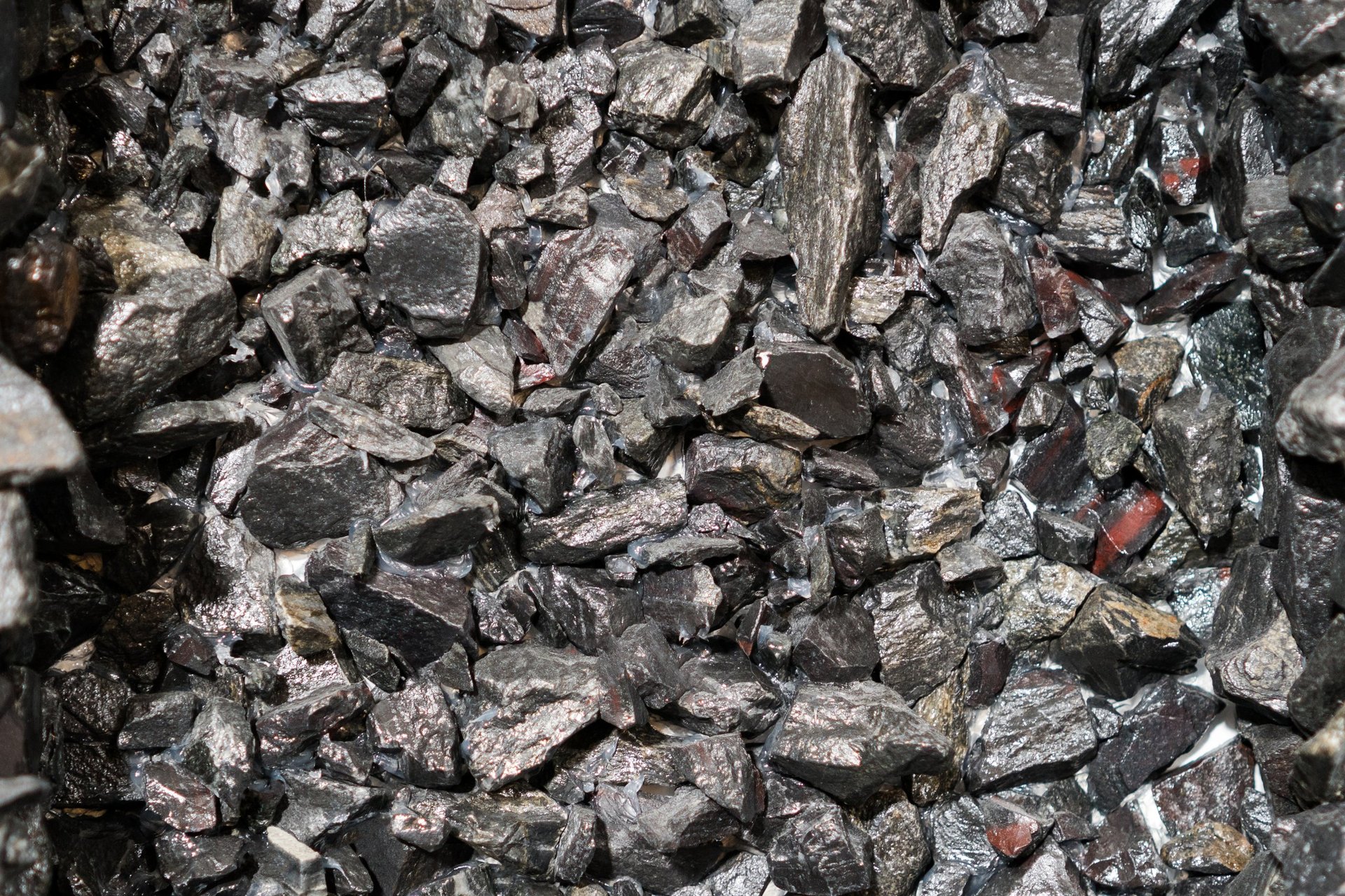
The right Fe grade and form for the reduction route
Fines for sintering, lumps for direct charge, pellets for DRI.
Iron Ore Fines
Fine-grained ore for sintering and pelletizing feed.
Iron Ore Lumps
Coarse lump ore charged directly to blast furnaces.
Iron Ore Pellets
Heat-hardened spheres for blast furnace and DRI feed.
Concentrate
Beneficiated fine ore with elevated Fe content.
Direct-Shipping Ore (DSO)
High-grade ore shipped without further beneficiation.
See the full ore range
Compare every route in one place and find the one that fits your plant.
Explore iron ore by type
Iron Ore Types
Fines, lumps, pellets, concentrate and DSO compared.
Learn moreIron Ore Fines
Fine-grade sinter and pellet feed.
Learn moreIron Ore Lumps
Coarse lump for direct blast-furnace charge.
Learn moreIron Ore Pellets
Heat-hardened spheres for BF and DRI.
Learn moreConcentrate
Beneficiated fine ore, elevated Fe.
Learn moreDirect-Shipping Ore
High-grade ore, shipped as-mined.
Learn moreMaterials, Categories & Forms
Mineral form matched to process and value-in-use
Hematite, magnetite and limonite each carry a distinct chemistry and beneficiation envelope. Confirm the mineral form and Fe grade together so the selected ore matches the reduction route.
Hematite Iron Ore
Fe₂O₃ — the dominant commercial ore for blast furnaces and DSO.
Explore materialMagnetite Iron Ore
Fe₃O₄ — magnetic, processed into high-grade concentrate.
Explore materialLimonite Iron Ore
Hydrated iron oxide — lower-grade, friable ore bodies.
Explore materialFe grades by iron content
| Grade | Fe basis | Typical application |
|---|---|---|
| 58% Fe | 58.0% | Low-grade fines for sintering and blending |
| 60% Fe | 60.0% | Mid-grade for sinter feed and general steelmaking |
| 62% Fe | 62.0% | Benchmark-grade fines — the standard reference |
| 63.5% Fe | 63.5% | Premium-grade fines for efficient blast furnaces |
| 65% Fe | 65.0% | High-grade for DRI and direct reduction |
| 66% Fe | 66.0% | Concentrate-grade for pelletizing and DRI |
Fe content guides selection, not quoting: exact availability and price are confirmed on request.
Build Your Specification
Build a complete iron-ore specification
Select ore type, Fe grade, form, chemistry and size. The builder assembles a full specification you can copy, review, or submit for quotation.
The builder is a first-pass guide, not a catalogue. Noor Deira Steel reviews every specification by hand and confirms Fe grade, gangue chemistry and delivery. Settlement is on an assayed weight basis. Pricing is always on request — request a quotation to receive a confirmed offer.
Grades, Standards, Sizes & Tolerances
Assay and specification you can plan a burden against
Fe content, moisture and impurities tie directly to the assay basis and governing sampling standard. The reference below helps you frame a specification before Noor Deira Steel confirms the full chemistry against your order.
| Parameter | Typical range | Note |
|---|---|---|
| Fe (total iron) | 58 – 66 % | Primary value driver; confirmed by assay |
| SiO₂ (silica) | 2 – 8 % | Gangue — higher silica lowers value-in-use |
| Al₂O₃ (alumina) | 0.5 – 2.5 % | Affects slag viscosity in the blast furnace |
| P (phosphorus) | 0.02 – 0.10 % | Tight limit for premium steel grades |
| S (sulfur) | 0.01 – 0.05 % | Low sulfur preferred for steelmaking |
| Moisture | 2 – 9 % | Confirmed at loading, adjusted in weight |
Governing standards
Technical resources
- Grades guide — Fe content by grade reference
- Chemical composition — gangue and impurity limits
- Specifications — typical trade specification structures
Quality, Testing & Documentation
Assay-backed, sampled and traceable
Every iron ore parcel we quote is supported by sampling and assay to the governing standard. We reconcile the assay and moisture results against your order before it ships.
Assay and moisture certificate matched to the parcel.
Sampling
Representative sampling at loading per ISO 3082.
Laboratory assay
Total Fe and gangue chemistry verified to ISO 2597.
Moisture determination
Moisture measured at loading, applied to settlement weight.
Traceability
Parcel, vessel and load-port lot identification retained end-to-end.
Procurement Insight
Why a 4-point Fe spread changes the whole furnace burden
A common procurement error is to compare iron ore on price per tonne alone. The Fe content drives value-in-use, so a small difference in grade compounds across a parcel. Because gangue (silica and alumina) displaces iron, lower-Fe ore carries both less usable metal and a heavier slag load through the furnace — the grade offset is roughly linear in iron units, not a rounding detail.
| Fe grade | Fe units per tonne | Gangue (non-Fe) |
|---|---|---|
| 58% Fe | 580 kg | ≈ 420 kg |
| 62% Fe | 620 kg | ≈ 380 kg |
| 66% Fe | 660 kg | ≈ 340 kg |
Fe units per tonne = Fe content × 1,000 kg; the remainder is gangue, moisture and loss on ignition. An 8-point jump from 58% to 66% Fe removes roughly 80 kg of gangue per tonne, which is why high-grade ore — despite a higher per-tonne headline — often lowers the true furnace cost. Engineering reference — mass balance per 1,000 kg of ore; compiled 30 August 2026.
Applications & Industries
Iron ore across reduction, steelmaking and agglomeration
The right ore changes from one process to the next. Noor Deira Steel aligns ore type, Fe grade and particle form to the duty each plant demands.
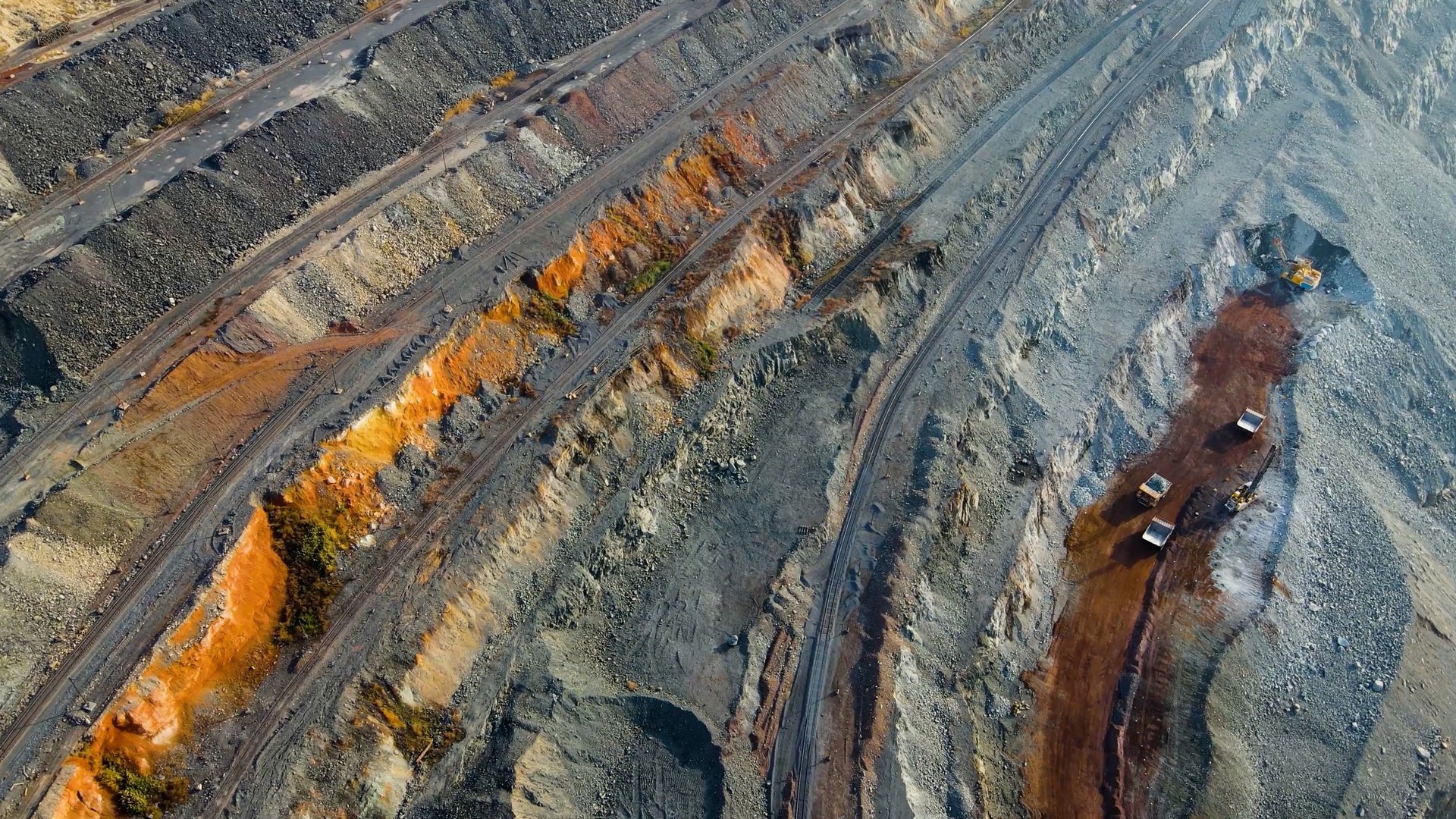
From the mine face to the reduction plant
Blast Furnaces
Burden chemistry and reducibility.
Which Fe grade and lump/fine mix suits the burden?
DRI Plants
High Fe, low gangue, low phosphorus.
Which high-grade ore or concentrate qualifies for DRI?
Steelmaking
Consistent chemistry and impurities.
Which ore grade feeds the steelmaking route?
Integrated Mills
Sinter and pellet feed balance.
Which blend sustains the integrated mill burden?
Pellet Plants
Fine grind and particle size.
Which concentrate size and Fe content feed pelletizing?
Sintering
Fines size and gangue control.
Which fines fraction and chemistry sinter cleanly?
GCC Markets
Iron ore supply across the Gulf region
Noor Deira Steel coordinates iron ore supply across the GCC, matching Incoterms, bulk loading and assay documents to each market's requirements.

United Arab Emirates
DRI and pelletising feed through UAE ports.
For UAE DRI and steelmaking hubs we align Fe grade, phosphorus and moisture to plant intake, then coordinate port delivery and assay-based settlement.
Explore
Saudi Arabia
Integrated-mill and DRI feed for giga-scale capacity.
Saudi integrated mills and DRI plants demand consistent Fe grade and gangue control — we plan long-run ore parcels with sampling agreed to the plant requirement.
Explore
Qatar
DRI pellet and concentrate logistics coordination.
Qatar steelmaking is DRI-led and imports ore or hot-briquetted quality inputs — we coordinate concentrate and pellet specifications with technical approval.
Explore
Oman
Port-centric ore and pellet import for steel plants.
Oman's steel plants are port-oriented — we harmonise ore grade and moisture with port handling and plant intake requirements.
Explore
Kuwait
Steelmaking feed with assay-driven specification.
Kuwait steelmaking supply links ore chemistry to furnace burden, with shipment and assay agreed against destination and delivery window.
Explore
Bahrain
Iron ore feed and re-export coordination.
Bahrain steelmaking depends on accurate assay documentation — we coordinate ore chemistry and documents to the delivery requirement.
ExploreWhy Noor Deira Steel
Confidence from enquiry to delivery
Three capabilities separate Noor Deira Steel — each turns a procurement concern into a verified outcome.
Specification review
We reconcile Fe grade, gangue chemistry and moisture against the assay basis before quoting.
GCC coordination
Incoterms, bulk loading and destination documents agreed per order and market.
Assay & MTC traceability
Every parcel ships with sampling and assay documents matched to the order and closed out on arrival.
Enquiry-to-Delivery
How an iron-ore order moves from enquiry to arrival
Eight stages, each de-risking the next. This is the same sequence Noor Deira Steel runs for every GCC iron ore quotation.
- 01
First contact
Ore type, Fe grade, form and parcel size scope.
- 02
Specification review
Fe grade and form reconciled against assay basis.
- 03
Technical review
Gangue, moisture and particle size fit confirmed.
- 04
Quotation
Availability, pricing on request and delivery terms.
- 05
Order
Purchase order confirmed against the quotation.
- 06
Quality control
Sampling and assay documents verified against order.
- 07
Packing & shipping
Bulk-loaded, sampled and coordinated to destination.
- 08
Delivery & after-sales
Handed to plant with closed-out assay documents.
Frequently Asked Questions
Iron ore, answered for buyers
Direct answers to the questions procurement teams ask most about iron ore.
What iron ore can Noor Deira Steel supply?
Iron ore fines, lumps, pellets, concentrate and direct-shipping ore across hematite, magnetite and limonite forms, in Fe grades from roughly 58% to 66%. Availability is confirmed against your specification, not from a standing catalogue.
What does Fe grade mean for iron ore?
Fe grade is the percentage of total iron by mass in the ore, measured by assay. Higher Fe content means less gangue (silica, alumina), stronger furnace economics and — for the 65%+ grades — suitability for direct-reduced iron (DRI) production.
What is the difference between fines, lumps and pellets?
Fines are fine-grained ore used for sintering and pelletizing feed; lumps are coarse ore charged directly to a blast furnace; pellets are heat-hardened spheres formed from concentrate, used for blast furnace and DRI feed.
What impurities should I watch in iron ore?
Silica, alumina, phosphorus and sulfur each affect furnace operation and steel quality. Phosphorus in particular is tightly limited for premium steel grades. Noor Deira Steel confirms the full assay — not just Fe — before quotation.
How is iron ore quality verified?
By sampling at loading and laboratory assay to ISO 3082 (sampling), ISO 2597 (iron content) and related standards. Moisture is measured at loading and applied to the settlement weight. Assay and moisture results are documented on the certificate.
What is the difference between hematite and magnetite?
Hematite (Fe₂O₃) is the dominant commercial ore for blast furnaces and direct shipping. Magnetite (Fe₃O₄) is magnetic and usually processed into high-grade concentrate before use. Limonite is a lower-grade hydrated form.
What information do I need to request an iron ore quotation?
Ore type, Fe grade, form, chemistry (silica, alumina, phosphorus, sulfur), size distribution, quantity, destination and Incoterm. The Specification Builder collects these fields and hands them to our commercial department.
Request a Quote
Request an iron-ore quotation
Send your specification or enquiry to the commercial department. A member of the Noor Deira Steel team will review it and reply with a confirmed offer.
Office 3303, Churchill Executive Tower, Business Bay, Dubai, UAE
Mon–Sat 8.00–18.00 · Sun closed