
B2B Steel Distribution
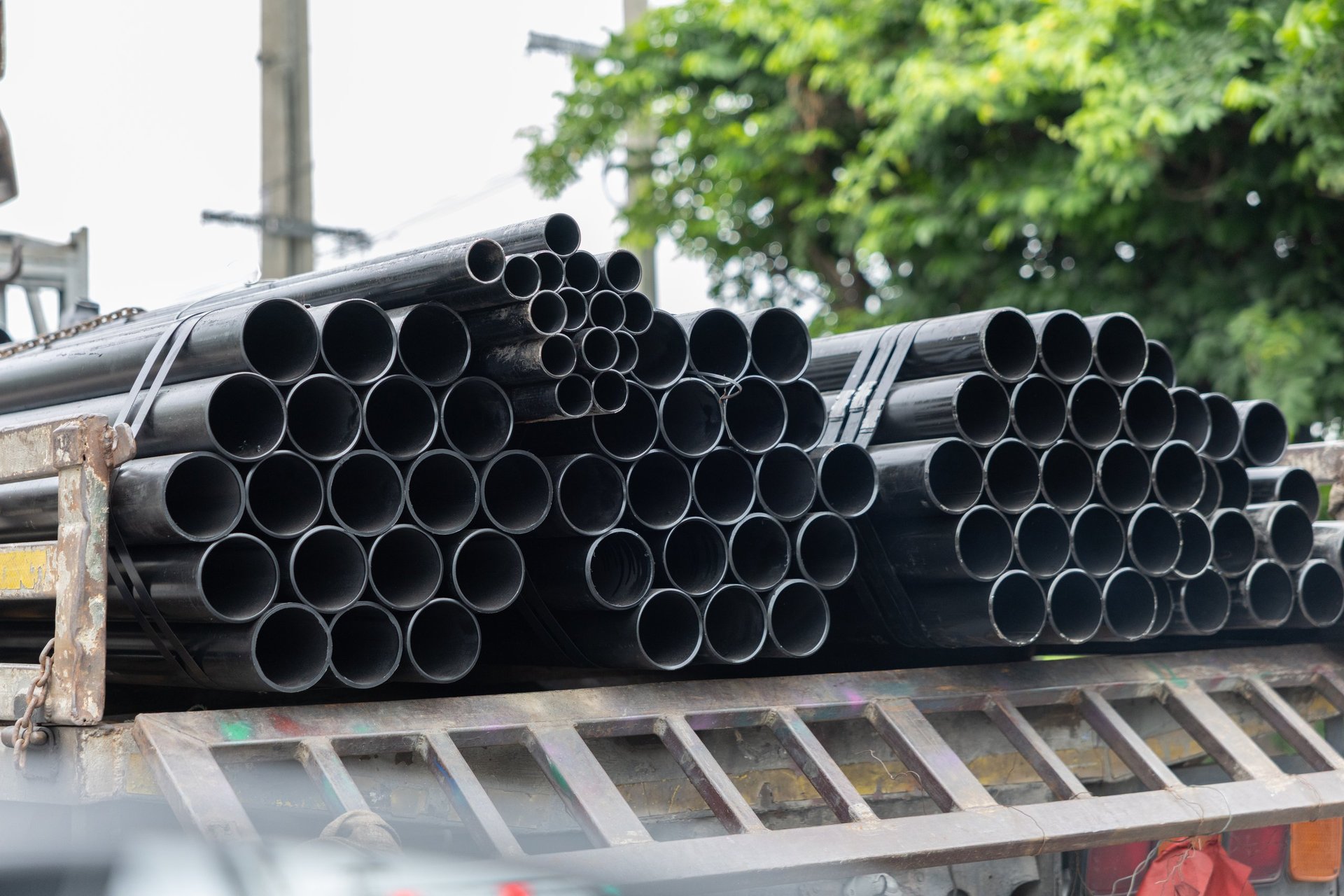
Mild Steel Scaffold Tube Supplier
Mild steel is a material family description, not a complete scaffold-tube specification. Before accepting an offer described that way, require the specified product standard and its revision, the grade or designation stated in full, the dimensions with their tolerance bases, the finish, the service conditions, and the mechanical and document requirement the project will check against.
Free, no-obligation specification review
Information current as of
Send these inputs
- Project standard & revision
- Grade / designation
- OD, wall & length
- Finish
- Mechanical / document basis
- Coupler interface
- Service conditions
Selection logic
When a mild steel scaffold tube fits — and when the label is doing the work
A material label is not a decision on its own. These are the boundaries that move a mild steel scaffold tube requirement from a description into a specification, and the related pages to follow where a different question is actually being asked.
Fits when
- The project standard and revision are stated, so mild steel is backed by a document rather than standing alone.
- The grade or designation is given in full, so the strength basis is fixed independently of the material label.
- Dimensions and their tolerance bases are stated, because the coupler meets the toleranced tube and not the nominal figure.
- The mechanical or document requirement is named, so the mill certificate can be checked against something specific.
Does not fit when
- The enquiry reads mild steel scaffold tube with no product standard and no revision attached.
- A material label is expected to carry the chemistry and mechanical properties, when those belong to the standard and grade.
- The finish is left open, so the corrosion-control requirement is never settled against the service conditions.
- The document scope is indefinite, so a mill certificate cannot be checked against a stated requirement.
Compare next: related pages by decision role
Each of these is a related page that answers a different version of the question. Take one when it matches the decision in front of you, and note the boundary where it stops applying.
Working tool
Mild Steel Scaffold Tube Grade Clarifier
This tool exists to stop the phrase mild steel replacing the exact project grade or product standard. It reads the designation fields you enter, flags where the material label is standing in for the specification, and returns the fields and documents the enquiry has to carry. It does not approve anything, and it does not supply values.
Step 1 — Designation fields
Field-specific notes appear in the result. Nothing is defaulted: an unknown standard, grade, dimension or finish is reported as missing rather than filled in. The tool explains why a field matters — it does not approve a product for your project.
Step 2 — Clarified result
Nothing entered yet
Enter the designation fields on the left and choose clarify. Until then, here is the checklist every mild steel scaffold tube enquiry has to satisfy before the material label stops carrying the specification:
- Product standard and revision, cited explicitly
- Grade or designation, stated in full with its edition
- Outside diameter and wall, each with its tolerance basis
- Length with its tolerance basis
- Finish, and the coating standard where a coating applies
Copyable RFQ summary
Product / entity: Mild Steel Scaffolding Tube
Project standard + revision: to confirm on RFQ
Grade / designation: to confirm on RFQ
Outside diameter + tolerance: to confirm on RFQ
Wall thickness + tolerance: to confirm on RFQ
Length + tolerance: to confirm on RFQ
Finish / coating: to confirm on RFQ
Service conditions: to confirm on RFQ
Mechanical / document requirement: to confirm on RFQ
Quantity + unit basis: to confirm on RFQ
Destination / named place: to confirm on RFQ
Incoterm + version: Incoterms 2020 — named place to be stated by buyer
Required date: to be stated by buyer
Acceptance notes: Mild steel is treated as a material family descriptor only, never as a grade or standard. BS EN 39:2001 is withdrawn from 21 May 2026. No chemistry, mechanical value, price, stock or lead time is asserted by this page.
Transfer this summary into the RFQ
Your entries are carried into the enquiry form as the summary above — nothing you typed is discarded. Add the destination, Incoterm and window the quotation needs.
Specification
Standards, grades, dimensions and service conditions
Each table below separates what the buyer supplies from what the standard decides. Every row names the units, the method and the condition the value depends on, or replaces the value with the exact verification step required to resolve it.
Evidence warning. No chemistry, mechanical property, dimensional tolerance, coating mass, unit weight, load capacity or corrosion life is published on this page. Those values belong to the standard and grade the project nominates and are evidenced by the certificate for the supplied lot. Where a value is unavailable for publication, this page publishes the verification step instead of a figure.
Standards and grades
What fixes the tube requirement, and what the material label does not
| Requirement | What it establishes | Buyer input needed | RFQ field |
|---|---|---|---|
| Product standard & revision | The document the tube is made and tested against, cited with its revision. | Buyer cites the accepted standard and revision. | Standard / revision field |
| BS EN 39:2001 status | BSI marks it withdrawn from 21 May 2026, so it no longer identifies a current standard by itself. | Buyer confirms the accepted current document, or the project's stated basis for a legacy reference. | Standard / revision field |
| Grade / designation | Identifies a strength basis within the standard; it is not supplied by the phrase mild steel. | Buyer states the designation in full with its edition. | Grade field |
| Material label limits | Mild steel describes a broad family — it fixes neither chemistry, properties, dimensions nor tolerances. | Buyer treats the label as context only, never as the specification. | Specification completeness check |
| Finish requirement | Bare or coated — and where coated, the coating standard is a separate requirement again. | Buyer states the finish and, if coated, the standard that applies. | Finish field |
| Standard and edition | Every value carries source, revision, units and condition — an unversioned reference is not a specification. | Buyer cites the governing document and revision. | Standard / revision field |
Mechanical properties and certification basis
Why these values belong to the standard and grade rather than to the phrase mild steel
| Property or basis | How it is established | Buyer input needed | RFQ field |
|---|---|---|---|
| Chemistry | Belongs to the governing standard and grade, and is evidenced by the mill certificate for the heat. | Buyer names the standard and grade, then requires the certificate. | MTC / chemistry field |
| Mechanical properties | Yield and tensile requirements follow from the standard and designation — no value is inferred from a material label. | Buyer states the properties the project checks. | Mechanical requirement field |
| Dimensional tolerances | Outside diameter, wall and length each carry their own tolerance basis under the standard. | Buyer states each dimension with its tolerance basis. | Dimension / tolerance field |
| Straightness and end condition | Set by the standard and the project rather than by the material family. | Buyer states the straightness limit and end condition required. | Condition field |
| Certification basis | The certificate must name the standard, revision and grade to be checkable. | Buyer requires the certificate to name the standard explicitly. | Document field set |
| Test basis | Which tests apply is decided by the standard and the project's acceptance requirement. | Buyer names the test and scope required. | Inspection field |
Dimensions, tolerances and size range
Related size and dimension routes, with the boundary where each stops answering
| Dimension | What it decides | Buyer input needed | RFQ field |
|---|---|---|---|
| Outside diameter | Nominal OD is a label; the tolerance basis attached to it is what the coupler actually meets. | Buyer states nominal OD and its tolerance basis. | OD / tolerance field |
| Wall thickness | Wall drives mass, stiffness and load behaviour, and carries its own tolerance basis. | Buyer states wall and its tolerance basis. | Wall field |
| Length | Cut length with a stated length tolerance; stock and cut lengths are different statements. | Buyer states length and length tolerance basis. | Length field |
| Mass per unit length | Derived from OD, wall and a stated density — a calculation, not a standard value. | Buyer confirms the density basis or accepts the stated assumption. | Mass field with stated basis |
| Coated diameter | Where a coating applies it adds to the outside surface, so the coupler meets the coated diameter. | Buyer confirms the coupler size range against the presented diameter. | Coupler compatibility field |
| Size range limits | The applicable size range follows from the product standard and the coupler system together. | Buyer confirms the standard's size range covers the required size. | Verification requirement |
Quality & documentation
The verification matrix: request, issuer, stage, dependency
This page does not publish certificates and does not create them. What it publishes is the matrix that tells you which document verifies which claim, who issues it, at what stage it is required, and what remains quotation-dependent until the order is placed.
| Requested document / test | What it verifies | Source / issuer | When required | Risk if absent |
|---|---|---|---|---|
| Mill test certificate | The product standard, revision and grade the certificate must name | Certificate naming the standard, revision and grade, traceable to the supplied lot | Buyer / project | A certificate that repeats the material label proves nothing checkable. |
| Dimensional record | Outside diameter, wall and length, each with the tolerance basis | Measured record for OD, wall and length against the stated bases | Buyer / project | Coupler fit cannot be confirmed against a nominal size alone. |
| Mechanical property evidence | The properties the project will check against the standard | Test results for the stated properties, at the agreed scope | Buyer / project | Properties are assumed from the material label and never measured. |
| Finish documentation | The finish required, and where coated, the coating standard that applies | Finish record naming the standard and method where a coating applies | Buyer / project | A finish claim with no standard cannot be accepted or rejected. |
| Independent inspection | Whether inspection is independent, and at what scope and stage | Named body, scope and stage, agreed before release | Buyer, with the named body | Inspection performed later than agreed, at a stage that cannot change the outcome. |
| Grade traceability | Whether the grade must follow to the bundle and marking | Marking convention and the record linking grade to bundle | Buyer / supplier | Reconciliation on arrival has nothing to reconcile against. |
| Packing list and marking | The bundle, tagging and marking convention required | Packing list and marking that reconcile against the supplied lot | Commercial | The consignment cannot be reconciled against the documents on arrival. |
Evidence gates before dispatch
- The certificate names the product standard, its revision and the grade — a certificate repeating only the material label is returned, because it cannot be checked against anything.
- The dimensional record carries the measured outside diameter, wall and length beside the tolerance basis they are measured against.
- Where a mechanical requirement was named, the test results evidence exactly those properties at the agreed scope — nothing is assumed from the material family.
- Where a coating applies, the finish record names the coating standard and the method used, since the coating is a separate requirement from the tube standard.
- Where independent inspection is agreed, the body, scope and stage are fixed before release rather than negotiated after production.
Certification limits
No certificate, approval, classification, permit or project reference is published on this page, and none is implied by the layout. Certification depends on the standard the project nominates and the mill that produces the lot — both are established per order, not asserted here.
Applications
Operating condition → risk → specification implication
An application matters here only where its operating conditions materially change how the tube must be specified. Each route below shows the condition that changes the answer, the risk if it is left unresolved, the specification implication, and the boundary where that route stops applying.
Oil & gas
scaffolding pipe for oil and gas
Applies where the shutdown's document and inspection regime changes what has to be evidenced.
- Operating condition
- Short, intensive shutdown windows in a controlled industrial atmosphere, with inspection and access constraints.
- Failure / compatibility risk
- Tube arriving without a certificate that names the standard and grade delays access work that has no slack in the schedule.
- Specification implication
- Require the certificate to name the standard, revision and grade, because a material label cannot be checked on site.
Petrochemical
scaffolding pipe for petrochemical
Applies where the facility's own constraints change which finish is acceptable.
- Operating condition
- Chemically exposed operating areas where the facility may constrain what finish is acceptable.
- Failure / compatibility risk
- A finish left open because the material label was treated as the specification can be rejected on site.
- Specification implication
- Settle the finish against the facility's constraints alongside the standard and grade, rather than after supply.
Power plants
power plant scaffolding pipe
Applies where the plant's inspection regime materially changes what the order has to evidence.
- Operating condition
- Outage and maintenance access work with defined inspection points and a fixed window to complete.
- Failure / compatibility risk
- An indefinite document scope leaves the acceptance basis open until inspection, when there is no time to resolve it.
- Specification implication
- Name the mechanical and document requirement at enquiry, so the certificate can be checked against something specific on arrival.

GCC markets
Destination planning across the Gulf
Each card below opens the related market page for scaffold tube supply into that country. What changes between them is not the tube — it is the destination, the document set, the importer context and the logistics inputs the quotation has to carry. Nothing on this page claims a served market, an office, a stock position or a live availability.
 United Arab EmiratesDomestic supply with Dubai-based coordination.Name the delivery emirate or port, the accepted standard and grade, and the coupler system in use. Domestic routes are coordinated from the Dubai base against the agreed tube specification.
 Saudi ArabiaTechnical submittal and document scope led.Agree the accepted standard and revision, the grade and the document set before release, naming the port or inland destination on the enquiry.
 QatarApproval sequence and importer context.Confirm the importer's document and classification context, the named port, and the approval sequence before the quotation is finalised.
 KuwaitProject-based supply with defined delivery windows.State the standard, grade and quantity basis, and tie the shipment to the named destination and required window.
 BahrainIndustrial supply and re-export documentation.Confirm the document set, the named place and the importer's requirements before dispatch, since industrial routes depend on accurate paperwork.
 OmanPort-oriented supply with onward delivery planning.State the port or inland delivery place and the Incoterm rule with its named place, and align the finish with the exposure at the destination.
These cards open destination-planning routes. They do not indicate that Noor Deira Steel maintains stock, an office or a delivery commitment in any listed country — availability, origin, routing and lead time are all returned on the quotation.
Commercial inputs
Which buyer inputs change the offer
This page states no price, stock position, origin, lead time, freight rate or delivery date. What it does state is which buyer input changes the quotation, so the enquiry arrives with the fields that actually move the offer rather than the ones that do not.
| Buyer input | Why it changes the offer | What the buyer states | Resulting RFQ field |
|---|---|---|---|
| Product standard & revision | The governing document, not a material label | Buyer cites the accepted standard and revision | Standard field |
| Grade / designation | Fixes the strength basis independently of the label | Buyer states the designation in full | Grade field |
| OD, wall & tolerance basis | Drives mass, stiffness and coupler fit | Buyer names OD, wall and tolerance bases | Dimension field |
| Length & end condition | Cut length and end treatment change handling and packing | Buyer states length, tolerance and end condition | Length field |
| Finish | Bare or coated, with the standard that applies | Buyer states the finish requirement | Finish field |
| Mechanical requirement | Fix what the certificate has to evidence | Buyer names the properties the project checks | Mechanical field |
| Quantity & unit basis | Pieces, lengths or tonnes — the basis is stated with the figure | Buyer confirms the unit basis | Quantity field |
| Packing & bundle arrangement | Bundle weight and lifting points change the handling operation | Buyer confirms bundle weight and marking | Packing field |
| Named port or place | Routing and vessel schedule are quotation-dependent | Buyer names the port, terminal or inland place | Destination field |
| Incoterm 2020 rule | The rule and its named place are one term, not two | Buyer chooses the rule and named place | Incoterm field |
| Payment & documentary terms | Incoterms allocate delivery cost and risk, not payment | Buyer states instrument and timing separately | Payment field |
| Requested delivery window | Lead time is quotation-dependent and never asserted here | Buyer states the window required | Date field |
| Inspection & document scope | Destination and project requirements decide the paper set | Buyer lists each document and its issuer | Document matrix |
Incoterms 2020
The rule and its named place are one term, not two. Incoterms 2020 allocates delivery cost and risk between buyer and seller — it does not decide title transfer, payment terms, duty outcome or customs clearance, all of which are agreed separately.
Packing variables
Bundle arrangement, lifting points, marking convention and load-out sequence change the handling operation and therefore the offer. They are captured as inputs so they can be quoted rather than assumed at the port.
What stays open
Price, stock position, mill origin, lead time, freight rate and delivery date are quotation-dependent in every case. None is asserted by this page, and none can be inferred from the layout of the enquiry.
Alternatives & resources
Related pages, grouped by the decision they serve
These are related pages on this site, grouped by what they help you decide rather than listed as a directory. Take one only where it answers the question actually in front of you.
Parent hierarchy. This page sits under the scaffolding-pipe category. Return to scaffolding pipe supplier to move between the tube material, type, grade and size routes.
Expert insight
Can "mild steel scaffolding tube" stand in for a grade and standard?
A terminology-to-standard status check. The decision below is drawn from the publisher record for the standard this shorthand has historically pointed at.
Decision answer
No. "Mild steel" is a broad commercial descriptor for a material family; it is not a grade and not a product standard, and it cannot substitute for either on a purchase order.
- Method
- Treat "mild steel" as a broad commercial descriptor, then verify the project product standard separately against the publisher record.
- Information date
- 27 September 2026
- Source scope
- BS EN 39:2001, a historically common loose scaffold-tube specification, is now withdrawn by BSI; a generic material label is therefore especially insufficient for new procurement.
Limitations
- No universal chemistry or mechanical values should be inferred from the phrase mild steel.
- Project specifications may nominate a different current standard or approved equivalent.
Buyer implication. Require exact grade/designation plus standard and revision on the quotation and inspection documents.
Buyer advantages
Concern → evidence required → procurement outcome
Each row is a real procurement concern, the evidence or capability that resolves it, and what the buyer ends up with. No claim here rests on being better than anyone else — it rests on what can be checked.
Concern 01
A material label standing in for a specification
Evidence / capability
The product standard and revision are held as their own field, separate from the material family, so mild steel is backed by a document rather than standing alone.
Procurement outcome
A tube requirement that can be cited and quoted against.
Concern 02
The EN 39 shorthand carrying more weight than it can
Evidence / capability
The page states the 21 May 2026 withdrawal outright, so an enquiry resting on the historical shorthand is caught before it is quoted.
Procurement outcome
A standard identified by its current status rather than by habit.
Concern 03
Chemistry and properties assumed from the material name
Evidence / capability
The mechanical requirement is captured as a field and tied to the certificate, because those values belong to the standard and grade for the actual heat.
Procurement outcome
A certificate that can be checked against a stated requirement.
Concern 04
A finish left open because the material was treated as the answer
Evidence / capability
The finish requirement is captured separately, and where a coating applies its own standard is named again.
Procurement outcome
Corrosion control settled against the service conditions.
Concern 05
Documents requested without a decided scope
Evidence / capability
The certificate, dimensional record, mechanical evidence and finish record are listed separately with their issuer and stage.
Procurement outcome
A document set agreed before release rather than reconstructed at delivery.
Process
From enquiry to delivery, stage by stage
Every stage below shows the buyer input that starts it, the role that owns it, the evidence it produces, the risk if that evidence is missing, and the next action. No named individual is referenced — the review path is organisational.
- 01
Enquiry
Buyer / procurement
- Buyer input
- Accepted product standard and revision, grade, OD, wall and length with their tolerance bases.
- Evidence produced
- A tube specification complete enough to be quoted against.
- Risk if missing
- Suppliers quoting different tubes under a material label that looked specific.
- Next action
- Name the standard and revision before anything else.
- 02
Grade clarification
Buyer / technical reviewer
- Buyer input
- The designation the standard uses, stated in full with its edition.
- Evidence produced
- A strength basis fixed independently of the material family label.
- Risk if missing
- A grade assumed from the phrase mild steel and never stated on the order.
- Next action
- State the designation in full on the enquiry and the order.
- 03
Mechanical & document requirement
Buyer / project engineer
- Buyer input
- The properties the project will check, and the certificate that has to evidence them.
- Evidence produced
- A checkable requirement for the mill certificate to be measured against.
- Risk if missing
- A certificate that repeats the material label and proves nothing checkable.
- Next action
- Require the certificate to name the standard, revision and grade.
- 04
Finish definition
Buyer / technical reviewer
- Buyer input
- The service conditions, and the finish or coating standard the project requires.
- Evidence produced
- A finish requirement stated separately from the tube standard.
- Risk if missing
- A finish left open because the material label was treated as the specification.
- Next action
- State the finish, and the coating standard where a coating applies.
- 05
Commercial quotation
Commercial department
- Buyer input
- Incoterm 2020 rule with its named place, quantity basis, packing and destination.
- Evidence produced
- A quotation request on a stated basis — price on request.
- Risk if missing
- A cost difference read as a commercial difference when the offers carry different obligations.
- Next action
- Hand the qualified RFQ to the Scaffolding Pipes enquiry form.
- 06
Packing and dispatch
Supplier / carrier
- Buyer input
- Bundle arrangement, lifting points, marking convention and load-out sequence.
- Evidence produced
- Packing and handling captured so they can be quoted rather than assumed.
- Risk if missing
- Tube bundled without a handling basis, then disputed on site.
- Next action
- Confirm packing and marking against the destination requirement.
- 07
Delivery and document handoff
Buyer / importer
- Buyer input
- Confirmed named place, delivery window and the destination papers.
- Evidence produced
- A document handoff at the buyer's end, reconciled against the requirement.
- Risk if missing
- Clearance obligation assumed to sit with the supplier when it does not.
- Next action
- Confirm the named place and the document set with the importer before dispatch.
This workflow describes the information path, not a service-level commitment. Timings, availability and delivery are quotation-dependent and are not asserted here. Return toscaffolding pipe supplierfor the full category.
Buyer FAQ
Questions that come after the decision, not before it
These assume the tube requirement is already understood. They resolve scope, grade and standard separation, documentation, equivalence and how to compare offers — the questions a procurement team asks once the basic decision is made.
- Is mild steel a grade I can put on a purchase order?
- No. Mild steel is a broad commercial material family, not a grade and not a standard. It tells a supplier roughly what kind of steel you mean, but it does not fix the chemistry, the mechanical properties, the dimensions or the tolerances. A purchase order that says only mild steel scaffold tube leaves every one of those open, and two suppliers can both satisfy the words while delivering different tubes.
- Why does the EN 39 withdrawal matter for a mild steel enquiry?
- Because EN 39 was for a long time the specification loosely called mild steel scaffold tube, and BSI marks BS EN 39:2001 as withdrawn from 21 May 2026. So the shorthand has lost the thing that used to give it meaning. A generic material label is especially insufficient for new procurement when the historical standard behind it no longer stands. State the exact product standard and revision the project accepts.
- What has to be on the enquiry before mild steel means anything?
- The product standard and its revision; the grade or designation, stated in full; the outside diameter, wall and length with their tolerance bases; the finish; the service conditions the tube works in; and the mechanical or document requirement the project will check. Mild steel as a label sits above all of those — it does not substitute for any of them.
- Can you give me the chemistry or mechanical values for mild steel?
- Not as a single set of numbers, because mild steel is a family rather than a specification and no universal values can be inferred from the phrase. Chemistry and mechanical properties belong to the governing standard and the grade within it, and they are evidenced by the mill certificate for the actual heat. Where a project needs those values, they come from the standard it nominates and the certificate for the supplied lot.
- Which documents should a mild steel scaffold tube order carry?
- The mill test certificate or inspection certificate naming the product standard, revision and grade, traceable to the supplied lot; a dimensional record for outside diameter, wall and length against their tolerance bases; and the finish documentation where a finish is specified. Ask for the certificate to name the standard explicitly, because a certificate that only says mild steel repeats the ambiguity rather than resolving it.
- How do I compare two mild steel scaffold tube offers fairly?
- Put them on one line item and make sure the standard is named on both. State the product standard and revision, the grade, the outside diameter and wall with their tolerance bases, the length, the finish, the coupler family, the inspection and document scope, the quantity with its unit basis, the named destination and the Incoterm with its named place. If one offer names a standard and the other only says mild steel, they are not yet comparable.
Still open?
If your question is not answered above, run the specification through the grade clarifier — it returns the exact fields and documents your enquiry still needs, and carries them into the RFQ.
Material composition
What the phrase mild steel does and does not fix
Composition is where the material label is most often asked to do work it cannot do. This module separates the things a composition label can establish from the things that only the standard and the certificate can.
What the label gives you
- A broad family description that tells a supplier roughly what class of steel you mean.
- A useful starting point for an exploratory enquiry before the project standard is fixed.
- A signal that the tube is not a special or alloy grade, where that distinction is what you are clarifying.
What it does not fix
- Chemistry — which elements and at what limits is decided by the governing standard and grade.
- Mechanical properties — yield and tensile requirements follow from the designation, not the family name.
- Dimensions and tolerances — outside diameter, wall and length each carry their own basis under the standard.
- The finish — bare or coated is a separate requirement, and a coating standard is a separate document again.
Where each is actually established
- The standard and revision, cited by the project, decide which requirements apply at all.
- The grade or designation within that standard fixes the strength basis.
- The mill certificate for the supplied lot evidences the chemistry and properties actually achieved.
- The dimensional record evidences the measured OD, wall and length against their tolerance bases.
Decision rule. Treat mild steel as the entry point to the enquiry, never as the specification on the order. The moment a standard and revision are named, the material family stops deciding anything — the standard and the certificate for the supplied lot take over. Compare offers on carbon steel products only once each offer states the same governing document.
Corrosion & temperature
Exposure limits belong to the finish, not to the material family
A mild steel scaffold tube is not corrosion-resistant by virtue of being mild steel. What governs its performance in service is the finish and the maintenance regime around it — and the coating standard that applies to the route actually used.
Atmospheric exposure
Corrosion behaviour outdoors depends on the finish applied and the atmospheric conditions at the site. Bare mild steel is not a corrosion-control measure on its own; the requirement has to be stated as a finish and, where a coating applies, as a coating standard.
Verify: State the exposure class and the finish requirement on the enquiry.
Chloride and industrial exposure
Coastal, marine and chemically exposed sites change the finish requirement materially, and they change it in a way that the material label cannot express. The applicable corrosion expectation belongs to the coating specification and the maintenance regime, not to the substrate name.
Verify: State the exposure conditions and the service expectation the tube has to meet.
Temperature and service conditions
Where the tube works at elevated or reduced temperature, the property that governs behaviour comes from the standard and grade — not from the material family. This page publishes no temperature limit itself, because the applicable limit is tied to the governing specification and the service condition.
Verify: State the service temperature range and the property requirement your project applies.
How to read a coating claim
Name the standard, not the finish
"Galvanized" and "coated" are descriptions. The standard behind the coating is what can be inspected and accepted.
Check the route it covers
Coating standards have scopes, and a route can fall outside the one cited. Verify the standard covers the production route your tube actually gets.
Keep the tracks apart
A tube certificate says nothing about the coating, and a coating record says nothing about the steel meeting the tube standard. Both are required.
Where a coated tube is the actual requirement, followhot dip galvanized scaffold tube supplier— the finish decision changes the evidence set.
Qualified RFQ
Send the specification, not the material label
The summary below carries every field this decision rests on. Copy it as it stands and add the destination, Incoterm and window the quotation needs. Nothing here asserts a price, a stock position or a lead time.
What this page does not state
No chemistry, mechanical property, tolerance, coating mass, unit weight, load capacity or corrosion life is published on this page. Each of those belongs to the standard and grade your project nominates, evidenced by the certificate for the supplied lot. The page publishes the verification step instead.