Iron ore sampling and inspection: agreeing the protocol before the cargo moves
Most quality disagreements are not disagreements about chemistry. They are disagreements about who sampled what, at which point, and on which basis — and they surface after the material has moved, when nothing can be re-drawn. A protocol written before loading settles those questions while they are still cheap to settle; a certificate issued afterwards cannot.
Defines the lot, the approach, the increments and the preparation. It produces the sample.
An inspection
Puts a qualified party at the transfer to witness it and create an independent record.
A certificate
Records what a laboratory found on the sample it was given. It describes no procedure and witnesses nothing.
Where the argument comes from
Two defensible results, and neither party wrong
A disputed cargo figure is usually not the product of error. It is the product of two parties having measured different things on different bases, each according to a procedure nobody wrote down in advance.
The two ends of one movement
Loading and discharge are different positions in the same journey. Both may be sampled, both may be right, and they answer different questions. Without the protocol naming which one governs, both parties will reasonably believe theirs is the one that counts.
Quality settled on one basis, tonnage on another
The quality basis and the weight basis are separate mechanisms, and they have to describe the same material. Where they diverge, the parties can fully agree on the assay and still dispute the invoice.
A result with no retained fallback
Once the lot has moved, a disputed result can only be revisited through a sample that was set aside for the purpose. If no referee portion was held, the dispute has no material basis whatever the parties agree afterwards.
What the protocol actually buys you
It does not make the figures agree. It makes them comparable — which is what allows two parties who disagree to resolve it rather than simply hold different numbers.
When the lot, the sampling point, the basis, the method and the retained portion are all recorded in advance, a disagreement becomes a question with an answer: re-run the retained sample, compare against a stated method, and apply the rule the contract already set. When those are absent, the same disagreement has no route to resolution and tends to be settled by whoever is more willing to absorb the loss.
The point of transfer, where a protocol has to have been agreed. The image shows no Noor Deira cargo, vessel, port or origin, and identifies no inspector or party.
Decision aid
Nine stages, and the handover each one creates
Work down the protocol as you would write it. Every stage is a point at which responsibility changes hands, which is why a protocol that quietly skips one leaves a moment nobody owns. The tool tracks what is agreed and what is still open.
01Nomination of the inspector
Not reviewed
Before the material moves is the only time the parties can agree who attends and under what authority. Nominating after loading means the inspector documents what happened rather than witnessing it.
Which party nominates, the inspector's authority, and the notice period the other party gets.
02Definition of the lot
Not reviewed
A protocol governs a lot, and a lot is a defined quantity. Cargo, parcel, sub-lot and a day's production are different objects, and evidence drawn against one does not describe another.
What the lot is, its boundaries, and which document identifies it.
03Weighing and draught survey
Not reviewed
Tonnage and quality are settled on different evidence, and the two have to describe the same material. Where the weight basis and the sampling basis diverge, the parties can agree on quality and still disagree on quantity.
The weighing method, the basis it reports on, and who witnesses it.
04Sampling at the agreed point
Not reviewed
Loading and discharge sit at opposite ends of the same movement. Both may be sampled, but the two samples answer different questions, and the protocol has to say which one the settlement rests on.
The sampling point, the mechanical or manual approach, and the plan the sampler works to.
05Sample division and the referee portion
Not reviewed
A sample is divided into portions, and one of those portions is the only fallback if the result is disputed. Deciding afterwards which portion is the referee is deciding after the material has gone.
How the sample is divided, which portion is retained, how it is sealed, and who holds it.
06Assays and the methods applied
Not reviewed
A figure means little without the method that produced it. Two laboratories can both report total iron under the same parent standard while having run different procedures.
Which determinations, by which method and edition, on which portion, and by which laboratory.
07Moisture determination and basis
Not reviewed
Moisture is both a quality figure and the basis on which tonnage settles. Where it is determined, and on what basis it is reported, changes what the same material is worth.
The moisture method, the determination point, and whether figures are expressed wet or dry.
08Sealing, labelling and handover
Not reviewed
A sample is only as good as the record of who held it. Sealing and labelling at each handover are what make a later check possible at all — and what make a chain of custody provable rather than asserted.
The seal identifiers, the labelling convention, and who signs at each handover.
09Claims window and the dispute route
Not reviewed
Deciding what happens after a disputed result is too late once the material has moved. The window and the fallback have to be written before the cargo sails, not argued when the figures arrive.
The claims period, what triggers a check, which result binds, and which party pays for the referee.
Protocol coverage
A count of the nine stages, based only on what you have selected. Nothing here supplies a tolerance, an increment count, a mass or an acceptance value.
0
Agreed
0
Unresolved
9
Not reviewed
Nothing reviewed yet. Start with the lot definition, because every later stage depends on what the lot actually is.
The tool reports coverage only. It does not tell you what a compliant protocol should contain, because that depends on the lot, the material and the terms your contract sets.
Reconciling the evidence
The documents that make a protocol checkable
Each of these answers a different question, and each is held by a different party. Asking for them by name is more useful than asking for 'inspection documents', which tends to produce whichever one the other party happens to hold.
The records a cargo quality protocol produces, the question each one settles, and the party that normally holds it.
Record
The question it settles
Normally held by
Nomination and authority
Who attends, on whose behalf, and with what power to act at the point of transfer.
Both parties, exchanged before the movement
Sampling plan or procedure
How the sample was to be taken, from what lot and at which points.
The party commissioning the sampling
Weighing or draught survey record
The tonnage, its basis, and who witnessed the measurement.
The weighing party and the attending inspector
Sampling and preparation record
What was actually done, when, and by whom — as distinct from what the plan said.
The sampler or the appointed inspector
Chain-of-custody record
Who held the sample between drawing and testing, and whether the seal was intact.
Whoever signs at each handover
Determination report and certificate
The figures measured, the methods applied, and the party that issued them.
The testing laboratory
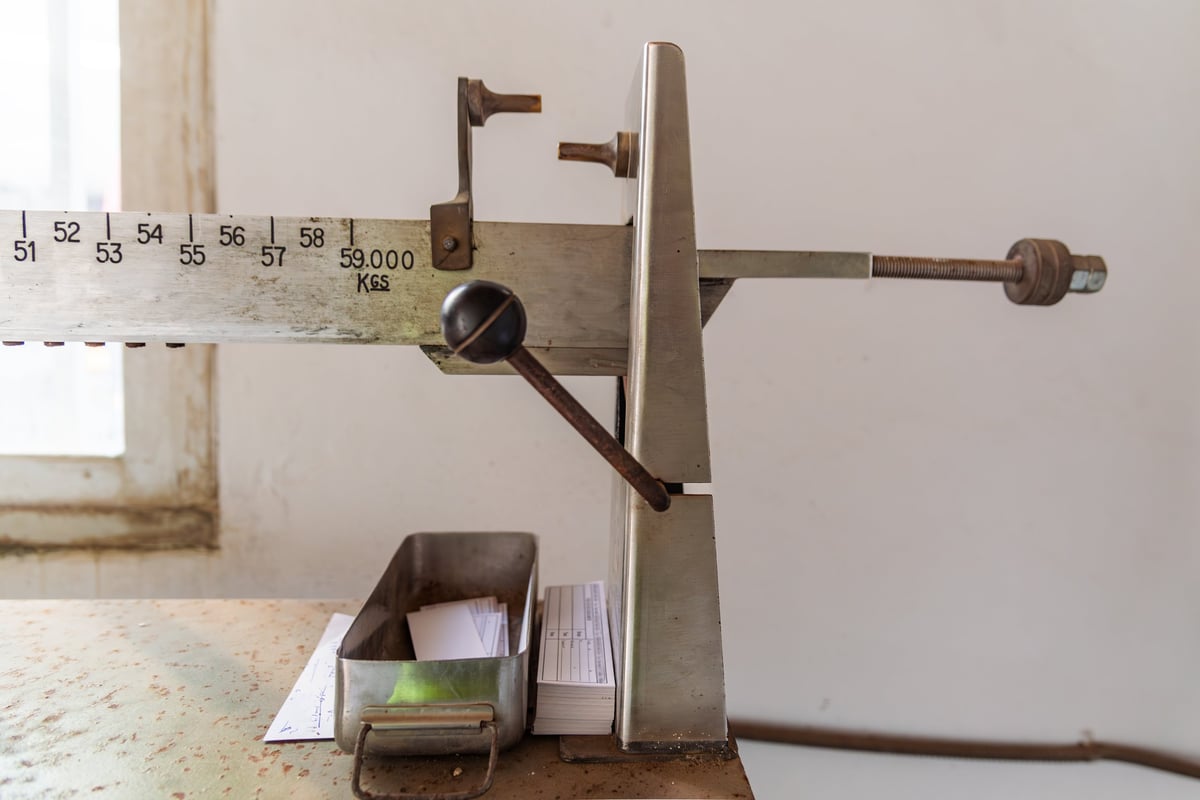
Weighing context — the tonnage basis a protocol has to reconcile against its quality basis. The image shows no Noor Deira installation, cargo or result.
Why the records have to line up, not just exist
Holding every document is not the same as having a reconciled set. A sampling record that names a lot the weighing record describes differently leaves the two describing different cargoes, and no amount of completeness in either will bridge that.
The same applies down the chain of custody: where the seal identifier on the handover contradicts the one on the preparation record, the question is no longer what the sample contained but whether it is the same sample — and that question is usually unanswerable after the fact. Reconciling the identifiers at the time is the only cheap moment to do it.
The sample itself
Where a defensible sample stops being defensible
A procedure can be followed exactly and still produce a sample that cannot be relied on. The failures happen in the handling, between the point of drawing and the point of testing.
The referee portion is set aside at the time or not at all
A reference sample has to be divided, sealed and traceably held while the sample is intact. Once testing has consumed the material, no later arrangement can create a fallback that was not set aside. This is the single most consequential act in the whole protocol, and it costs nothing to include.
Preparation is where representativeness is lost
Drying, crushing, dividing and reducing a sample to laboratory size is the stage at which a sample most easily stops representing the lot. It has to be done to a stated procedure by a named party, and the record of it has to travel with the result.
Custody is proven by seals and signatures, not by intent
Chain of custody is only meaningful if it is recorded: a seal identifier, a labelling convention, and a signature at each handover. Without those, custody is an assumption, and an assumption cannot be checked when it is questioned.
No increment count, mass, tolerance or acceptance limit is published on this page. Those are set by the agreed plan for a specific lot, and they belong in the contract and the sampler's procedure rather than in a guide.
Sample division and labelling — where a reference portion is either created or lost. The image shows no Noor Deira sample, laboratory, result or certificate.
Where this sits
A workflow page, next to a method page and a chemistry page
This guide describes the protocol around the sampling. The documents it points to describe the methods themselves — and none of them substitutes for the others.
This guide compared with the sampling method page and the chemical composition resource across the question each answers and the limitation each carries.
Scope
What it answers
The limitation to hold in mind
This guide — the protocol
Who samples what, at which point, on which basis, and how a disagreement is resolved.
It governs the workflow. It performs no measurement and reproduces no method's procedures.
The sampling method
How a lot is sampled and how the sample is prepared and reduced before determination.
It produces the sample. It reports no figure, and it does not decide which party's result binds.
Chemical composition
How the constituent figures are established, and what each determination covers.
It describes the determinations taken on the sample. It is only as representative as the sampling behind it.
This page publishes no certificate, no test result and no analysis for any material, and makes no claim about any inspection party, laboratory or accreditation.
Procurement navigator
Where the cargo is being received
A protocol is settled against the destination as well as the material, because the receiving end is where the second set of figures is produced. Choose the receiving market to carry the requirement into the right context.
Each market page covers import planning for that destination. This guide covers the sampling and inspection protocol a shipment into any of them has to settle.
Related routes
Where to go next, depending on what is still open
These lead to different decisions. Where one is a neighbouring scope, it answers a different question — it is not a substitute for this one.
What buyers and inspectors ask when writing a protocol
Is a supplier's quality certificate a substitute for a sampling protocol?
No, and treating one as the other is the failure this page exists to prevent. A certificate records what a laboratory found on a sample it was given. It says nothing about how that sample was drawn from the lot, whether the sample was representative, or whether the parties agreed to the procedure. A protocol establishes those things in advance; a certificate is one output of it.
Does appointing an inspector replace a sampling plan?
No. Inspection attendance is a witnessing function — it puts a qualified party at the point of transfer and creates an independent record. The sampling plan is a separate instrument that defines the lot, the approach, the increments and the preparation. Attendance without an agreed plan documents a procedure nobody specified.
Why does the referee portion have to be decided before sampling?
Because it only has value if it was set aside while the sample was still intact. A reference portion has to be properly divided, sealed and traceably held — all of which are acts taken at the time of sampling. Once the lot has moved and the sample has been consumed by testing, no arrangement made afterwards can create a fallback that did not exist.
Can the buyer's and the seller's results both be right?
Yes, and this is more common than outright error. Where the two parties sample at different points, apply different methods, or report on different bases, two defensible results can disagree without either being wrong. That is why the protocol has to state which basis governs, rather than leaving the parties to compare figures that were never measuring the same thing.
What should a cargo quality protocol contain?
The lot definition and its boundaries; the nomination and authority of any inspector; the weighing method and basis; the sampling point and the plan the sampler works to; how the sample is divided and which portion is retained as referee; the determinations required, each with its method and edition; the moisture method, determination point and reporting basis; the sealing and labelling convention with signatures at each handover; and the claims window with the route to be followed if a result is disputed.
Does this page state what any particular cargo should be accepted at?
No. It describes the workflow a protocol is built from and the stages at which responsibility changes hands. No tolerance, increment count, mass, assay value or acceptance limit is published here, because every one of them is agreed between the parties for a specific lot and contract.
Source
Where the method scope is defined
The sampling and preparation standard is published by the International Organization for Standardization. Check the current edition and status there before relying on any particular clause.
Put the sampling and inspection terms into the enquiry
Tell the commercial desk which material you are buying, which sampling and inspection basis the contract will use, and which records you expect with the shipment. The enquiry reaches the same desk that answers the specification, so the offer comes back against the protocol you set.