
 Kuwait — Market Route
Iron Ore Supplier in Kuwaitwhere the file, not the price, causes the delay
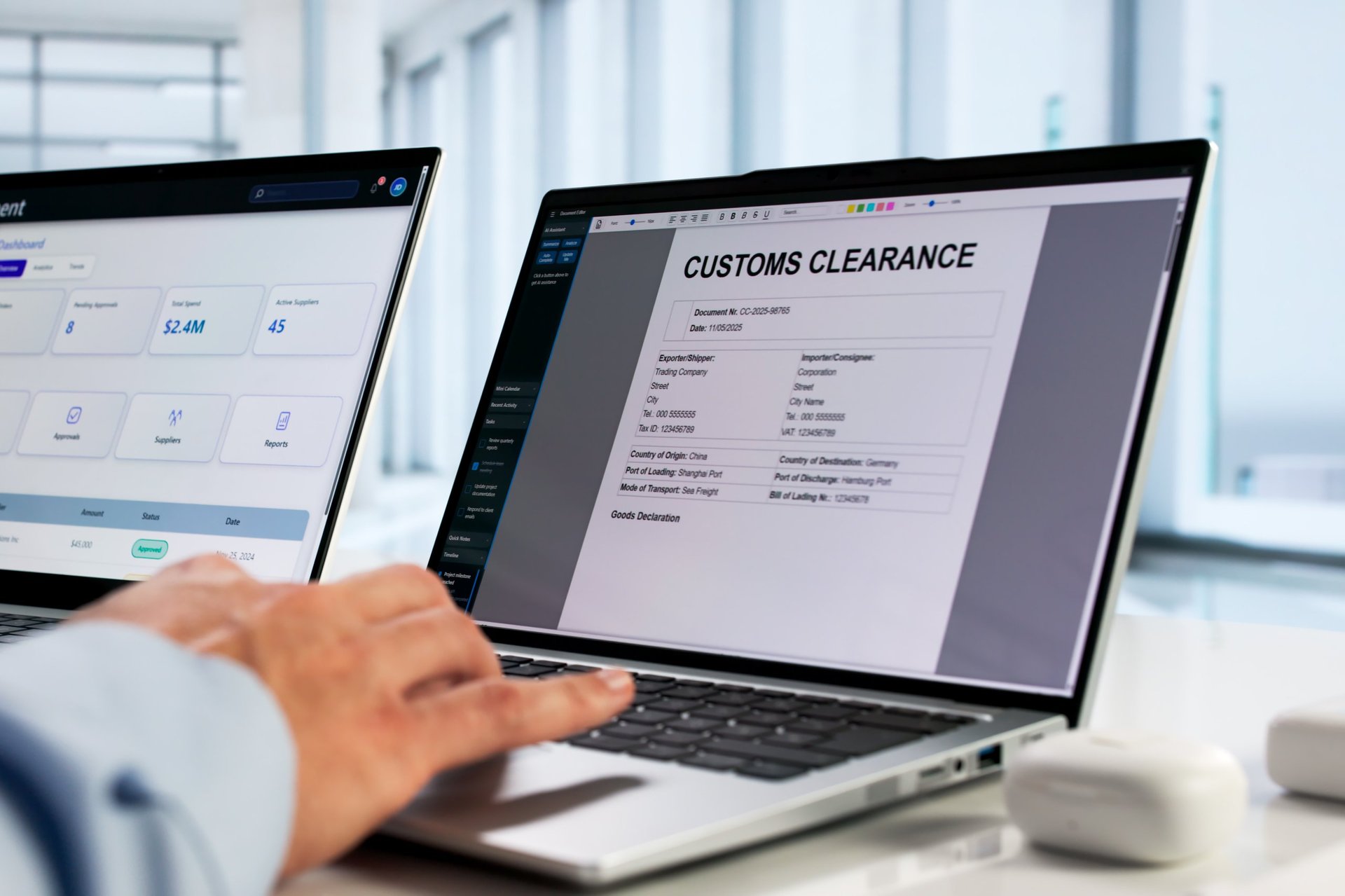
An iron ore offer can be complete on material and still fail at the shipment stage, because the evidence that releases the consignment is held by two different parties. The supplier holds the analysis, the invoice and the shipping documents. The buyer holds the import registration, the classification, the licence position and the named delivery place. A pre-quote scan finds which side is short before the price is fixed, rather than after.
No customs system, permit, processing time, duty, tariff or local-stock claim is made anywhere on this page.
Where the evidence sits
Two owners, one consignment
An iron ore shipment is released against a file that two parties build in parallel. The supplier's half is produced as part of the offer; the buyer's half is assembled from registrations and confirmations that take longer than a quotation does.
The supplier's half
Produced with the offer, and the part that a well-formed enquiry can pin down immediately: the analysis and the standard behind it, the iron figure with its method and basis, the gangue and deleterious limits as separate values, moisture with its mass basis, sizing with its method, the lot reference, the invoice and the packing details.
The failure mode here is not a missing document. It is a figure stated without its basis, which looks complete and cannot be compared against another offer or reproduced by a second laboratory.
The buyer's half
Assembled by the importer, their agent or the authority, and the half that cannot be delegated back to a supplier: the import registration the consignment is filed under, the declarant who files, the licence or registration position for these goods and this end use, the classification confirmed against the exact description and origin, and the named delivery place with its trade term.
This half is slower, because each item depends on someone other than the party quoting. That is exactly why it belongs in the same conversation as the price rather than after it.
Why the split matters commercially: if the buyer's half turns out to be open after the price is agreed, the commercial terms were fixed around an assumption that did not hold. A pre-quote scan puts the release conditions and the price in front of the same decision, which is the only point at which they can still be traded against each other.
Import and customs conditions are set by the competent authority and change. This page describes what has to be evidenced rather than what the rules currently are, and it states no duty rate, no tariff code, no permit requirement and no processing time.
Kuwait pre-quote evidence scan
Find which side of the file is short
Two owners, three groups each. The scan reports the first side that is incomplete rather than a score, because a gap on the buyer's side is not something more material evidence can close — it is a different action by a different party.
Supplier-side evidence — ask for this
Buyer-side evidence — an importer or authority action, not a supplier one
Evidence by owner
- Supplier-side0/14
- Still open: Product form, Iron content, Its basis and method, Gangue limits, Deleterious limits, Moisture figure, Mass basis, Sizing, Its method, Lot or consignment reference, Sampling standard, Behaviour test required?, Quantity & unit of measure, Packing / presentation.
- Buyer-side (verify externally)0/9
- Still open: Importer of record, Declarant / clearing agent, Import licence / registration position, Country of origin, Exact goods description, Classification confirmed, Named delivery place, Incoterm with its named place, Required document set.
Start here
Nothing is entered yet. Fill both halves with what you already know — the scan will not supply a value, a limit or a classification on your behalf, and nothing is pre-filled.
What this scan will not do
- It supplies no limit, tolerance or default — every value is the buyer's own.
- It states no customs system, permit requirement, duty rate or tariff code.
- It promises no clearance, no processing time and no transit time.
Ore forms
Which form the Kuwaiti requirement points to
The form decides which specification fields govern and which sizing evidence the works will ask for, so it belongs at the front of the enquiry.
Iron ore fines
The usual import for a works that blends or sinters. The sizing basis decides whether the receiving line can use it at all, so the sizing record belongs with the analysis rather than arriving as a separate query.
Sizing basis drives acceptance
Direct-shipping ore
Sold close to its natural state, so the deposit grade has to clear the buyer's floor with nothing else lifting it. There is no upgrading step to absorb a shortfall, which makes the assay basis the whole argument.
Natural grade carries the requirement
Lumps
Charged without further crushing, so the size band has to match what the receiving unit accepts at the mouth. A band that is right on paper and wrong at the furnace is not a specification, it is a claim.
Size band governs acceptance
Options that appear together — and why they are not the same purchase
These turn up in the same conversation often enough to be treated as alternatives. Each answers a different question, and substituting one for another changes what has to be specified.
Hematite is a mineral, not a specification. It says nothing about the grade, the gangue or the sizing, so choosing hematite is not the same decision as choosing a lump, a fine or a concentrate — the form and the limits still have to be stated.
Magnetite differs from hematite in how it responds to magnetic separation, which matters to a beneficiation route rather than to the receiving works. Comparing the two on grade alone ignores what the processing step does to each.
Sinter feed is bought into a mixture, so its value depends on the other components. A sizing result acceptable in one blend can be wrong in another, which makes the blend context part of the enquiry rather than implied by the name.
Pellet feed shares a particle-size vocabulary with sinter feed but is specified against a different downstream process, and it is judged on fineness rather than on the iron figure alone.
The registered iron ore specifications set out the figures these forms are described by, so a limit can be written the way the receiving operation reads it.
What the methods cover
The standard explains the method, not the supplier
Naming a standard in an enquiry fixes how a figure was determined. It does not certify that any particular material meets a limit, and each standard below covers a different method with its own scope.
Sampling and sample preparation
Governs how a lot is sampled and how the sample is prepared. It is the boundary every later figure sits inside, which is why the certificate is only meaningful alongside the standard it was produced under.
Total iron determination
Governs how total iron is determined. The Part used and its current edition belong in the enquiry, because a figure quoted without them cannot be reproduced by a second laboratory.
Reduction behaviour
Governs how reduction behaviour is assessed for the material it covers. Whether it applies to your ore form and circuit is a separate question, and it has to be checked rather than assumed.
Pellet strength
Governs a physical test for pelletised material. It has no bearing on lump, fine or concentrate forms, so it is only a requirement where the material is actually pelletised.
Each standard carries a Part and an edition, and its applicability to your ore form and receiving route has to be checked before it can be treated as a requirement. The registered iron ore standards index lists the methods across the supply family.

Sampling comes before analysis
Every figure on a certificate sits inside a sampling boundary. That boundary is set by the standard the lot was sampled under — which is why the sampling and inspection guide is worth reading alongside whichever method your enquiry names.
Delivery basis & documents
Fix where delivery ends, then the rest of the terms follow
The trade term names the place where risk and cost transfer, and the document set is agreed against it. Where the receiving point is left vague, the term cannot be applied and the delivery obligation stays open.
| Incoterm | Supplier obligation | Buyer obligation | Risk transfer |
|---|---|---|---|
| FOB | Deliver the goods on board the vessel at the named port of loading. | Book the vessel, manage the main carriage, destination clearance and any inland movement. | On board the vessel at the port of shipment. |
| CFR | Deliver on board and arrange the main carriage to the named destination port. | Manage import clearance and receive at destination; insurance is the buyer's. | On board at loading; cost covered to the destination port. |
| CIF | Deliver on board and arrange main carriage plus insurance to the destination. | Manage import clearance and receive at destination. | On board at loading; cost covered to destination, risk to the loading port. |
| DAP | Deliver the goods at the named destination, at the buyer's disposal. | Manage import clearance and final unloading at the receiving point. | At the named destination point. |
Incoterms® is a registered trademark of the International Chamber of Commerce. The table describes the Incoterms® 2020 rules as a planning aid, not a contract term. The term actually applied is confirmed in the contract and on the quotation.
- Weight basis in the contract — State whether tonnage is priced on a wet or dry basis and which figure governs at discharge. It is the most common source of a quantity dispute on ore.
- Discharge constraints — Bulk, containerised or bagged changes both the receiving arrangement and the cost. State the form and any restriction before the term is fixed.
- Documents against the shipment, not after it — The set the destination and the buyer require is agreed before dispatch, because a document gap on a short leg is resolved on arrival, not before it.
- One description across the file — The invoice, the certificate and the declaration should carry the same wording for the goods. Three slightly different descriptions of one cargo is the most common way a routine release becomes a query.
What is not claimed here
Noor Deira Steel states no warehouse, branch, stockyard, local stock or standing buyer relationship inside Kuwait, and no clearance or processing time. Deliveries are arranged against the consignment and the named destination; anything beyond that is confirmed with the commercial desk for your specific requirement rather than assumed from this page.
Where this route sits
Iron ore into Kuwait, and the neighbouring destinations
Each Gulf destination runs its own import regime and receiving pattern. Kuwait is where you are now; the others open their own route.

United Arab Emirates
Feedstock assessment against the buyer's own route
UAE steelmaking is largely electric-arc led, so ore is judged as a feedstock against that route, and size distribution and assay are reconciled to the specification before quoting.

Saudi Arabia
Project-scale volumes and cross-border documentation
Saudi requirements typically arrive with a full specification and hold points, so the contractual acceptance bands and the sampling method are aligned before the lot is offered.

Qatar
Evidence has to beat the cargo
A reduction-route enquiry, where the assay basis and the submittal the receiving operation runs have to be settled while the material is still a quotation.

Bahrain
Documentation discipline on a compact receiving leg
A short receiving leg means the consignment can arrive before a document gap is resolved, so the set is agreed before dispatch rather than corrected on arrival.

Oman
Named place and inland delivery
Name the port and any inland destination, and fix the Incoterm with its named place, so responsibility for the final leg is settled before dispatch rather than after it.
Buyer FAQ
Questions about the file, not the material
What a Kuwaiti procurement or documentation manager asks once the material is identified — the basics are settled above.
Why scan for evidence gaps before the quotation rather than after the order?
Which parts of the file does a supplier actually control?
Can the classification be settled from the material specification?
Does this page state duty rates, clearance times or permit requirements for Kuwait?
What should be in the enquiry so the offer and the release both work?
Qualified RFQ
Quote it with the release conditions in view
State the form and the analysis on a named basis, the quantity and its unit, the origin, the named delivery place with its Incoterm, and which buyer-side items are already settled. The commercial desk can then respond against the consignment as it will actually be released.
Classification and permit positions stay with the importer or their broker — the enquiry records them so the gaps are visible before the order, not after.
Send this requirement
Attach the evidence record or state the fields directly. Nothing is pre-filled.