
This standard
The determination of total iron in a prepared test portion of iron ore. It returns one analyte — the iron content of what was weighed out in the laboratory.
The subject of this page
Iron ore standards
Two laboratories can both report “total Fe by ISO 2597” and still have run different procedures. ISO 2597 is published in Parts, and each Part fixes its own sample preparation, its own reduction chemistry and its own reporting convention — so a figure from one is not automatically the figure another would return. Before the assay is ordered, the Part and its edition have to be named, the basis it reports on has to be stated, and the report has to be traceable back to the test portion it was measured on.
Method scope
Four things get read as interchangeable in a laboratory order. They are not, and the difference is what decides whether a reported figure can be relied on.
The determination of total iron in a prepared test portion of iron ore. It returns one analyte — the iron content of what was weighed out in the laboratory.
The subject of this page
Impurities, gangue minerals, loss on ignition and the other figures a full specification carries. Each comes from its own determination and its own scope.
Different determinations
Sizing, tumble behaviour and, for fired pellets, crushing strength. These are physical determinations taken on defined test objects, not chemical measurements.
A separate method family
The stage that produced the test portion in the first place. A perfectly executed assay on an unrepresentative portion still describes only that portion.
Upstream of this determination
A total-Fe figure settles the iron content of the portion it was measured on. It does not settle the material. Where a specification rests on a single figure, the other properties the material has to meet are being left unstated rather than satisfied.
Decision aid
Work down the list as the laboratory manager would when the order arrives. The tool tracks which arrangements are already written down, which are acknowledged but unresolved, and which are still open — so the gaps are visible before the result is argued over rather than after.
The series is published in Parts, and the Parts are not interchangeable procedures. An order that names only the parent number leaves the laboratory free to choose, and the two results are not guaranteed to be the same number.
A method reference carried forward from an older contract is not automatically the same basis today. The edition has to be checked against the publisher's current status before the result is relied on.
Total iron can be expressed against the material as received or against a dried portion, and the two are different numbers on the same ore. If the basis is not written down, the figure is not comparable with the next one.
The determination reports on the test portion in the laboratory. Whether that number describes your lot depends entirely on the sampling and preparation behind it — which is a different scope, governed by its own method.
A certificate of analysis comes from the laboratory that performed the determination, against the method it applied. A figure without a named issuer cannot be placed against another laboratory's figure, and cannot be queried later.
The same determination carries different consequences depending on what it decides. A settlement figure needs the full evidentiary chain behind it; a process-control figure usually needs a frequency rather than a certificate. Naming the purpose first prevents the wrong one being built.
A count of the six arrangements, based only on what you have selected. Nothing here supplies a procedure, a value or a tolerance.
Nothing selected yet. Start with the Part, because every later question depends on which procedure within the series is actually being applied.
The tool reports readiness only. It does not tell you which Part a given order should name, because that follows from your specification, your material and the result's purpose.
The series
The standard is published as a multi-part series by the International Organization for Standardization. Which Parts exist, what each covers and whether each is current are matters for the publisher's catalogue, not for this page.
A purchase order, an offer or a specification clause that names only the parent standard leaves the procedure unidentified. The laboratory applies the Part it judges appropriate, and the report comes back carrying a figure that is defensible in itself while not necessarily being the figure a different Part would have returned on the same portion.
The remedy is not technical. Naming the Part and its edition on the order removes the ambiguity before anyone opens a sample, and it costs nothing to add.
Titrimetric total-iron methods differ in how the iron is brought to the state in which it can be titrated. A different reducing agent, a different pre-treatment or a different approach to interfering elements means a different procedure, with its own sample-preparation requirements and its own set of interferences to control.
That is precisely why one Part cannot simply be swapped for another. The figure means something slightly different in each case, and a specification that does not name the Part has not actually fixed what is being measured.
This page describes the shape of the decision, not the contents of the methods. The procedures, reagents, tolerances and interference controls belong to the standard itself.

ISO 2597-1 — titrimetric method after tin(II) chloride reduction
Part 1 · check the edition and current status at iso.org
ISO 2597-2 — titrimetric methods after titanium(III) chloride reduction
Part 2 · check the edition and current status at iso.org
Confirm the current edition and status with the publisher before relying on any Part. The catalogue — not this page, and not an older contract's wording — is the authority on which Parts exist and which are in force.
The boundary
A total-Fe figure is frequently read as a summary of an ore. It is one analyte, taken on one portion, at one stage of a chain. The comparison below is a statement of scope, not a ranking.
| Scope | What it answers | The limitation to hold in mind |
|---|---|---|
| Sampling and preparation | How the lot was sampled and how the sample was reduced to a test portion. | Produces the portion. It reports no iron figure itself, and no assay can repair a portion that was not representative. |
| Total iron determination | How much iron was found in the prepared test portion. | One analyte, on a stated basis, under a named Part. It fixes neither the impurities nor the physical form. |
| Other chemical determinations | Impurity levels, gangue minerals, loss on ignition and the remaining chemical figures. | Each is its own method with its own scope. None is delivered by the total-iron figure. |
| Physical determinations | Sizing, handling degradation and, for fired pellets, crushing strength. | Taken on physical test objects, not on a prepared chemical portion. A chemistry result cannot stand in for them. |
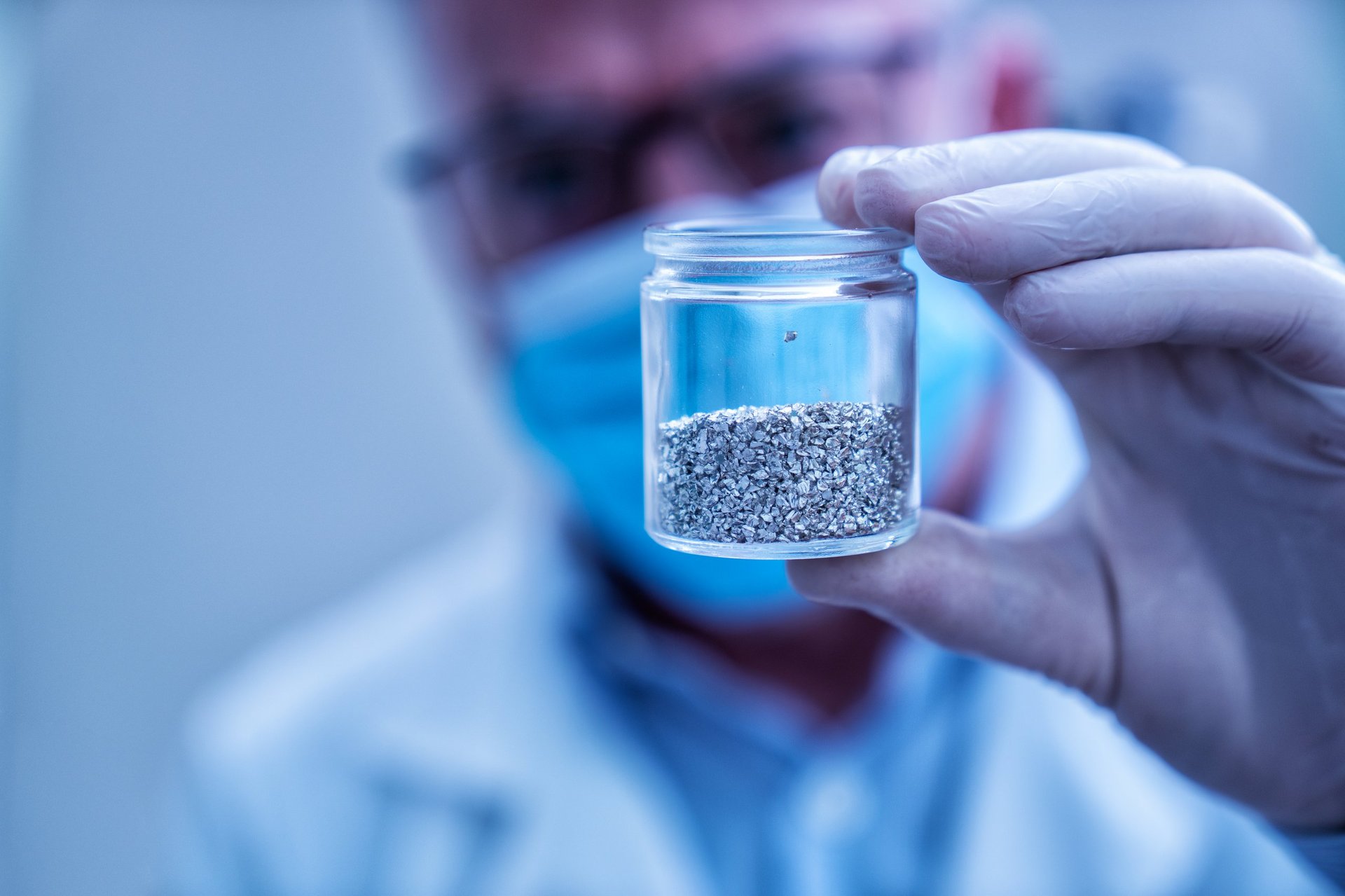
A total-Fe result and the rest of a chemical specification travel together on the same certificate, which is exactly why they get collapsed into a single idea of quality. They are separate determinations, and each can be correct while the other is not asked for at all.
For a laboratory manager this matters at the point of order: a specification that names a total-Fe requirement and stops has not described the material. The impurities that decide how a charge behaves in a furnace were never commissioned, and their absence from a report is not evidence that they are within any limit.
Ask what the report was intended to decide, and read the figures against that. A settlement figure, a process-control figure and a source-qualification figure are not the same commission, even when they carry the same analyte name.
Evidence
A total-Fe number on its own cannot be placed beside another laboratory's number, and cannot be tied back to a material. These are the fields that make it a result rather than a reading.
The parent number leaves the procedure unidentified. Without the Part, a second laboratory cannot repeat what was done.
A procedure is not frozen across editions. Two laboratories citing different editions are not performing the same determination.
Whether the figure is expressed on a dry or an as-received portion. The same ore reports differently on each, so the basis has to travel with the number.
Which lot the portion came from, and how it was drawn. This determines whether the figure describes a shipment or a stockpile.
The stage that produced the portion, under its own method. A correct assay on a portion that was never representative is still unrepresentative.
Who signed the report, against which method. A certificate comes from the laboratory that performed the work, and a figure without a named issuer cannot be queried.
This page publishes no assay value, no tolerance, no acceptance limit and no test result for any material. Nothing here should be read as a figure your specification ought to apply.
Commercial
A determination is one input to an enquiry. These are the fields that turn a general request into one that can actually be quoted against your specification.
Which form is being purchased — fines, lumps, concentrate, pellets — and the grade band you are specifying.
Which chemical figures you require, and the Part and edition the determinations are to be made under.
Whether the figures are to be expressed on a dry or an as-received basis, stated rather than assumed.
Whether a surveyor is appointed, and which sampling basis the test portion is to be drawn under.
The records you require with the shipment, named individually: analysis report, sampling record and certificate as applicable.
The tonnage and the unit it is transacted in, together with the receiving place and the delivery term the enquiry is written against.
No price, availability, stock position, origin, mill, lead time or shipping arrangement appears on this page, and none is implied by it. A chemical requirement is one part of a commercial offer; it does not itself constitute one.

Qualified enquiry
Tell the commercial desk which material you are buying, which chemical figures your specification calls for, and under which Part and basis the determinations are to be made. The enquiry reaches the same desk that answers the specification.
Price on request — no figure is published on this page.
Commercial desk reachable Monday to Saturday, 8.00 AM to 6.00 PM.
Procurement navigator
A chemical requirement is settled against the destination as well as the material, because the receiving plant's acceptance basis is the buyer's, not the laboratory's. Choose the receiving market to carry it into the right procurement context.
Each market page covers import planning for that destination. This page covers the determination basis a specification for any of them has to name.
Questions
No, and that is the point of the page. It is published in Parts, and each Part fixes its own procedure. Two laboratories can both record “total Fe by ISO 2597” on a report while having run different procedures, because the parent number alone does not identify which one was applied. When a specification, an offer or a purchase order cites the standard, the Part is what makes the reference specific.
Only once you know they were taken on the same basis. Two figures are comparable when the same Part was applied, under the same edition, on a test portion prepared the same way, and reported against the same moisture basis. Where any of those differ, the two numbers are not measuring the same thing even though they carry the same standard number. A figure reported without its Part, its edition and its basis cannot be placed beside another laboratory's figure.
No. Total iron is one analyte in a chemical specification. It does not describe the impurities that can affect a steelmaking route, the gangue minerals present, the loss on ignition, the physical sizing or the handling behaviour of the material. A specification written only around a total-Fe figure leaves the rest of the material undescribed, and those other figures come from their own determinations.
No. The determination establishes how much iron was found in the test portion. Whether a material is suitable for a particular furnace or process route depends on its full chemistry, its physical form and your operating conditions, none of which the determination knows about. Treat the figure as one property among the several a burden is judged on, not as a verdict on the material.
Ask for the Part and edition applied, since the parent number does not identify the procedure. Ask for the moisture basis the figure is reported on, because the same ore reports differently on a dry and an as-received basis. Ask which lot and test portion the number was drawn from, and ask for the sampling basis behind it. Finally, ask who issued the report, because a figure is only as traceable as the party that signed it.
No. It describes the scope of a determination. A certificate of analysis is issued by the laboratory that performed the work, against the method it applied, and this page publishes no certificate, no test result and no analysis for any material. Nor does it make any claim about an inspection party, a laboratory or an accreditation.
Source
The standard is published by the International Organization for Standardization. Check the current edition and status there before relying on any particular Part.
ISO 2597-1 — determination of total iron content
Titrimetric method after tin(II) chloride reduction
iso.org — check the current edition and status
ISO 2597-2 — determination of total iron content
Titrimetric methods after titanium(III) chloride reduction
iso.org — check the current edition and status
The standard itself sets out the procedures and their requirements. This page describes the shape of the decision and the questions an order has to settle; it does not reproduce the methods' reagents, tolerances or interference controls.