
Is the grade right for my load?
Grade and rolling condition cross-checked against ASTM, EN and BS at enquiry.
→Grade matched to mechanical duty.
Hot Rolled Steel Directory
Hot rolled steel is shaped above its recrystallisation temperature, giving a mill-scale surface and a thickness-led property set. Noor Deira Steel supplies it as coil and sheet, plate, structural sections, billet, rebar and pipe — each carrying a distinct mill route, base grade and governing standard; this directory maps the whole set.
Free, no-obligation hot rolled product review
Information current as of
Definition & Boundaries
Hot rolled steel is defined by its rolling route rather than its chemistry. Setting that boundary keeps a mill-route decision from being mistaken for a grade change.
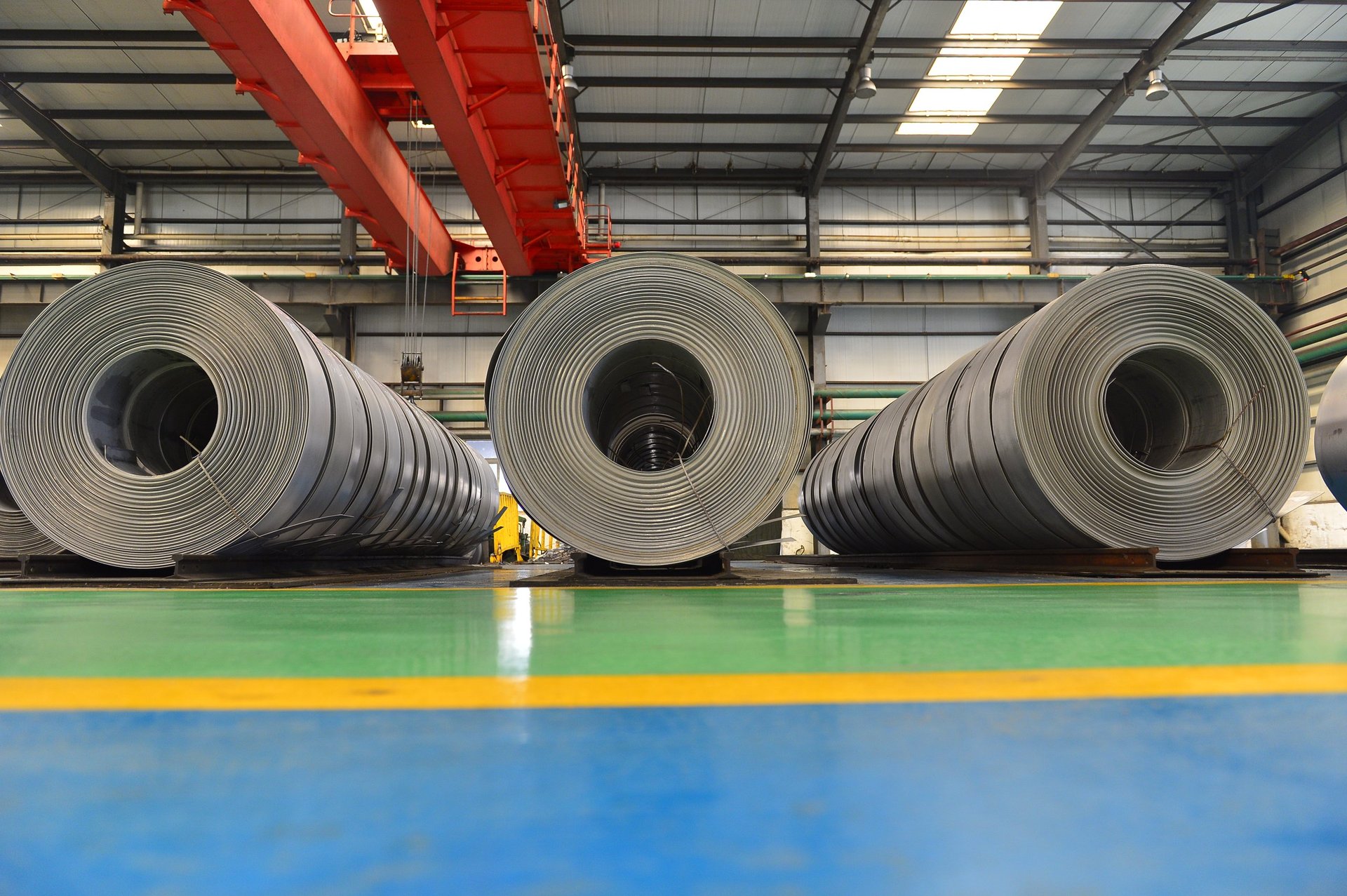
Hot rolled steel is rolled above its recrystallisation temperature, which produces a mill-scale surface and a property set led by thickness and form rather than cold reduction. Most common structural and flat carbon material starts here.
A hot rolled coil is carbon underneath, but belongs in the hot rolled category — the rolling route, not the coating or chemistry, determines where the specification lands.
Hot Rolled Steel Product Mapper
Three inputs — family, property need and application — rank the hot rolled routes and hand you to the matching product page.
Hot Rolled Steel Product Mapper
Choose all three to map your hot rolled steel product. 3 remaining.
Cross-product Mapping
Every supplied hot rolled product carries one mill route over one base form, with a governing standard. Compare them before you open a route.
Mill-edge coil and cut sheet for forming, structural and general work.
Thick hot rolled plate for heavy fabrication and machine beds.
Beams, angles and channels in standard structural sections.
Semi-finished rolled feedstock for downstream rerolling and forging.
Deformed reinforcement bar for concrete structures.
Hot rolled hollow and tubular sections for structural and line duty.
Selection Criteria
Before you request, confirm the grade, the size and the rolling condition. These checks prevent re-specification later.
The carbon grade and its mechanical minimums — yield and tensile.
Thickness, width or section size, and the product form — coil, plate, section, billet or bar.
As-rolled, normalised or controlled — the hot rolling condition the standard demands.
Where to go next
With the grade, size and rolling condition fixed, move to the product index or the standards hub to finish the specification — then carry your selection into an enquiry.
Applications & Limits
Hot rolled steel gives a thickness-led, weldable base for structural and heavy duty, but its mill-scale surface and broader tolerance are finite. The fit line is explicit so a buyer does not over-specify.
Thickness-led, bounded by finish
Hot rolled steel is the default for structural and heavy flat work; the moment the job needs a close tolerance or a bright surface, the specification must move to cold rolled.
Why Noor Deira Steel
Each advantage is a hot rolled buyer's concern answered with a verifiable capability and a practical outcome — not a slogan.
Grade and rolling condition cross-checked against ASTM, EN and BS at enquiry.
→Grade matched to mechanical duty.
Hot rolled carbon plate and sections checked for weldability before order.
→Base that fabricates without surprises.
Common structural and flat sizes held in-region across coil, plate and section.
→Shorter lead time on common sections.
Mill Test Certificates and heat details prepared as part of the order.
→No clearance or inspection stalls.
Hot rolled coil with controlled mill edge held for forming and pressing.
→Material that forms within specification.
Single Dubai hub handles multi-country Incoterms and documentation.
→Shipment delivered on agreed terms.
Partner & Client Proof
Partner logos and client quotations appear here only as independently approved. Noor Deira Steel never invents a company or review.
Commercial Partners
Partner logos appear here as independently approved — the layout is retained while final assets are added.
Buyer Testimonial
A buyer quotation from this page is published once it has been approved for release by the customer who gave it. Nothing is shown here until that approval exists.
Procurement lead
Testimonial content awaits independent approval and is published only with permission.
Expert Insight
A dated method for reading rolling condition against property, so a buyer can distinguish mill routes on the first pass.
Rolling-condition method
The practical difference between hot rolled, normalised and cold reduced is how the material behaves at size and surface. This table reads the rolling condition against the property and finish it typically implies, so the route is chosen for the duty as much as for the appearance.
| Rolling condition | Typical product | Fit note |
|---|---|---|
| Hot rolled (as-rolled) | Coil, plate, section | Thickness-led, mill-scale surface |
| Normalised | Pressure & structural plate | Refined grain, certified impact |
| Cold reduced (for contrast) | Sheet, strip | Close tolerance, bright surface |
Method: rolling-condition to fit cross-reference · Basis: commercial material selection practice · Last reviewed: 31 August 2026
What this means for you
Rolling condition is a specification decision, made once and carried through quotation.
From Enquiry to Delivery
What happens after the hot rolled route is chosen — from first enquiry through after-sales support.
Hot rolled requirement and thickness intent received.
Grade, size and rolling condition captured.
Grade and standard cross-checked.
Price on request, terms confirmed.
Order and documents agreed.
Mill Test Certificates and heat details verified.
Loading, Incoterm coordinated.
Shipment tracked to destination.
Follow-up and claims resolved.
Hot Rolled Steel FAQ
Concise answers to the questions that follow a hot rolled selection decision.
Hot rolled steel is rolled above its recrystallisation temperature, which gives a mill-scale surface and a thickness-led property set. The rolling route — not the base chemistry — drives selection for structural and heavy flat work.
Coil and sheet, plate, structural sections, semi-finished billet, deformed reinforcing bar and hot rolled pipe. Each is a carbon base formed into a different family along the hot rolling route.
By your finish and tolerance need. Hot rolled suits thickness-led structural work; cold rolled is for close tolerance and a bright surface.
ASTM, EN or BS, whichever your project names. Common references include ASTM A36 for structural plate and ASTM A615 for reinforcing bar.
It has a carbon base, but it belongs in the hot rolled category — the mill route, not the chemistry, determines where the specification sits for structural and flat duty.
Yes — coil, plate, sections, billet and rebar can be combined in a single order, supplied from one Dubai hub with one commercial manager accountable.
Start Your Enquiry
Share the family, grade, size, rolling condition, quantity and destination — the commercial team responds with a clear next step.