
Steel Sheet Grades
ASTM A36 Steel Sheet
Structural carbon steel — scope, form and specification verification before quotation.
Do not assume ASTM A36 is a generic sheet standard. ASTM A36 covers structural shapes, plates and bars; an 'A36 sheet' request must be checked for product form, thickness and governing design specification before any substitution or equivalence is suggested.
Price on request. No stock position, lead time, origin or certification status is stated or implied on this page.
What this page settles, and what it does not
- Reference specification
- ASTM A36/A36M — Carbon Structural Steel. Scope covers structural shapes, plates and bars.
- The open question
- Whether an “A36 sheet” request sits inside that scope or belongs to a sheet specification instead.
- How it is resolved
- By product form, thickness and the governing design specification — confirmed against the active standard scope, not against informal market wording.
- What we do not do
- We do not declare equivalence between ASTM A36 and any sheet standard, and we do not perform structural design or load-rating approval.
Decision implication: an enquiry that names only “A36 sheet” leaves the supplier to determine the product form and specification on your behalf. Name both before you compare quotations.
Expert Insight
What the A36 scope actually covers
The single most useful thing a structural flat-product buyer can do before enquiry is read the scope clause of the specification they are about to name. Everything on this page follows from it.
- Method
- Direct reading of the published scope clause of ASTM A36/A36M-19 as listed by the standards publisher. The scope clause — not the grade designation alone — defines which product forms the specification addresses.
- Information date
- 11 September 2026. Standard editions are revised on their own cycle; confirm the edition called up by your project specification.
- Scope
- Carbon structural steel shapes, plates and bars for structural and general purposes.
- Limitation
- ASTM A36/A36M scope is not a general steel-sheet specification. A buyer using “A36 sheet” may mean plate, thin plate, or a commercially cross-described product; the final material standard must be confirmed.
Buyer implication: the phrase “A36” travels through the market as a shorthand for a structural carbon flat product. That shorthand is useful commercially and unreliable contractually. A purchase order that names A36 for a sheet product without resolving the scope question can be fulfilled to a different specification than the one your design assumed — and the mismatch may only surface at inspection or at fabrication.
Replace the informal term before enquiry
Each row below is a term that reaches steel desks every week. The right-hand column is what the request must say instead before it is quotable.
| Term as received | What must be stated |
|---|---|
| “A36 sheet” | Product form (sheet or plate), thickness, and the governing specification you will accept. |
| “A36 equivalent” | The specification your design names. Equivalence is an engineering determination, not a supplier one. |
| “Mild steel A36” | Which of the two designations governs. They are not interchangeable labels. |
| “A36 or better” | The actual property or design basis that “better” refers to, and who approved the substitution. |
Next action
Retrieve the scope clause for the edition your specification calls up, then write the product form and governing standard into the enquiry in that order. Run the ASTM A36 Product-Form Scope Checker to see which combination your requirement falls into before you send it.
Where the scope question is decided
The scope clause is where a specification states which product forms it addresses. It is written to define the boundary of the document, not to describe the commercial range a market attaches to a grade name.
That is why two parties can both be acting in good faith while holding different understandings of what a request means: one is reading the standard, the other is reading the market. Both are legitimate; only one is contractual.
Where your project specification calls up a particular edition, that edition's scope clause governs — not the current edition, and not the designation on its own.
Why buy through Noor Deira Steel
Specification discipline is the product
For a structural flat product, the commercial value of a supplier is measured by how precisely the quotation, the certificate and the delivered material agree with the specification you named. That is what we manage.
| Buyer concern | Evidence we provide | Outcome for your project |
|---|---|---|
| The specification I named is not the one delivered | The governing specification and grade are recorded on the order acknowledgement before production, and cross-checked against the mill or inspection certificate at handover. | A documented trail from your enquiry to the delivered material, so a discrepancy is caught at goods-in rather than at fabrication. |
| Ambiguity in the enquiry is resolved by the supplier, not me | Open points — product form, thickness basis, tolerance basis, documents accepted — are put back to you in writing before the quotation is issued. | You approve the interpretation rather than discovering it in the delivered lot. |
| Substitution is agreed verbally and forgotten | Any substitution or equivalence is only recorded when the engineering approver has confirmed it, and it is written into the order documents. | The substitution decision stays auditable and traceable to the person authorised to make it. |
| Documentation arrives that does not match the order | The document set is reviewed against the named specification before dispatch, and identification markings are confirmed against the certificate. | Fewer rejections at site and a cleaner handover pack for your client. |
| Cross-border supply complicates the paperwork | Documentation requirements are agreed against the destination market before the order is confirmed, so the pack is assembled for the market it is going to. | Fewer clearance delays caused by incomplete or mismatched paperwork. |
Written confirmation before commitment
The specification, product form and document set you will accept are confirmed in writing before the order is placed — not assumed from the enquiry wording.
Traceability through the order
Enquiry, quotation, order acknowledgement and certificate stay linked, so any party in the chain can see what was bought against what was specified.
Dimensional questions answered explicitly
Thickness and dimension queries are resolved against the tolerance basis you nominate, rather than against a nominal-only description.
Evidence requirement: before you award, ask for the order acknowledgement to state the governing specification and grade in the same words your design or project specification uses. If those two documents disagree at the acknowledgement stage, the discrepancy will not resolve itself later in the chain.
Procurement Journey
From a structural requirement to a delivered flat product
Six stages. Each one has a specific output that the next stage depends on — and a specific point where the specification question must already be closed.
| Stage | What happens | Output that carries forward | Where it fails if skipped |
|---|---|---|---|
| 1Requirement defined | The product form, thickness with unit, governing specification and design basis are written down by the party who owns the requirement. | A defined requirement that states both the product form and the specification to be certified. | The supplier resolves the ambiguity, and the quotation is priced against an interpretation you never approved. |
| 2Enquiry resolved | Open points are returned to you in writing — tolerance basis, cut-to-length requirement, documents accepted, substitution position. | A closed specification question, with any substitution put to the engineering approver rather than assumed. | Two suppliers quote against two different specifications and the comparison is meaningless. |
| 3Sourcing and confirmation | The quotation is issued against the closed specification, with the commercial basis stated as price on request and confirmed per enquiry. | A quotation that names the same specification and product form as your requirement. | Commercial terms are compared against a moving technical basis and the cheapest offer is not comparable. |
| 4Order and documentation | The order acknowledgement records the governing specification, grade, dimensions and the document set to be supplied. | A written record of exactly what the material is to be produced and certified to. | There is no baseline against which to reject non-conforming material at goods-in. |
| 5Production and inspection | The material is produced and tested to the named specification, and the certificate is issued against it. | A mill or inspection certificate citing the specification on the order acknowledgement. | The mismatch is discovered at fabrication, when the cost of correction is highest. |
| 6Dispatch and receipt | Identification markings, packing and the document pack are confirmed against the order before dispatch, and checked again at receipt. | Material at site that is identifiable against its certificate and traceable to the order. | Untraceable material is quarantined pending documentation that may never arrive. |
Risk control: the specification question must be closed at stage 2. Once production has started at stage 5, the only remaining options are to accept the material as produced or to reject it — both of which are more expensive than resolving the question before the order.
Source Chain
Who decides what the material actually is
Between a design drawing and a delivered flat product there are four separate parties, each holding a different part of the specification. Confusion between them is the most common cause of an A36 mismatch.
- Step 1
The design or project specification
Names the governing material standard and grade the structure or component is designed against. This is the only party entitled to change the specification basis.
- Step 2
The buyer or procurement team
Converts the design basis into an enquiry. Where the design basis and the enquiry wording diverge — as happens with “A36 sheet” — the divergence is created here.
- Step 3
The supplier
Quotes against the wording received. A supplier cannot validate a design basis; where the enquiry is ambiguous, the only correct action is to return the question in writing.
- Step 4
The producing mill
Produces and tests to the specification on the order, and issues the certificate against it. The certificate records what was made — not what was intended.
What the specification chain decides downstream
| Control point | Set by | Consequence if unclosed |
|---|---|---|
| Product form and thickness basis | Design / project specification | The item ordered is a different product category than the one designed around. |
| Governing material standard | Design / project specification | Certification is issued against a specification your approver did not accept. |
| Tolerance and dimensional basis | The standard called up by the specification | Fabrication tolerances assumed in the design are not the ones delivered. |
| Welding and fabrication suitability | The grade and the fabricator's procedure | WPS and consumable selection is made against the wrong base material assumption. |
| Documentation and traceability | The buyer, at order stage | Material arrives without the evidence the project handover requires. |
Where the A36 shorthand breaks the chain
A36 is widely used as a commercial shorthand for a structural carbon flat product, so it survives comfortably from step 1 to step 3 without anyone checking it against the product form actually required. The break only becomes visible at step 4, when a mill produces and certifies to the specification written on the order.
Evidence warning
A certificate that cites a specification other than the one your approval names is not evidence of compliance — it is evidence of a mismatch. Read the specification field on the certificate, not only the grade field.
Next action
Establish, in writing, which party owns the specification decision on your project — and confirm that the enquiry sent to suppliers names the same standard that party approved.
What each party can and cannot do
- The design owner can change the specification basis, and is the only party who can.
- The buyer can restate the requirement accurately and can return a quotation that is technically non-comparable.
- The supplier cannot validate a design basis, and should not be asked to.
- The mill cannot certify to an intention — only to the specification written on the order it received.
Cross-References
What a cross-reference is, and what it is not
Buyers routinely receive tables listing 'A36 equivalents'. A cross-reference is a starting point for a conversation between engineers — it is not a purchasing instruction, and it is not a compliance statement.
| The claim being made | What it legitimately supports | What it cannot support |
|---|---|---|
| “A36 is equivalent to specification X” | Identifying a comparable family of structural carbon flat products for preliminary enquiry. | Replacing a specification named in an approved design without the approver's written confirmation. |
| “A36 sheet is the same as A36 plate” | Nothing. Product form is part of what the scope clause of each specification decides. | Treating plate and sheet as interchangeable in a purchase order or a design assumption. |
| “The certificate proves compliance” | Recording what the material was produced and tested to at the mill. | Demonstrating that the material matches a specification the certificate does not cite. |
| “The supplier confirmed it is equivalent” | Nothing beyond the supplier's own commercial position. | An engineering approval. Substitution authority sits with the design owner, not the supply chain. |
| “Same grade, so the same performance” | Nothing. Grade designation alone does not define the product form, tolerance basis or testing regime. | Assuming structural behaviour matches without checking the governing specification and design basis. |
How to use a cross-reference correctly
- 1
Treat the cross-reference as evidence that a conversation is needed, not as a decision that has been made.
- 2
Identify which party owns the specification decision on your project — usually the design or project engineer.
- 3
Put the proposed change to that party with the product form, thickness and application stated.
- 4
Only once confirmed in writing should the alternative specification appear on the enquiry or order.
Our position: we do not publish an equivalence table for ASTM A36 and we will not quote a substitution unless your engineering approver has confirmed it in writing.
Decision implication: if a quotation you receive offers an alternative specification without a written approval reference, treat the offer as unconfirmed and put the question to your approver before comparing it commercially against the compliant offers.
Documentation
What the certificate must actually say
A mill or inspection certificate is the evidence that the material was produced and tested to a specification. Which specification it cites — and whether that is the one your project approved — is the whole question.
Identity fields
The certificate should identify the material unambiguously and tie it to the order it was supplied against.
- Specification and grade exactly as ordered
- Heat / cast identification
- Product form, dimensions and quantity
- Order or reference number linking it to your purchase
Verification fields
These are what make the certificate evidence rather than a statement of intent.
- Test results recorded against the specification cited
- Inspection body or mill authority identified
- Date of issue and, where applicable, the edition referenced
- Any deviation or concession stated explicitly
What the certificate does not do
Understanding the limits of the document prevents it being asked to prove something it cannot.
- It does not approve a substitution
- It does not certify a specification it does not cite
- It does not confirm fitness for your specific application
- It does not replace your goods-in inspection
| Check at goods-in | Compare against | Action if it does not agree |
|---|---|---|
| Specification cited on the certificate | The specification named on your order acknowledgement | Quarantine the material and raise a documentation discrepancy before it enters production. |
| Heat or cast identification on the material | The identification recorded on the certificate | Treat the material as untraceable until the link is established in writing. |
| Dimensions and quantity received | The ordered dimensions and the tolerance basis agreed | Record the variance against the agreed basis before accepting the lot. |
| Condition and identification markings | The packing and marking requirements agreed at order | Photograph and record before any material is cut or distributed to site. |
Evidence gate: before the material is released into fabrication, confirm that the certificate cites the same specification your project approved. A certificate citing a different specification is a mismatch to be resolved, not a document to be filed.
Selection
Is your requirement actually an A36 requirement?
This is the decision that has to be made before anything is quoted. The two columns below separate requirements that sit inside the A36 scope from those that must be resolved elsewhere.
Where an A36 reference typically belongs
Structural plate requirements
Plate product forms where a structural carbon plate specification is named by the design.
Structural shapes, angles, channels and bars
Rolled structural sections and bar product forms designed around a structural carbon specification.
General structural fabrication
Fabricated frames, base plates and support steel where the design basis names a structural carbon standard.
Requirements where the design basis names A36 explicitly
Where an approved design or project specification cites the standard directly, the enquiry should cite it back in the same terms.
Plate-type thicknesses supplied as a flat product
Where the item is thickness-driven rather than coil-driven, confirm the product form and the standard scope before enquiry.
Where the basis must be revisited
Requests written only as “A36 sheet”
The product form and the standard are in tension. Resolve which one the requirement actually follows.
Coil-fed or continuous processes
Forming lines, roll-forming and coil-fed presswork imply a coil or sheet product form that should be specified as such.
Thin-gauge forming and deep drawing
Formability-driven applications are governed by the sheet specification and its forming provisions, not by a structural plate standard.
Coated, painted or galvanised requirements
Coating systems attach to specific product forms and specifications. Confirm the base standard before the coating is discussed.
Requirements inherited from an old or superseded document
Where the specification has been carried forward from a previous project, confirm it is still the intended basis before it is reordered.
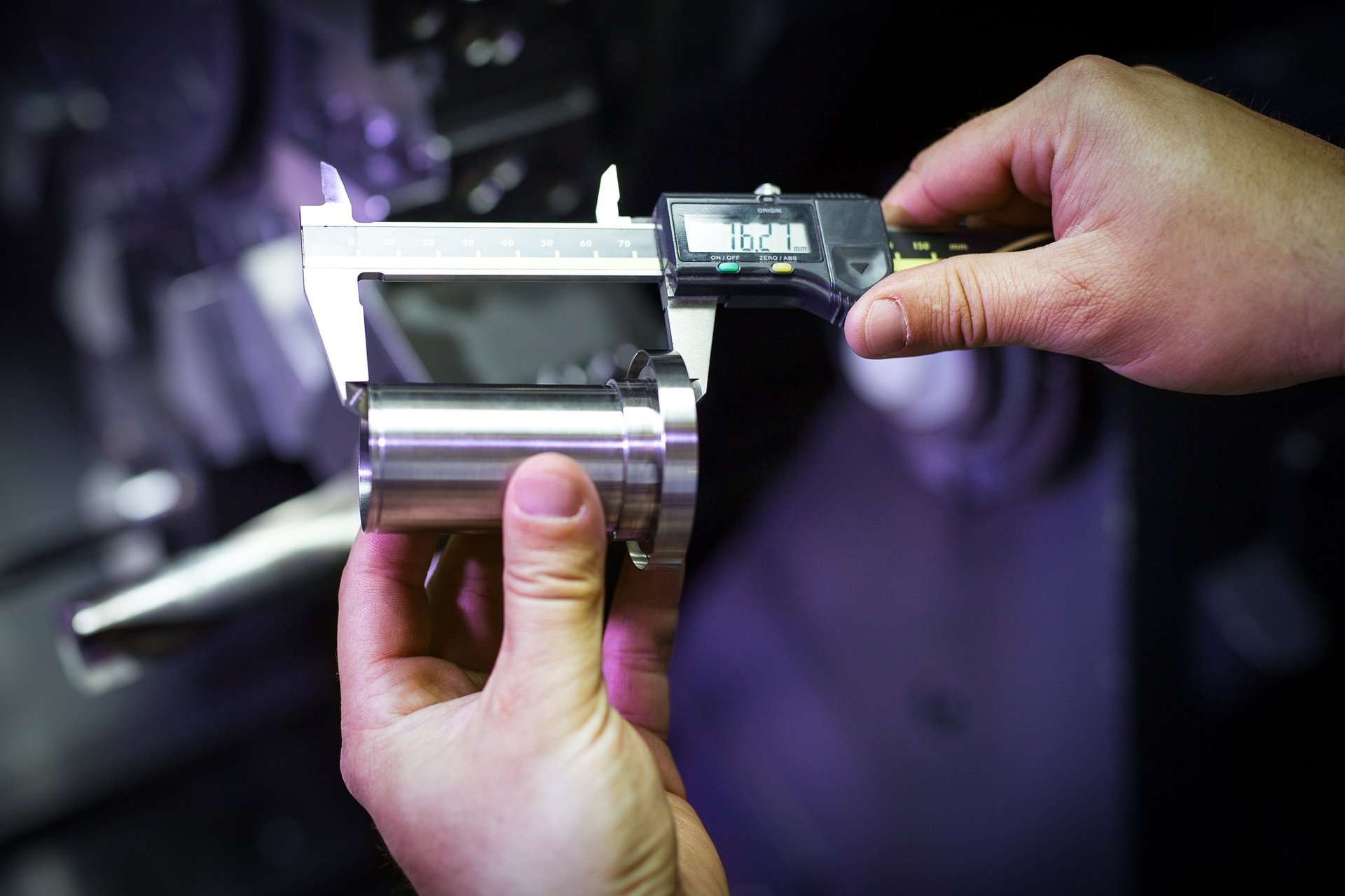
Where to go next, depending on what you actually require
Steel Sheet Supplier
The sheet product range this page sits within, with the full sheet specification set.
Hot Rolled Steel Sheet
The hot-rolled route, its surface condition and its typical application profile.
Carbon Steel
Carbon steel material context across the flat product range we supply into.
ASTM Steel Grades
The ASTM grade reference covering what each designation specifies and where its scope ends.
If the answer is “plate”
Confirm the plate thickness range and the standard edition your project calls up, then proceed to enquiry naming the specification explicitly. The structural basis and the purchase description will then agree.
If the answer is “sheet”
Establish which sheet specification governs the requirement — from the design, the end user or the forming process — and enquire against that standard rather than against an A36 shorthand.
If the answer is “not known”
Do not send the requirement to enquiry yet. Route the question to whoever owns the design basis and get the product form and governing specification settled first.
Decision implication: if your requirement appears in the right-hand column, do not send it to enquiry until the product form and governing specification have been settled — an enquiry sent in that state will produce quotations that cannot be compared on a like-for-like basis.
Decision Tool
ASTM A36 Product-Form Scope Checker
Describe the requirement as it currently stands. The checker shows which scope category the combination falls into and which fields remain open — it does not approve a substitution and it does not perform structural design or load-rating assessment.
Requirement inputs
Nothing is stored on our systemsScope result
No inputs yet. Complete the product form, thickness, governing standard, intended use, quantity and destination fields to see which scope category the requirement falls into.
Field checklist
- Product form stated explicitly
- Nominal thickness with explicit unit
- Width with explicit unit
- Governing standard named
- Intended use stated
- Structural design reference answered
- Quantity with unit
- Destination stated
Method and assumptions
- The checker compares the product form and governing standard you enter against the scope position stated in the Expert Insight section above. It does not read the standard on your behalf.
- It does not calculate, verify or approve structural capacity, load rating, design equivalence or fitness for purpose. Those remain engineering determinations.
- It does not supply default values. Any field you leave blank is reported as open rather than assumed.
- No input leaves your browser. The summary is placed on your clipboard only when you choose to copy it.
Next action: if the result reads “Engineering review required”, send the summary to the party that owns the design basis before you send it to suppliers. If it reads “A36 plate / shape / bar route”, proceed to enquiry with the specification named explicitly.
Specification
What has to be pinned down before quotation
Three control areas decide whether a quotation is comparable: the governing standard, the mechanical properties the design relies on, and the dimensional and tolerance basis. None of them can be left to the supplier's assumption.
Evidence warning: the values below are the fields you must state, not values we publish. Numeric chemical, mechanical, tolerance and dimensional limits are defined by the edition of the standard called up by your project specification, and they must be read from that document — not from a supplier page, a market table or a previous project's paperwork.
| Control area | What must be stated in the enquiry | Where the value comes from | Failure if left open |
|---|---|---|---|
| Governing standard and edition | The full designation, including the edition or year your project specification calls up. | The project specification or approved design. See ASTM A1011 Hot Rolled Sheet where a sheet product standard is the relevant basis. | The material is certified against an edition your approver did not review. |
| Product form | Plate, sheet, coil, bar or structural shape — stated explicitly, not implied by a grade shorthand. | The design basis and the fabrication method that will be used. | The quoted item is a different product category than the one the design assumed. |
| Mechanical properties relied on | Which properties the design depends on, and confirmation that they are to be evidenced on the certificate. | The standard edition and the design calculation — never from a supplier summary. | The certificate arrives without the evidence the design review requires. |
| Chemical composition requirements | Whether the application imposes any composition limit beyond the standard, and whether it must be reported. | The standard edition, plus any project or end-user specification layered on top of it. | Weldability or service-performance assumptions are made against unverified composition. |
| Dimensional and tolerance basis | Nominal thickness, width and length with units, plus the tolerance basis you will accept. | The dimensional provisions of the standard edition called up by the specification. | Fabrication and fit-up assumptions do not match the delivered material. |
Mechanical and chemical properties — who sets the numbers
We do not reproduce property tables on this page, because a table copied out of context is the single most common source of a specification error. The values that govern your order are the ones in the edition of the standard your project specification cites.
| Property group | Who defines the requirement | What the buyer must supply |
|---|---|---|
| Tensile and yield requirements | The standard edition cited by the project specification | Confirmation that these are the properties the design relies on and that they must appear on the certificate. |
| Elongation and ductility provisions | The standard edition, together with any fabrication requirement | The forming or bending operation the material must survive, stated as a process requirement. |
| Composition limits | The standard edition, plus any project overlay | Whether any element must be reported or limited for the application or the welding procedure. |
| Testing and retest provisions | The standard edition | Whether any additional or witness testing is required by the project or the end user. |

Risk control
State the edition, not just the designation. A quotation that cites a standard without an edition cannot be checked against the document your design review used, and the difference between editions is exactly where specification disputes originate.
Decision implication: the enquiry is complete only when the governing standard and edition, the product form, the dimensional basis and the properties to be evidenced are all stated. Any of those left open will be filled by an assumption you did not make.
Quality & Documentation
The document set that makes a delivery auditable
For a structural flat product, the material is only as useful as the paperwork that travels with it. Agree the document set at order stage, because it cannot be assembled retroactively.
| Document | What it establishes | Agreed at | Checked at |
|---|---|---|---|
| Order acknowledgement | The governing specification, product form, dimensions and document set the order will be fulfilled against. | Order placement | Before production release |
| Mill or inspection certificate | The specification the material was produced and tested to, with the results recorded against it. | Order placement | Goods-in inspection |
| Heat / cast identification | The link between the physical material and the certificate that describes it. | Order placement | On receipt and before any cutting |
| Packing list and dispatch documents | What was shipped, in what quantity, under what identification, against which order. | Order placement | At receipt and clearance |
| Export / customs documentation | Compliance with the requirements of the destination market the material is entering. | Before order confirmation | At clearance |
| Deviation or concession record | Any departure from the ordered specification, and the authority under which it was accepted. | The moment it is identified | Before the material enters fabrication |
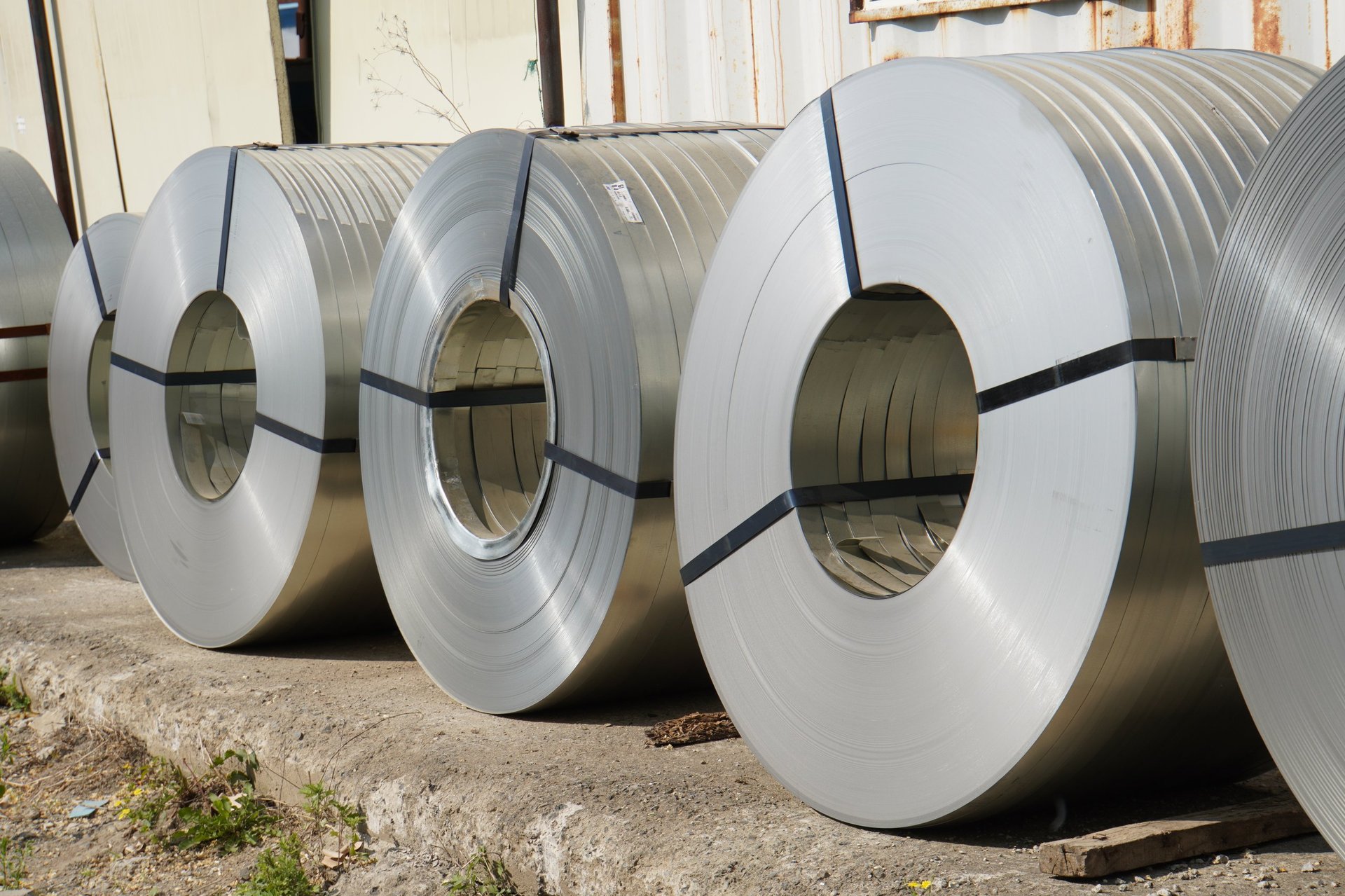
What certification does and does not establish
It does establish
- The specification and grade the material was produced and tested to.
- The recorded results against that specification, as issued by the producing or inspecting body.
- The identity of the lot the material belongs to.
It does not establish
- That the material is fit for your specific structural application.
- That a substitution was approved by the party owning the design.
- That the delivered item matches your goods-in inspection — that check still has to be made.
Evidence gate
Do not release material into fabrication on the strength of a packing list alone. The certificate must be in hand and must cite the specification on your order acknowledgement before the first cut is made — after that, the evidence position can no longer be protected.
A documentation defect is not a material defect
The two failures are often treated as one and handled the same way, which is a mistake in both directions. Material that is correct but documented wrongly will be rejected at goods-in until the paperwork is corrected. Material that is non-conforming but documented consistently will pass a paper check and be discovered at fabrication.
The practical consequence is that a goods-in inspection must check the material and the certificate against each other, not merely confirm that a certificate exists. A document that arrives and is filed unread has performed no verification function at all.
Timing: why retroactive documents are unreliable
A certificate is issued by the body that produced or inspected the material, at the time it did so. Once the lot has left the mill and the material has been cut, bundled and shipped, the original issuing context is gone.
A document produced later is a reconstruction, not a record — and it cannot carry the same evidential weight as one issued at the point of production. This is why the document set has to be agreed at order stage and supplied with the material, rather than requested when the project realises it needs it.
Risk control: name the document set in the enquiry, not after the order. A requirement for a document not agreed at order stage is a request for a favour, not an enforceable delivery condition.
Applications
Where a structural flat product requirement comes from
The application drives the specification question. Each of these originating contexts imposes a different constraint on which product form and which governing standard is the right one.
| Application context | Operating requirement it imposes | What it means for the specification | Evidence to request |
|---|---|---|---|
| Structural steelwork and frames | Load-bearing members designed to a named structural specification. | The governing standard is set by the design. The enquiry must cite it in the design's own terms. | Order acknowledgement and certificate citing the design's specification. |
| Fabrication and welding | Weldability and dimensional consistency across a fabricated assembly. | Base material must be selected against the approved welding procedure, and the certificate must support it. | Material certificate with composition reported, matched to the WPS basis. |
| Forming and enclosure manufacture | Consistent thickness and formability across a production run. | Usually a coil or sheet product form and a sheet specification — confirm before accepting an A36 reference. | Confirmation of product form and the sheet specification governing the run. |
| Infrastructure and general construction | Durability and compliance across a long project programme. | The specification basis is usually set by the project specification, not by the purchasing route. | Traceable documentation matched to the project specification clause. |
Fabrication
Cutting, forming and welding requirements that shape the material choice.
Construction
Project-specification-driven demand across building and infrastructure works.
Electrical Enclosure
Forming, coating and thickness-consistency requirements for enclosure production.
Failure risks when the application is not stated
- A formability-driven requirement is quoted against a structural plate standard, and the material fails during forming.
- A structural requirement is quoted against a coil product, and the thickness tolerance is not the one the design assumed.
- A welding procedure is qualified against one base material specification and the delivered material cites another.
Selection implications
- State the application in the enquiry — it is the fastest way for a supplier to identify a specification mismatch.
- Name the fabrication process where forming or welding is involved, since it constrains the material options.
- Where the project specification governs, quote its clause in the enquiry rather than paraphrasing it.
Decision implication: if you cannot state the application in one sentence, the specification question is not yet closed — and the enquiry will be priced against the supplier's interpretation of it rather than yours.
GCC Markets
Destination markets we serve across the GCC
Documentation and clearance requirements differ by market. Selecting your destination here takes you to the market page that sets out how a structural flat-product requirement is handled for that country.
 United Arab EmiratesSteel sheet supplier
 Saudi ArabiaSteel sheet supplier
 QatarSteel sheet supplier
 KuwaitSteel sheet supplier
 BahrainSteel sheet supplier
 OmanSteel sheet supplier
What destination planning does not establish
- It does not confirm the availability of any particular product form, size or specification in that market.
- It does not establish a price, a lead time or a stock position. All pricing is on request, per enquiry.
- It does not state that we hold a branch, a warehouse or a facility in any market.
- It does not substitute for the destination market's own import and conformity requirements, which are set by that market's authorities.
Who is responsible for what
The buyer
States the governing specification, the product form and the documents the project will accept, and holds the engineering approval for any substitution.
The supplier
Quotes against the stated specification, returns open points in writing, and supplies the agreed document set with the material.
The importer
Confirms the destination market's import requirements and ensures the documentation pack matches them before clearance.
Evidence requirement: confirm the destination market's documentation requirements against that market's own published rules, and confirm in the order which party is responsible for each document in the pack.
Commercial
What the quotation will and will not contain
Availability for a structural flat product is confirmed per enquiry, per specification. Nothing on this page is a stock statement, and no price, lead time or origin is published.
| Quotation input | Why it changes the commercial basis | Where it is stated |
|---|---|---|
| Governing specification and edition | The specification determines what the material must be produced and tested to, and therefore what is being priced. | Enquiry and order acknowledgement |
| Product form and dimensions | Form, thickness, width and length determine the source route and the cutting or slitting operation required. | Enquiry and order acknowledgement |
| Quantity with unit | Order magnitude and unit basis affect how the requirement can be sourced. | Enquiry |
| Document set required | The documentation and testing scope is part of what is supplied, not an add-on after delivery. | Order acknowledgement |
| Destination and delivery window | Determines the logistics route and the documentation required for the market being entered. | Enquiry |
| Substitution position | Where a substitution is proposed, it is only priced once the engineering approver has confirmed it. | Written approval, recorded on the order |
Pricing
Price on request. Structural flat product pricing depends on the specification, form, dimensions, quantity, documentation scope and destination — so it is quoted per enquiry rather than published.
Availability
Confirmed per enquiry against the specification and dimensions you state. This page does not claim stock, and no stock position, warehouse or lead time is stated or implied.
Origin
Confirmed per enquiry against the specification and the documentation the destination requires. No mill, country of origin or production route is stated or implied here.
Scope boundaries
- Quotation issued against the specification you state in writing.
- Open points returned to you before the quotation is issued.
- Document set agreed at order stage and supplied with the material.
- We do not approve substitutions — that is the design owner's decision.
- We do not perform structural design, load rating or fitness- for-purpose assessment.
- We do not publish price, stock, lead time, origin or certification status on this page.
Comparing quotations that are not alike
A structural flat-product quotation carries at least four variables that change independently of price: the specification and edition, the product form, the dimensional and tolerance basis, and the documentation scope. Two offers can differ on any one of them while looking identical on a comparison sheet.
The disciplined sequence is to confirm the technical basis of each offer first and only then compare commercial terms. Where an offer cannot be traced to a stated specification and document set, the correct treatment is to return it for clarification rather than to price it into the comparison.
What changes the commercial basis
- A change of specification or edition changes what is being produced and tested, not merely what is being called it.
- A change of product form changes the source route and the processing operation the material requires.
- A change of tolerance basis changes what is accepted at goods-in and what may be rejected later.
- A change of documentation scope changes the testing and inspection the order carries.
Decision implication: two quotations for the same requirement are only comparable when both were issued against the same specification, the same dimensions and the same document set. If those three are not identical, compare the technical basis before you compare the commercial terms.
Adjacent Routes
The range this product sits within
ASTM A36 as a flat product reference sits inside a wider sheet and plate range. These are the routes that carry the same buyer from the same requirement.
Steel Sheet Supplier
The full sheet range — types, materials and grades — with the specification route for each product form we supply into.
Carbon Steel Sheet
Carbon steel material context across the flat product range, including the composition and property questions buyers raise.
Hot Rolled Steel Sheet
The hot-rolled route, its surface condition, dimensional characteristics and typical application profile.
What these routes do not do
- They do not convert one product form into another. A sheet route does not make a plate requirement into a sheet requirement, or the reverse.
- They do not establish equivalence between ASTM standards or between ASTM and any other system.
- They do not confirm availability. Every route describes the requirement; availability is confirmed per enquiry.
Important: a structural requirement and a sheet requirement are not interchangeable descriptions of the same order. If you arrived here searching for a structural product, confirm the product form first — the governing specification follows from it, not the other way round.
Request a Quote
Send the specification, product form and dimensions you require.
Decision implication: if the route you actually need is one of the three above rather than a structural A36 reference, change the specification basis now — before the enquiry is issued and before quotations are compared.
Questions
Questions buyers ask before sourcing an A36 flat product
Five questions that determine whether a requirement can be quoted accurately, and what the answer depends on.
Does ASTM A36 cover steel sheet, or does it cover plate and other structural product forms?
ASTM A36/A36M is a carbon structural steel specification whose scope covers structural shapes, plates and bars. It is not a general steel-sheet specification, and the term “A36 sheet” does not map cleanly onto a single orderable product form. Because the scope boundary sits between plate and sheet, a request written as “A36 sheet” must be resolved by reading the active standard scope and confirming which product form and governing specification apply to your requirement. This page states the boundary and the verification step; it does not certify that any particular flat product is covered.
What product-form and thickness information is needed before quoting an “A36 sheet” request?
State the product form you actually require, the nominal thickness with an explicit unit, width and length, the governing specification you want the material certified to, and how the thickness will be verified. Because the scope of ASTM A36 turns partly on product form and thickness, these fields are what determine whether your requirement sits inside it or belongs to a sheet specification instead. An enquiry that names only “A36 sheet” leaves the supplier to make that determination on your behalf.
Can ASTM A1011 or another sheet standard be substituted for A36 automatically?
No. Substitution is an engineering determination, not a supplier convenience. The appropriate sheet specification for a given requirement depends on the application, the design basis, the product form and the properties the design relies on. Where a design has been approved against a named specification, changing it requires the approver's confirmation. This page does not claim equivalence between ASTM A36 and any sheet specification, and no automatic substitution should be accepted in a quotation.
Which documents should confirm the final governing material specification?
Name the specification you will accept before the order is placed, and require the order acknowledgement to record it exactly. At handover, the mill or inspection certificate should state the specification and grade the material was produced and tested to, and the delivered material should be identifiable against that certificate. Where an approved design names a specification, the buyer should confirm that the certificate cites the same one rather than a commercially similar substitute.
What information should be included in an RFQ for a structural flat-steel requirement?
Include the governing specification and grade, the product form, dimensions with units and the tolerance basis, quantity with unit, the fabrication and welding requirements, the service conditions, the destination and required delivery window, and the documents you will accept. Where the requirement is structural, state the design basis and whether the material must match an approved specification. Confirm any substitution in writing through the engineering approver rather than accepting it at quotation.
Read the scope clause
The scope clause — not the grade designation — decides which product forms a specification addresses. It is the first thing to read and the last thing to assume.
Write the enquiry in specification terms
Product form, thickness with unit, governing standard and edition, quantity, destination. An enquiry written this way is quotable without interpretation.
Keep substitution in writing
Any change to the specification basis should be confirmed by the approval authority and recorded on the order — never settled verbally in a commercial conversation.
Next action: run your requirement through the ASTM A36 Product-Form Scope Checker above, then send the resulting summary with your enquiry.
Contact Commercial Department
Send us the specification, not just the grade
An enquiry that states the product form, the nominal thickness with units, the governing standard and edition, the quantity and the destination can be quoted accurately. Anything left open will be returned to you as a question rather than filled by an assumption.
Price on request. No price, stock position, lead time, origin or certification status is stated or implied on this page.
Minimum enquiry payload
- Governing standard and edition
- Product form (plate / sheet / coil / bar)
- Nominal thickness with unit
- Width and length with units
- Tolerance basis you will accept
- Quantity with unit
- Fabrication and welding requirement
- Service conditions and application
- Document set you will accept
- Destination and delivery window
Commercial department
- WhatsApp / Mobile
- +971 56 398 0860
- Address
- Office 3303, Churchill Executive Tower, Business Bay, Dubai, United Arab Emirates
- Working hours
- Monday – Saturday: 8.00 AM – 6.00 PM | Sunday: Closed
Structural requirements are reviewed by the commercial department against the specification you state. Where the product form and the governing standard do not align, we will put the question back to you before quoting.