
Steel Sheet · Hot Rolled
Hot Rolled Steel Sheet Supplier
Use hot-rolled sheet when its applicable grade/designation, surface condition and dimensional tolerance fit the fabrication route; move to cold-rolled or coated alternatives when finish, tighter dimensional control or corrosion protection is the governing need.
Free, no-obligation quotation. All hot rolled steel sheet pricing is Price on request — no figure is published on this page.
Scope of this page
Hot-rolled carbon, structural and HSLA sheet and strip supplied against your declared standard or designation — not a general sheet category.
What decides the order
Designation, thickness with its basis, dimensional tolerance basis, surface condition and the fabrication route you intend to run.
Evidence limits
A rolling route does not establish a finish, flatness, weld procedure or application approval. Those are verified against your named standard.
Next action
Run the route check to expose the fields your enquiry is still missing, then transfer the summary to the RFQ target.
Specification
Standards, designations, dimensions and service conditions
Every row below ends in an RFQ field. Where a value is set by a standard clause rather than by agreement, the table says what to verify and where — no numeric value is asserted on this page from memory.
Manufacturing route — why it is the first field
Hot rolling shapes the steel above its recrystallisation temperature, which is why the as-rolled surface and the dimensional tolerance basis differ from a cold-reduced route. That single fact drives the rest of the specification: it is why surface condition has to be declared rather than assumed, why the tolerance basis has to be named rather than inferred, and why a downstream coater will ask about flatness before accepting the coil. The route is not background — it is the input that determines which of the fields below carry the most risk on your order.
Related standard for this product form: astm a1011 steel sheet supplier — the route that carries the designation, tolerance and surface-condition framework for hot-rolled carbon, structural and HSLA sheet.

Surface condition is an order field, not an assumption. As-rolled surface is a consequence of the hot-rolling route — confirm what your fabrication and any downstream finishing step will accept.
Designation and standard — applicability and verification
| Field | Applicability / limitation | Source / verification required | Buyer implication | RFQ field |
|---|---|---|---|---|
| Governing standard + edition | Applies to the whole order. A remembered edition is not a governing edition. | Confirm the current edition at the standard body’s own source before ordering. | Acceptance criteria follow the standard you name — naming it transfers that control to you. | Standard + edition |
| Designation / grade | A designation is specific to its standard system and is not portable across systems by name alone. | Take the designation from the drawing, MTC or purchase order — not from a product description. | “Hot rolled” describes the route, not the material. A route alone cannot be quoted. | Designation / grade |
| Product form | Coil and cut length are distinct order forms with their own handling and tolerance questions. | Confirm the form the standard covers and the form your process consumes. | A coil/length mismatch is a re-handling cost, not a grade dispute. | Coil or cut length |
| Surface condition basis | As-rolled condition is normal for the route and not by itself a defect claim. | Confirm the surface condition the standard defines for your designation and how it is judged. | Unstated surface expectations become rejection disputes at goods-in. | Surface condition |
No designation list, edition year or grade value is stated on this page. Each is confirmed at the standard body’s source for your specific order.
Size and unit-weight — applicability and verification
| Field | Applicability / limitation | Source / verification required | Buyer implication | RFQ field |
|---|---|---|---|---|
| Thickness + basis | Nominal, minimum and tolerance basis are different statements of the same dimension. | Confirm which basis the governing standard defines and which basis your drawing intends. | Naming the basis prevents a delivered sheet measuring “correctly” against the wrong definition. | Thickness + basis |
| Width × length | Cut lengths and coil widths carry different edge and camber questions. | Confirm edge condition and dimensional tolerance clause for the named form. | Edge condition drives downstream yield — state it before the order, not after nesting. | Width × length + edge |
| Unit system | SI and inch-pound are not interchangeable and must not be silently mixed in one order. | Declare one system explicitly on the enquiry and hold it across every field. | A mixed-system enquiry is the single most common source of incomparable quotations. | Unit system declared |
| Unit weight / mass basis | Calculated mass depends on the density and dimensional assumptions used — it is a derived figure, not a measured one. | Use the published calculation basis rather than a remembered figure, and state the density assumption. | Confirm whether the commercial quantity is by theoretical or actual weight before comparing offers. | Quantity + weight basis |
No dimensional tolerance values, thickness ranges or unit-weight figures are published on this page. Use the listed steel sheet dimensions and steel sheet weight chart references, then confirm against your governing standard.
Chemical and mechanical properties — applicability and verification
| Field | Applicability / limitation | Source / verification required | Buyer implication | RFQ field |
|---|---|---|---|---|
| Chemical composition | Limits are set by the designation and the standard edition, and vary between them. | Verify against the governing standard’s own composition clause and the MTC for the heat. | Composition drives weldability — which is why it is verified per heat, not per product name. | Composition + verification |
| Mechanical properties | Yield, tensile and elongation are defined per designation, product form and thickness range, with direction and test conditions attached. | Verify the test method, specimen orientation and conditions stated in the standard before comparing figures. | A property figure without its test conditions is not comparable between two offers. | Property + test basis |
| Formability / weldability | Neither is established by the rolling route alone; both depend on designation and process. | Confirm suitability against your specific forming or welding procedure, not against a general statement. | Weld procedure and forming limits remain the buyer’s engineering decision on this page. | Fabrication route |
| Service conditions | Exposure, temperature and duty affect suitability in ways the designation alone does not capture. | Confirm corrosion and service suitability against the intended environment — this page does not assess it. | Where corrosion protection is the governing need, a coated route is the correct comparison. | Service environment |
No chemical limits, yield values, tensile values or elongation figures appear on this page. Every one of them is confirmed against the governing standard and the heat certificate for your order.
Next action: name the standard and designation before anything else. Those two fields determine which tolerance clause, surface condition and property requirements apply — and every remaining row in these tables is confirmed against them rather than agreed separately.
Selection Logic
When hot-rolled sheet fits, and when it does not
This is the decision that governs the rest of the order. It is not a comparison of quality — it is a test of whether the rolling route matches the fabrication you intend to run.
Hot-rolled sheet fits when
- The governing need is structural or general fabrication duty, where thickness and section drive the design rather than appearance.
- The as-rolled surface condition is acceptable to your process and to whatever finishing step follows it.
- The dimensional tolerance basis your standard defines is sufficient for the fit-up and weld preparation you are running.
- Corrosion protection is handled separately — by coating, painting or a different material selection — rather than being expected from the sheet itself.
Move to an alternative when
- Surface finish is the governing need. A cold-reduced route delivers the consistent surface that visible or painted applications depend on.
- Tighter dimensional control is required. Where the tolerance basis has to be held more closely than the hot-rolled route provides for your thickness, the cold-reduced route is the correct comparison.
- Corrosion protection is the governing need. A coated route — galvanized or pre-painted — addresses that requirement directly rather than leaving it to a later process.
- Downstream finishing sets surface expectations your hot-rolled surface cannot meet without additional processing.
Related alternatives to compare against
Each route below carries its own applicability boundary. Compare them against the governing need — not against a general preference for one product form over another.

The selection decision is settled against the fields on your own specification — not against a general view of which sheet type is “better”. No product form is superior to another here; each one answers a different governing need.
Next action: write down the single governing need for this order — duty, surface or corrosion protection — and name the field that most directly controls it. That choice determines which of the routes above you compare, and it is the first field the route checker asks for.
Specification & RFQ Builder
Hot-Rolled Sheet Route Checker
Enter your specification as it stands. The checker exposes the fields your enquiry is still missing, tells you which comparison triggers apply, and builds a copyable summary you can transfer to the RFQ target.
No result yet
Enter your specification to see the route fit. Nothing is pre-filled and nothing is assumed — the result reflects only what you type.
Fields this check expects
- Governing standard and its current edition, named by you
- Designation or grade exactly as written on your document
- Thickness with basis and unit system, plus dimensional tolerance basis
- Surface condition expectation and its basis
- Fabrication route — forming, welding, downstream coating
- Quantity with unit, destination, delivery window and required documents
Next action: resolve every item the checker flagged, then transfer the summary. An enquiry where each field is explicit is the only one that can be compared line for line against another supplier’s offer.
Quality & Documentation
What to request, what it verifies, and what stays quotation-dependent
Each row below pairs a document with the question it actually answers. A document that does not answer your question is not evidence — it is paperwork.
| Document | What it verifies | When required | Stays quotation-dependent |
|---|---|---|---|
| Mill / test certificate | Heat identification, the standard referenced, and the test results recorded against it. | Whenever the order is judged against a standard — state the standard you want it raised against. | Which specific tests are recorded, and for which heat, depends on the mill route for the ordered quantity. |
| Dimensional inspection record | That the measured thickness, width and length fall within the tolerance basis declared on the order. | When dimensional acceptance is a contractual condition, not an assumption. | Sampling frequency, measurement points and reporting format are agreed at quotation. |
| Surface condition record | Whether the delivered surface condition matches the basis stated on the order. | Where surface acceptance has been defined up front — without a stated basis there is nothing to verify against. | The acceptance criteria themselves depend on the surface condition you name. |
| Third-party inspection | Independent verification against the scope the inspection body is engaged to cover. | When your project or end client requires it. Raise it in the enquiry, not after dispatch. | Scope, timing, access and cost are all quotation-dependent and vary by inspection body. |
| Traceability and marking | That the material received can be tied back to the order and the certificate issued for it. | On every order where the certificate matters — untraceable material cannot be evidenced. | Marking method, label content and packing identification are agreed per destination. |
| Origin documentation | The origin declared for the consignment, where the destination route requires it. | Where the destination’s customs process asks for it — confirm the requirement before the order is fixed. | The origin position itself is confirmed at quotation. No origin is claimed on this page. |
Evidence gates before an order is released
- The standard and its edition are named on the order, not inferred from the product description.
- The tolerance basis for thickness and dimensions is stated, and the acceptance method is agreed.
- The surface condition expected is defined, so there is something concrete to verify against on receipt.
- Any third-party inspection, marking or origin requirement is raised at enquiry stage and confirmed in the quotation.
Certification limits: this page does not assert that any certificate, test result, approval or origin position is held or available. Each is confirmed per order against the standard you declare. No certificate is created, implied or referenced by this page.
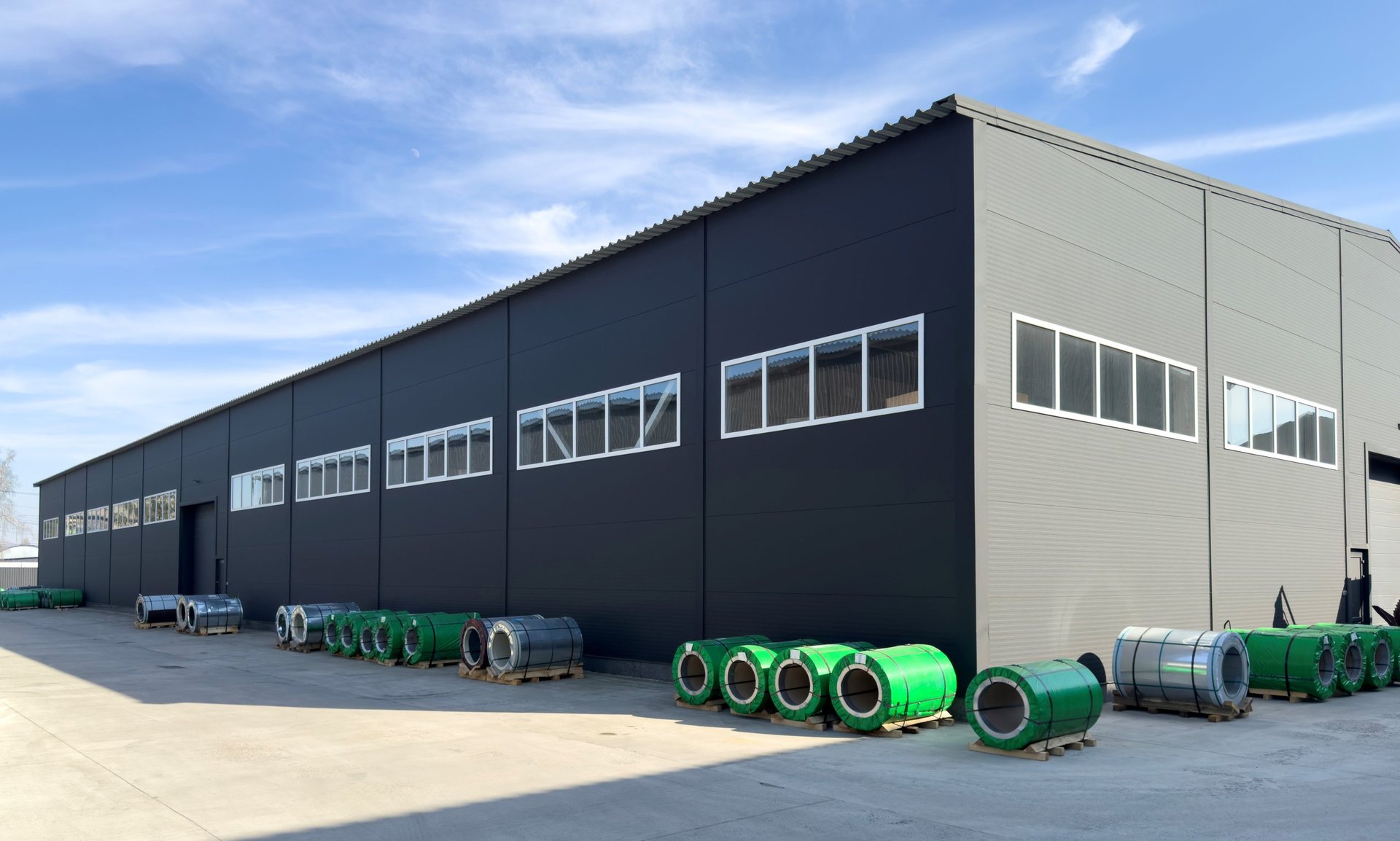
Identification and packing are part of the evidence chain, not an afterthought. Agree the marking and packing basis before dispatch — this image illustrates the verification step and does not imply stock position or shipment availability.
Next action: name the standard on the order document and list the documents you require alongside it. Every row above is then confirmed against those two things rather than negotiated at goods-in.
Commercial & Logistics
What the quotation is built from
Specification decides what can be supplied. These inputs decide what it costs to get there. Leaving any of them open is what makes two offers incomparable.
Quotation inputs
- Standard with edition, and the designation exactly as written.
- Product form, thickness with basis, dimensions with tolerance basis.
- Surface condition, quantity with unit, and the weight basis used.
- Destination, delivery window and the documents you require.
Packing and documentation
- Packing method and identification marking are agreed per order and per destination.
- Handling requirements for coil and cut length differ — state the form before packing is fixed.
- Documentation set is confirmed against the destination route, not assumed from the specification.
Delivery variables
- The Incoterm and its named place are agreed together. One without the other is not quotable.
- Who holds buyer and importer responsibility is confirmed before the movement is priced.
- Inland movement from the port or border to the actual receiving point changes the figure.
Unknowns are left open on purpose
This page makes no claim about price, stock position, lead time, origin, port or delivery performance. All hot rolled steel sheet pricing is Price on request. Those inputs are confirmed against your specific requirement and destination when the enquiry is worked.
Next action: fix the Incoterm and its named place before requesting a delivery figure. It is the single input that most often changes a quotation between two otherwise identical enquiries.
Application Paths
Where hot-rolled sheet is specified, and what it has to survive
Each path below is framed by the operating condition and the failure risk it creates — not by a general list of industries. The related pages carry the detail; this section decides which one applies to you.
How the operating requirement maps to the order
| Operating requirement | Drives this field | Fit limit to check |
|---|---|---|
| Load-bearing duty | Designation, standard and the property set your design assumes | This page does not perform structural design or load-rating. The property requirement is confirmed against your named standard. |
| Welded assembly | Composition and the weld procedure your shop will qualify | Weld procedure qualification remains your engineering decision — the rolling route alone does not establish it. |
| Exposed or coastal service | Corrosion protection — a separate selection, not the sheet itself | Where protection governs, a coated route is the correct comparison rather than a change of grade. |
| Visible or painted finish | Surface condition and its acceptance basis | Where a consistent finish is the requirement, the cold-reduced route is the correct comparison. |
Next action: name the operating condition first, then the field it drives. That pairing tells you whether this page is the right one before any specification detail is settled.
Destinations
GCC destination planning for hot rolled steel sheet
Every destination below is an active planning route. Each collects a different set of inputs — buyer and importer responsibility, document verification, delivery location and the customs question that follows — before a delivery can be quoted.
 steel sheet supplier UAEOnshore delivery and local clearance inputs usually govern. Confirm the receiving point and who holds import responsibility before the movement is priced.Plan a UAE delivery
 steel sheet supplier Saudi ArabiaLand-border or seaport entry changes the document set. Confirm the named place and the importer of record, then verify the conformity documents the destination requires.Plan a Saudi Arabia delivery
 steel sheet supplier QatarPort of discharge and inland movement drive the delivery inputs. Confirm the delivery point and the Incoterm named place together — one without the other is not quotable.Plan a Qatar delivery
 steel sheet supplier KuwaitDestination documentation and clearance responsibility are the usual friction points. Identify the importer and the required origin documents before the shipment is fixed.Plan a Kuwait delivery
 steel sheet supplier BahrainA short-sea movement with its own documentation and delivery-location inputs. Confirm the receiving point and the clearance owner for the consignment.Plan a Bahrain delivery
 steel sheet supplier OmanPort and free-zone delivery points lead to different logistics inputs. Confirm the delivery location and the importer or clearance responsibility before requesting a delivery figure.Plan an Oman delivery
What a destination route changes — and what it does not
- Changes: buyer and importer responsibility, which documents are verified and by whom, the delivery location, the Incoterm named place and the customs question that follows.
- Changes: the inland movement from the port or border to the actual receiving point.
- Does not change: the designation, the standard, the surface condition or the dimensional tolerance basis. Those are fixed by the order, not the destination.
- Does not change: the fabrication route the sheet has to survive. A destination route is a planning path, never an alternative specification.
No branch, warehouse, live stock or guaranteed service presence is claimed in any country simply because a route exists. Each route reflects the commercial and customs pathway, not an inventory position.
Next action: open the destination route that matches your delivery and confirm the two inputs that most often change a quotation — who holds importer responsibility, and exactly where the material is received.
Related Routes
Where to go next, and why you would go there
Each destination below answers a different question. Use the grouping to pick the right one rather than working through them in order.
Product category
Compare against the parent category
Go here when the rolling route is still open. The parent category carries every sheet form — carbon, coated and stainless — under one RFQ basis, which is the correct starting point when the material family has not been fixed.
steel sheet supplierTechnical reference
Get the dimensional and weight basis right
Go here when the specification fields are already settled but the numbers still need a declared basis. Both references are for stating fields correctly — neither replaces the tolerance clause in your governing standard.
Route comparison
Test the alternative routes
Go here when the governing need points away from hot-rolled — surface finish, tighter dimensional control or a material selection question. Compare on the field that actually governs your order.
Standard
Confirm the governing standard
Go here when the order has to be judged against a specific hot-rolled sheet standard and you need the designation, tolerance and surface-condition framework in one place.
astm a1011 steel sheet supplierNext action: if you already know the governing need, open the category or route that matches it. If you do not, run the route checker above first — it identifies the field that decides the answer.
Expert Insight
When is hot-rolled the correct route rather than cold-rolled or coated?
A source-backed procurement check, presented as an organisation-level technical review. It is a decision aid, not a suitability determination for any specific order.
Method — rolling-route scope check
Start from the scope and designations of the governing hot-rolled sheet standard to confirm that hot-rolled sheet applies to your product form at all. Then test the four needs that actually move the decision — surface condition, formability, dimensional tolerance and downstream finishing — against the fabrication you intend to run. Only when all four sit inside the hot-rolled route is it the correct procurement path; where any one of them does not, the comparison moves to a cold-reduced or coated route.
Primary source
ASTM A1011/A1011M-25 — Hot-Rolled Carbon, Structural and HSLA Steel Sheet and Strip
store.astm.org/a1011_a1011m-25.htmlInformation date
11 September 2026
Scope
Hot-rolled carbon, structural, HSLA and ultra-high-strength steel sheet and strip, in coils and cut lengths.
Limitations
The standard scope does not prove a specific finish, flatness, thickness tolerance, weld procedure, stock position or application approval. It establishes the framework for the product form — it does not certify your individual order.
Buyer implication
Choose hot-rolled sheet only after confirming grade or designation, dimensional tolerance, surface condition and downstream forming, welding or coating needs. Any one of those fields left unstated is enough to make the route decision unsafe — and to make two quotations incomparable.
This insight is source-backed and organisation-level. No named expert profile, testimonial or client proof is presented, because none is verified for this page.
Next action: check your order against the four needs in the method above, in that order. The first one that falls outside the hot-rolled route is the one that decides your specification.
Why It Matters
What changes when the enquiry is built this way
Each row pairs a concern buyers raise on hot-rolled sheet with the evidence that resolves it and the practical procurement outcome of supplying that evidence up front.
“Hot rolled” is written on the enquiry with no designation
The designation or grade exactly as written on the drawing, MTC or purchase order.
The enquiry is priced against a defined material instead of an assumed one — removing the most common cause of post-order dispute.
Surface condition is discovered at goods-in
The surface condition your process and any finishing step will accept, stated at enquiry stage.
Acceptance criteria are agreed before delivery, so an as-rolled surface is judged against a stated basis rather than a surprise.
Tolerance basis is left to the supplier to assume
The tolerance basis named explicitly, with the governing standard clause identified rather than paraphrased.
Offers become comparable line for line, because every supplier is quoting against the same dimensional definition.
Corrosion protection is expected from the sheet
The service environment described, and the finishing or coating step that will address it.
Protection is treated as its own selection rather than a property assumed from the rolling route, which keeps the cost aligned to the actual duty.
Delivery is implied rather than defined
The delivery location and the Incoterm named place, both explicit in the enquiry.
A delivery figure that can be quoted and held, rather than revised once the movement is understood.
This page does not grade, design, load-rate or approve any structure, component or application. It sets out the inputs that make a hot-rolled sheet enquiry complete and quotable, and it makes no superiority claim for one rolling route over another.
Enquiry to Delivery
Five stages, each with a named owner and a gate
Nothing advances on an assumption. Each stage has a required input, a defined output and a risk it controls.
| Stage | Owner | Required input | Output / evidence | Risk controlled |
|---|---|---|---|---|
| 1. Requirement | Buyer | Standard with edition, designation, thickness with basis, dimensions with tolerance basis, surface condition, quantity, destination | A written requirement that can be quoted as stated | Incomparable quotations from ambiguous wording |
| 2. Gap closure | Buyer and commercial desk | Every field the route checker flagged as missing or unusable | A closed specification, with each field explicit | Sourcing against an assumption that later proves wrong |
| 3. Sourcing and verification | Commercial desk | The closed specification, plus the document set the buyer requires | Confirmation of availability against the exact requirement, and the supporting documents reviewed against the stated standard | Material offered against a different definition of the same product name |
| 4. Quotation | Commercial desk | Incoterm and named place, delivery window, packing and marking basis | Commercial terms, delivery basis and documents quoted together against the defined requirement | Terms revised after the movement is understood |
| 5. Release and delivery | Commercial desk and buyer | Confirmed order against the quoted specification and destination route | Consignment released and documented for the agreed route, traceable to the order | Documentation gaps discovered at the destination rather than at release |
Next action: confirm which stage your enquiry is actually at. Most delays trace back to stage two — a field that was never closed before sourcing began.
FAQ
Hot rolled steel sheet — questions buyers ask
Post-decision questions from procurement and engineering buyers, answered the same way each time.
What exact specification fields should an RFQ for Hot Rolled Steel Sheet include?
State six fields independently: the grade or designation, the governing standard with its edition, the thickness with its basis and unit system, the dimensions with their tolerance basis, the surface condition, and the fabrication route including welding. Add any downstream coating or finishing requirement, the quantity with its unit, the destination, the delivery window and the documents you require. A grade alone is not a specification, and the phrase hot rolled is not one either.
Which standard or designation should control acceptance of Hot Rolled Steel Sheet?
The standard your order names, together with the edition in force at the time of order. Acceptance is judged against what the buyer specifies, so the buyer has to name it. Different standard systems express designations, tolerances and surface conditions differently, so state the standard and confirm its current edition at the source before the order is placed rather than relying on a remembered figure.
How should thickness, dimensions and tolerances be stated for Hot Rolled Steel Sheet?
State thickness and dimensions in one unit system, declared explicitly, and never mix SI with inch-pound. Give each a tolerance basis. Where the tolerance is set by a standard clause rather than by agreement, name the standard instead of quoting a number. Confirm the governing tolerance clause at the source, since it differs between standard systems, product forms and thickness ranges.
Which finish, coating, forming or service-condition details can change the Hot Rolled Steel Sheet selection?
Four move the decision most: surface condition, because as-rolled surface is a normal consequence of the hot-rolling route rather than a defect; the fabrication route including welding and forming, because it constrains which designations will work; any downstream coating or finishing, because that process has its own surface and flatness expectations; and the service environment, because corrosion protection is not established by the hot-rolled designation alone. Each is a separate order field.
Which certificates or verification documents should be requested for Hot Rolled Steel Sheet?
Request the mill or test certificate against the standard you declared, confirmation of the thickness and dimensional tolerances ordered, and material identification traceable to the order. Add origin documentation where the destination requires it, and agree packing and identification marks before dispatch. If the project requires third-party inspection, treat it as part of the order rather than something requested afterwards.
All hot rolled steel sheet pricing is Price on request. Submit the requirement through the RFQ form and the enquiry is worked against the exact fields you state.
Qualified RFQ
Send your hot rolled steel sheet requirement
The more of the payload below that is explicit, the more precisely the enquiry can be answered. Fields you leave open are identified and closed before sourcing begins.
Free, no-obligation quotation. All hot rolled steel sheet pricing is Price on request — no figure is published on this page, and no response time or delivery performance is promised here.
Minimum RFQ payload
- Governing standard with its edition, and the designation
- Product form — coil or cut length
- Thickness with basis, dimensions with tolerance basis
- Surface condition and any finish or coating requirement
- Quantity with unit and weight basis
- Destination, Incoterm named place and delivery window
- Documents required and any third-party inspection scope
Contact Commercial Department
Email: sales@noordeirasteel.ae
WhatsApp / Mobile: +971 56 398 0860
Mon – Sat: 8.00 AM – 6.00 PM | Sunday: Closed
Next action: send the payload above as it stands on your specification document. A complete enquiry is the only one that can be quoted without a round of clarification.