
Steel Sheet · Material
Mild Steel Sheet Supplier
Treat 'mild steel sheet' as an informal starting description, not the final grade. Confirm hot- or cold-rolled route, applicable standard/designation, thickness/tolerance, finish and fabrication requirements before quoting.
Send standard, grade, size, quantity, destination and required delivery date. Commercial response is confirmed on quotation.
- What the term does not fix
- The rolling route — hot-rolled and cold-rolled sheet are different products with different surface, tolerance and forming behaviour.
- What it does not name
- A designation or grade number inside a standard. 'Mild' describes a carbon level in general usage, not an orderable line item.
- What it does not set
- Thickness tolerance, flatness, edge condition and surface class — each of which governs whether the sheet passes your goods-in check.
- What it does not cover
- Finish or coating, welding and forming requirements, service environment and the documents you will accept at handover.
Decision implication: an enquiry that reads only “mild steel sheet” will return quotes that are not comparable, because each supplier resolves the route, designation and tolerance package differently. Name the standard and the tolerance basis before you ask for numbers.
GCC Destination Planning
Every GCC market resolves the same specification differently
The product requirement does not change across the Gulf, but the import documentation, delivery-location inputs and customs questions do. Use the destination route that matches the delivery point before you price the enquiry.
 United Arab Emirates
Confirm the delivery emirate and free-zone status, because the receiving entity and the clearance route differ between mainland, free-zone and project-site deliveries.
Confirm whether the end user requires a mill certificate countersigned by an approved inspection agency, since UAE project specifications frequently name one.
steel sheet supplier UAE Saudi Arabia
Confirm the consignee registration and the port of entry, because inland delivery from Dammam or Jeddah changes the logistics assumption materially.
Confirm whether the project requires conformity documentation tied to the applicable Saudi technical regulation before the material is released to site.
steel sheet supplier Saudi Arabia Qatar
Confirm the delivery point and whether the material is destined for a listed project, as this affects the documentation pack requested at the port.
Confirm the acceptable certificate format and whether legalisation or attestation is required on the mill documents.
steel sheet supplier Qatar Kuwait
Confirm the receiving authority and the inland delivery address, since the last-mile leg is usually the largest variable in the delivered-cost assumption.
Confirm the number of original documents the consignee requires and whether copies are acceptable for pre-clearance.
steel sheet supplier Kuwait Bahrain
Confirm whether the shipment moves directly or via a mainland road leg, because the customs entry point determines the documents needed.
Confirm the certificate of origin requirements and whether the consignee needs the documents in a specific language.
steel sheet supplier Bahrain Oman
Confirm the port of discharge and the onward delivery distance before the delivery window is committed, as the inland leg dominates the schedule risk.
Confirm whether the consignee requires inspection at load port in addition to the mill certificate.
steel sheet supplier OmanWhat destination planning does not establish
- It does not confirm that any market is served, that stock is held for it, or that a delivery schedule can be met.
- It does not fix an Incoterm, a freight rate, a duty or a tax treatment — each is confirmed at quotation against the actual consignee.
- It does not replace the consignee's own customs classification or import-licence responsibility.
- It does not convert a destination preference into a product specification — the sheet requirement is resolved separately.
Risk control: resolve the product specification first and the destination second. If you reverse that order, the destination paperwork will be built around a material line that may still change.
What the buyer defines
- The consignee entity, exactly as it is listed for import purposes.
- The delivery location or port, not simply the country.
- The Incoterm you intend to buy on and who clears the destination entry.
- The documents the consignee's clearance agent requires in practice.
What the supplier confirms
- Whether the required document set can be issued for the ordered specification.
- The origin of the material offered, confirmed in writing at quotation.
- Any restriction that applies to the destination or the consignee type.
- The delivery window that can actually be committed against, once the route is fixed.
What stays with the importer
- Customs classification of the goods and any duty or tax treatment.
- Import licensing and the consignee's own registration obligations.
- Conformity or approval processes required by the destination authority.
- Final acceptance of the delivered material against the ordered specification.
Evidence requirement: every destination-specific claim in your enquiry — port, consignee, document set — should be traceable to a written instruction from the buyer rather than to an assumption made at quotation stage.
Commercial Inputs
What the quotation depends on, and what it will not contain
A mild steel sheet quotation is assembled from a small set of inputs. If any of them is missing, the supplier fills the gap with an assumption and the quotes you receive stop being comparable.
| Quotation input | What it resolves | What remains open |
|---|---|---|
| Price | Commercial basis only — unit rate or lump sum against the stated quantity and Incoterm. | No price is stated on this page. Price on request against a completed specification. |
| Availability and lead time | Whether the route and designation can be supplied within the required delivery window. | Confirmed at quotation only. No stock position or lead time is implied here. |
| Origin | The country of manufacture, which affects documentation, customs treatment and any project approval list. | Not stated. Origin is a quotation-time input and must be confirmed in writing. |
| Certification and approval status | Whether the documents you require can be issued and by whom. | Scope-dependent. Confirm the exact document before award, not after. |
| Incoterm and customs inputs | Where risk and cost transfer, and which party clears the destination entry. | Confirmed against the consignee. No Incoterm, duty or tax treatment is assumed here. |
Packaging and handling inputs
State whether the sheet ships flat, on skids or in strapped bundles, and whether edge protection or interleaving is required for the transit leg you have chosen. Packaging decisions belong in the enquiry — retrofitting them after award usually changes the freight assumption.
Scope boundaries
- This page does not state a price, a stock position, a lead time, an origin, a port or a certification status.
- It does not confirm that any market is served or that any project approval applies.
- It does not classify the goods for customs, or advise on duty or tax treatment.
Next action: complete the specification inputs before requesting commercial terms — a quotation returned against an incomplete line cannot be compared against a competing one.
Request a quote against a completed specificationWhere This Sits
The related pages that change this decision
Three groups only: the parent framework this material sits inside, the two product-form alternatives that most often replace it, and the reference material that verifies what you have specified.
The range this product sits in
Mild steel sheet is one material option inside the steel sheet range. If your enquiry is written at the range level — covering several sheet types or a mixed package — start from the parent page, which carries the shared route, standard and tolerance framework this page narrows.
steel sheet supplierDimensional verification
Once thickness, width and length are stated, the reference tables are what let you check that the delivered sheet matches the order and that the unit weight you used in the enquiry is the one the supplier used.
What these routes do not do
None of the linked routes approves a material for your application, confirms availability, or replaces the governing standard. They resolve the specification and planning questions that sit around it.
Evidence requirement: if the parent page and this page appear to disagree on a designation, the governing standard's own text resolves it — not either page.
Expert Insight
Why 'mild steel sheet' is not a purchase description
An informal-term replacement checkpoint: the everyday phrase describes a material family, while the standards that govern supply describe product routes and designations. The gap between the two is where incomparable quotations come from.
Decision question
Why is ‘mild steel sheet’ insufficient as a final purchase description?
- Method
- Compare the informal ‘mild steel’ request with ASTM A1008/A1008M cold-rolled designations and ASTM A1011/A1011M hot-rolled designations, then require the buyer to choose the process and product specification that matches the fabrication need rather than the material nickname.
- Primary source
- ASTM A1008/A1008M-26 — Cold-Rolled Steel Sheet
- Information date
- 11 September 2026. Standard editions change; confirm the current edition and any supplementary requirements applicable to your order before you cite either specification in a purchase order.
- Scope
- Cold-rolled carbon, structural and HSLA steel sheet designations used to turn a broad low-carbon request into a controlled order.
- Limitations
- The everyday term ‘mild steel’ has no single universal grade, mechanical-property set, surface class or tolerance package. This note does not reproduce the standards’ tables, does not establish that any particular designation is stocked, and does not approve a material for any application.
Buyer implication: do not approve an RFQ line that reads only ‘mild steel sheet’. Capture the standard or designation, the rolling route, thickness and tolerance, finish, forming and welding needs, and the documents you will accept.
Primary source
ASTM International publishes the product specifications that define cold-rolled and hot-rolled sheet designations. The standard itself is the authoritative text; this page cites it rather than restating its values.
How this note is reviewed
This is an organization-level technical review note prepared against the cited published specification. It is not a named individual’s opinion, and no personal profile is presented. Technical queries route through the commercial department.
Next action: open the standard, identify the designation that matches your forming and service requirement, and enter that designation — not the phrase ‘mild steel’ — into your enquiry line.
| Informal wording | Orderable replacement | Why the substitution changes the order |
|---|---|---|
| “Mild steel sheet” | Governing standard plus designation | The standard fixes the property and inspection basis; the designation fixes the actual line the mill produces to. |
| “Standard sheet thickness” | Nominal thickness with unit and tolerance basis | The permitted deviation is a function of the ordered thickness and width, so a nominal figure alone is not an acceptance criterion. |
| “Normal finish” | Surface condition or coating stated against the standard | Surface condition is judged by the buyer at goods-in; leaving it unstated transfers that judgement to the supplier. |
| “Mill certificate” | Document type, issuing party and scope | The certificate verifies only what the order specified — an unspecified document verifies an unspecified requirement. |
Buyer Concerns Mapped
Four procurement concerns, and the evidence that resolves each
These are the concerns buyers actually raise on a mild steel sheet enquiry. Each one is answered by a checkable artefact rather than by an assurance.
| Buyer concern | Verifiable evidence | Procurement outcome |
|---|---|---|
| The quotes we receive are not comparable | A written specification naming the standard, designation, thickness with tolerance basis, finish and quantity unit. | Every supplier prices the same line, so the comparison is commercial rather than definitional. |
| We cannot tell whether a substitution was made | Identification traceability from the bundle markings through to the certificate you accepted at order. | Goods-in inspection verifies the delivered material against the ordered specification, not against a description. |
| The tolerance question only appears after delivery | The tolerance basis stated explicitly in the enquiry, with the governing standard named for the ordered thickness and width. | Dimensional acceptance is settled before award rather than argued at site. |
| The documents may not satisfy our approver | The acceptable document type, issuer and format named in the RFQ and confirmed in the order acknowledgement. | Certification is verified as part of the order, not discovered as a gap at handover. |
The specification is the deliverable
The most useful output of this page is a written line you can paste into a purchase order. Commercial terms follow from it; they cannot substitute for it.
Gaps are shown, not filled
Where a value depends on the governing standard or on supplier confirmation, this page says so and names the verification step instead of supplying a number.
Accountability stays explicit
Material selection for a structure or a pressure duty remains the specifying engineer’s responsibility. This page supports the purchasing description, not the design approval.
Evidence requirement: each concern above is resolved by an artefact you can ask for and check — a written specification, a traceable identification chain, a stated tolerance basis or a named document. An assurance without the artefact does not resolve the concern.
Process
From enquiry to delivery, stage by stage
Each stage below names the buyer concern it resolves, the input required to move forward, the evidence produced, and the risk if the stage is skipped.
| Stage | Required input | Evidence or output | Risk if skipped |
|---|---|---|---|
| Requirement definedBuyer / specifying engineer | Fabrication intent, service environment, standard and designation, thickness and tolerance basis. | A written specification line that no longer relies on the phrase 'mild steel'. | Quotes arrive against different assumptions and cannot be compared. |
| Enquiry resolvedCommercial department | Quantity with unit, destination, delivery window and the documents you will accept. | Clarification of anything the specification left open. | The open items get filled by assumption on the supplier side. |
| Sourcing and confirmationSupplier | Agreed specification, quantity and delivery window. | Confirmation of what can be offered against the stated route and designation. | A route or designation is substituted without a written record — this is where origin and availability must be confirmed in writing. |
| Order and documentationBuyer and supplier | Purchase order referencing the standard, designation and tolerance basis. | Order acknowledgement recording the specification and the document type to be issued. | The certificate type or issuer is disputed at handover. |
| Production and inspectionSupplier / inspection body | The inspection basis agreed at order. | Inspection records and the certificate you specified. | A documentation gap is discovered after the material has been produced. |
| Dispatch and receiptBuyer / consignee | Delivery point, Incoterm and the receiving checklist. | Goods-in verification against the ordered specification. | A dimensional or identification discrepancy is raised too late to correct. |
Risk control: the two stages that most often stall an enquiry are requirement definition and document agreement. Both are settled by writing the standard, the tolerance basis and the acceptable document into the enquiry before it is sent.
Composition
Why chemistry is a purchasing control, not a label
Low-carbon sheet is bought against a specification that constrains the chemistry and the properties together. The composition question that matters commercially is not what the steel contains, but which limits your order is placed under and how they will be verified.
The four-step composition control chain
Name the standard that carries the limits
The chemical limits are defined by the product specification you order under, and they differ between the cold-rolled and hot-rolled route specifications. The standard is the source, not this page.
Name the designation inside that standard
Within a standard, different designations carry different property and chemistry bases. Selecting the standard alone still leaves the orderable line undefined.
State how it will be verified
Decide whether chemistry is verified by the mill's own analysis and reported on the certificate, or whether independent verification is required — and price that decision into the enquiry.
Confirm the values against the standard
The permitted ranges are read from the current edition of the governing standard for the exact designation and product route you ordered. They are not quoted from memory or from a summary.
What composition decides downstream
- Formability — whether the sheet tolerates the bend radius and forming severity your process applies.
- Weldability — whether the joining process your fabricator uses produces a sound joint without additional measures.
- Surface and coating behaviour — how the sheet accepts and holds a paint or coating system.
- Certificate content — which test results the mill reports and therefore what your approver will see.
Evidence warning: no chemistry or mechanical value is published on this page. Any figure you rely on must come from the current edition of the governing standard for your designation, or from the certificate issued against your order.
Next action: write the standard and designation into the enquiry line, and state whether a certificate reporting the tested values is required.
| Control point | Owner | Evidence produced |
|---|---|---|
| Standard selected | Buyer / specifying engineer | The named standard and edition cited in the enquiry. |
| Designation selected within the standard | Buyer / specifying engineer | The orderable designation written into the RFQ line. |
| Verification method agreed | Buyer and supplier at quotation | A written record of whether chemistry is mill-reported or independently verified. |
| Values confirmed against the standard | Buyer at order review | The current edition's requirements table checked for the exact ordered designation. |
| Certificate matched to the delivered bundle | Buyer at goods-in | Identification traceability from the bundle marking through to the certificate. |
Service Limits
Corrosion and temperature: the two conditions that change the product
These are the two service conditions most often left out of a mild steel sheet enquiry and most often responsible for a material that is technically correct yet unsuitable on site.
Corrosion exposure
Uncoated mild steel sheet has no inherent corrosion resistance. Where the service environment includes moisture, salt, humidity or condensation, the selection question is not which mild steel designation to use but what protective system the sheet will carry.
- Indoor, dry, sheltered
- An uncoated sheet is normally acceptable where the environment is genuinely dry and the appearance requirement is not controlling.
- Humid, coastal or outdoor
- A protective system becomes part of the specification. Either state the coating system separately in the enquiry, or move to a coated or prepainted product where that suits the process.
- Chemically aggressive
- Mild steel sheet is generally not selected on the sheet designation alone here. Confirm whether a different material family or a lining is required before the enquiry is priced.
Temperature
A general sheet designation does not by itself establish behaviour at either end of the temperature range. State the service temperature with its unit so the requirement can be checked rather than assumed.
- Elevated service temperature
- Strength retention and scaling behaviour above ambient are design questions. Confirm the design basis with your engineer and state the maximum temperature and duration in the enquiry.
- Low-temperature service
- Low-temperature toughness is not implied by a general low-carbon sheet designation. Where the service temperature is low, state whether impact testing is required and against which standard.
- Ambient-range service
- Where the service temperature sits in the normal ambient band and no impact or elevated-temperature design basis applies, the general designation is normally used — provided the corrosion question above has been answered separately.
| Service condition | Source or verification requirement | Resulting RFQ field |
|---|---|---|
| Atmospheric exposure class | Defined by the buyer from the actual service location — not inferred from the destination country. | Service environment and required protective system. |
| Coating system, where required | Coating type, coating mass and the applicable coating standard verified independently of the substrate standard. | Substrate standard plus a separate coating specification. |
| Maximum service temperature | Provided by the specifying engineer with an explicit unit and duration. | Maximum temperature and whether a design basis applies. |
| Minimum service temperature and impact requirement | Confirmed against the governing standard's impact-testing provisions for the ordered designation. | Minimum service temperature and impact-test requirement. |
Decision implication: if the service environment requires a protective system or the temperature falls outside the ambient band, the product selection changes — and it changes before the standard is chosen, not after the material arrives.
Selection Logic
When mild steel sheet fits, and when the route must change
Fit is decided by the fabrication and the service condition, not by the material family. The two lists below are the honest boundary.
Where it fits
- General fabrication where the sheet is cut, drilled and welded into a non-critical assembly.
- Formed components where the bend severity is within what the ordered designation supports.
- Structural or bracketry work where the design basis is provided by the engineer and the sheet carries it.
- Enclosures and cabinets where the sheet is subsequently painted or coated.
- Applications where the material will operate in a dry, sheltered environment.
Where the route must change
- Where a surface appearance or paint finish is the controlling requirement and the hot-rolled surface is not acceptable.
- Where the service environment requires corrosion resistance — the sheet carries a coating system, or the product family changes.
- Where the service temperature falls outside the ambient range and a design basis applies.
- Where the forming severity exceeds what the ordered designation supports and a more formable specification is needed.
- Where a hygiene, pressure or structural-approval regime applies — this becomes an engineering specification, not a material selection.
hot rolled steel sheet supplier
The usual basis for general and structural fabrication, where the surface is not the controlling requirement. Compare it when cost and availability matter more than finish.
Compare the routecold rolled steel sheet supplier
The route normally specified where a smoother surface, tighter thickness consistency or better formability is the deciding factor. Compare it when finish drives the decision.
Compare the routecarbon steel products
Mild steel sheet is a low-carbon product form. This cross-product reference shows the wider carbon steel range the decision sits inside — useful when your requirement spans more than one product form.
See the wider rangeNext action: if the deciding factor is surface, formability or tolerance consistency, open the route page that matches and confirm the specification before you finalise the standard.
Decision Tool
Mild-Steel Request Normalizer
Replace the informal wording with orderable fields. The tool shows what is still missing before it shows a result, and it will not fill a gap on your behalf.
No result yet
Enter the required fields on the left. This tool will not produce a result from an empty form, and it will not supply a default for a field you have not decided.
Reference material for the fields above
- steel sheet gauge chartBounded comparison — gauge is a convention, and its meaning depends on the table referenced. Convert to a nominal dimension before ordering.
- steel sheet weight chartBounded comparison — unit weight follows the governing standard for the ordered thickness and width, so use it to check an estimate rather than to set one.
Next action: copy the summary into your enquiry, then transfer it to the RFQ target. The transfer carries only the specification fields you entered — no price, stock, lead time or certification is prefilled.
Specification
Standards, grades, dimensions and service conditions
Each table below connects a specification choice to the purchasing consequence. Values are not restated here — the governing standard is the authoritative source and the evidence requirement is shown alongside every row.
Evidence warning: no numeric chemistry, mechanical, tolerance or dimensional value is published on this page. Every value governing your order must come from the current edition of the standard you name, for the exact designation and product route — or from the certificate issued against your order.
Standard and designation control
| Item | Applicability / limitation | Source / verification | RFQ field |
|---|---|---|---|
| astm a1008 steel sheet supplierDirectly applicable to the cold-rolled route. | Applies to cold-rolled sheet only. Naming it while ordering a hot-rolled product is a conflict, not a preference. | The published standard, current edition, for the exact designation ordered. | Governing standard and designation. |
| astm a1011 steel sheet supplierDirectly applicable to the hot-rolled route. | Applies to hot-rolled sheet only. Surface condition differs from the cold-rolled route and may not suit visible applications. | The published standard, current edition, for the exact designation ordered. | Governing standard and designation. |
| Designation within the standard | The standard alone does not define the orderable line — the designation carries the property basis. | The published standard's designation table for the product route. | Designation or grade. |
| Supplementary requirements | Some projects invoke additional requirements beyond the base specification; they change inspection and cost. | The project specification and the standard's supplementary section. | Any supplementary requirements to be invoked. |
Size and unit-weight control
| Item | Applicability / limitation | Source / verification | RFQ field |
|---|---|---|---|
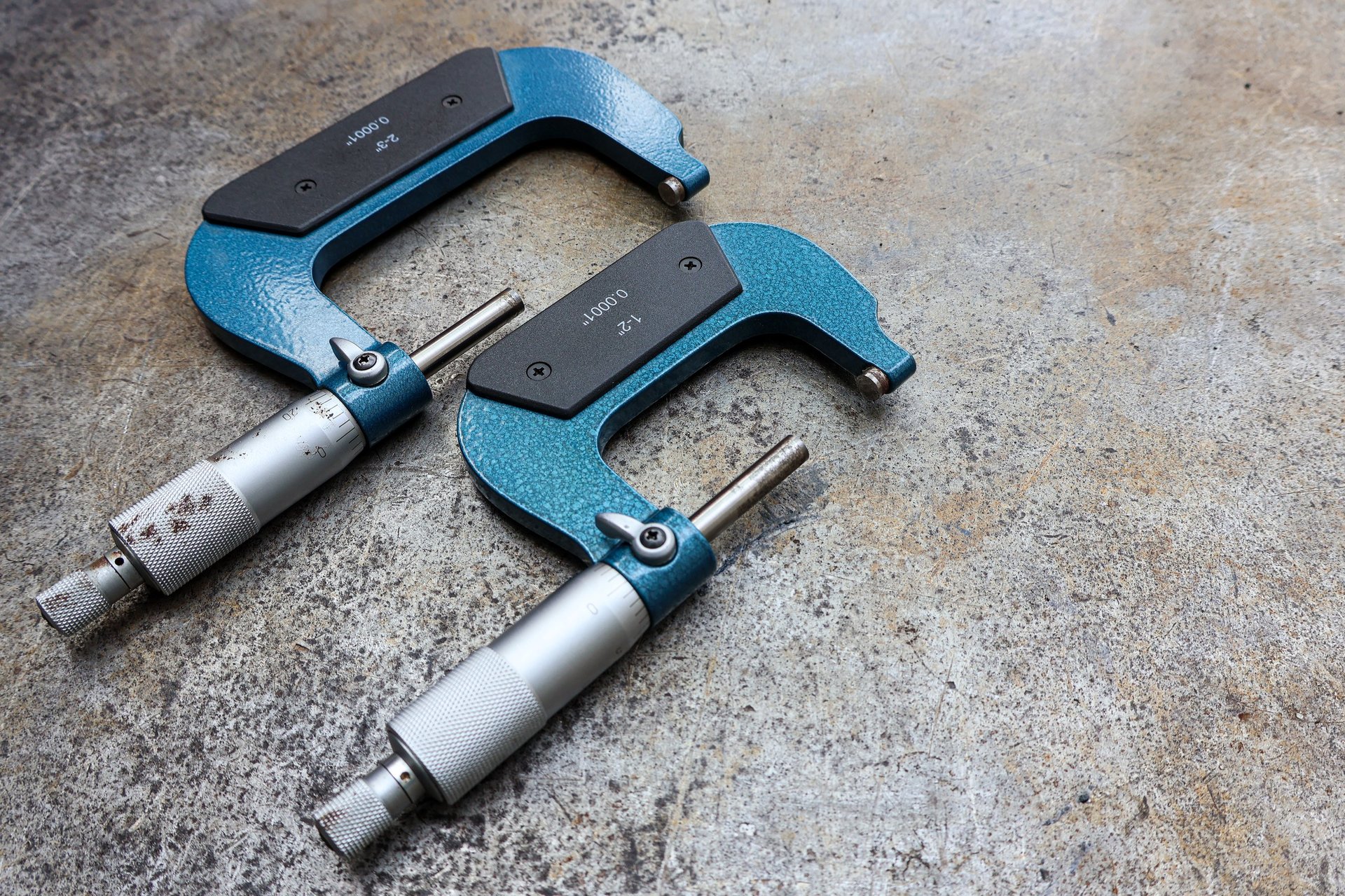
| Nominal thickness | Must carry an explicit unit. A gauge reference is a convention, not a dimension, and does not identify the ordered thickness on its own. | The standard's thickness table for the ordered width, in the unit you have declared. | Nominal thickness with unit. |
| Width and length | State as ordered dimensions or as a cut-to-length requirement. Edge condition and flatness belong in the same line. | The standard's dimensional provisions plus any buyer-specified limits. | Width, length and edge requirement. |
| Thickness tolerance basis | The permitted deviation depends on the standard, the ordered thickness and the ordered width — it cannot be inherited from a different size combination. | The standard's tolerance table for the exact ordered combination. | Tolerance basis. |
| Unit weight | Follows from the nominal dimensions under the governing standard. Discrepancies between the quoted and measured weight are normally dimensional, not material. | The standard's basis, cross-checked against the reference chart below. | Quantity unit and the basis used for the weight estimate. |
Chemical and mechanical properties
| Item | Applicability / limitation | Source / verification | RFQ field |
|---|---|---|---|
| Chemical limits | Defined per designation within the standard. They are not interchangeable between the cold-rolled and hot-rolled route specifications. | The standard's chemical requirements table for the ordered designation, or the mill certificate against your order. | Designation plus the certificate requirement. |
| Mechanical properties | Tensile and yield bases differ by designation and by product route. A value from one designation does not describe another. | The standard's mechanical property table, or the tested values on the certificate. | Designation plus whether tested values are required on the certificate. |
| Formability basis | Where forming severity is high, the designation selection is driven by the forming requirement rather than by a general purpose grade. | The standard's designation definitions plus your own forming trial or the fabricator's assessment. | Forming requirement and severity. |
| Impact or special testing | Only applies where the service condition or the project specification invokes it; it changes the inspection scope and cost. | The invoked supplementary requirement in the governing standard. | Test requirement and temperature basis. |
Decision implication: the standard and the designation together define the orderable line. Selecting one without the other leaves the supplier to choose the remaining half.
Verification
Quality, testing and documentation
The documents you accept at handover define what has actually been verified. Name them at enquiry stage — the document set is part of the specification, not an administrative afterthought.
| Document requested | What it verifies | When required | What remains quotation-dependent |
|---|---|---|---|
| Mill test certificate | That the material was produced to the ordered specification and that the tested values fall within it. | By default on any order where the specification names a standard. | Issuing entity, format and language are confirmed at quotation. |
| Inspection certificate | That an inspection body verified the material against the stated basis, where the buyer's approver requires independent confirmation. | When the project or the end user requires third-party inspection. | Inspector, scope and cost are quotation-dependent. |
| Dimensional inspection record | That thickness, width and length measured at inspection fall within the tolerance basis you specified. | Where the tolerance basis is the acceptance criterion at goods-in. | Sampling basis and recording format confirmed at order. |
| Identification traceability | That the delivered bundle corresponds to the certificate you accepted — the link that makes a substitution detectable. | On every order, including repeat orders. | Marking method and what must remain legible on receipt. |
| Destination documentation set | That the consignee can clear and accept the material at the destination. | Where the goods move across a border. | Origin, certification scope and any legalisation requirement are confirmed at quotation. |
Evidence gate
Before the order is placed, the buyer should be able to answer three questions: which document will be issued, who will issue it, and what will be done if it does not arrive in the agreed form. If any of the three is unanswered, the documentation requirement is not yet specified.
Certification limits
A certificate records what was tested against the specification that was ordered. It does not approve the material for your application, does not confirm the material is in stock, and does not extend to any property outside the scope of the standard invoked.
Risk control: a certificate is only as useful as the specification it was issued against. If the RFQ line says ‘mild steel sheet’, the certificate will confirm compliance with a specification nobody actually agreed.
Next action: name the document type and the issuing party in the RFQ, and confirm both in the order acknowledgement.
Applications
Operating conditions map the application to the specification
An application name is not a specification. Each route below is entered through the operating condition that actually drives the material decision, so the specification follows from the requirement rather than from the label.
| Operating requirement | What it drives | Fit limits |
|---|---|---|
| Cutting, drilling, welding and forming into a general assembly | A general-purpose sheet designation under the route specification that matches the rolling process, with the forming severity stated. | Not suitable where forming severity is high or where surface appearance is the acceptance criterion. |
| Visible painted enclosure or cabinet panel | A route that delivers an acceptable surface for coating, with the surface requirement written into the specification alongside the standard. | Hot-rolled surface condition may not meet a visible-finish requirement without additional preparation. |
| Ducting and air-handling components | A sheet that forms and joins consistently, with the coating or finish decision taken separately from the substrate decision. | Where the duct is exposed to moisture or a washdown environment, the corrosion question is answered by the coating system, not the designation. |
| Structural or load-bearing use | An engineering specification with a stated design basis — the material is selected to satisfy it. | Material selection for a structural duty is the engineer's determination; this page supports the purchasing description only. |
steel sheet for fabrication
For buyers whose requirement is defined by cutting, forming and welding operations rather than by a service environment. State the forming severity and the joining process.
Open the routesteel sheet for enclosures
Where surface condition, flatness and coating adhesion are the acceptance criteria rather than the mechanical basis. Compare the route before fixing the standard.
Open the routesteel sheet for hvac
Where forming consistency and the coating decision dominate, and where the exposure of the finished component changes the finish requirement rather than the substrate.
Open the routeNext action: start from the operating condition that decides acceptance in your application, then write the standard that supports it. Do not start from the application name alone.
Failure risks by operating condition
- Surface not as expected — arises when the surface requirement was never written into the order and is judged only at delivery.
- Forming cracks — arise when the forming severity exceeds what the ordered designation supports.
- Coating adhesion problems — arise when the surface condition was not specified alongside the coating system.
- Corrosion appearing early — arises when the environment required a protective system that the enquiry never mentioned.
Selection implications
- When the operating condition names a surface or appearance criterion, the route question comes before the standard question.
- When the operating condition names an environment, the coating or product-family question comes before the designation question.
- When the operating condition names a load or pressure duty, the specification becomes an engineering deliverable rather than a purchasing description.
- When the operating condition is purely process-driven, the general-purpose route is normally the correct starting point.
Buyer FAQ
Questions that come up after the material decision
These are the questions buyers raise once the specification work has started — not basic definitions of what steel is.
What exact specification fields should an RFQ for Mild Steel Sheet include?
State the product form (sheet), the rolling route, the governing standard and designation, thickness with tolerance basis, width and length, finish or coating, quantity with unit, destination and required delivery window, and the documents you will accept at handover. An RFQ line that reads only 'mild steel sheet' cannot be quoted comparably because each supplier will assume a different route and tolerance package.
Which standard or designation should control acceptance of Mild Steel Sheet?
'Mild steel' is not itself a designation. The controlling specification is the standard you name and the designation within it, together with the product route that standard applies to. The buyer should select the standard that matches the fabrication and service need, then confirm in the order that the standard, its edition and any supplementary requirements govern inspection. Where the applicable table must be consulted, confirm the exact designation and edition directly against the published standard before the order is placed.
How should thickness, dimensions and tolerances be stated for Mild Steel Sheet?
Give thickness as a nominal value with an explicit unit and state the tolerance basis separately, because the permitted deviation depends on the standard, the ordered thickness and the ordered width. State width and length as ordered dimensions or as a cut-length requirement, and confirm the flatness and camber requirements at the same time. Do not mix SI and inch-pound conventions on one line. The specific permitted ranges are defined by the governing standard and must be confirmed against it rather than assumed.
Which finish, coating, forming or service-condition details can change the Mild Steel Sheet selection?
Surface condition and finish requirements, whether the sheet will be welded or formed and to what severity, whether it will be exposed to moisture, salt, chemicals or elevated temperature, and the appearance or paintability requirements all change the route and the inspection basis. Tell the supplier these conditions at enquiry stage rather than after award, because they determine whether the requirement is compatible with the route and standard you have named.
Which certificates or verification documents should be requested for Mild Steel Sheet?
Name the document you will accept before the order is placed — typically a mill test certificate or inspection certificate, a dimensional inspection record where the tolerance basis matters, and identification traceability from the bundle to the certificate. Confirm whether the documents must be issued by the mill, by an independent inspection body, or either, and whether they must be legalised or accompanied by any destination-specific paperwork. Certification scope and third-party inspection are quotation-dependent and must be confirmed case by case.
For the procurement lead
Your lever is the specification line. Once the standard, designation and tolerance basis are written, the commercial comparison becomes meaningful — and the RFQ below carries those fields forward.
For the specifying engineer
Confirm the design basis and the service temperature before the material line is issued. This page supports the purchasing description; it does not replace your design determination.
Where to go next
If a value in any answer above must come from the standard, the answer tells you the verification step rather than the number. Confirm it against the current edition before award.
Next action: take the specification fields named across these answers and write them into the RFQ below. Where an answer directs you to the standard rather than giving a value, that is the verification step — complete it before the order is placed.
Request a Quote
Request a quote for Mild Steel Sheet
Send standard, grade, size, quantity, destination and required delivery date. Use the summary from the normalizer above — it carries the specification fields and marks anything still open.
Minimum RFQ payload
An enquiry carrying these fields can be quoted against a defined line. Anything omitted is resolved by assumption.
- Governing standard or designation
- Product form (sheet)
- Rolling route
- Dimensions and tolerance basis
- Finish or coating
- Quantity with unit
- Destination
- Delivery window
- Required documents
Commercial department
- WhatsApp / Mobile
- +971 56 398 0860
- Address
- Office 3303, Churchill Executive Tower, Business Bay, Dubai, United Arab Emirates
- Working hours
- Monday – Saturday: 8.00 AM – 6.00 PM | Sunday: Closed
Decision implication: the enquiry you send determines the quotes you can compare. Price on request. No price, stock position, lead time, origin or certification status is stated or implied on this page.