
Applications · Wire Rod Mills
Steel Billet for Wire Rod Production
Billet for wire rod mills must be specified from the intended wire-rod grade family, final rod size range and downstream drawing/forming needs. Chemistry, cleanliness or defect limits where relevant, billet size/length, traceability and mill capability must be agreed; “wire rod billet” is not a universal grade.
“Wire rod billet” describes a product category, not a grade. What your mill actually needs depends on the rod specification, the size range and — most of all — what happens to the rod after it comes off the line.
Standards, grades and evidenceA rod feedstock enquiry needs all five
- The individual rod specificationYour controlling document. A general requirements standard defers to it rather than overriding it.
- Rod grade family and size rangeWhat the mill will roll, and the finished diameters the program covers.
- Downstream drawing and forming useWhat happens to the rod after rolling. This is what makes cleanliness and surface controls matter or not.
- Billet section and lengthMatched to the mill's reheating furnace and its rolling schedule.
- Heat traceability to the coilThe chain from billet heat number through the mill's record to the supplied coil identity.
No chemical composition, mechanical property or dimensional tolerance value appears on this page. Those belong to the controlled standards and to your own order documents.
Operating requirement
What a wire rod program actually demands of its feedstock
Wire rod is rolled fast and then worked hard. These are the operating realities that turn into selection criteria — and the failure each one produces when it is left out of the enquiry.
Continuous high-speed rolling
Rod mills run fast and continuously. Section and charge length have to suit a reheating furnace that is being fed without interruption, which makes feedstock geometry a throughput question rather than a one-off one.
Feedstock that technically rolls but disrupts the schedule it was bought to serve.
Surface condition carried downstream
Unlike a re-rolling pass, drawing does not remove defects — it propagates them. Surface condition that a bar mill would work out becomes a break in a drawing line.
Defects that pass intake inspection and fail at the drawing stage, far from the cause.
Reduction sequence
The finished rod diameter range sets how much work the billet has to take. A section that gives one program the right reduction may give another too little.
A section that looks right and produces rod outside the properties the program expects.
Consistency across a campaign
Rod is a volume product rolled in sustained campaigns. Chemistry variation between heats shows up as scattered downstream performance rather than a single obvious failure.
Inconsistent drawing behaviour that is hard to attribute to any single lot.
End use determining the controls
What happens after rolling decides whether cleanliness and surface controls are justified. Heavy drawing and cold heading put real demand on feedstock condition; general-purpose rod does not.
Controls specified by habit — either missing where they matter, or adding cost where they do not.
Traceability to the coil
A rod question has to trace back through the mill's record to the billet heat. That chain only exists if it was designed before production started.
A coil whose origin cannot be established, with no way to reconstruct the link.
The failure that travels furthest. A feedstock defect that reaches the drawing line has already passed every check the rod mill ran. By the time it becomes a break, the material is several processes away from the cause — which is why the controls worth specifying are the ones tied to a declared end use, not the ones inherited from the last order.
Decision tool
Wire Rod Feedstock Requirement Mapper
Start from the rod specification, not the billet label. Eight answers produce a requirement map, flag the downstream risks your end use creates, and assemble the document checklist your order actually needs.
2. Requirement map
Nothing mapped yet — six answers are still open
- Wire rod specification
- Target rod grade / family
- Final rod diameter range
- Downstream drawing / forming use
- Billet chemistry basis
- Billet section and length
The rod specification is the one to settle first, because a general requirements standard defers to it rather than replacing it.
Feedstock shortlist
Three feedstock routes, and what each settles
Registered billet choices that matter to a rod program. Each answers a different question, so read them as a set of decisions rather than a ranking — none of them substitutes for another.
Continuous casting billet
The usual feedstock form for wire rod rolling. Compare here when the casting route is settled and the chemistry basis is the open decision.
Boundary: The casting route describes how the form was produced. It sets no chemistry and no section — both are separate decisions.
continuous casting billet supplierRebar-grade billet
Compare when a program spans reinforcement and rod production and you need to see where the requirements diverge.
Boundary: Reinforcement acceptance and rod drawing demands are different controls. Suiting one does not suit the other.
rebar billet supplierCarbon steel billet
Compare when the material family is still open and no grade designation has been fixed for the rod program.
Boundary: The family narrows the field but specifies no chemistry — the rod grade decision still has to be made.
carbon steel billet supplier
Fits when
- The enquiry names the individual rod specification — not just the general standard — so the feedstock has a controlling document to be written against.
- The rod grade family and finished size range are stated, so section and chemistry can be checked against the actual reduction sequence.
- The downstream drawing or forming use is declared, which is what justifies any cleanliness or surface control you are asking for.
- Heat traceability is designed end to end, with the mill's record connecting billet heat to finished coil before production starts.
Does not fit when
- The enquiry says “wire rod billet” and names no rod specification, leaving the mill to infer what product the feedstock is meant to become.
- Surface or cleanliness controls are asked for without a stated end use, so there is no basis for deciding whether they are needed or how to inspect them.
- Traceability stops at the billet certificate, with no arrangement for carrying heat identity through to the coil.
- Section is chosen from a previous order without checking the current reheating furnace and rolling schedule.
Grade, standard & size
Which document governs, and which one just fills the gaps
Wire rod specifications nest inside each other. Getting the order of precedence right is what makes the feedstock requirements mean anything — and it is the one thing a general requirements standard is most explicit about.
The order of precedence on a rod order
Highest governing document first. Each row says what it controls and where the evidence for it lives — which is rarely on the billet certificate.
| Rank | Document | What it controls | Evidence & owner |
|---|---|---|---|
| 1 | Purchase order | The commercial and technical terms you are actually buying on | The order documents; buyer's authority |
| 2 | Drawing, where one applies | Product-specific geometry and any requirement the order references | The drawing; buyer's technical authority |
| 3 | Individual rod specification | The finished rod's own requirements, grade and test basis | Finished testing; rebar or rod mill quality function |
| 4 | General requirements standard (A510/A510M) | Defaults that apply where the documents above are silent | Fills gaps rather than overriding — it defers to them |
| 5 | Billet specification or agreed limits | The feedstock chemistry the incoming material is held to | Mill test certificate; buyer's technical authority |
Why the order barely moves. A510/A510M sits near the bottom by its own terms. It is written as a general requirements standard and explicitly defers to the purchase order, the drawing and the individual specification where they conflict. That is the single most useful thing in it for a buyer: your documents govern, and the general standard only speaks where they are silent.
Evidence warning. No chemical composition, mechanical property or dimensional tolerance value is published on this page. Those belong to the controlled standards for the rod and the billet you contract against. The table above says which document holds which requirement — not what the values in them are.
Grade and size routes for a rod feedstock
Registered paths a rod buyer commonly needs to weigh, grouped by the decision they resolve. None implies a designation transfers between standards.
Billet grades
- 3sp steel billet supplier
A grade route for a GOST-referenced program. Its applicability depends on your governing standard.
- 5sp steel billet supplier
A different grade, not an upgrade. Suitability comes from the rod product, not the number.
Section route
- 150x150 steel billet
A section route. Settling the section does nothing to settle the rod grade or the chemistry.
Grade index
- steel billet grades
The full grade index, when the chemistry basis is still the open decision.
Verification & documentation
Who confirms what, and on which evidence
A rod program generates evidence in two places: what arrived as feedstock, and what the mill did with it. Work down the table to see which is which, and who owns each one.
| Requirement | Buyer must specify | Evidence to request | Acceptance owner | Risk if missing |
|---|---|---|---|---|
| Rod specification | The individual specification and edition, plus the order that governs | The controlling documents, named in the enquiry | Buyer's technical authority | A general standard standing alone, deferring to a specification nobody supplied |
| Billet chemistry | The grade or agreed limits, and the elements the certificate must report | Mill test certificate carrying the heat analysis | Buyer's technical authority | A relied-on element missing from the analysis, with no basis to reject |
| Section and charge length | Nominal section, charge length and their tolerance basis | Dimensional record against the order | Receiving mill | Feedstock that disrupts the furnace schedule, discovered during the campaign |
| Surface condition | Quantified defect limits and the inspection basis, where the end use justifies them | Inspection record against the named basis, under agreed viewing conditions | Receiving mill | Defects that pass intake and surface as breaks at the drawing line |
| Internal quality | Whether internal controls apply, and the method by which they are assessed | The agreed record for the assessment method specified | Receiving mill | Internal defects that only appear once the rod is worked |
| Heat marking | How heat identity is marked and what it must survive | Heat number on the bundle, tied to the certificate | Buyer / mill quality function | A certificate that cannot be attached to any physical material |
| Heat-to-coil link | How the mill records which heat became which coil | Mill production record connecting heat to coil identity | Wire rod mill quality function | A coil question that cannot be traced back to its feedstock |
| Mill capability | The reduction sequence and rolling practice the mill will run | The mill's written confirmation — not a supplier certification | Receiving mill | Suitable feedstock the route cannot convert to the required rod |
| Shipment documents | Document set, language and issue timing | Certificate, packing list and documents per the Incoterm | Buyer's commercial function | Release, clearance or payment is delayed at destination |
Certification limit. Nothing here should be read as an assertion that a certificate, approval or test report is already held or issued, or that any feedstock will reach a given rod outcome. Content, issuing party and timing are settled against your order. No certificate is created here and none is implied.
Procurement & delivery
What turns a rod requirement into an order
Technical scope is only half a purchase. These are the commercial and logistics inputs a rod feedstock quotation is assembled from — and the ones a rolling campaign is usually waiting on.
Controlling documents first
Name the order, any drawing, and the individual rod specification up front. Every other line in the enquiry is written against those.
Quantity & unit
State the quantity with its unit — pieces or MT — and tie it to the campaign the feedstock is feeding rather than a standing figure.
Mass basis
Agree whether theoretical mass from nominal dimensions or actual weighbridge mass governs settlement, and the tolerance between them.
Named place / port
A named port or inland delivery place is required. A country on its own does not define the delivery obligation.
Incoterm 2020
Name the rule (EXW, FOB, CFR, CIF, DAP…). It decides who carries risk, freight and insurance at each point.
Payment & documents
State the documentary and payment requirement, and the document set the importer has to receive.
Packing, tagging & separation
Strapping, heat tagging and how multiple heats are kept apart through handling — the physical half of traceability.
Inspection scope
Which inspections apply, at whose cost, and whether witnessing is required.
Schedule against the campaign
State when the mill needs the feedstock on the ground. A rolling campaign that starts without its billet is a schedule problem, not a material one.
Quote required. Price, availability, lead time and origin are confirmed against your enquiry. They are deliberately not stated here — a figure published without a live basis would misstate what a feedstock order actually carries.
Related technical & market paths
Following the decision onward
Grouped by the task still open. If the feedstock form is the question, start with the billet types. If it is the chemistry, take a grade route. If you are still framing the enquiry, the reference material will save you a round.
Billet hierarchy
- steel billet supplier
The full billet scope — grades, sizes, standards and the wider type range.
- steel billet grades
The grade index. Designations are not interchangeable between standards.
Feedstock form
- continuous casting billet supplier
The usual form for rod feedstock. Compare when the casting route is the open question.
- rebar billet supplier
Compare where a program spans reinforcement and rod production.
- carbon steel billet supplier
The material family behind a rod feedstock, when the family is still open.
Technical resources
- steel billet specifications
Reduce specification ambiguity before the enquiry is written.
- steel billet price
Understand the commercial inputs that shape a feedstock offer before you request pricing.
Expert insight
Why should a wire rod billet RFQ name the individual finished rod specification instead of relying on a generic billet label?
Source-backed procurement decision note
What the standard is, and what that tells you
A510/A510M covers general requirements for carbon and alloy wire rods and coarse round wire. Read the title closely: it describes the product your mill produces, and it describes it in general terms. It is a downstream reference — the document the rod is measured against, not the document the feedstock is bought under.
The clause that decides how you use it
The standard explicitly defers to the purchase order, the drawing and the individual specification where they conflict. Most buyers read past that. It is in fact the most useful sentence in the document, because it tells you where the requirements actually live: in your documents, with the general standard filling in behind them. Naming the general standard alone therefore specifies nothing — you have named the fallback and omitted the thing it falls back from.
And it says nothing about billet
It is a rod standard. It sets out what the rolled product has to be; it does not describe the semi-finished input that produced it. So “wire rod billet” is a category description, not a grade. Once you name the individual rod specification, you have a target — and the billet chemistry, section, traceability and surface controls become decisions you can actually write down against it.
How that shapes the enquiry
Name the order, the drawing where one applies, and the individual rod specification — in that order of precedence. Then declare what happens to the rod after rolling, because that is what justifies any surface or internal control you are asking for. A feedstock enquiry built that way can be answered with a specification rather than a range of options.
Buyer implication. Start from rod chemistry and the downstream forming requirements, then set the billet controls your mill needs in order to deliver that product family.
Primary source
ASTM International — ASTM A510/A510M-25Method: the source scope and its order of precedence are compared against the buyer decision; what the source establishes is separated from what remains order-specific.
Scope & limitations
- Information date
- 2026-10-03
- Scope
- General requirements for carbon and alloy wire rods and coarse round wire, and its stated deference to the purchase order, drawing and individual specification.
- Limitations
- The standard is a downstream reference and is not a universal billet specification. It does not establish feedstock chemistry, billet geometry or semi-finished acceptance criteria, and it does not prove supplier inventory, price, lead time, origin, certification or market coverage.
This note is an engineering aid for framing your own specification. It is not a certificate, an inspection report or a statement of compliance.
Buyer advantages
What you can verify without asking us
Every point starts from something rod buyers actually raise with us, and ends at a check you can run without taking anything on trust. If it cannot be verified, it does not belong on the list.
“Isn't A510/A510M my specification?”
Choosing the general standard on its own raises a warning explaining that it defers to the purchase order, drawing and individual spec.
The enquiry names the document that actually governs rather than the fallback behind it.
“Do I need surface or internal controls?”
The downstream use is a required input, and each demanding end use raises its own risk flag explaining why condition matters more there.
Controls get justified by your product rather than inherited from the last order.
“Why does this section suit one rod program and not another?”
The rod diameter range is required, so section suitability is assessed against your reduction sequence rather than assumed.
Feedstock gets checked against the schedule it will actually run on.
“Can a rod question be traced back?”
Traceability is assessed as a chain running from billet heat through the mill's record to the supplied coil identity.
A partial chain is identified before production, when it can still be closed.
“Where does the billet chemistry come from?”
If the chemistry is taken from the rod specification, the mapper flags that the rod document defines the product and not the feedstock, and requires the limits be agreed separately.
The billet side of the order gets its own written limits instead of an assumption.
“Have I covered the paperwork?”
The mapper assembles a document checklist from your answers, including the items that only apply where you specified a control.
You leave with the document scope rather than discovering a gap at dispatch.
From enquiry to delivery
Nine stages, from specification to gate
From a rod specification appearing in a product plan to billet arriving at the mill. Every stage names the question being answered, the input required, who is blocked until it is done, and what slips when it runs late.
- Stage 1
Controlling documents fixed
- Buyer concern
- Which document governs this order?
- Required input
- The purchase order, any drawing, and the individual rod specification
- Output
- A defined order of precedence the feedstock can be written against
- Risk
- The general standard stands in for your product spec, and the actual requirement never gets written down
Next: Write the controlling documents into the enquiry first
- Stage 2
Downstream use declared
- Buyer concern
- What does the rod have to survive after rolling?
- Required input
- The drawing or forming process the rod is destined for
- Output
- A basis for deciding whether surface and internal controls are justified
- Risk
- Controls specified by habit, missing where they matter
Next: State the end use before specifying any control
- Stage 3
Billet chemistry fixed
- Buyer concern
- What steel is the feedstock?
- Required input
- A billet grade or agreed limits, plus the elements the certificate must report
- Output
- A chemistry basis the heat analysis can be held to
- Risk
- A certificate arrives without the elements your specification depends on, and nothing in the order says what should have been on it
Next: Confirm the element list in writing before the offer is accepted
- Stage 4
Section and length confirmed
- Buyer concern
- Will this feedstock run the schedule?
- Required input
- Nominal section, charge length and their tolerance basis
- Output
- A geometry the mill has confirmed against its furnace and schedule
- Risk
- Feedstock that disrupts a continuous campaign, discovered during it
Next: Get the mill's confirmation on the record, not in a phone call
- Stage 5
Traceability designed
- Buyer concern
- How will a rod question trace back?
- Required input
- Marking requirement plus the mill's heat-to-coil recording arrangement
- Output
- A chain that survives from certificate to supplied coil
- Risk
- A gap that cannot be closed once heats are mixed
Next: Agree the marking and the mill record before dispatch
- Stage 6
Quotation
- Buyer concern
- On what basis is the offer made?
- Required input
- Named place or port, Incoterm 2020, currency, mass basis and document set
- Output
- A comparable offer with open items listed
- Risk
- An unstated basis becomes a settlement dispute
Next: Check the offer against the campaign schedule it has to serve
- Stage 7
Production & despatch
- Buyer concern
- Will the lot match the order?
- Required input
- Confirmed section, length, strapping, heat tagging and heat separation
- Output
- Tagged, separated and documented lots
- Risk
- Heat identity lost between production and the mill's yard
Next: Verify the physical marking, not just the certificate
- Stage 8
Rolling & coil forming
- Buyer concern
- Does the route reach the required rod?
- Required input
- The mill's reduction sequence and rolling practice
- Output
- Rolled rod, with the mill's process records
- Risk
- Suitable feedstock the route cannot convert to the required product
Next: Confirm capability in writing — this is the mill's to establish
- Stage 9
Delivery & risk transfer
- Buyer concern
- Who carries risk, and when?
- Required input
- Incoterm rule and the named place or port
- Output
- Freight and insurance arranged to the agreed point
- Risk
- Risk transfers at a point the buyer did not expect
Next: Confirm the risk-transfer point in writing
Buyer FAQ
What rod buyers ask about feedstock
The five questions that come up most often once a mill knows its rod specification and is trying to write the billet enquiry. If you are still working out the target, the sections above will get you there faster.
Does ASTM A510/A510M specify billet feedstock?
No. A510/A510M covers general requirements for carbon and alloy wire rods and coarse round wire — the product your mill makes, not the semi-finished input it starts from. It is a downstream reference that describes the rod, and it does not set out what an incoming billet must be. That gap is filled by your purchase order and by the individual rod specification you are working to.
Which wire-rod end use changes billet requirements most?
The one that puts the most demand on the product after rolling. A rod destined for heavy drawing puts far more weight on cleanliness and surface condition than one rolled for a general-purpose application, because a defect that survives into a drawn wire becomes a break rather than a surface mark. State the end use explicitly — the same rod size and grade can carry very different feedstock expectations depending on what happens to it next.
When are internal-quality or surface-defect controls justified?
When the downstream process would be damaged by a defect rather than working it out. Drawing and fine forming are the usual cases: a defect that reduces in a re-rolling pass may simply propagate through a drawing sequence instead. Where you specify such controls, put them in the order as explicit requirements with the inspection basis named, because a control that is not written down cannot be inspected against.
How should heat traceability carry into rod coils?
Through the mill's own records, designed in before production. The chain runs from the billet heat number, through the mill's production record, to the coil identity the finished rod is supplied under. All three links are needed — a billet certificate with no surviving marking proves nothing at intake, and a coil identity with no route back to a heat cannot support a question about the rod's origin.
What happens when purchase-order requirements differ from a general standard?
The purchase order governs. A510/A510M is written as a general requirements standard and explicitly defers to the purchase order, the drawing and the individual specification in case of conflict. That deferral is the most useful thing in the document for a buyer: it means your order and your rod specification are the controlling documents, and the general standard fills in what they do not address rather than overriding them.
Qualified RFQ
Tell us the rod, not just the billet
The rod specification is what makes the rest of the enquiry decidable. Supply it and the more of the payload below, and our reply becomes an answer rather than an assumption.
- Product and entity
- Governing purchase order and drawing
- Individual rod specification and edition
- Rod grade family and diameter range
- Downstream drawing or forming use
- Billet chemistry basis
- Billet section and charge length
- Surface and internal control requirements
- Heat traceability arrangement
- Quantity with unit of measure
- Destination, named place or port
- Incoterm 2020 and campaign timing
The RFQ goes to the Steel Billet enquiry intake. Your requirement record travels with it.
Contact the commercial department
- WhatsApp / Mobile
- +971 56 398 0860
- Address
- Office 1015, Churchill Executive Tower, Business Bay, Dubai, United Arab Emirates
- Working hours
- Monday – Saturday: 8.00 AM – 6.00 PM · Sunday: Closed
Technical review is handled at organisation level through the commercial department. No individual contact is named on this page.
Application requirements
How rod rolling differs from the other rolling programs
Wire rod rolling is one downstream program among several a billet can feed. Each route below shows what the operating requirement asks of the feedstock, what that implies for the order, and where the reasoning stops.
Bar and section rolling
- Operating requirement
- Section and chemistry matched to the mill's pass schedule and the bar's own standard
- Selection implication
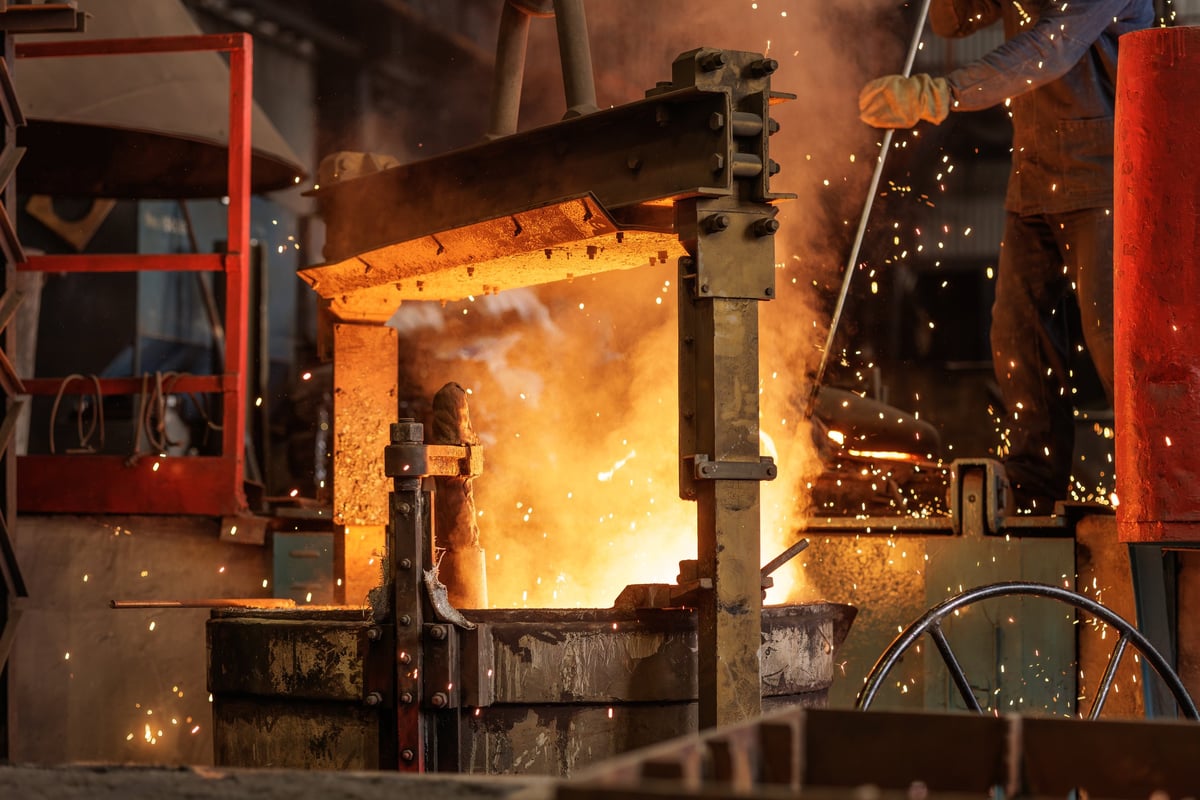
- Closer in form than the other routes, but bar rolling has a re-rolling character that rod drawing does not — surface defects have more chance of working out.
- Where the reasoning stops
- Bar tolerances and properties come from the bar standard; the billet supply does not carry them.
Rebar rolling
- Operating requirement
- Section and composition anchored to the reinforcing standard the finished bar must satisfy
- Selection implication
- Reinforcement is a volume product with its own acceptance basis, and its finish requirements are less demanding than a drawing route's.
- Where the reasoning stops
- A billet section is not a rebar size — the finished bar is qualified under its own standard.
Forging feedstock
- Operating requirement
- Chemistry and section suited to hot working rather than a rolling sequence
- Selection implication
- A different reduction mechanism entirely, so the section logic that works for rolling does not transfer across.
- Where the reasoning stops
- Forged product properties are established by the forging process and its own acceptance criteria.
Recommended feedstock
The billet routes a rod program usually reaches for
Registered product routes that serve wire rod production, grouped by what they decide. These are starting points for your specification, not a claim that any one of them suits your mill.
Continuous casting billet
The usual feedstock form for rod rolling, where the casting route is already settled.
continuous casting billet supplierCarbon steel billet
The material family behind most rod feedstock, when the family rather than the grade is open.
carbon steel billet supplier150 × 150 mm section
A commonly traded section, subject to your mill's reheating furnace and reduction sequence.
150x150 steel billetGrade index
The full grade route index, when the chemistry basis is still the decision in front of you.
steel billet gradesNo suitability claim is made here. Whether any of these routes suits your program depends on your mill's reduction sequence, furnace and schedule. The routes above narrow where to look; the mill confirms what will actually run.
Operating conditions
How a rod line's conditions shape the feedstock call
A wire rod mill runs differently from a plate mill or a forge. These are the conditions specific to rod production that change what the feedstock has to be — as opposed to what any billet has to be.
Very high rolling speeds
Rod mills are the fastest rolling lines in a steelworks. Feedstock geometry has to suit a furnace and sequence running continuously at speed, which makes charge length variation a schedule problem rather than an inconvenience.
Drawing as the defining risk
The distinguishing feature of rod production is what happens afterwards. Drawing propagates defects rather than removing them, so feedstock surface and internal condition carry weight they would not in a re-rolling route.
Cleanliness where it is justified
Where a rod is heavily worked downstream, cleanliness and defect limits become real requirements rather than generic aspirations. Where it is not, specifying them adds cost and inspection for no decision they improve.
Campaign consistency
Rod is a volume product rolled in sustained campaigns, so chemistry variation between heats surfaces as scattered downstream behaviour rather than a single clear failure.
Grade family as the anchor
The rod grade family sets the direction the feedstock chemistry has to follow. It is the link between what the product must be and what the input must contain.
Coil handling and identity
Rod is delivered as coils, and coil identity is the end of the traceability chain. Marking has to survive the rolling process and the handling that follows, or the chain breaks at the last link.
QA & compliance
Precedence, and why the paperwork order matters
A rod order carries several documents that could each claim to govern. Which one wins determines what the feedstock requirement actually is — and the general requirements standard is unusually explicit about where it sits.
Documents in precedence order
- Purchase order — governs where it conflicts with anything below it.
- Drawing, where one applies — product-specific geometry and referenced requirements.
- Individual rod specification — the finished rod's own grade and test basis.
- General requirements standard — fills what the documents above leave silent.
- Billet specification or agreed limits — the feedstock the certificate is held to.
Read down the list, each document is more specific than the one below it — which is why the more specific one governs.
What each document can and cannot do
- The order can set requirements the standards do not mention, and it wins over them.
- The rod specification defines the finished product; it does not define the feedstock.
- The general standard supplies defaults where you have specified nothing — but it is not a fallback you can rely on for your product's key requirements.
- The billet specification governs the incoming certificate — a separate document from everything above.
- None of them certifies another. Each governs its own stage and its own evidence.
The compliance line. Nothing on this page should be read as asserting that any feedstock, certificate or supplier capability establishes compliance with a rod standard. The rod specification governs the rolled product, and that compliance is produced by rolling and shown by testing the rod.
Procurement checklist
Ten lines a rod feedstock enquiry needs
Write these out and most of the familiar rod feedstock problems disappear before they start. Miss one and it surfaces later, usually at the point where it is most expensive to fix.
Note the order of the first three. They are your documents, and they outrank the general standard. Buyers most often arrive with line three only — a standard number — which is the one line on the list that cannot govern on its own. The other lines exist to give it something to sit underneath.
Logistics
Moving rod feedstock into the Gulf
Customs, documentation and logistics are handled country by country on the routes below. To price a shipment we need a named port or place, an Incoterm, and the importer's document and classification position — none of which is an availability claim.
 United Arab Emirates
Feedstock for domestic rod programs, coordinated from Dubai.
Name the receiving mill and the rod program the feedstock serves. Domestic delivery is coordinated from Dubai against the agreed section, charge length and heat separation.
steel billet supplier UAE Saudi Arabia
Mill feedstock with technical submittal approval.
Saudi routes usually need technical submittal approval before release. Settle the rod specification, billet grade, certificate scope and the named port or inland destination before anything is quoted.
steel billet supplier Saudi Arabia Qatar
QatarTechnical approval and document scope led.
Confirm the importer's document and classification position, the named port, and how long the approval sequence runs before the quotation is finalised.
steel billet supplier Qatar Oman
OmanPort-oriented supply for downstream rolling.
Name the port or inland delivery place and the Incoterm rule. Section and charge length are harmonised with what the receiving mill's furnace and schedule actually take.
steel billet supplier Oman Kuwait
Mill feedstock with production hand-off planning.
Tie the feedstock choice to the rod program, and agree the shipment against the named destination and the delivery window the rolling schedule is working to.
steel billet supplier Kuwait Bahrain
Industrial supply and re-export documentation.
Industrial routes live or die on accurate paperwork. Confirm the document set, the named place and the importer's requirements before dispatch, not after arrival.
steel billet supplier BahrainBefore an offer: name the destination or port, the Incoterm 2020 rule, and the importer's documentation and classification requirements. Confirm the tariff classification for the billet form with your own customs adviser — that determination is not made on this page.